 ProMapRanker
Best Mental Math Apps for Kids in 2026

Key takeaways
- Khan Academy Kids and Moose Math suit the youngest learners, with counting, number sense and short, gentle activities.
- SplashLearn, Prodigy Math and Todo Math suit primary ages, with adaptive practice, games and curriculum-aligned work.
- DragonBox Numbers, MathTango and DoodleMath suit children who need concept work, times tables fluency or short daily practice.
- Free apps are strong for early ages, while paid apps tend to add adaptive levels, reports and wider grade coverage.
- Check each app privacy policy, ads, chat features and data collection before a child uses it, and use a parent account where offered.
Quick comparison
| Pick | Great for | Pricing starts at | Free tier | |
|---|---|---|---|---|
 Khan Academy Kids | Free early learning | Free | Yes | Visit |
 Moose Math | Early number games | Free | Yes | Visit |
 SplashLearn | Adaptive primary practice | Free | Yes | Visit |
 Prodigy Math | Game-based practice | Free | Yes | Visit |
 Todo Math | Foundational early skills | Free | Yes | Visit |
 DragonBox Numbers | Number concepts | See website | Free trial | Visit |
 MathTango | Times tables and fluency | See website | Free trial | Visit |
 DoodleMath | Short daily practice | See website | Free trial | Visit |
The best mental math apps for kids
Mental math for kids means quick, confident work with numbers in the head, not just tapping answers on screen. The best apps build number sense first, then addition, subtraction, multiplication and division fluency through short, repeated practice. We grouped the list by age and practice style, since a good app for a four-year-old is different from a good app for a ten-year-old.
A note on privacy: apps for children should limit ads, avoid open chat, and collect as little personal data as possible. Check the privacy policy, turn on parent controls where offered, and avoid apps that ask a child for a full name, school or location. An adult should set up the account and check progress reports, rather than letting a child create an account alone.
Khan Academy Kids is the best free starting point for ages two to eight. It covers counting, number recognition, shapes, early addition and subtraction through stories, songs and short activities, with no ads and no in-app purchases. The pace is gentle, which suits children who are new to math or who lose confidence with timed drills.
The limit is range. Older children who need times tables fluency or multi-step mental math will outgrow it, and parents should move them to a primary app when that happens. For early number sense, though, Khan Academy Kids is hard to beat, and its free, ad-free model makes it an easy first app to try.
- Free and ad-free
- Early math plus reading
- Gentle pace for young children
- Less focused on older mental math fluency
- Limited advanced levels
Moose Math, from Duck Duck Moose, offers mini-games for counting, sorting, addition and subtraction for ages three to seven. Children build a town by completing math tasks, which gives a light goal without heavy competition. Parents can view progress, and the app is free, which makes it low risk to test.
Like Khan Academy Kids, Moose Math is an early-years app. It does not cover multiplication fluency or older mental math in depth, so it works best as a foundation builder. Pair it with real-world counting, such as counting items at home, to help skills transfer beyond the screen.
- Free early math games
- Counting and addition practice
- Progress reports for parents
- Best for younger ages only
- Content range is narrow
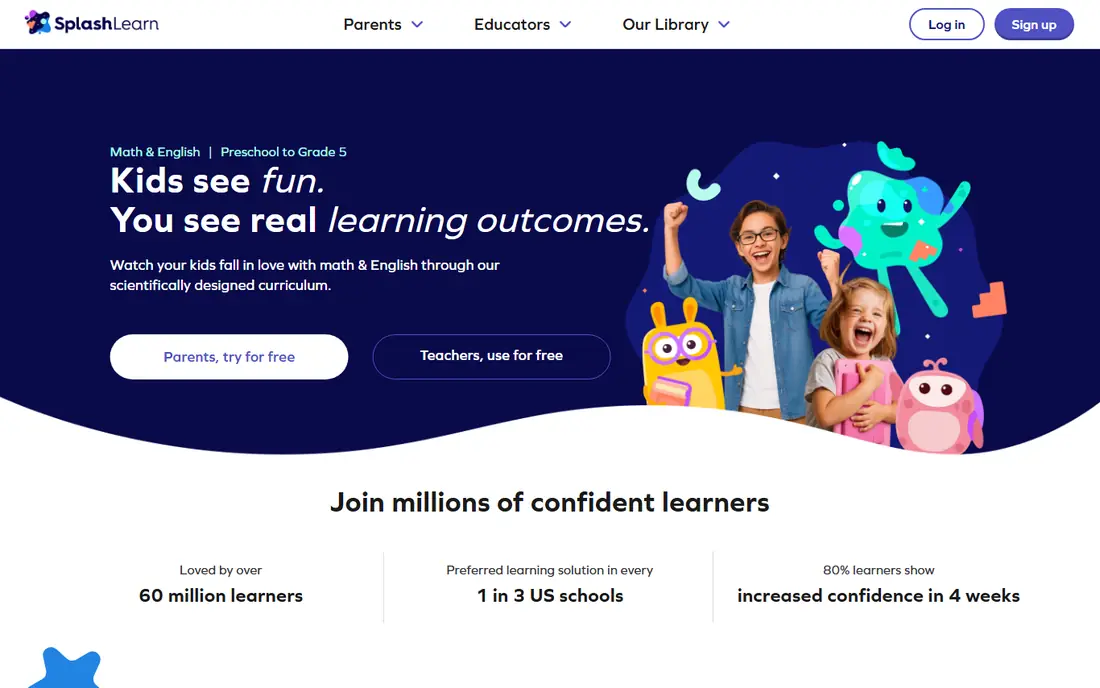
SplashLearn offers adaptive lessons for pre-K to grade 5, with games, practice and progress reports for parents and teachers. Difficulty adjusts as a child answers, which helps with mental math fluency, since easier work builds confidence and harder work stretches speed. The curriculum alignment also helps parents see which school skills are being practiced.
The free school version differs from paid family plans, so check what is included before you subscribe. Some children also focus more on rewards than on the math itself, so short sessions work better than long ones. For primary-age practice that adapts to the child, SplashLearn is a strong, well-rounded choice.
- Adaptive math and reading
- Pre-K to grade 5 coverage
- Teacher and parent reports
- Full family plans are paid
- Game rewards can distract some children
Prodigy Math turns math practice into a role-playing game, where correct answers help a child progress, earn items and explore a world. It covers grade 1 through middle school, with curriculum-aligned questions that adapt to the child level. The free core game gives real practice, which makes it easy to test before paying.
The main concern is upselling. Membership offers appear in the game, and parents should set expectations and check settings before a child plays. Some children also spend more time on game features than on questions. With a time limit and a parent check-in, Prodigy can motivate reluctant learners who resist plain worksheets.
- Curriculum-aligned game world
- Grade 1 to middle school range
- Free core practice
- Membership upsells are visible
- Game can distract from math for some children
Todo Math focuses on foundational skills for pre-K to second grade, with more than two thousand activities covering counting, addition, subtraction and early problem solving. The design includes accessibility options, such as left-handed mode and dyslexia-friendly fonts in some versions, which helps children who need a different visual layout.
Full access is paid, so check the current plan before you rely on it for a whole school year. Todo Math also tops out at early primary level, so older children will need a different app for fluency. For a young child who needs steady, varied foundation practice, it is a thoughtful choice.
- Foundational pre-K to grade 2 skills
- Many activities
- Accessible design options
- Paid plans for full access
- Best for younger ages only
DragonBox Numbers teaches number sense through playful characters and hands-on activities for ages four to eight. Instead of starting with timed drills, it helps children see how numbers relate, combine and break apart, which supports later mental math. That concept-first approach suits children who can recite answers but struggle to explain them.
It is a paid app, and it does not replace a fluency app for times tables or fast recall. Think of DragonBox as a concept builder to use alongside a practice app, not as the only math tool. For parents who want understanding before speed, it is a distinctive and well-designed option.
- Playful number concept learning
- Hands-on characters
- Builds number sense before drills
- Paid app
- Narrower drill practice than a fluency app
MathTango focuses on multiplication and division fluency for ages seven to nine and older, using an island game where practice opens progress. That narrow focus is its strength: children who know addition but stall on times tables get repeated, targeted practice without a wide curriculum pulling attention away.
The limit is scope. MathTango does not cover the full primary curriculum, so it works best as a supplement for a child who needs fluency work. Check the trial and pricing before subscribing, and use short, regular sessions rather than long weekend bursts, since fluency grows from repetition over time.
- Focused multiplication and division practice
- Island game world
- Fluency tracking
- Narrower than a full curriculum app
- Paid for full access
DoodleMath offers short, personalised daily practice that adapts to a child level, with parent reports showing strengths and gaps. The short-session design suits busy families, since ten to fifteen minutes a day is easier to sustain than a long weekly session. It covers a wide primary range, which helps as a child moves through grades.
Full access is paid, and rewards and games need parent limits so practice stays the focus. DoodleMath is best for families who want a low-friction daily habit with clear reports, rather than a large game world. Pair it with a weekly check-in, where a child explains one tricky problem aloud, to strengthen understanding.
- Short personalised daily sessions
- Adaptive levels
- Parent reports
- Paid for full access
- Game rewards need parent limits
How we picked these
We compared official app pages, age guidance, curriculum notes and app store listings for math apps live in October 2026. We looked for age fit, mental math practice, adaptive levels, progress reports and child privacy practices, including ads and chat features. We left out apps that were mainly homework solvers or that relied on open chat, since those do not fit safe mental math practice for children. We did not claim hands-on testing, and we treated pricing from vendor pages as a starting point to verify at checkout.
How to choose by age and habit
Match the app to the child current skill, not just to age. A seven-year-old who is still shaky on counting needs an early app, while a confident six-year-old may be ready for primary practice. Start free where possible, test for two weeks, and watch whether the child can explain answers, not just tap them quickly.
Keep sessions short and regular, ideally ten to fifteen minutes a day, and sit nearby for the first few sessions. Check privacy settings, turn off chat if offered, and review what data the app collects. Talk about math away from the screen too, such as estimating a shopping total or counting change, since mental math grows stronger when it is used in real life as well as in an app.
Frequently asked questions
What is the best mental math app for kids overall?
Khan Academy Kids is the best free start for young children, while SplashLearn and Prodigy Math suit primary ages. The right pick depends on age, current skill and whether a child prefers games or plain practice.
Are mental math apps safe for children?
Safer apps are ad-free or ad-light, have no open chat, and collect little personal data. Always check the privacy policy, use a parent account, and review settings before a child plays alone.
How long should a child use a math app each day?
Ten to fifteen minutes a day is a good target for most children. Short, regular practice builds fluency better than a long session once a week, and it leaves time for play and other learning.
Do math apps replace school math?
No. Apps support practice and fluency, but school teaching, teacher feedback and real-world problem solving still matter. Use an app to reinforce skills, and talk to a teacher if a child is falling behind.
What is the best free mental math app for kids?
Khan Academy Kids and Moose Math are strong free options for early ages, and SplashLearn and Prodigy Math offer free core practice for primary ages. Check what is free in each app before you commit to a paid plan.
Sources
See where you really rank - block by block
ProMapRanker scans Google Maps across a grid of your service area. Simple monthly plans from $19, white-label on every plan.
Start freeKeep reading
 zscaler alternatives
Best Zscaler Alternatives in 2026
Looking for zscaler alternatives? We compare 9 SASE and zero trust platforms on architecture, data protection, pricing, and fit for your network and team.
Read → zapier alternatives free
Best Zapier Alternatives Free in 2026
Nine automation tools for zapier alternatives free in 2026, all with genuinely free tiers, plus free plan limits, starting prices and upgrade paths explained.
Read → which platform is best for online reputation
Which Platform Is Best for Online Reputation in 2026
Wondering which platform is best for online reputation? We compare 8 review, listing, and response tools for small and multi-location businesses and agencies.
Read →