 ProMapRanker
Best Meditation Apps for Mental Health in 2026

Key takeaways
- Headspace and Calm are the easiest paid starting points, with annual plans at $69.99 per year, while Insight Timer, Medito and Smiling Mind give you a large amount of content for free.
- If sleep is the main problem, Calm has the strongest bedtime library, while Balance adapts each day to your goals, mood and experience.
- Waking Up and Happier suit people who want teaching and explanation, not just a calm voice telling them to breathe.
- Meditation apps are wellness tools, not a substitute for professional care, and the free options here are a good first step before you pay anything.
Quick comparison
| Pick | Great for | Pricing starts at | Free tier | |
|---|---|---|---|---|
 Headspace | Structured beginner courses | $69.99 per year | Free trial (14 days) | Visit |
 Calm | Sleep stories and relaxation | $69.99 per year | Free trial (7 days) | Visit |
 Insight Timer | Huge free library | Free | Yes | Visit |
 Balance | Personalized daily plans | $69.99 per year | Free trial | Visit |
 Waking Up | Depth and theory | See website | Free trial | Visit |
 Happier | Practical teaching for skeptics | $99.99 per year | Free trial (7 days) | Visit |
 Medito | Completely free meditation | Free | Yes | Visit |
 Smiling Mind | Free programs for families | Free | Yes | Visit |
 Aura | Short personalized sessions | $11.99 per month | Free trial (7 days) | Visit |
The best meditation apps for mental health
We looked for apps that are still supported in 2026, that offer guided meditation rather than only a timer, and that are clear about what is free and what is paid.
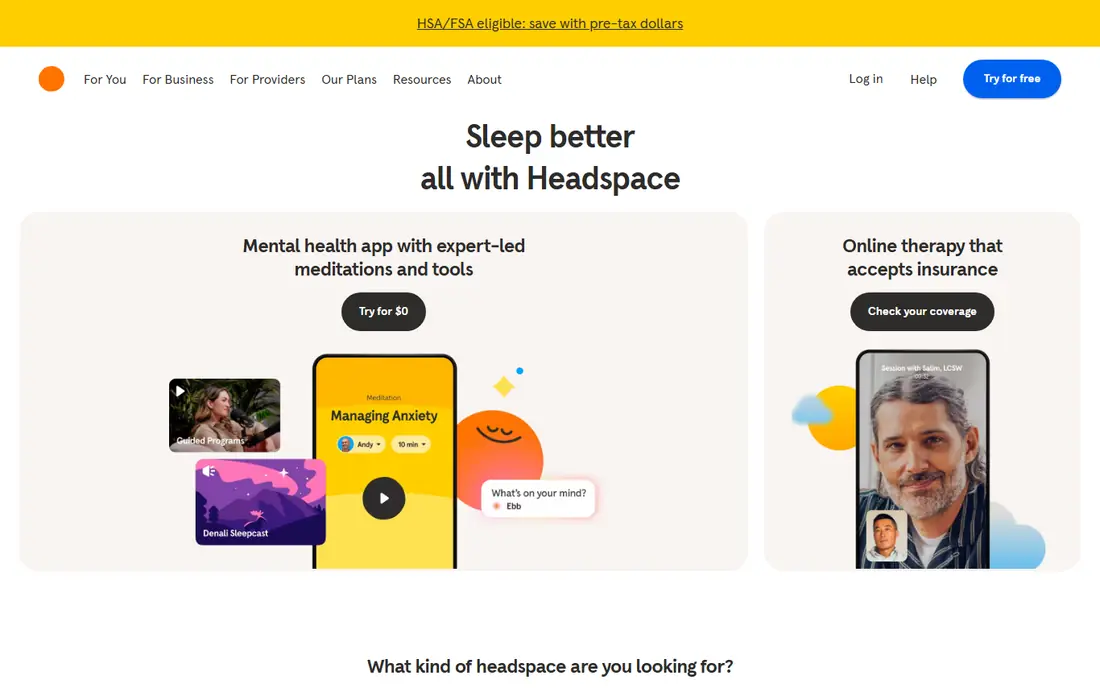
Headspace is our pick for most people who are starting from zero. Its Basics course teaches one skill at a time, and the app tells you what to do next, which removes the guesswork that puts many beginners off. Short animations explain the ideas behind each practice in plain language, so you are learning a skill rather than just listening to a pleasant voice for ten minutes.
The wider library covers stress, sleep, focus and movement, and there are sessions for children too, which makes one subscription useful for a household. The trade off is that the free content is limited, and the structured style can feel restrictive if you already meditate regularly and prefer to choose your own sessions.
- Clear step by step courses
- Good sleep and focus content
- Separate content for children
- Most of the library needs a paid plan
- Advanced meditators may find it basic
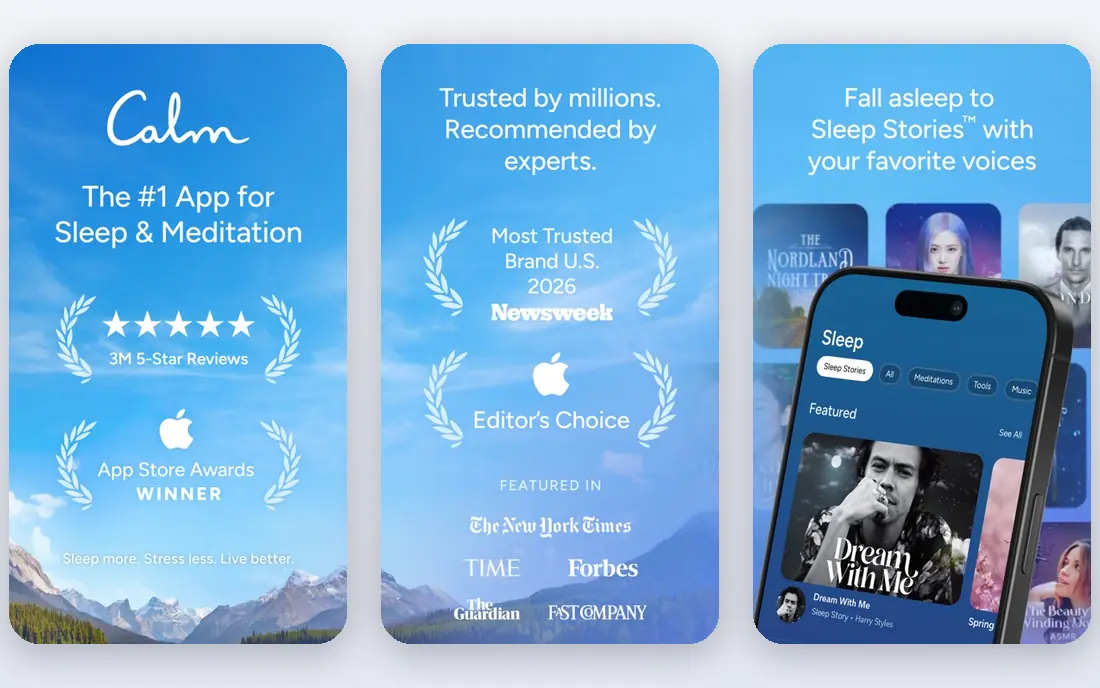
Calm is the app to try first if falling asleep is your main goal. Its Sleep Stories, narrated by a range of familiar voices, are the most polished bedtime content in this list, and the soundscapes and music sections are strong enough to use on their own. The Daily Calm gives you a simple ten minute habit, and there are guided series on anxiety, overthinking and panic, plus breathing exercises for moments of acute stress.
The downside is that the free tier offers only a small sample, so you will need the trial to judge the full library properly. Calm can also feel cluttered, because sleep, music, movement and masterclasses all compete for attention on the home screen. If you mainly want meditation technique rather than help getting to sleep, Headspace or Happier will teach you more, but for winding down at night Calm is hard to beat.
- Large Sleep Stories library
- Daily meditation ritual
- Music and soundscapes
- Free tier is very limited
- Meditation can get buried among sleep and music content
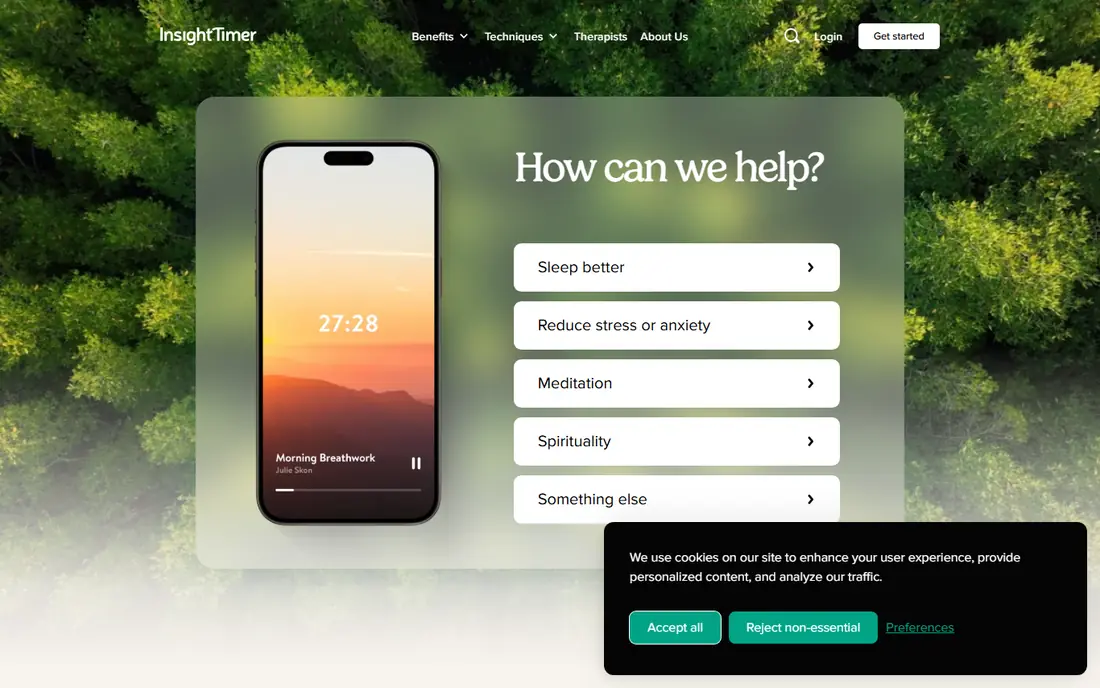
Insight Timer is the best free option by a wide margin. Its free library includes tens of thousands of guided meditations, talks and music tracks from teachers around the world, covering many traditions, lengths and topics. That variety is a real strength if you already know what you like, and the customizable timer is useful once you want to sit without guidance.
The optional Member Plus plan, at $9.99 per month or $59.99 per year, adds offline listening and full courses, but most people can use the app for months without paying. If cost is the deciding factor, start here and only consider a paid app if you want a structured course.
- Very large free library
- Many teachers and traditions
- Good timer for unguided practice
- Quality varies between teachers
- Paid courses and offline listening need Member Plus
Balance asks about your goals, experience and mood, then builds a daily plan around your answers, rather than leaving you to browse a large catalog. That structure suits people who open an app, want to be told what to do, and do not want to spend five minutes choosing a session. Ten day plans teach specific skills, while short singles target moments such as anxiety, frustration or procrastination, and there are breathing exercises and calming sounds alongside the meditations.
The monthly price is $11.99, with the annual plan at $69.99 per year, which puts it in line with Headspace and Calm. The catch is that personalization only pays off if you use it often enough for the plan to adapt, and people who like following a favorite teacher may miss the variety of a bigger library. For a busy person who wants a tailored daily session without decision fatigue, Balance is a strong choice.
- Plans adapt to your goals and experience
- Short singles for specific moods
- Sleep content included
- Less teacher variety than Insight Timer
- Full value needs regular use
Waking Up, created by Sam Harris, takes a different approach from most meditation apps. It pairs guided practice with lessons that explain what meditation is, how attention works and why the practice matters, so you understand the method instead of just following instructions. The introductory course is well regarded, and later content includes conversations with other teachers and thinkers, which gives the app more intellectual depth than a typical relaxation library.
That depth comes at a price, and Waking Up is among the more expensive apps in this list, so check the current price on its website before committing. It is also less focused on sleep content than Calm, and the style will feel dry if you only want a soothing voice before bed. The app does offer free access to anyone who asks and cannot afford it, which is a genuine and unusual policy, and it makes the app worth trying even if the headline price puts you off.
- Strong introductory course
- Lessons on the theory behind practice
- Free access on request if you cannot afford it
- Higher price than most rivals
- Theory heavy style will not suit everyone
Happier, formerly Ten Percent Happier, is built for people who suspect meditation is not for them. Its teaching is direct and practical, with courses and talks that explain the evidence and the technique without spiritual language, and it features teachers who are used to speaking to beginners. If you have tried a meditation app before and bounced off because it felt vague or overly earnest, this tone may be the difference that keeps you going.
The monthly option is $14.99, with the annual plan at $99.99 per year, so it costs more than Headspace or Calm for a year. Sleep content is thinner here than in Calm, and the full library needs a subscription after the trial. For someone who wants to understand meditation and build a habit, rather than only relax for ten minutes, Happier justifies its price with teaching quality.
- Conversational, practical teaching style
- Courses from well known teachers
- Good for people who doubt meditation
- Higher annual price than Headspace or Calm
- Sleep content is limited
Medito is a nonprofit app that is free in full, with no subscription, no paywall and no ads in the core experience. It offers structured courses for beginners, sessions for sleep, stress and anxiety, and packs for students, alongside a timer and breathing exercises. The design is simple, which is part of the appeal, because there is nothing trying to sell you an upgrade while you are trying to calm down.
The library is smaller than Insight Timer and the range of teachers is narrower, so experienced meditators may exhaust the content they like sooner. That is a fair trade for a genuinely free, donation funded app. If you want to start meditating without spending anything or handing over payment details, Medito is the cleanest choice in this list.
- Entirely free with no subscription
- Structured courses and sleep content
- No account required for much of the content
- Smaller library than Insight Timer
- Fewer voices and less variety
Smiling Mind is an Australian nonprofit app that offers free mindfulness programs for adults, children, teenagers and classrooms. The programs are structured by age group, which makes it unusually useful for families and schools, and the content was developed with psychologists rather than assembled from a large open library. Sessions are short and practical, covering stress, sleep, focus and emotional awareness.
Those limits matter less if your priority is a free, trustworthy program you can share with children without worrying about subscriptions or ads. For families, teachers and anyone who wants a free structured program, Smiling Mind is a strong and honest pick.
- Completely free
- Age based programs for children and adults
- Developed with psychologists
- Less variety than commercial libraries
- Design is simpler than paid rivals
Aura starts with a short daily check in about your mood, then builds a personalized meditation from your answers, which suits people who want a session that fits how they feel today. Sessions are often short, so the app fits into a lunch break or a commute, and there are sleep stories, soundscapes and coaching content alongside the meditations. The approach feels personal in a way that a fixed course does not, especially on days when stress or low mood is the main issue.
The downside is that the personalization only works if you keep checking in, and the free content is a sample rather than a full library. Prices vary by plan and platform, with monthly pricing around $11.99, so confirm the current offer in the app store before subscribing. If you like the idea of an app that asks how you are before it tells you what to do, Aura is worth a trial week.
- Daily check in builds a personalized session
- Short meditations fit busy days
- Sleep and coaching content included
- Personalization depends on regular check ins
- Full library needs a subscription
How we picked these
We compared official feature pages, pricing pages and app store listings for each app, and we checked what is actually free against what needs a subscription or a trial. We favored apps that are still maintained in 2026, that offer guided meditation rather than only ambient sound, and that are clear about pricing and privacy terms. We also read public reviews to see where users report the same strengths and frustrations, such as limited free tiers or varying teacher quality, and we left out apps that only cover sleep sounds or only offer a timer.
Meditation apps are not a substitute for professional care. They can support everyday stress, sleep and focus, but if you are dealing with depression, anxiety, trauma or another mental health condition, talk to a qualified professional, and use an app alongside care rather than instead of it. If you ever feel unsafe, seek urgent help in your country rather than waiting for an app session to help.
Choosing the right meditation app
Start with the problem you actually want to solve, because the best app for sleep is not always the best app for learning meditation.
If you are a complete beginner
Pick a structured course over a large library. Headspace, Balance and Happier all tell you what to do next, which matters more in the first month than having thousands of sessions to choose from. Try one for a week, at the same time each day, and judge it on whether you actually opened it, not on how impressive the library looks.
If sleep is the priority
Look at bedtime content specifically, not the general meditation library. Calm leads here, with Balance and Aura offering useful sleep material too, while Waking Up and Happier are weaker for bedtime use. Test the sleep content during the trial, because a voice or story style that relaxes one person can irritate another.
A note on privacy and habit tracking
Check what an app tracks before you rely on streaks. Most record session history, and some connect to Apple Health or Google Fit. Turn off unhelpful notifications, keep sessions short at first, and treat a missed day as normal, because consistency over months matters more than a perfect week.
Frequently asked questions
What is the best meditation app for mental health?
There is no single best app, because the right choice depends on your goal. Headspace is a safe starting point for beginners, Calm is strongest for sleep, Insight Timer is best if you want a large free library, and Medito or Smiling Mind are best if you want to pay nothing. Try a free option first, then pay only if a specific paid feature would help you practice more often.
Are meditation apps free?
Some are fully free, and some offer only a small free sample. Medito and Smiling Mind are free in full, and Insight Timer offers a very large free library with an optional paid plan. Headspace, Calm, Balance, Waking Up, Happier and Aura are mainly paid apps with a trial, so check the trial length and renewal terms before you subscribe.
Can a meditation app replace therapy?
No, a meditation app cannot replace therapy or other professional care. Apps can help with everyday stress, sleep and focus, and they can sit alongside professional treatment, but they do not diagnose or treat mental health conditions. If symptoms are severe, persistent or getting worse, speak to a qualified professional.
How long should a meditation session be?
Five to ten minutes a day is a realistic starting point, and it is better than a long session you dread and skip. Many of these apps offer sessions from three minutes upward, so you can fit practice into a break or a commute. As the habit settles, you can lengthen sessions gradually, but short and regular beats long and rare.
Which meditation app is best for sleep?
Calm is the strongest pick for sleep, thanks to its Sleep Stories, soundscapes and music, and it is the app we would try first for bedtime use. Balance and Aura also offer sleep content, while Insight Timer has many free sleep meditations from different teachers. Test a few bedtime sessions during a trial, since voice and pacing matter a lot at night.
Do meditation apps work for anxiety?
Meditation apps can help some people manage everyday anxiety by teaching breathing and attention skills, and structured courses tend to help more than random sessions. They are not a treatment for an anxiety disorder on their own, and if anxiety interferes with work, sleep or relationships, professional help is the right next step.
Sources
- https://www.headspace.com
- https://www.calm.com
- https://insighttimer.com
- https://www.balanceapp.com
- https://www.wakingup.com
- https://www.happier.com
- https://meditofoundation.org
- https://www.smilingmind.com.au
- https://www.aurahealth.io
- https://health.creamytales.com/best-meditation-apps-anxiety-sleep/
- https://trywhitespace.com/blog/best-meditation-apps-2026.html
See where you really rank - block by block
ProMapRanker scans Google Maps across a grid of your service area. Simple monthly plans from $19, white-label on every plan.
Start freeKeep reading
 zendesk alternatives
Best Zendesk Alternatives in 2026
Compare the best Zendesk alternatives in 2026, from budget help desks to AI-first support tools, with current pricing, free plans, and honest trade-offs.
Read → wordpress alternatives
Best WordPress Alternatives in 2026
Looking for the best WordPress alternatives? We compare 8 free and paid options for blogs, business sites, stores, and developer-led projects in 2026.
Read → which real estate company has the best training
Best Real Estate Company Training in 2026
Compare which real estate company has the best training, from Keller Williams and eXp to Compass and Coldwell Banker, by program, mentor, and fit in 2026.
Read →