 ProMapRanker
Best Medical Scribe Company in 2026


Hospital systems and emergency departments needing scale · Pricing starts at: See website
Key takeaways
- Human, AI and hybrid scribe models suit different practices, and the right model depends on visit type, EHR and review time.
- Software alone does not make a practice HIPAA compliant, and a vendor claim is not a substitute for a signed agreement and staff training.
- A pilot on your hardest visit types tells you more than a demo on simple visits, because edit time is where cost hides.
- This guide is general information only, not medical advice, and it does not replace clinical judgment or legal advice.
Quick comparison
| Pick | Great for | Pricing starts at | Free tier | |
|---|---|---|---|---|
| ScribeAmerica | Hospital systems and emergency departments needing scale | See website | No | Visit |
 DeepScribe | Specialty practices needing ambient AI notes with coding hints | See website | No | Visit |
 Augmedix | Mobile and specialty clinicians wanting AI plus human review | See website | No | Visit |
 Ambience Healthcare | Large health systems needing ambient AI plus coding support | See website | No | Visit |
 Abridge | Health systems using Epic and wanting ambient notes | See website | No | Visit |
 Suki | Clinicians wanting voice-first notes and dictation in the EHR | See website | No | Visit |
 Freed | Solo clinicians and small practices wanting simple AI notes | From $39 per month | Free trial | Visit |
 ScribeEMR | Practices wanting virtual human scribes plus coding support | See website | No | Visit |
The best medical scribe companies
Clinical documentation takes time that many practices would rather spend with patients, and scribe services exist to move that work off the clinician. Some services provide trained human scribes who join visits live, some use ambient AI to draft notes, and some mix both, with a human reviewing the AI draft before sign-off. We compared official feature pages, pricing pages, EHR information and public reviews for companies that serve United States practices, and we did not claim hands-on testing of any service.
Software alone does not make a practice HIPAA compliant. A practice still needs a signed business associate agreement, access controls, staff training and its own review of every note before sign-off, whatever the vendor claims. This guide is general information only, not medical advice. Use it to shortlist services for a pilot, then test each one on real visit types, in your own EHR, before you sign a longer contract.
ScribeAmerica
Great for: Hospital systems and emergency departments needing scale
ScribeAmerica is the largest human scribe option on this list and the natural starting point for hospitals. It provides on-site and virtual scribes across the United States, with deep experience in emergency departments and hospital systems. That scale helps large groups that need cover across many sites and shifts.
The limit for small practices is fit: a service built for hospital scale may be heavier and dearer than a solo practice needs. It is a good match for readers who want Hospital systems and emergency departments needing scale and are ready to check the current terms before they commit.
- Large scribe workforce
- On-site and virtual cover
- Emergency and hospital experience
- Pricing is quote-based
- Large-scale service may be more than a small practice needs
DeepScribe
Great for: Specialty practices needing ambient AI notes with coding hints
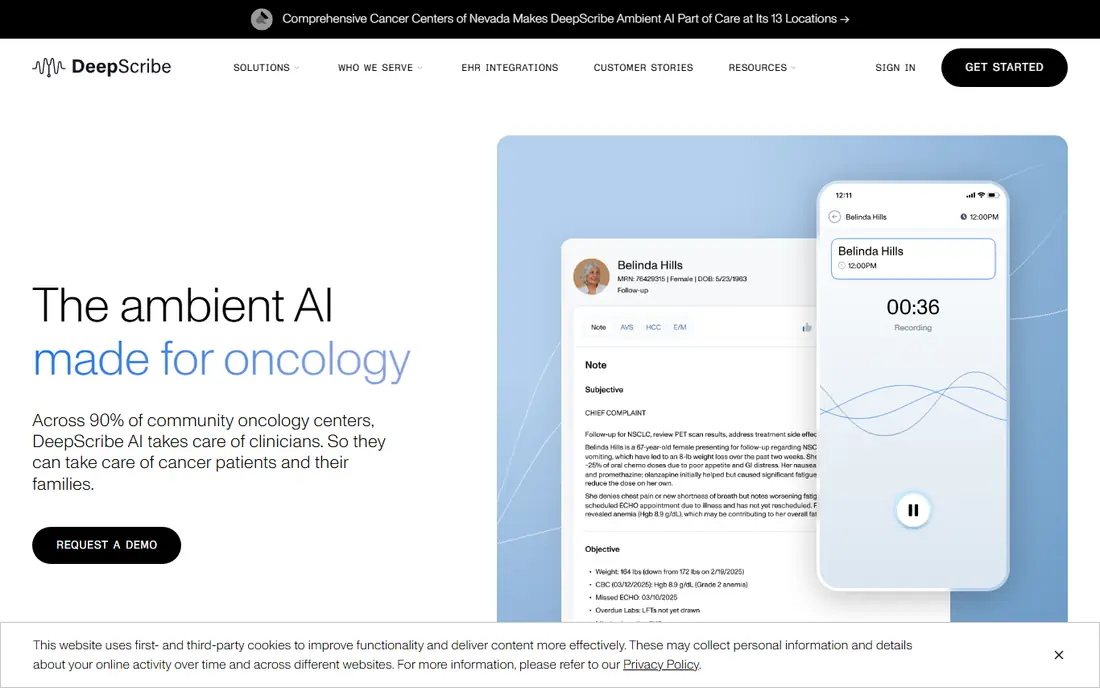
DeepScribe suits specialty practices that want ambient AI to draft notes without a person in the room. Its models are tuned for specialties such as oncology and cardiology, and draft notes can include coding suggestions that help with billing review. The AI listens to the visit and builds a structured note for clinician review.
The weakness is variation: complex or multi-problem visits need more clinician edits than simple visits, so a pilot should test those cases first. Choose it when Specialty practices needing ambient AI notes with coding hints matters more than the lowest headline price, and confirm the full terms in writing first.
- Ambient AI capture
- Specialty-tuned models
- Coding suggestions in draft notes
- Pricing is quote-based
- Accuracy varies by specialty and visit complexity
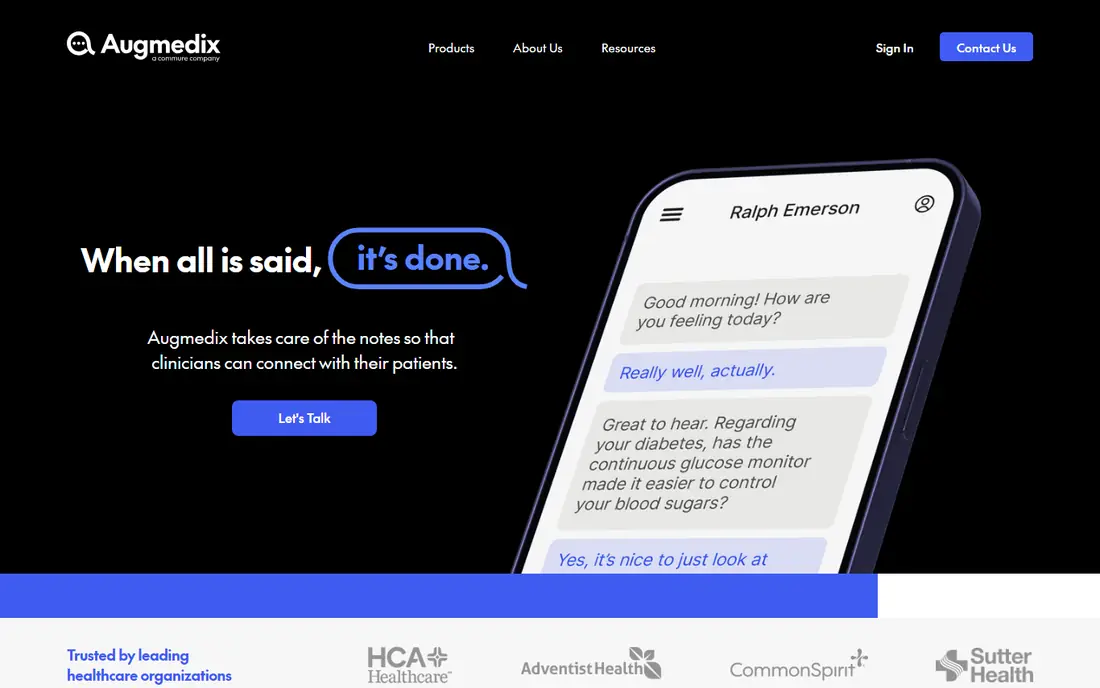
Augmedix is a hybrid choice for clinicians who move between rooms or sites and want a human check on the AI draft. It pairs ambient capture with human review, which suits complex visits and large specialty groups that need consistent note quality. Mobile clinicians benefit from hands-free capture that does not tie them to a desk.
The trade-off is process: hybrid review takes longer than an instant AI draft, and pricing is set by contract rather than a public monthly price. It fits a buyer who puts Mobile and specialty clinicians wanting AI plus human review first, provided the quoted terms match the service they actually need.
- Hybrid AI and human review
- Hands-free capture for mobile clinicians
- Large group experience
- Enterprise pricing
- Deployment can take longer than a self-serve AI tool
Ambience Healthcare
Great for: Large health systems needing ambient AI plus coding support
Ambience Healthcare is built for large health systems that want ambient documentation and coding help in one platform. Its platform drafts notes from the visit and adds real-time coding support, which can help revenue teams review codes earlier in the workflow. It is used by large systems, which shows it can handle scale and governance needs.
The limit is access for small practices: enterprise sales and deployment cycles may be longer than a small clinic wants to wait. Pick it if Large health systems needing ambient AI plus coding support is the main test, and compare the final quote with at least one other option on this list.
- Ambient AI platform
- Real-time coding support
- Health-system deployments
- Enterprise focus
- Smaller practices may find the sales process long
Abridge is a strong shortlist option for health systems that already run Epic and want ambient notes inside that workflow. It captures the visit, drafts a structured note and can support patient-facing summaries, which helps both clinicians and patients follow the plan. Its traction with large systems shows it can meet enterprise security and governance checks.
The weakness is that value depends on EHR setup: a shallow link that only copies text is less useful than a deeper link into the chart. It works best for people who need Health systems using Epic and wanting ambient notes and want a clear scope before work or payment starts.
- Ambient AI with EHR links
- Patient visit summaries
- Large health-system traction
- Pricing is contract-based
- Deployment depth varies by EHR setup
Suki suits clinicians who prefer to speak naturally and let the system build the note, rather than type after each visit. It offers ambient scribing plus voice dictation and commands inside the EHR, which helps clinicians who already dictate or who want to finish notes by voice. Coverage spans many specialties, including primary care and large groups.
The limit is the same as with other AI tools: accuracy varies by specialty, so test it on your most complex visit types before you commit. Consider it first when Clinicians wanting voice-first notes and dictation in the EHR is the priority, then check delivery, limits and support before you decide.
- Voice-first ambient notes
- Dictation and commands
- Multi-specialty coverage
- Pricing is quote-based
- Specialty accuracy varies by visit type
Freed is the simplest entry point for a solo clinician who wants AI notes without an enterprise contract. It starts from $39 per month, offers a free trial and can be set up quickly, which suits independent practices that want to test ambient notes at low cost. The interface focuses on turning visit speech into a structured note.
The trade-off is depth: EHR transfer is often handled by copying the note, and clinicians still need to review structure and detail before sign-off. It is worth a shortlist place for anyone who wants Solo clinicians and small practices wanting simple AI notes, as long as the price and terms are confirmed in advance.
- Simple ambient AI notes
- Low starting price
- Fast self-serve setup
- EHR link is often copy-based
- Note structure needs clinician review
ScribeEMR suits practices that want a human scribe working in their EHR, with coding help alongside documentation. Its virtual scribes join live visits, document in the practice EHR and can support coding and office tasks, which helps practices that want more than note drafting alone. It covers many EHR systems and specialties.
The limit is onboarding time: matching a scribe to a specialty and an EHR takes setup, so the first weeks need clinician feedback to get notes right. End your shortlist here if Practices wanting virtual human scribes plus coding support is what you need most, and get the key terms in writing before you sign up.
- Virtual human scribes
- EHR workflow support
- Coding and office services
- Pricing is quote-based
- Onboarding depends on EHR and specialty
How we picked these
We compared official feature pages, EHR compatibility information, pricing pages and public reviews for human, AI and hybrid scribe services that serve United States practices. We favoured services with a clear note workflow, a stated review step and EHR links a practice can test, rather than services that only promise time savings. We did not test any service in a live clinic and we did not rely on a single review source for any claim.
Where a price was not published by the vendor, we wrote See website rather than borrowing a third-party estimate. Scribe pricing often depends on provider count, specialty and contract length, so a pilot quote for your own visit mix is the only figure that counts. Software alone does not make a practice HIPAA compliant, and every note still needs clinician review before sign-off.
How to choose a scribe model for your practice
Start with your visit mix, not with the technology. A practice with mostly simple, single-problem visits may do well with a self-serve AI tool, while a practice with complex, multi-problem visits may need a human scribe or a hybrid review step. List your five hardest visit types, then run each shortlisted service on those visits during a pilot and measure edit time per note. A service that saves time on easy visits but adds edits on hard ones has not saved time at all.
Next, check the EHR workflow in detail. Ask if the note lands directly in the chart, if it needs copy and paste, and how orders, codes and patient instructions are handled. Confirm data handling too: ask about audio retention, where data is stored, who can access it, and if a business associate agreement is signed before any patient data flows. Software alone does not make a practice HIPAA compliant, so pair any vendor with your own access controls and staff training.
Finally, settle the contract terms before a long commitment. Confirm the monthly cost per provider, the minimum term, the cost of adding providers, and what happens to your notes if you leave. Ask how scribe quality is monitored, how feedback is handled, and how quickly a poor match can be changed. This guide is general information only, not medical advice, and clinical judgment always governs the final note.
Frequently asked questions
Is an AI scribe accurate enough to use without review?
No service on this list should be used without clinician review. AI drafts can miss detail, mishear terms or misplace findings, and the clinician who signs the note remains responsible for it. Review every note before sign-off, especially for complex visits.
Does using a scribe service make my practice HIPAA compliant?
No. Software alone does not make a practice HIPAA compliant. You still need a signed business associate agreement, access controls, staff training and your own privacy policies, and you should review vendor security claims with your compliance team.
What is the difference between human, AI and hybrid scribing?
Human scribing uses a trained person to document the visit live. AI scribing uses ambient software to draft the note. Hybrid scribing uses AI to draft and a human to review the draft before the clinician signs it.
How much does a medical scribe service cost?
Prices range from around $39 per month for a simple self-serve AI tool to contract pricing for enterprise and hybrid services. Cost depends on provider count, specialty, EHR depth and review model, so get a pilot quote for your own mix.
Can a scribe service work with my EHR?
Most services list EHR compatibility, but depth varies. Some write directly into the chart, while others require copying text from a separate app. Test the exact workflow in your EHR during a pilot before you sign.
Sources
See where you really rank - block by block
ProMapRanker scans Google Maps across a grid of your service area. Simple monthly plans from $19, white-label on every plan.
Start freeKeep reading
 worlds best local seo company
8 Worlds Best Local SEO Companies for Map Pack Growth in 2026
Compare the worlds best local seo company options for Google Business Profile work, citations, reviews, and multi-location rankings and reporting in 2026.
Read → world's best web hosting company
World's Best Web Hosting Company in 2026
Searching for the world's best web hosting company? We compared 10 hosts on price, renewal rates, speed, and support to help you choose well today in 2026.
Read → who's got the best nanny tax services
Who's Got the Best Nanny Tax Services in 2026
We answer who's got the best nanny tax services, comparing full filing, back taxes, software, and pricing so families can handle nanny taxes correctly.
Read →