 ProMapRanker
Best Medical Coding Software in 2026


Broad reference library · Pricing starts at: $299.95 per year
Key takeaways
- Optum EncoderPro is the broadest reference library here, with code content drawn from many books in one subscription.
- Codify by AAPC suits coders who want AAPC-linked search, CCI edits checks and continuing education in the same tool.
- Find-A-Code and SpeedeCoder are the lower-cost lookup options for small practices and solo coders.
- TruCode and Solventum CodeFinder fit larger organisations that need encoder integration and decision support, with pricing by quote.
Quick comparison
| Pick | Great for | Pricing starts at | Free tier | |
|---|---|---|---|---|
| Optum EncoderPro | Broad reference library | $299.95 per year | No | Visit |
 Codify by AAPC | AAPC-linked code search | See website | No | Visit |
 Find-A-Code | Low-cost code lookup | See website | Free trial | Visit |
 TruCode | Encoder integration in health systems | See website | No | Visit |
 Solventum CodeFinder | Decision support for coding teams | See website | No | Visit |
 SpeedeCoder | Fast, simple code lookup | See website | Free trial | Visit |
 SuperCoder | Specialty coding reference | See website | No | Visit |
The best medical coding software
A coding tool does not make a practice compliant on its own, and it does not replace coder judgement. This is general information only, not medical advice, and coding accuracy remains the responsibility of the clinician and coder who assign each code. Software alone does not make a practice HIPAA compliant either, so check access controls, audit logs and business associate agreements before you buy.
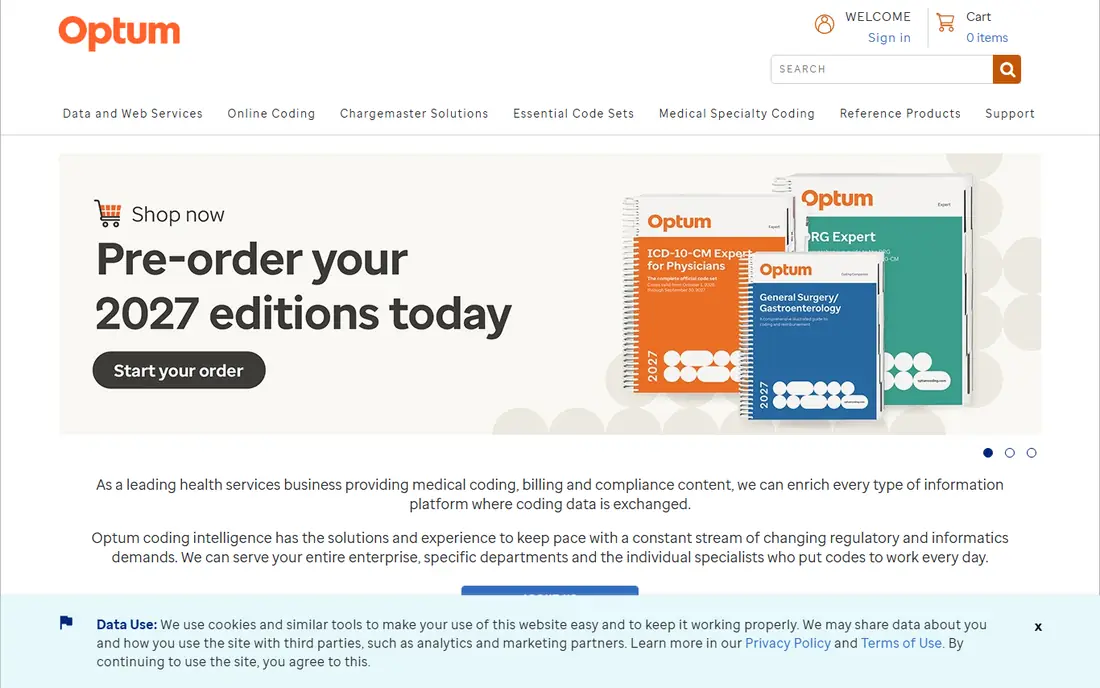
Optum EncoderPro is the reference-heavy choice in this list. It offers real-time lookup across ICD-10-CM, ICD-10-PCS, CPT and HCPCS Level II code sets, with content drawn from many code books in one subscription. For coders who move between specialties during the day, that breadth means fewer separate books and fewer gaps when a case crosses specialties.
The price structure needs care. The Standard tier is listed at $299.95 for 12 months for a single user, while Professional and Expert tiers cost more, and add-ons such as coding clinic content are sold separately. Teams should price the tier and add-ons they actually need, and trial the search workflow on real charts before rolling it out to a whole coding department.
- Wide code and reference content
- Real-time lookup across major code sets
- Audit trail features
- Add-ons cost extra
- Interface takes time to learn
- No free plan

Codify by AAPC is the natural first look for coders already in the AAPC world. It brings together CPT, ICD-10 and HCPCS search, with a CCI edits checker that flags code combinations likely to draw denials, plus tools such as an evaluation and management calculator and fee schedule lookup. Regular updates matter here, because code sets change and a stale reference is worse than no reference at all.
The downside is that the value depends on the tier. Basic search is far cheaper than the full coder package, and member pricing differs from non-member pricing, so two buyers can see quite different totals. Coders should list the exact tools they need, such as the claim scrubber or historical code sets, and confirm which tier includes them before subscribing.
- AAPC code search and updates
- CCI edits checker
- Continuing education options
- Pricing varies by tier and membership
- Single-user licence model on many plans
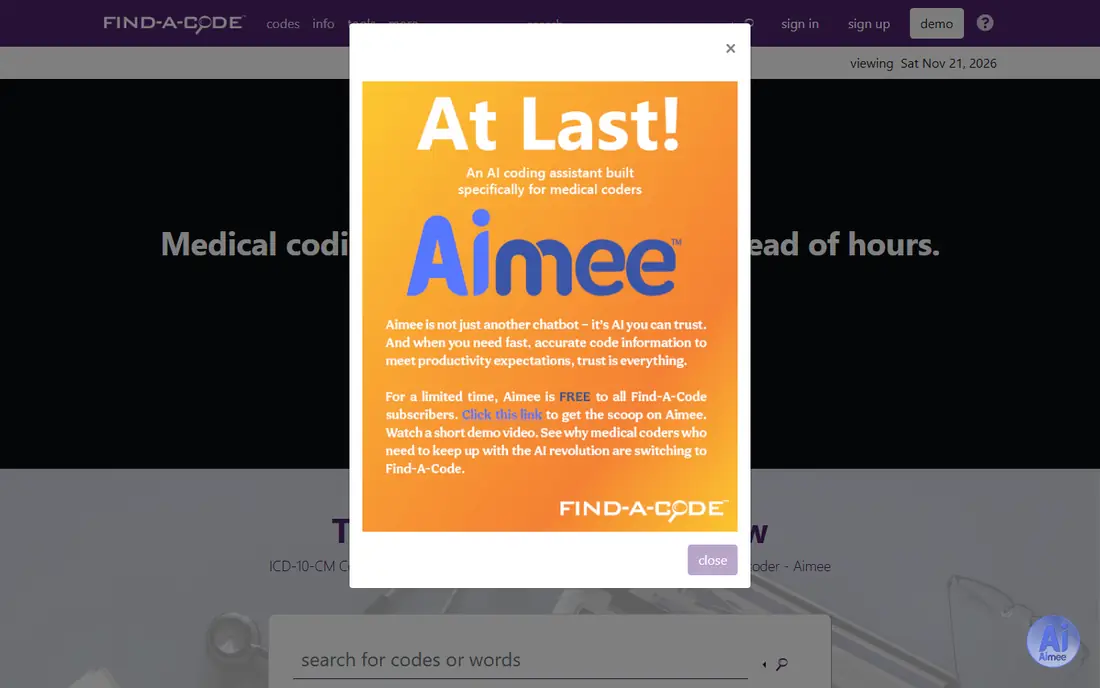
Find-A-Code is the practical pick for smaller practices and solo coders who need reliable lookup without an enterprise budget. It covers ICD, CPT and HCPCS codes, and its Code A Note feature helps translate clinical notes into specific codes, which is useful for newer coders still building confidence. Cloud access means a coder can work from the office or from home with the same reference.
The limit shows up on complex or edge-case coding, where users report that search does not always surface the right pathway as quickly as a larger encoder. It is also less of a full enterprise system than TruCode or Solventum CodeFinder. For straightforward lookup and daily coding, though, Find-A-Code is easy to learn and easy to justify on cost.
- Affordable entry point
- Code A Note feature
- Cloud access from anywhere
- Search can feel limited on complex cases
- Fewer enterprise integrations
TruCode is aimed at hospitals and larger health systems that need an encoder inside their existing workflow, not a standalone lookup site. It is designed to sit alongside electronic health record and revenue cycle systems, so coders work with coding logic and edits checks without leaving the patient record. That integration is the main reason larger organisations choose it over a simple search tool.
The trade is that TruCode is not a casual purchase. Pricing is by quote, implementation involves IT and revenue cycle teams, and solo coders will find it more system than they need. For a hospital coding department that needs consistent logic across many coders, however, that depth is exactly the point, and the demo should focus on how edits and audits flow through the existing record.
- Built for integration with health systems
- Encoder workflow for teams
- Coding logic support
- Quote-based pricing
- Implementation needs IT involvement
- Less suited to solo coders
Solventum CodeFinder, formerly 3M CodeFinder, is a suite for coding teams that want logic and decision support behind each code choice, not just a search box. It offers ICD-10, CPT and HCPCS lookup with integrated editing, which helps coders check a code against guidelines before it goes on a claim. For teams handling complex inpatient or specialty cases, that guided workflow can reduce rework and denials.
Pricing is available on demo request rather than published, so buyers should budget for a sales conversation and a trial with their own case mix. New users also need time to get used to the interface, and mobile use is limited compared with cloud lookup tools. Organisations that value guided logic over simple search will still find it a strong contender.
- Built-in coding logic and decision support
- ICD-10, CPT and HCPCS coverage
- Compliance focus
- Pricing by demo request
- Learning curve for new users
- Limited mobile use
SpeedeCoder does one job well: it gets a coder from a term to a code quickly. Its interface is simpler than the enterprise encoders here, which suits small practices, billing staff and coders who already know the guidelines and mainly need a reliable reference. Buyers should confirm the current price with the vendor before subscribing.
The limit is depth. Advanced edits checks, audit workflows and system integration are thinner than in TruCode or Solventum CodeFinder. If your work is mostly straightforward outpatient coding and you value speed over enterprise features, SpeedeCoder is a sensible shortlist entry. If you need deep inpatient logic, look at the larger encoders first.
- Fast lookup workflow
- Simple interface
- Low starting cost in third-party listings
- Fewer advanced edits tools
- Less enterprise depth than TruCode
SuperCoder, from DecisionHealth, is a reference tool with a specialty lean. It offers code search across major sets alongside specialty articles and guidance, which helps coders who spend most of their time in one or two specialties and want context, not just a code number. For a specialty practice, that focused content can be more useful than a general library that spreads thin.
The downside is overlap. A practice that already subscribes to EncoderPro or Codify may find SuperCoder duplicates much of what it already pays for. Pricing is also not published as a single clear figure, so a quote is needed. Shortlist it when specialty depth is the gap in your current toolkit, and skip it when a broad encoder already covers your case mix.
- Specialty-focused coding content
- Code search across major sets
- Reference articles
- Pricing not published clearly
- Overlap with larger encoders for general coding
How we picked these
We compared official product pages, pricing pages and public reviews for coding tools live in October 2026 that cover ICD-10, CPT or HCPCS lookup, edits checks or encoder workflow. We favoured tools with current code content, a clear coder workflow and a pricing route we could check, and we used See website wherever a vendor did not publish a clear starting price, rather than guessing.
How to choose a coding tool without overbuying
Start from your case mix, not from the feature list. A solo coder handling routine outpatient claims needs fast lookup and an edits checker, which Find-A-Code or SpeedeCoder can cover. A hospital department handling inpatient, specialty and audit work needs integrated logic, audit trails and consistent edits, which points to TruCode or Solventum CodeFinder. A coder in the AAPC ecosystem may get the most value from Codify, because its updates, CCI checks and education sit in one place.
Test with real charts, not demo cases. Pick ten recent charts that caused denials or queries, run them through each shortlisted tool, and note where the tool helped and where it slowed you down. Check update frequency, historical code sets for audits, and how the tool handles code changes mid-year. Finally, confirm access controls and audit logging with your compliance team before any coder handles live patient data in a new system.
Frequently asked questions
What code sets should medical coding software cover?
Most US practices need ICD-10-CM and ICD-10-PCS where relevant, CPT and HCPCS Level II, plus CCI edits checks. Specialty practices should also check for their own code subsets, historical sets for audits, and fee schedule data if they use it for charge review.
Does coding software guarantee clean claims?
No. It can flag likely edits problems and speed up lookup, but the coder still assigns the code based on documentation. Denials still happen, and the final responsibility stays with the clinician and coder, not the software vendor.
Is cloud coding software HIPAA compliant?
A tool can support HIPAA compliance with access controls, audit logs and encryption, but software alone does not make a practice compliant. Confirm a business associate agreement, role-based access and audit logging, and review your own policies with your compliance team.
How much does medical coding software cost?
Entry prices vary widely, from low-cost lookup tools to enterprise encoders priced by quote. EncoderPro Standard is listed at $299.95 for 12 months for a single user, while many enterprise tools require a quote based on users, sites and modules. Always price the tier and add-ons you need.
Can one coder use the same tool for many specialties?
Yes, if the tool covers the relevant code sets and specialty content. Broad encoders such as EncoderPro and Codify suit multi-specialty work, while specialty tools such as SuperCoder suit practices that stay in one or two areas.
Sources
See where you really rank - block by block
ProMapRanker scans Google Maps across a grid of your service area. Simple monthly plans from $19, white-label on every plan.
Start freeKeep reading
 worlds best local seo company
8 Worlds Best Local SEO Companies for Map Pack Growth in 2026
Compare the worlds best local seo company options for Google Business Profile work, citations, reviews, and multi-location rankings and reporting in 2026.
Read → world's best web hosting company
World's Best Web Hosting Company in 2026
Searching for the world's best web hosting company? We compared 10 hosts on price, renewal rates, speed, and support to help you choose well today in 2026.
Read → who's got the best nanny tax services
Who's Got the Best Nanny Tax Services in 2026
We answer who's got the best nanny tax services, comparing full filing, back taxes, software, and pricing so families can handle nanny taxes correctly.
Read →