 ProMapRanker
Best Medical Billing Companies in 2026


Large practices that want billing plus EHR · Pricing starts at: See website
Key takeaways
- athenahealth and AdvancedMD suit larger or growing practices that want billing plus EHR and practice management in one system.
- Tebra, DrChrono and PracticeSuite suit small and mid-size practices that want a simpler, cloud-based setup.
- CareCloud, NextGen Healthcare, CollaborateMD and CureMD add multi-specialty, hospital-scale or outsourced options.
- Pricing is often by quote or by collections percentage, so ask for a written quote for your specialty and claim volume.
Quick comparison
| Pick | Great for | Pricing starts at | Free tier | |
|---|---|---|---|---|
| athenahealth | Large practices that want billing plus EHR | See website | No | Visit |
 AdvancedMD | Growing multi-provider practices | See website | No | Visit |
 Tebra | Small independent practices | See website | No | Visit |
 DrChrono | Practices that want mobile-friendly EHR and billing | See website | No | Visit |
 CareCloud | Multi-specialty practices modernising billing | See website | No | Visit |
 PracticeSuite | Practices that want affordable cloud billing | See website | No | Visit |
 NextGen Healthcare | Ambulatory practices and groups | See website | No | Visit |
 CollaborateMD | Small practices that want simple cloud billing | See website | No | Visit |
 CureMD | Small practices that want outsourced billing | See website | No | Visit |
The best medical billing companies
This article is general information only, not financial, legal or medical advice, and it does not rank companies by score. Medical billing companies differ in an important way: some sell software that your staff uses, others run billing for you, and some do both. The order below is not a ranking or a score. We list companies that offer billing software, outsourced billing, or both, so you can compare the model that fits your practice size and staffing.
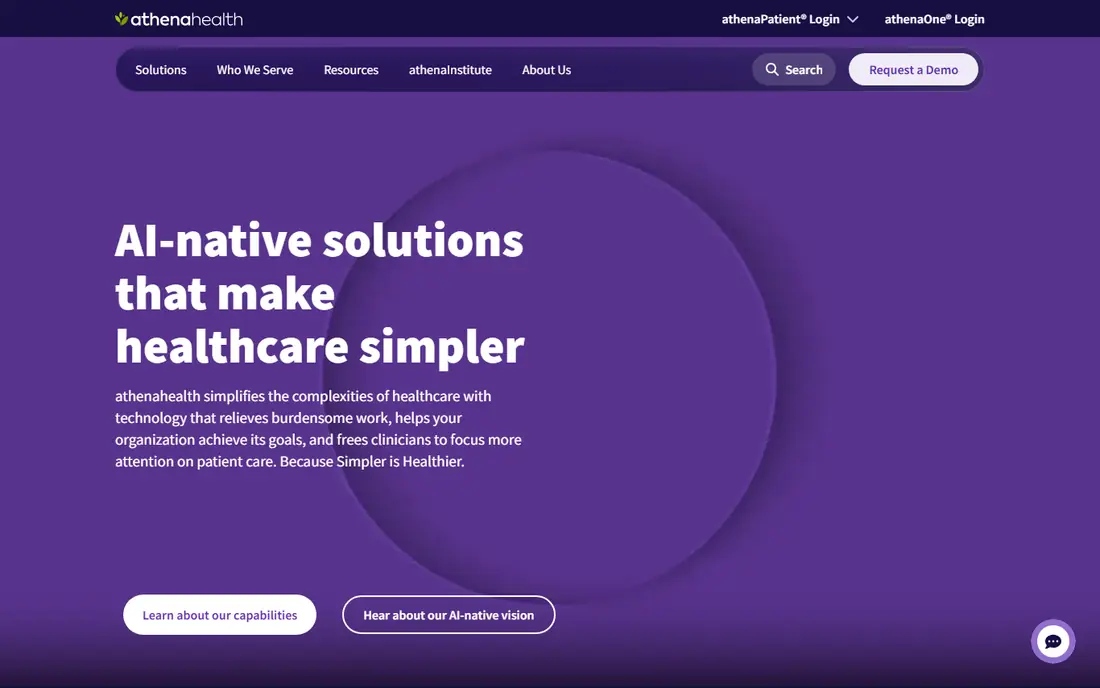
It fits established practices that want automation and a large payer network in one system. Athenahealth combines cloud EHR, practice management and billing, with a payer network and rules-based claim scrubbing. In practice, that means the athenahealth experience is shaped by its large practices that want billing plus ehr focus, not by trying to cover every possible use case at once.
The trade-off is control and cost structure, since pricing is often tied to collections and the practice uses the athena platform. That trade-off is worth weighing before you commit, because the right choice depends more on how you will use it week to week than on any single feature. Check the current plan details on the official site before you sign up, since pricing and feature limits change. If that balance sounds right, athenahealth is worth a closer look. If not, another entry here may match your routine better.
- Cloud billing and EHR in one system
- Payer network and claim scrubbing
- Patient engagement tools
- Requires its own platform
- Pricing is often a percentage of collections
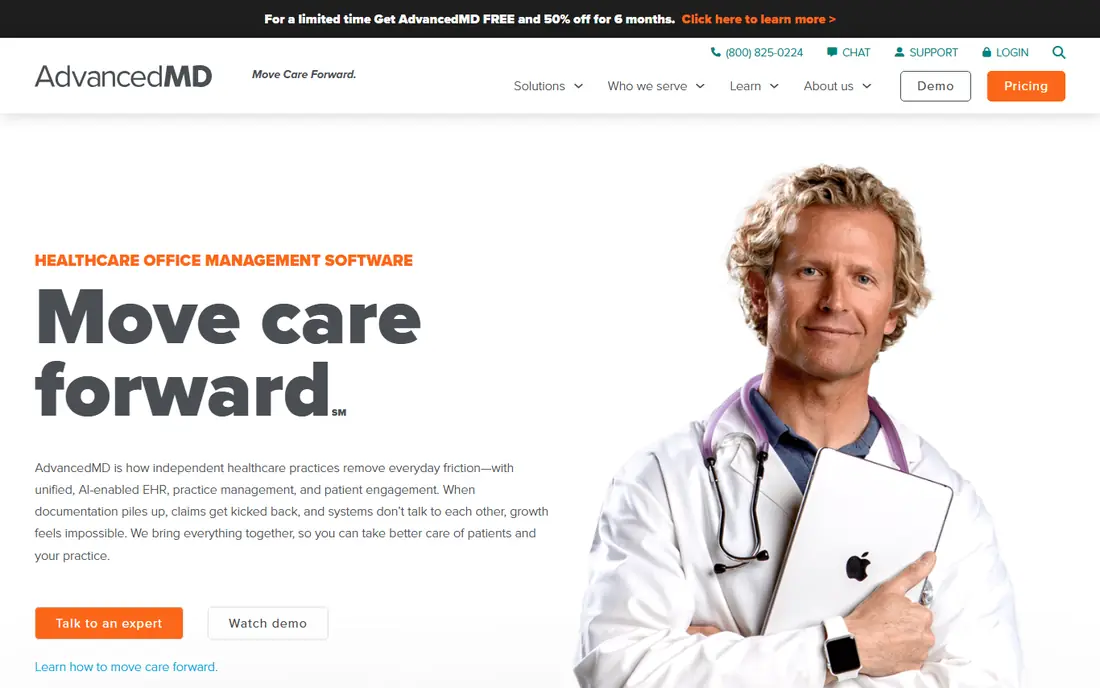
AdvancedMD offers billing with EHR, scheduling and telehealth, with software-only or full-service billing options. It fits growing practices that want a configurable system that can scale with them. In practice, that means the AdvancedMD experience is shaped by its growing multi-provider practices focus, not by trying to cover every possible use case at once.
The breadth of features means staff training matters, especially for larger practices. We would still put it on a shortlist for readers who match the use case above, but it is not the pick for everyone. Compare it directly with the next options on this list before deciding. If that balance sounds right, AdvancedMD is worth a closer look. If not, another entry here may match your routine better.
- Billing, EHR, scheduling and telehealth
- Software-only or outsourced billing options
- Reporting
- Learning curve for new staff
- Full setup needs training
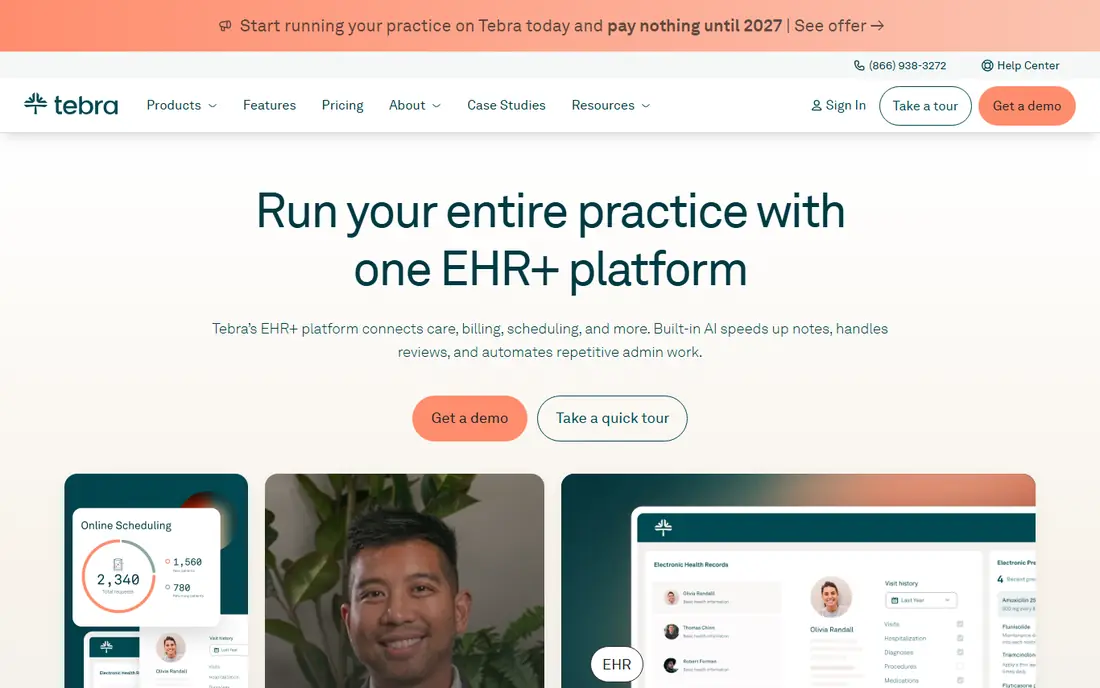
For readers who fit this profile, it fits small independent practices that want billing-first software with room to add EHR tools. Tebra, formerly Kareo, targets independent practices with billing, practice management and patient engagement in one cloud system. In practice, that means the Tebra experience is shaped by its small independent practices focus, not by trying to cover every possible use case at once.
Small practices get a simpler setup, but support is more self-service than with a full-service billing firm. The limits matter less if you mainly need the core job done well, and more if you want every extra feature in one place. Read the plan page carefully before you commit. If that balance sounds right, Tebra is worth a closer look. If not, another entry here may match your routine better.
- Billing, practice management and patient engagement
- Cloud-based
- Formerly Kareo
- Support is more self-service than some rivals
- Pricing needs a quote
It fits specialists and tech-friendly clinics that want EHR and billing together. DrChrono combines a mobile-friendly EHR with billing and outsourced billing options. In practice, that means the DrChrono experience is shaped by its practices that want mobile-friendly ehr and billing focus, not by trying to cover every possible use case at once.
It suits practices that want custom templates and mobile charge capture, but setup takes time. That trade-off is worth weighing before you commit, because the right choice depends more on how you will use it week to week than on any single feature. Check the current plan details on the official site before you sign up, since pricing and feature limits change. If that balance sounds right, DrChrono is worth a closer look. If not, another entry here may match your routine better.
- Mobile-friendly EHR and billing
- Custom templates
- Outsourced billing options
- Customisation takes setup time
- Pricing needs a quote
CareCloud offers cloud EHR, practice management and billing with denial prevention and analytics. It fits multi-specialty practices that want a unified cloud system. In practice, that means the CareCloud experience is shaped by its multi-specialty practices modernising billing focus, not by trying to cover every possible use case at once.
It works best when a practice adopts the full platform, rather than using billing alone. We would still put it on a shortlist for readers who match the use case above, but it is not the pick for everyone. Compare it directly with the next options on this list before deciding. If that balance sounds right, CareCloud is worth a closer look. If not, another entry here may match your routine better.
- Cloud EHR, practice management and billing
- Denial prevention tools
- Analytics
- Works best with full platform adoption
- Pricing needs a quote
For readers who fit this profile, it fits small and mid-size practices that want affordable cloud billing. PracticeSuite offers cloud billing and practice management across many specialties at a lower starting cost than some rivals. In practice, that means the PracticeSuite experience is shaped by its practices that want affordable cloud billing focus, not by trying to cover every possible use case at once.
It is a practical choice, but users who want a polished interface may prefer a larger platform. The limits matter less if you mainly need the core job done well, and more if you want every extra feature in one place. Read the plan page carefully before you commit. If that balance sounds right, PracticeSuite is worth a closer look. If not, another entry here may match your routine better.
- Cloud billing and practice management
- Many specialties
- Patient portal and scheduling
- Interface is functional rather than polished
- Advanced features vary by plan
It fits ambulatory groups that want EHR, billing and population health in one vendor system. NextGen Healthcare offers ambulatory EHR, billing and population health tools for practices and groups. In practice, that means the NextGen Healthcare experience is shaped by its ambulatory practices and groups focus, not by trying to cover every possible use case at once.
Implementation is a larger project than a simple billing tool, so small practices should plan for setup time. That trade-off is worth weighing before you commit, because the right choice depends more on how you will use it week to week than on any single feature. Check the current plan details on the official site before you sign up, since pricing and feature limits change. If that balance sounds right, NextGen Healthcare is worth a closer look. If not, another entry here may match your routine better.
- Ambulatory EHR and billing
- Population health tools
- Reporting and analytics
- Implementation can be complex for small practices
- Pricing needs a quote
CollaborateMD offers cloud billing with eligibility checks and an outsourced billing team option for practices that want a hybrid model. It fits small practices that want straightforward cloud billing with optional outsourced help. In practice, that means the CollaborateMD experience is shaped by its small practices that want simple cloud billing focus, not by trying to cover every possible use case at once.
It is simpler than a full EHR platform, so practices that need deep EHR tools may need another system. We would still put it on a shortlist for readers who match the use case above, but it is not the pick for everyone. Compare it directly with the next options on this list before deciding. If that balance sounds right, CollaborateMD is worth a closer look. If not, another entry here may match your routine better.
- Cloud billing software
- Eligibility checks
- Outsourced billing team option
- Smaller feature set than full EHR platforms
- Pricing needs a quote
For readers who fit this profile, it fits small practices that want to outsource billing rather than hire in-house billers. CureMD offers outsourced billing alongside EHR and practice management, with specialty billing support. In practice, that means the CureMD experience is shaped by its small practices that want outsourced billing focus, not by trying to cover every possible use case at once.
Because it is a service as well as software, practices should get a written quote for their specialty and volume. The limits matter less if you mainly need the core job done well, and more if you want every extra feature in one place. Read the plan page carefully before you commit. If that balance sounds right, CureMD is worth a closer look. If not, another entry here may match your routine better.
- Outsourced billing services
- EHR and practice management options
- Specialty billing
- Pricing and service scope need a written quote
- Model varies by specialty
How we picked these
We compared official company pages, product pages and service descriptions, and we kept only companies that offer medical billing software or outsourced billing in the US in October 2026. We did not assign scores, rankings or acceptance rates, because those figures vary by specialty, payer mix and claim volume and cannot be verified for every reader. We marked pricing as See website where the vendor uses a quote or collections-based model. This article is general information only.
How to compare medical billing companies for your practice
Decide between software and a service first. Software suits practices with experienced billers who want control. A full-service billing company suits practices that want the vendor to handle claims, denials and follow-up. A hybrid model, where software plus an outsourced team share the work, suits practices in between. Ask who owns each step before you sign.
Get a written quote for your specialty and volume. Ask whether pricing is a flat fee, a monthly subscription, a percentage of collections, or a mix. Ask what is included, such as claim scrubbing, denial follow-up, patient statements and reporting, and what costs extra. Compare the total cost, not just the headline rate.
Check payer, specialty and compliance fit. Ask which payers and specialties the company supports, how it handles eligibility checks, coding updates and HIPAA safeguards, and how it reports denials and aging accounts. Ask for a demo with your own claim types, not just a generic walkthrough.
Plan the switch carefully. Ask about data migration from your current EHR, clearinghouse changes, staff training and the timeline for going live. Keep your old billing process running until the new system is proven, and agree in writing who handles claims submitted during the switch.
Frequently asked questions
What is the difference between medical billing software and a billing company?
Software is a tool your staff uses to create and track claims. A billing company runs billing for you, including claims, denials and follow-up. Some vendors, such as AdvancedMD and CureMD, offer both.
How do medical billing companies charge?
Common models include a monthly subscription, a flat fee, and a percentage of collections. The right model depends on your claim volume, specialty and whether you want software only or a full service.
Do I still need an EHR if I use a billing company?
In most cases, yes, or you need a vendor that includes EHR tools. Billing needs clinical and scheduling data, so check how the billing system connects to your EHR before you sign.
What should I ask before signing a contract?
Ask about pricing, contract length, termination terms, who handles denials, reporting, data ownership and HIPAA safeguards. Get the answers in writing.
Is this article a recommendation for my practice?
No. This article is general information only. The best choice depends on your specialty, payer mix, staff and claim volume, so get quotes and demos for your own practice.
Sources
See where you really rank - block by block
ProMapRanker scans Google Maps across a grid of your service area. Simple monthly plans from $19, white-label on every plan.
Start freeKeep reading
 zscaler alternatives
Best Zscaler Alternatives in 2026
Looking for zscaler alternatives? We compare 9 SASE and zero trust platforms on architecture, data protection, pricing, and fit for your network and team.
Read → zapier alternatives free
Best Zapier Alternatives Free in 2026
Nine automation tools for zapier alternatives free in 2026, all with genuinely free tiers, plus free plan limits, starting prices and upgrade paths explained.
Read → which platform is best for online reputation
Which Platform Is Best for Online Reputation in 2026
Wondering which platform is best for online reputation? We compare 8 review, listing, and response tools for small and multi-location businesses and agencies.
Read →