 ProMapRanker
Best Mass Email Service in 2026

Key takeaways
- Mass email pricing is usually based on contacts stored, not just emails sent, so cleaning your list can lower your bill as much as switching plans.
- Mailchimp still suits small lists that need a free start, but its free plan is now small, at 250 contacts and 500 sends per month in current listings.
- Brevo and MailerLite suit senders who want lower entry costs, while SendGrid suits app-driven bulk sending through an API.
- Constant Contact suits event-led teams that want automation and support in a fixed paid plan, with no free plan, only a trial.
- Check send limits, contact counting rules, and deliverability tools before you migrate, since moving a large list is costly in time.
Quick comparison
| Pick | Great for | Pricing starts at | Free tier | |
|---|---|---|---|---|
 Mailchimp | Small lists and wide integrations | Free | Yes | Visit |
 Constant Contact | Event-led teams that want support | $12 per month | No | Visit |
 Brevo | Low-cost bulk sending by email volume | Free | Yes | Visit |
 SendGrid | App-driven and high-volume bulk sending | $19.95 per month | No | Visit |
 MailerLite | Simple newsletters on a budget | Free | Yes | Visit |
 Kit | Creators and paid newsletters | Free | Yes | Visit |
 ActiveCampaign | Automation for growing teams | See website | Free trial | Visit |
 Klaviyo | Ecommerce email and SMS | Free | Yes | Visit |
 Campaign Monitor | Design-led campaigns for teams | See website | Free trial | Visit |
The best mass email services
We compared services on free limits, paid entry price, contact counting, automation, templates, and bulk sending tools. Our pick for most small senders is Mailchimp for ease or Brevo for value, while high-volume app senders should look at SendGrid first.
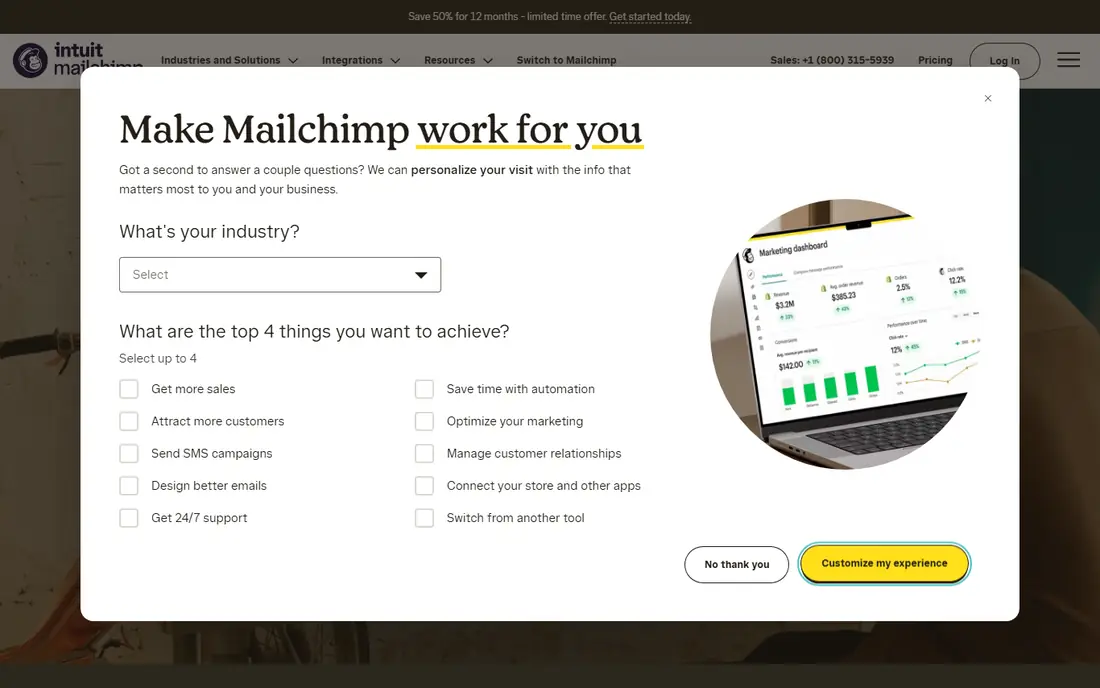
Mailchimp remains the best-known mass email service, now owned by Intuit, and it is often the first tool a small business tries. The free plan covers 250 contacts and 500 sends per month, with a daily cap, in current October 2026 listings. Essentials starts at $13 per month for 500 contacts, Standard at $20 per month, and Premium at $350 per month, with prices rising as contacts grow.
The strength is breadth: templates, landing pages, automation, and integrations with major ecommerce, CRM, and CMS platforms. The catch is contact counting: unsubscribed and non-subscribed contacts count toward your tier unless you archive or delete them, so a stale list inflates the bill. Mailchimp suits stable small lists that need integrations; growing lists should compare Brevo or MailerLite before committing.
- Free plan for very small lists
- Large template library
- More than 300 integrations in current listings
- Free plan now covers only 250 contacts
- Paid price rises fast as contacts grow
- Unsubscribed contacts count toward limits
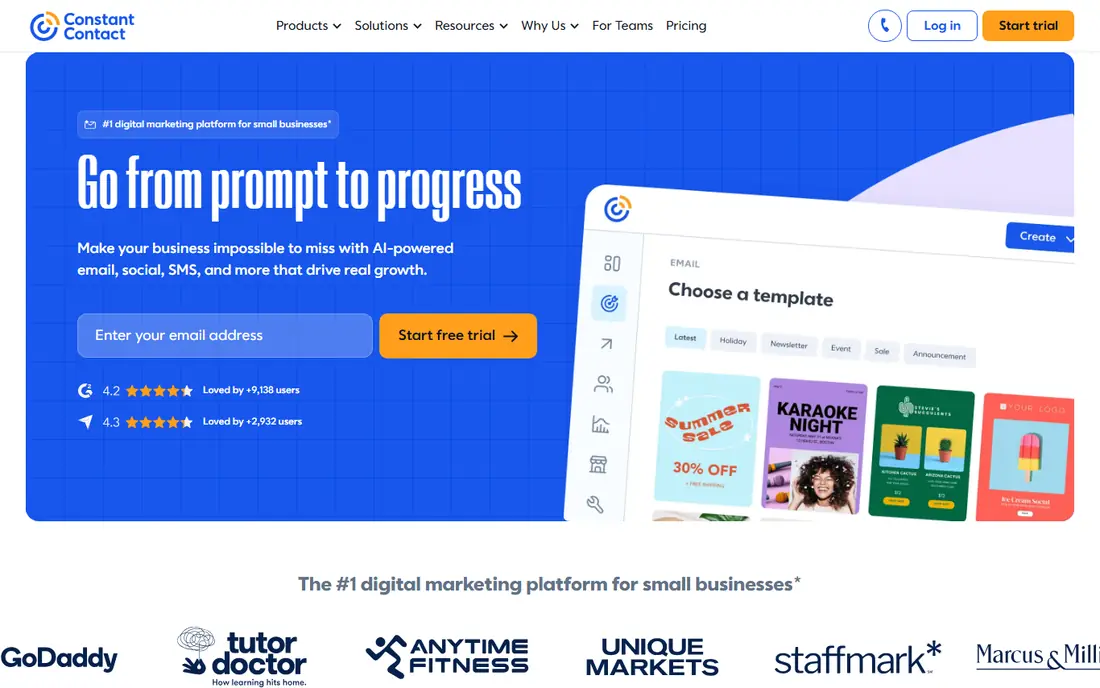
Constant Contact suits teams where events drive the list, such as nonprofits, local businesses, and community groups. Its Lite plan is listed from $12 per month on monthly billing, or $10.20 per month billed annually, in October 2026 comparisons, with a free trial that needs no credit card. Standard adds deeper automation, and the platform includes event tools that Mailchimp handles less directly.
The limit is the lack of a free plan, so a very small sender pays from day one. Pricing also depends on contact count, so the headline price is only the starting rung. Constant Contact is a good fit when you value support, events, and a fixed plan structure over a free start, and when your list is stable enough that contact-based pricing is predictable.
- Event registration tools
- Automation and A/B testing in paid plans
- SMS included alongside email on some plans
- No free plan, trial only
- Price depends on contact count
- Automation depth starts at Standard
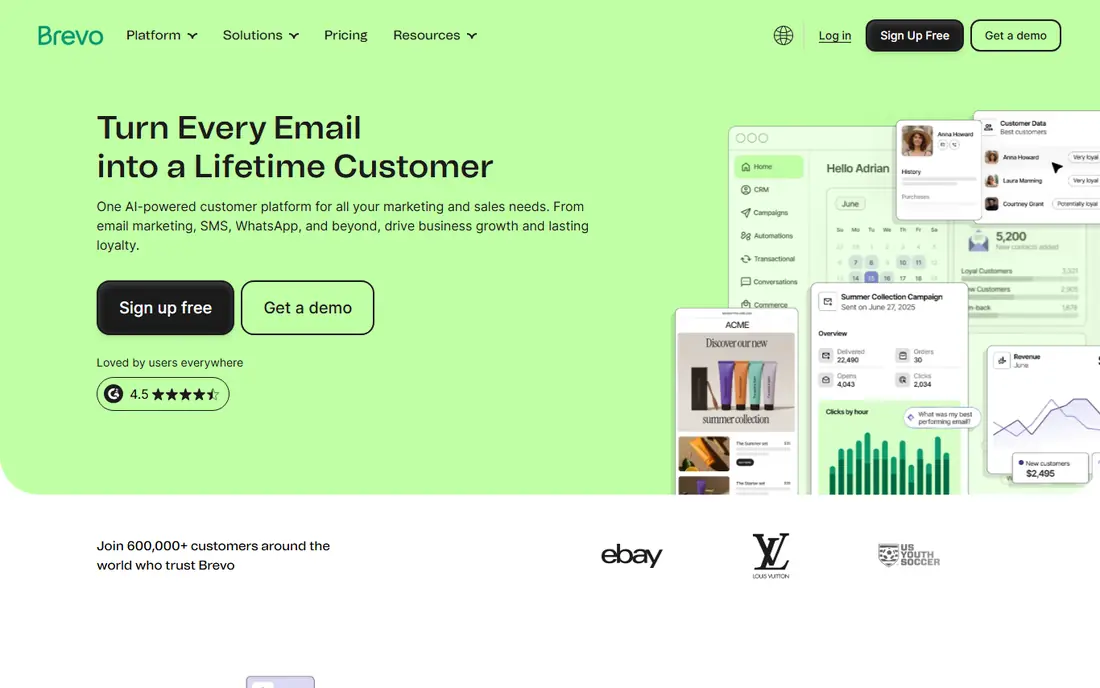
Brevo, formerly Sendinblue, prices largely by email volume, which helps senders with a large list but infrequent sends. The free plan lets you test the platform with a daily send limit, and paid plans start at a lower entry point than contact-heavy rivals in current listings, though exact tiers should be checked on the vendor site. It also offers SMS and WhatsApp alongside email, which suits teams that message customers on more than one channel.
The trade is polish: Brevo templates and automation are capable but less deep than Mailchimp or ActiveCampaign at the top end. For a newsletter sender who wants low cost and simple bulk sending, that trade is fair. For a team that needs complex multi-step automation, test the paid tier in a trial before migrating a large list.
- Free plan for testing
- Pricing by emails sent rather than only contacts
- SMS and WhatsApp tools available
- Template and automation depth varies by plan
- Free plan has a daily send cap
SendGrid, owned by Twilio, started as an email API for developers and remains the strongest pick for sending from an app: password resets, receipts, order updates, and other transactional mail, plus bulk marketing campaigns. Current comparisons list the Email API at $19.95 per month for 50,000 emails, and Marketing Campaigns Basic from $15 per month. That volume pricing beats marketing-only tools for app senders.
The catch is the audience: SendGrid suits teams with developer help or a clear API workflow, while pure marketers may prefer Mailchimp templates and automation. The free option is a 60-day trial at 100 emails per day in current listings, not an ongoing free plan. If most of your mail comes from an app rather than a newsletter editor, SendGrid should lead your shortlist.
- Strong API for app email
- Email API plan listed at $19.95 for 50,000 emails
- Marketing campaigns product available
- Marketing tools are less rich than Mailchimp
- Free option is a trial, not a free plan
- Dedicated IP needs a higher plan
MailerLite is a favourite for small newsletters, bloggers, and local businesses that want a clean editor without a steep price. The free plan covers a small list with monthly send limits, and paid plans start lower than Mailchimp for comparable list sizes in current listings, though exact tiers should be checked on the vendor site. Landing pages, forms, and basic automation cover most newsletter needs.
The limits are scale and ecosystem: MailerLite has fewer native integrations than Mailchimp, and advanced automation sits on paid plans. New accounts also face approval checks that can delay the first bulk send, which is a spam-control step worth knowing about. For a straightforward newsletter on a budget, MailerLite is one of the best value picks here.
- Free plan for small lists
- Clean editor and landing pages
- Lower paid entry than many rivals
- Fewer integrations than Mailchimp
- Automation depth grows only on paid plans
- Approval checks can delay first sends
Kit, formerly ConvertKit, is built for creators, bloggers, and course sellers who grow an audience and sell through email. The free plan covers up to 1,000 subscribers in current listings, with paid Creator plans starting higher and Creator Pro adding deeper reporting and tools. Visual automation, tagging, and paid newsletter features make it easy to run sequences that turn subscribers into customers.
The trade is focus: Kit is less suited to a corporate team that needs complex design templates or a large shared workspace, and its templates are simpler than Mailchimp by design. For a creator-led mass email list, that simplicity is a strength, not a weakness. Check the current subscriber tiers on the vendor site, since creator pricing changes with list size.
- Free plan for up to 1,000 subscribers in current listings
- Visual automation for creators
- Paid newsletters and course tools
- Less suited to large corporate lists
- Design templates are simpler than Mailchimp
- Paid price rises with subscribers
ActiveCampaign suits teams that have outgrown simple newsletters and need automation that reacts to subscriber behaviour, purchases, and CRM stages. It combines email, marketing automation, and a CRM, with segmentation and multi-step flows that go beyond welcome emails. That depth helps ecommerce and service teams send fewer, better-targeted bulk messages instead of blasting the whole list.
The cost is complexity and price: there is no free plan, only a trial, and pricing depends on contacts and feature tier, so check the vendor site for a current quote. Small teams that only send a monthly newsletter will not use most of what ActiveCampaign offers. Teams that live on automation and segmentation will find it hard to beat.
- Deep automation and CRM tools
- Strong segmentation
- Ecommerce and sales integrations
- No free plan
- Learning curve is steeper than MailerLite
- Pricing varies by contacts and features
Klaviyo is the ecommerce pick in this list, with flows for abandoned carts, post-purchase follow-up, and customer segments tied to store data. The free tier covers under 250 active profiles in current listings, which lets a new store test flows before paying. SMS can run alongside email in the same platform, which helps stores that message customers on both channels.
The limit is cost at scale: Klaviyo prices by active profiles, and a growing store can see the bill rise quickly, especially with SMS added. It also delivers most value when connected to an ecommerce platform such as Shopify, so non-ecommerce senders may prefer a general tool. For a store that earns revenue from email flows, Klaviyo often pays for itself, but check the profile count closely.
- Free tier under 250 active profiles in current listings
- Strong ecommerce flows
- SMS alongside email
- Price rises fast with active profiles
- Best value is tied to ecommerce platforms
- Learning curve for advanced flows
Campaign Monitor, now part of Marigold, suits design-led teams and agencies that send polished campaigns for clients. Its editor, templates, and team features help a small agency manage several brands without a heavy automation system. Reporting is clear, and the platform handles large bulk sends reliably for its core audience.
The trade is price transparency and automation depth: there is no ongoing free plan, only a trial, and pricing should be checked on the vendor site for your list size. Teams that need deep behavioural automation should look at ActiveCampaign or Klaviyo instead. For design quality and agency workflows, Campaign Monitor remains a credible pick.
- Strong design and template tools
- Agency and team features
- Solid reporting for campaigns
- No ongoing free plan
- Pricing by list size should be checked on the vendor site
- Automation is less deep than ActiveCampaign
How we picked these
We compared mass email services using vendor pricing pages and October 2026 comparisons that cite vendor pricing. We included services that handle bulk sending to opted-in lists, with templates, automation, and deliverability tools, and we left out pure transactional APIs without a marketing product, except SendGrid, which offers both. We used See website where a vendor does not publish a simple starting price, rather than repeating an unverified figure. We did not claim hands-on testing; this is a comparison of published pricing, limits, and features.
What to check before you send in bulk
First, check how the service counts contacts. Some count every stored contact, including unsubscribed addresses, while others count only active profiles or bill by sends. That one rule can change your bill more than the headline plan price. Clean your list before you migrate: remove hard bounces, archive unsubscribed contacts where the platform allows it, and confirm consent for imported lists.
Deliverability and compliance
Use a verified sending domain, set up authentication records as the service guides you, and warm up a new domain slowly rather than blasting a full list on day one. Follow opt-in rules, include a clear unsubscribe link, and honour unsubscribes promptly. Bulk mail to purchased lists harms deliverability and can get an account suspended, so only send to people who asked to hear from you.
Templates, automation, and scale
Test the editor with your real content, not just a demo template, and check mobile rendering for your audience. For automation, list the flows you actually need, such as welcome, abandoned cart, or event follow-up, and confirm they are included in the tier you plan to buy. For scale, check monthly send limits, daily caps, and what happens when you exceed them, since a capped free plan can block a time-sensitive campaign.
Cost as your list grows
Price your service at your list size in six months, not just today, and compare annual versus monthly billing where offered. Some services offer annual billing only on higher tiers, while others discount annual plans across tiers. A service that looks cheap at 500 contacts can become the priciest option at 10,000, so run the numbers at two list sizes before you commit.
Frequently asked questions
What is the best mass email service for a small list?
Mailchimp suits very small lists that need a free start and many integrations, while MailerLite and Brevo suit small senders who want lower paid prices. For a list under 250 contacts, Mailchimp free is workable, but check the 500-send monthly cap. For a list near 1,000, compare MailerLite, Brevo, and Kit free tiers before paying.
What is the best bulk email service for high volume?
SendGrid suits high-volume app-driven sending through its API, with volume pricing that beats marketing tools for transactional mail. Brevo also suits high-volume newsletter sending by email count. For marketing bulk mail at scale, compare send limits and dedicated IP options, since deliverability matters as much as price.
What is the best mass mailing software for events?
Constant Contact suits event-led teams, with event registration tools, automation, and support in a fixed paid plan. Mailchimp also handles events through integrations and landing pages, but Constant Contact keeps event tools closer to the core product. Check whether event registration, ticketing, and follow-up emails are included in the tier you buy.
Do mass email services require opt-in lists?
Yes, reputable services require permission-based lists and forbid purchased or scraped lists. You need consent from recipients, a clear unsubscribe option, and a verified sending domain. Sending to a purchased list risks account suspension and poor deliverability, and it can breach anti-spam law depending on your location.
How much does a mass email platform cost?
Costs range from free for small lists to hundreds of dollars per month for large lists, depending on contacts, sends, and features. Mailchimp Essentials starts at $13 per month for 500 contacts, Constant Contact Lite from $12 per month, and SendGrid API from $19.95 per month for 50,000 emails in current listings. Always price at your actual contact count and send volume.
Sources
- https://www.mailchimp.com
- https://www.constantcontact.com
- https://www.brevo.com
- https://www.sendgrid.com
- https://www.mailerlite.com
- https://www.kit.com
- https://www.activecampaign.com
- https://www.klaviyo.com
- https://www.campaignmonitor.com
- https://marketingemailtools.com/compare/constant-contact-vs-mailchimp
- https://www.mailercloud.com/blog/sendgrid-vs-mailchimp
See where you really rank - block by block
ProMapRanker scans Google Maps across a grid of your service area. Simple monthly plans from $19, white-label on every plan.
Start freeKeep reading
 zoho inventory alternatives
6 Alternatives to Zoho Inventory, Compared on Price and Fit
Zoho Inventory alternatives: 6 tools compared on price, free plans and fit. Katana leads the list for manufacturers. Fit and flaws are laid out for each entry.
Read → zoho crm alternatives
Best Zoho CRM Alternatives (2026)
Need Zoho CRM alternatives? We compare 7 tools on cost, free access and who each suits. Every pick gets a straight assessment. Built for quick decisions.
Read → zelle alternatives
Best Zelle Alternatives in 2026
Compare the best Zelle alternatives for sending money to friends, paying sellers and moving funds abroad, with honest notes on fees, speed and safety in 2026.
Read →