 ProMapRanker
Best Martech Tools in 2026

Key takeaways
- HubSpot suits teams that want CRM, marketing, and sales in one system, with a free CRM to start.
- ActiveCampaign and Klaviyo suit smaller teams that need strong automation at a lower monthly cost than enterprise suites.
- Mailchimp suits early-stage teams with small lists, while Salesforce Marketing Cloud and Marketo suit large enterprises.
- Google Analytics 4 suits almost every team as the free measurement base, with Semrush covering search and content work.
- Start with the tools that cover contacts, email, and measurement, then add specialized tools only when a clear gap appears.
Quick comparison
| Pick | Great for | Pricing starts at | Free tier | |
|---|---|---|---|---|
 HubSpot | All-in-one CRM and marketing | Free | Yes | Visit |
 ActiveCampaign | Affordable automation for SMBs | $49 per month | No | Visit |
 Klaviyo | Ecommerce email and SMS | $45 per month | Yes | Visit |
 Mailchimp | Early-stage email marketing | See website | Yes | Visit |
 Salesforce Marketing Cloud | Enterprise Salesforce teams | See website | No | Visit |
 Adobe Marketo Engage | Enterprise B2B automation | See website | No | Visit |
 Customer.io | Behavioral messaging | See website | No | Visit |
 Braze | Cross-channel customer engagement | See website | No | Visit |
 Google Analytics 4 | Free website and app measurement | Free | Yes | Visit |
The best martech tools
Marketing technology, often called martech, covers the tools teams use to attract, convert, measure, and retain customers. These nine cover CRM, email, automation, analytics, and cross-channel engagement for teams from startup to enterprise.
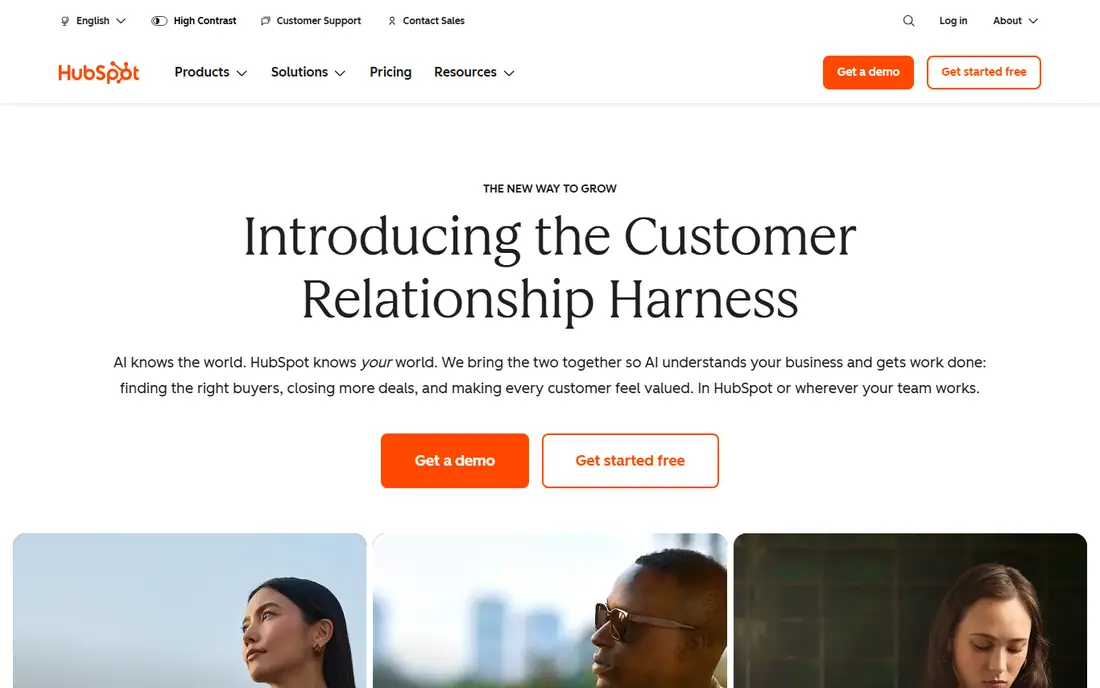
HubSpot is the best all-in-one martech pick for growth-stage teams that want CRM, email, landing pages, automation, and reporting without stitching five tools together. The free CRM covers contacts, forms, and basic workflows, which lets a small team start without a budget approval. Paid Marketing Hub tiers add deeper automation, A/B testing, and attribution as the team grows.
The catch is price at scale. Professional plans are listed around $890 per month, plus onboarding in some cases, and costs rise with contacts, seats, and hubs. Teams that only need email automation will find ActiveCampaign cheaper. Teams that want one system their whole company can use, with adoption across marketing and sales, will find HubSpot hard to replace.
- Free CRM to start
- Marketing, sales, and service in one system
- Easy to learn
- Professional tiers are expensive
- Costs rise with contacts and seats
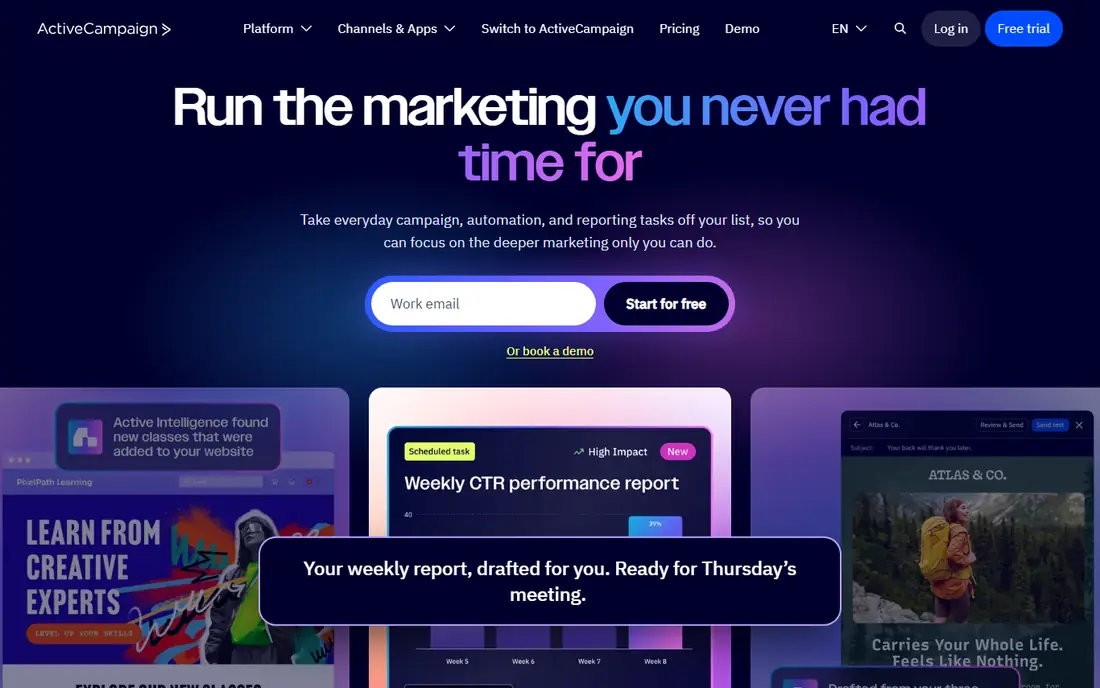
ActiveCampaign suits small and midsize businesses that want advanced automation without enterprise pricing. Paid plans start at $49 per month, and the automation builder supports branching, tagging, scoring, and multi-step sequences that go well beyond a simple newsletter. A built-in CRM keeps sales follow-up close to marketing automation, which helps smaller teams avoid a separate CRM purchase.
The builder takes time to learn, and pricing rises as contacts grow, so teams should clean inactive contacts regularly. ActiveCampaign is not a full enterprise suite, and large teams with complex multi-brand needs may need HubSpot or Marketo. For most SMBs, it offers the best balance of automation depth and monthly cost in this list.
- Strong automation at a lower price
- Good email deliverability
- CRM included
- Interface takes learning
- Pricing rises with contacts
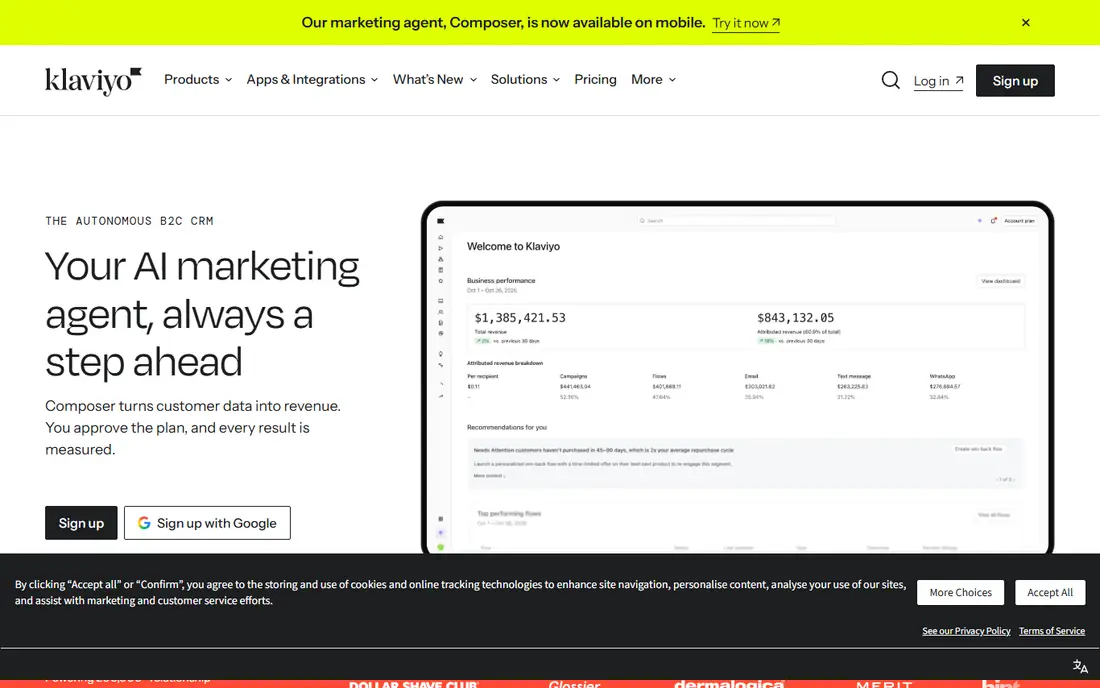
Klaviyo is the ecommerce martech leader for stores on Shopify and BigCommerce, with flows for abandoned carts, welcome series, post-purchase follow-up, and win-back campaigns built around purchase behavior. Segmentation uses order history, browsing, and predicted values, which lets stores send relevant messages rather than blanket blasts. Paid plans start at $45 per month, with a free tier for small lists.
Pricing rises with contacts and SMS volume, so a store with a large list should model total cost, not just the entry price. Klaviyo is also less suited to B2B lead nurturing than ActiveCampaign or HubSpot. For an ecommerce brand above early-stage revenue, Klaviyo flows and segmentation are a clear step up from a generic email tool.
- Deep Shopify and BigCommerce integration
- Strong flows and segmentation
- SMS included
- Pricing rises with contacts
- Best value for ecommerce stores
Mailchimp remains the easiest first email tool for a small business, creator, or nonprofit with a modest list. The free plan covers basic email, landing pages, and simple automation, and templates make a decent-looking campaign possible without design skill. For a team sending a monthly newsletter to a few hundred people, Mailchimp is enough.
The limits appear as a business grows. Pricing rises with contacts, automation depth trails ActiveCampaign and Klaviyo, and some public reviews in 2026 raised deliverability concerns. Teams that outgrow Mailchimp usually move to ActiveCampaign for B2B or Klaviyo for ecommerce. As a starting point, though, Mailchimp still earns its place for sheer ease.
- Easy to start
- Free plan for small lists
- Simple templates and automation
- Costs rise and features lag rivals as lists grow
- Deliverability concerns in some reviews
Salesforce Marketing Cloud suits enterprises already running Salesforce CRM that need cross-channel journeys across email, mobile, social, and advertising from one platform. Journey Builder, audience segmentation, and Einstein AI features support complex, multi-step campaigns at large scale, with data flowing back into Salesforce for sales and service teams.
Pricing is quoted and implementation needs marketing operations specialists, so small teams should not start here. The platform also rewards teams with clean Salesforce data; messy CRM data leads to messy journeys. For large Salesforce-native organizations, Marketing Cloud offers scale and integration that standalone email tools cannot match.
- Deep Salesforce integration
- Cross-channel journeys
- Enterprise scale
- Pricing on request
- Implementation needs specialists
Marketo Engage, part of Adobe, is the enterprise B2B automation platform for companies with complex funnels, long sales cycles, and large lead volumes. Lead scoring, nurturing, account-based marketing, and multi-touch programs are strengths, and integrations with Salesforce and other CRMs are mature. Large B2B teams with dedicated marketing operations staff get the most from its depth.
Pricing is quoted, often in the thousands per month range, and the learning curve is steep. Small teams will find it heavy and slow to set up. For enterprises that need the most powerful B2B automation and have the staff to run it, Marketo remains a benchmark, even as HubSpot and Salesforce close the gap for midsize teams.
- Powerful B2B automation
- Lead scoring and nurturing
- Strong Salesforce and CRM links
- Pricing on request
- Steep learning curve
- Needs dedicated marketing ops
Customer.io suits product-led and SaaS teams that want messages triggered by what users actually do in an app or website, rather than by list membership alone. Behavioral triggers, flexible segmentation, and support for email, SMS, and push let teams build onboarding, activation, and retention flows tied to real usage. Datapipelines and integrations help teams bring product events into messaging without heavy custom code.
Setup needs clean event data, which takes product and engineering time, and pricing is quoted for larger volumes. Teams that only send newsletters will find it more tool than needed. For SaaS and app teams that live or die by activation and retention, Customer.io is a strong martech pick.
- Messages triggered by product behavior
- Flexible data and segmentation
- Email, SMS, and push
- Pricing on request for larger use
- Needs product data setup
Braze is a customer engagement platform built for cross-channel messaging across mobile push, in-app messages, email, SMS, and web, with real-time personalization based on user behavior. Consumer brands with apps, such as media, retail, and delivery companies, use it to coordinate messages across channels without sending duplicate or conflicting campaigns.
Pricing is quoted and enterprise-level, so it suits larger brands rather than small teams. Implementation also needs mobile and data work to reach full value. For a consumer brand with an app and a large audience, Braze offers coordination and personalization that a simple email tool cannot provide.
- Cross-channel journeys across mobile, email, and web
- Real-time personalization
- Strong mobile tools
- Pricing on request
- Best suited to larger consumer brands
Google Analytics 4, or GA4, is the free measurement base for almost every martech stack, tracking website and app events, traffic sources, conversions, and user paths. It integrates with Google Ads and other Google tools, and its event-based model suits modern sites and apps better than old pageview-only analytics. For a team starting a stack, GA4 should be set up before buying any paid analytics tool.
The interface takes learning, and privacy settings, consent, and data retention need care, especially in regions with strict rules. GA4 also measures what happened, but it does not send campaigns or manage contacts on its own. Paired with a CRM and email tool, it gives a team the measurement layer every other martech decision depends on.
- Free measurement for websites and apps
- Event-based model
- Integrates with Google Ads
- Interface and reporting take learning
- Privacy setup needs care
How we picked these
We compared vendor pricing pages, feature documentation, and public reviews for martech tools in active use in October 2026. We kept a mix of all-in-one platforms, email and automation tools, enterprise suites, behavioral messaging, and free measurement, and we marked pricing as See website where vendors quote by contacts, volume, or enterprise scope.
How to build a martech stack without bloat
Start with three layers and nothing else: a CRM or contact home, an email and automation tool, and measurement through GA4. That trio covers most early marketing needs, and every extra tool should solve a named gap, such as SMS for ecommerce, behavioral messaging for SaaS, or cross-channel journeys for a consumer app. If a tool duplicates a layer you already own, it is bloat, not a stack.
Next, check data flow before features. Confirm contacts, events, and purchase data move cleanly between tools, and that unsubscribes, consent, and bounces sync in both directions. A stack with broken sync creates duplicate messages and bad reporting, which hurts trust more than a missing feature. Clean inactive contacts regularly, because most martech pricing rises with contact or message volume.
Finally, review the stack every six months. Check which tools the team actually uses weekly, which reports drive decisions, and which subscriptions sit idle. Cancel or downgrade idle tools, and only add a new tool when a pilot shows a clear gain in leads, sales, or retention. A smaller stack that the team uses well beats a large stack that nobody fully understands.
Frequently asked questions
What is the best martech platform for a small business?
HubSpot free CRM plus ActiveCampaign or Mailchimp covers most small businesses well. ActiveCampaign suits SMBs that need automation, Mailchimp suits the smallest lists, and HubSpot suits teams that want CRM and marketing in one place as they grow.
What are the best martech platforms for ecommerce?
Klaviyo leads for ecommerce email and SMS, thanks to Shopify integration and behavior-based flows. HubSpot and ActiveCampaign also work for ecommerce, while Braze suits larger consumer brands with apps and cross-channel needs.
How much do martech tools cost?
Costs range from free plans at HubSpot, Klaviyo, Mailchimp, and Google Analytics 4 to $49 per month at ActiveCampaign and $45 per month at Klaviyo, with Salesforce Marketing Cloud, Marketo, Customer.io, and Braze priced on request. Contact and message volume drive most paid costs.
What is the difference between martech and a CRM?
A CRM stores contacts, deals, and customer history, while martech is the wider set of tools for attracting, messaging, measuring, and retaining customers. HubSpot blends both, but most teams pair a CRM with separate email, analytics, and advertising tools.
How many martech tools does a small team need?
Most small teams need three: a contact home, an email and automation tool, and measurement. Add tools only for a clear gap, such as SMS, SEO, or behavioral messaging, and review usage every six months to cut tools nobody uses.
Sources
See where you really rank - block by block
ProMapRanker scans Google Maps across a grid of your service area. Simple monthly plans from $19, white-label on every plan.
Start freeKeep reading
 zscaler alternatives
Best Zscaler Alternatives in 2026
Looking for zscaler alternatives? We compare 9 SASE and zero trust platforms on architecture, data protection, pricing, and fit for your network and team.
Read → zapier alternatives free
Best Zapier Alternatives Free in 2026
Nine automation tools for zapier alternatives free in 2026, all with genuinely free tiers, plus free plan limits, starting prices and upgrade paths explained.
Read → which platform is best for online reputation
Which Platform Is Best for Online Reputation in 2026
Wondering which platform is best for online reputation? We compare 8 review, listing, and response tools for small and multi-location businesses and agencies.
Read →