 ProMapRanker
Best Marketplace Apps in 2026

Key takeaways
- eBay is our pick for widest reach, since it covers almost every category and has a large global buyer base.
- Facebook Marketplace is best for local, bulky items, with no fee for local pickup paid in person.
- Depop and Vinted suit fashion sellers, with Depop charging US sellers no selling fee beyond payment processing.
- Poshmark suits fashion sellers who want a simple prepaid label, despite a 20 percent fee on sales of $15 or more.
- Always check the fee on your exact sale, since fees apply to item price, shipping, and tax in different ways across platforms.
Quick comparison
| Pick | Great for | Pricing starts at | Free tier | |
|---|---|---|---|---|
 eBay | Widest reach, all categories | Free | Yes | Visit |
 Facebook Marketplace | Local and bulky items | Free | Yes | Visit |
 Mercari | Easy general selling | Free | Yes | Visit |
 Poshmark | Fashion with prepaid labels | Free | Yes | Visit |
 Etsy | Handmade and vintage items | $0.20 per listing | No | Visit |
 Depop | Vintage and streetwear fashion | Free | Yes | Visit |
 Vinted | Low-cost fashion selling | Free | Yes | Visit |
 OfferUp | Local flips and shipped items | Free | Yes | Visit |
 Craigslist | Local cash sales, no fees | Free | Yes | Visit |
 Whatnot | Live auctions and collectibles | Free | Yes | Visit |
The best marketplace apps
Marketplace apps let you sell used, vintage, handmade, and new items to buyers near you or around the world. Fees, shipping, and audience differ sharply, so the best app depends on what you sell and how you want to ship it.
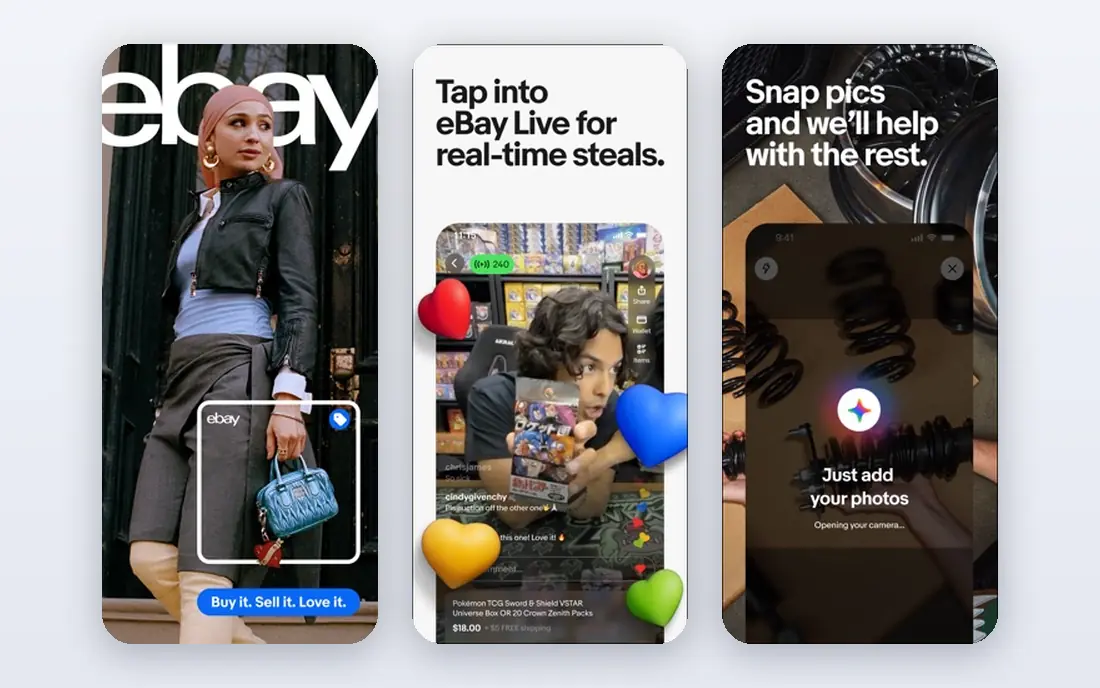
eBay remains the broadest marketplace app for sellers with varied items. Electronics, collectibles, parts, clothing, and home goods all find buyers, and both auction and fixed-price formats suit different selling styles. Managed payments simplify payouts, and seller protection covers many common disputes when rules are followed. For a seller with one unusual item, eBay often reaches a buyer faster than a niche app.
Fees are the main cost. In most categories, eBay charges a final value fee of 13.6 percent on the total sale, including shipping and tax, plus $0.30 to $0.40 per order. That total can feel high on low-value items, so price with fees in mind. Competition also means good photos, clear titles, and fair shipping matter. For reach across categories, eBay is still the first app to try.
- Huge buyer base across categories
- Auction and fixed-price selling
- Seller protection and managed payments
- Final value fee of 13.6 percent in most categories plus a per-order fee
- Competitive search
- Returns handling takes time
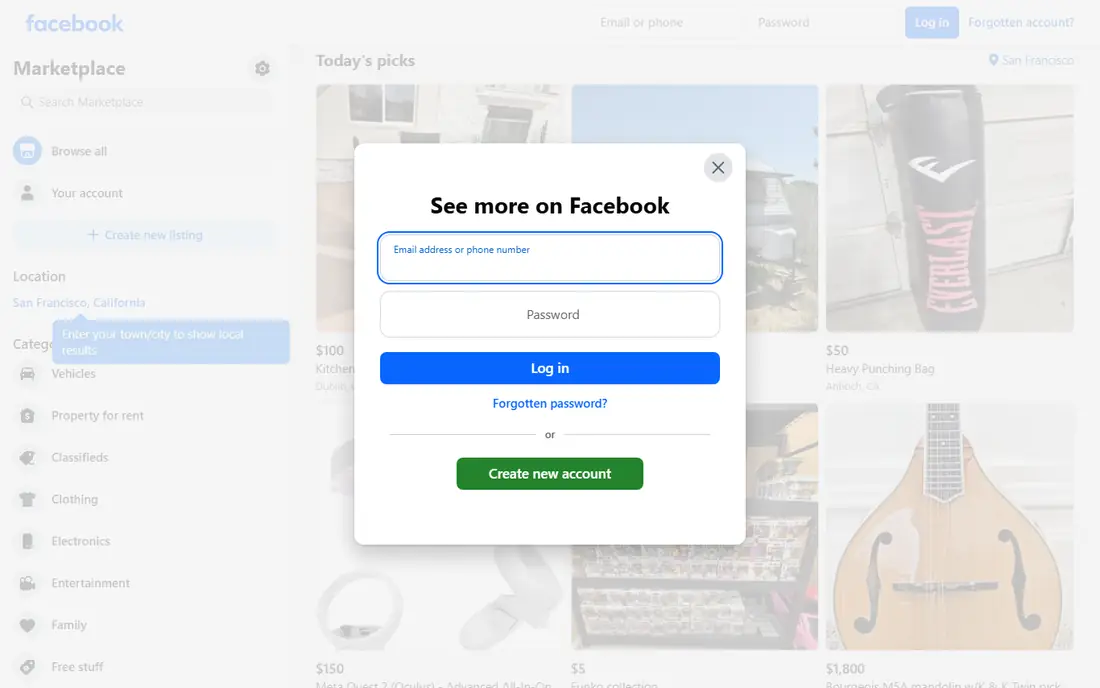
Facebook Marketplace is the best choice for furniture, appliances, and other bulky items that are costly to ship. Listing is free, local pickup paid in person carries no Marketplace fee, and the audience is already on Facebook daily. For a quick local sale, that combination is hard to beat. Shipped sales are also available, with a 10 percent fee on the order total and a minimum charge.
Safety needs care for local deals. Meet in a public place, avoid sharing personal details, and be wary of buyers who ask to move off Facebook or pay with unusual methods. Scam messages are common, so trust the in-app process and do not ship an item before payment clears. For local selling, Facebook Marketplace is practical and low-cost.
- No fee for local pickup paid in person
- Huge local audience
- Easy listing from a Facebook account
- Shipped sales carry a 10 percent fee
- Scam messages are common
- Seller protection is weaker for local deals
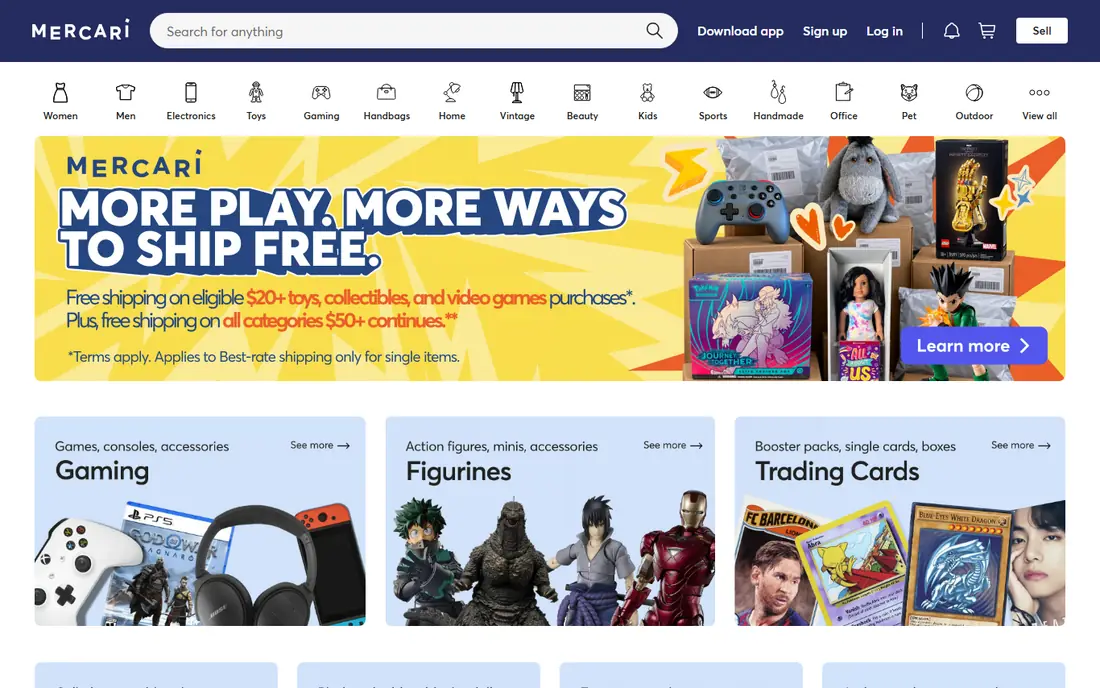
Mercari suits sellers who want a simple, general marketplace without learning a niche community. Listing takes a few photos and a description, categories cover household goods, electronics, toys, and clothing, and prepaid labels simplify shipping. The app feels approachable for first-time sellers, and buyers browse by price and recency as well as search. For clearing a household or selling varied items, Mercari is efficient.
The seller fee is 10 percent of the item price plus any shipping the buyer paid, with no separate payment processing fee for sellers in the current model. Buyer service fees may also affect how buyers view total price, so competitive pricing matters. Mercari is best for general selling where ease matters more than a fashion-specific audience.
- Simple listing flow
- Broad general categories
- Prepaid shipping labels
- Seller fee of 10 percent on item price plus buyer-paid shipping
- Buyer service fees can affect pricing
- Less fashion community than Poshmark
Poshmark is built for fashion selling, with a social feed, sharing, and a simple shipping model. The buyer pays for a prepaid label, up to 5 pounds, which removes the need to weigh items or choose a carrier for most clothing sales. That simplicity helps new fashion sellers, and the community aspect can drive discovery for brands and styles. Poshmark covers women's, men's, and kids fashion plus home items.
The fee is the trade-off. Poshmark charges $2.95 on sales under $15 and 20 percent on sales of $15 or more. On a $50 sale, that is $10, which is more than eBay, Mercari, or Depop in many cases. Sellers who price for fashion demand and value the prepaid label may still find it worthwhile, but cost-conscious sellers should compare Depop and Vinted first.
- Simple prepaid label system
- Social sharing and community
- Broad fashion audience in the US and Canada
- Fee of 20 percent on sales of $15 or more, or $2.95 under $15
- Higher cost than Depop or Vinted
- Buyer pays shipping label cost
Etsy is the marketplace for handmade goods, craft supplies, and vintage items at least 20 years old. Buyers come to Etsy specifically for unique, gift-ready, and vintage finds, which suits sellers with a distinct style or craft. Shop pages, branding, and search tools help a small seller look professional, and global reach extends beyond local buyers. For makers, Etsy remains the default marketplace.
Fees add up across several lines: $0.20 per listing, a 6.5 percent transaction fee, and payment processing of 3 percent plus $0.25 in the US. Offsite ads fees can also apply when Etsy drives a sale through external advertising. Price with all fees in mind, and check whether offsite ads apply to your shop. For handmade and vintage, the audience often justifies the cost.
- Strong audience for handmade and vintage
- Shop branding and search tools
- Global buyer reach
- Listing fee of $0.20 plus 6.5 percent transaction fee and payment processing
- Competitive search
- Offsite ads fees can apply
Depop suits vintage, streetwear, and trend-driven fashion sellers, with a social feed that helps discovery. For US sellers, Depop charges no selling fee, only payment processing of 3.3 percent plus $0.45 on the item, shipping, and tax. That makes Depop one of the cheapest fashion marketplaces on a typical sale, and the audience skews younger and trend-focused. Good photos and a clear shop style matter more here than on a search-only marketplace.
Boosted listings add a 12 percent fee on the item price, so only boost items where the extra visibility is likely to pay off. Sellers also arrange shipping in many cases, which needs more care than Poshmark prepaid labels. For vintage and streetwear sellers, Depop offers low fees and a well-matched audience.
- No selling fee for US sellers beyond payment processing
- Strong Gen Z and vintage audience
- Social explore feed
- Payment processing of 3.3 percent plus $0.45
- Boosted sales add 12 percent
- Seller arranges shipping in many cases
Vinted is the lowest-cost fashion marketplace for sellers on standard sales, since sellers pay no selling fee and buyers pay a protection fee at checkout. That model suits high-volume, lower-price fashion selling, where a 20 percent fee elsewhere would erase margin. Prepaid labels in many markets simplify shipping, and the audience is budget-minded and fashion-focused. For clearing closets, Vinted is an efficient choice.
The focus is fashion, so general goods, electronics, and home items fit better on eBay or Mercari. Buyer protection fees can make buyers more price-sensitive, and Vinted US presence is newer than eBay or Poshmark. For everyday clothing, shoes, and accessories, Vinted is hard to beat on seller cost.
- No seller fees on standard sales
- Buyers pay a protection fee
- Prepaid labels in many markets
- Fashion-focused, not general goods
- Buyer protection fee can affect buyer price sensitivity
- Newer US presence than eBay
OfferUp is a local-first marketplace that also supports shipped sales for smaller items. Local listings are free within limits, and the app suits quick flips of furniture, electronics, and household goods. For sellers who want an alternative local audience to Facebook Marketplace, OfferUp adds reach without a listing fee. Shipped sales extend that reach beyond the local area.
Shipped sales carry a fee around 12.9 percent with a minimum, so local pickup is the cheaper route where possible. As with any local marketplace, meet in public and avoid unusual payment requests. OfferUp is best for local sellers who also want a shipped option for smaller, shippable items.
- Free local listings
- Local-first audience
- Shipped sales option for smaller items
- Shipped sales fee around 12.9 percent with a minimum
- Local deals need safety care
- Smaller audience than Facebook Marketplace
Craigslist remains useful for local, bulky, and free items, precisely because it is simple and free for most posts. Furniture, appliances, vehicles, and household goods can be listed quickly, and buyers pay in person, usually in cash. There is no marketplace fee, no shipping step, and no complex seller dashboard. For a seller who wants an item gone locally, Craigslist is still practical.
The lack of built-in payment, shipping, and seller protection is the trade-off. Scams are a known risk, so meet in public, accept cash in person, and never ship an item before payment or share codes from a buyer. Craigslist is best for local cash deals where you control the handoff, not for shipped sales.
- No selling fee for most posts
- Simple local listings
- Good for bulky and free items
- No built-in payment or shipping
- Scam risk needs care
- Basic interface and no seller protection
Whatnot suits sellers of collectibles, trading cards, sneakers, and fashion who want a live auction format. Sellers run live shows, buyers bid and buy in real time, and the engaged community can drive fast sales for in-demand items. Fees are 8 percent in most categories, plus 2.9 percent plus $0.30 payment processing, with lower commission tiers for higher-volume sellers. For collectibles, that live energy is a real advantage.
Live selling needs preparation, including show planning, shipping after the show, and handling live questions. General household goods fit better on eBay or Mercari, where search-driven buying suits varied items. Whatnot earns its place for collectibles and live-first sellers, not as a general marketplace.
- Live selling format for collectibles and fashion
- Engaged buyer community
- Seller tiers reduce fees at higher volume
- Commission of 8 percent plus payment processing in most categories
- Live format needs preparation
- Less suited to general household goods
How we picked these
We compared official fee pages, help centres, and current 2026 reporting on marketplace fees, shipping, and seller protection. We kept only apps that are live in the United States in October 2026 and that allow individual sellers to list items, not just buy. We included general, fashion, handmade, local, and live marketplaces, so readers can match the app to their item type. Where fees changed during 2026, we used the most recent reported fee and noted that sellers should confirm the fee in the app before listing.
What to check before you list
Start with your item type and shipping cost. Fashion sellers should compare Poshmark, Depop, and Vinted on fee and audience. General sellers should compare eBay and Mercari on reach and fee. Local sellers should compare Facebook Marketplace, OfferUp, and Craigslist on safety and fee. Always calculate the fee on the full order total, since some platforms charge on shipping and tax as well as item price.
Fees and payout timing
Fees look simple until shipping and tax are included, so run a sample sale at your price before listing widely. Payout timing also varies, from a few days after delivery to after buyer confirmation. If cash flow matters, check payout timing in the app help centre, and keep a record of tracking for every shipped sale.
Photos, safety, and returns
Good photos and honest condition notes reduce returns and disputes on every platform. For local sales, meet in public, during daylight, and bring someone with you when possible. For shipped sales, use tracked shipping, keep receipts, and follow the platform return process rather than arranging refunds off-platform. Those habits protect both seller and buyer.
Frequently asked questions
What is the best marketplace app to sell things?
eBay is the best general choice for reach across categories, while Facebook Marketplace is best for local bulky items. Fashion sellers should look at Depop, Vinted, or Poshmark, and handmade sellers should look at Etsy. The best app depends on your item, fee tolerance, and whether you want to ship or meet locally.
What is the best app to sell used items online?
eBay and Mercari suit general used items, with broad audiences and shipped sales. Vinted suits used clothing at low seller cost, while Facebook Marketplace suits used furniture and bulky goods locally. Compare fees on your item price, since a low fee on one platform can still cost more once shipping and tax are included.
Which marketplace app has the lowest seller fees?
Vinted has no seller fee on standard sales, and Depop charges US sellers only payment processing on standard sales. Facebook Marketplace has no fee for local pickup paid in person. For shipped general goods, Mercari at 10 percent is often cheaper than eBay or Poshmark, though category and order total change the result.
Is it safe to sell on Facebook Marketplace?
It can be safe with care. Meet in a public place, accept payment in person for local deals, and avoid buyers who ask to move off Facebook or use unusual payment methods. For shipped sales, use the in-app checkout and tracking, and do not ship before payment clears. Report suspicious messages through the app.
What sells best on marketplace apps?
Fashion, electronics, collectibles, furniture, and vintage items tend to sell well, but demand varies by platform. Fashion does well on Poshmark, Depop, and Vinted, collectibles do well on eBay and Whatnot, and bulky goods do well locally on Facebook Marketplace and Craigslist. Check sold listings on your chosen app before pricing.
Sources
See where you really rank - block by block
ProMapRanker scans Google Maps across a grid of your service area. Simple monthly plans from $19, white-label on every plan.
Start freeKeep reading
 who has the best home internet service
Who Has the Best Home Internet Service in 2026
Who has the best home internet service in 2026? Compare fiber, cable, and 5G providers on speed, price, data caps, and availability at your address today.
Read → visio alternatives
Best Visio Alternatives in 2026
Compare 9 Visio alternatives for flowcharts, org charts, and network diagrams, with free plans, pricing, and the best pick for teams and solo users in 2026.
Read → top 10 logistics software
Top 10 Logistics Software in 2026
We compared the top 10 logistics software tools for transport, warehousing, visibility and shipping, for shippers, carriers and 3PL teams in 2026 today.
Read →