 ProMapRanker
Best Marketing Strategies for Manufacturing Companies in 2026


Industrial only strategy and positioning · Pricing starts at: See website
Key takeaways
- Manufacturing buyers are usually engineers and procurement managers, so technical content, spec sheets and quote requests matter more than broad traffic.
- Gorilla 76 and Windmill Strategy focus only on industrial clients, while WebFX and TopSpot bring scale to SEO and paid search.
- Most specialist agencies price by quote, with published strategy projects starting around $5,500 at Windmill Strategy in recent listings.
- A strong strategy pairs a fast, technical website with search, content and sales follow up, not a single channel on its own.
Quick comparison
| Pick | Great for | Pricing starts at | Free tier | |
|---|---|---|---|---|
| Gorilla 76 | Industrial only strategy and positioning | See website | No | Visit |
 Windmill Strategy | Technical websites plus SEO | See website | No | Visit |
 WebFX | Revenue tracking at scale | See website | No | Visit |
 TREW Marketing | Marketing to engineering audiences | See website | No | Visit |
 Weidert Group | HubSpot based manufacturing marketing | See website | No | Visit |
 Elevation Marketing | Enterprise and mid market manufacturers | See website | No | Visit |
 TopSpot Internet Marketing | Suppliers and distributors wanting SEO plus paid search | See website | No | Visit |
 Kula Partners | Account based marketing for manufacturers | See website | No | Visit |
The best marketing strategies for manufacturing companies
We compared agency service pages, published pricing notes and client focus descriptions to find providers that genuinely serve manufacturers, rather than general agencies that list manufacturing as one of many verticals.
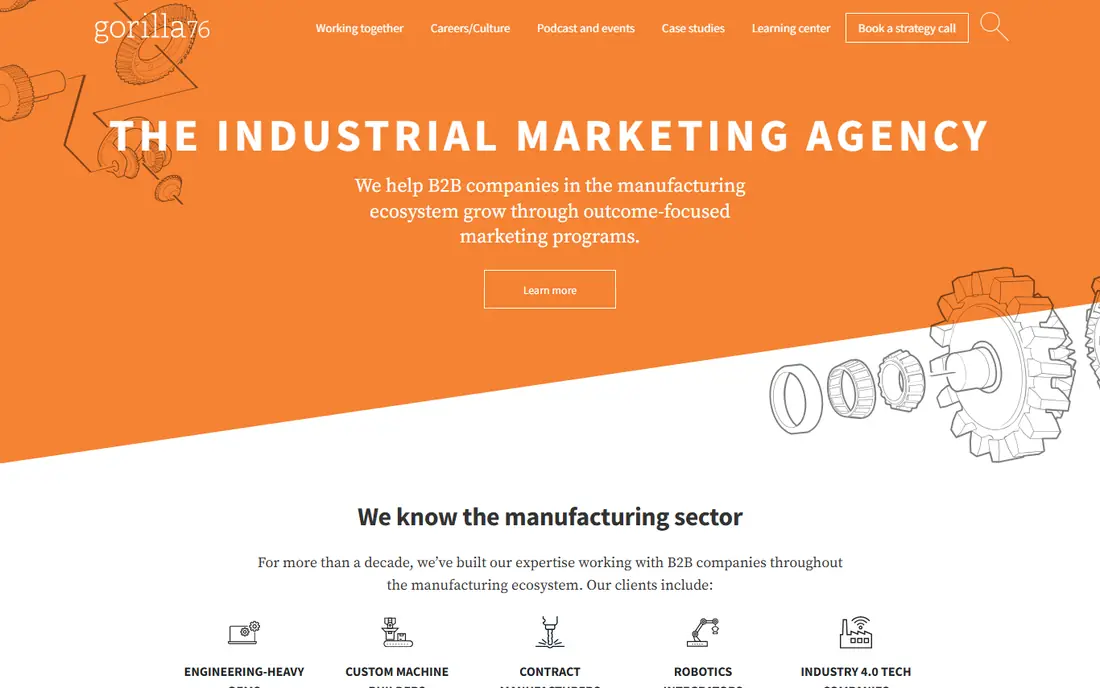
Gorilla 76 builds marketing around how industrial buying actually works, with long cycles and several people involved in a decision. Its strategy work starts with positioning and messaging, then turns that message into content, website pages and campaigns aimed at engineers, operations leaders and executives. That focus helps a manufacturer explain complex products without watering down technical detail.
The trade off is budget and commitment. Published notes describe full programs in the $200,000 to $250,000 per year range including media, which puts Gorilla 76 out of reach for very small shops. For mid sized OEMs and custom manufacturers that can fund a sustained program, the industrial only focus is a real advantage over a generalist agency.
- Works only with industrial and manufacturing clients
- Strong positioning and messaging work
- Content built for engineers and buying teams
- Full programs are a large annual investment
- Smaller firms may find the scope heavy
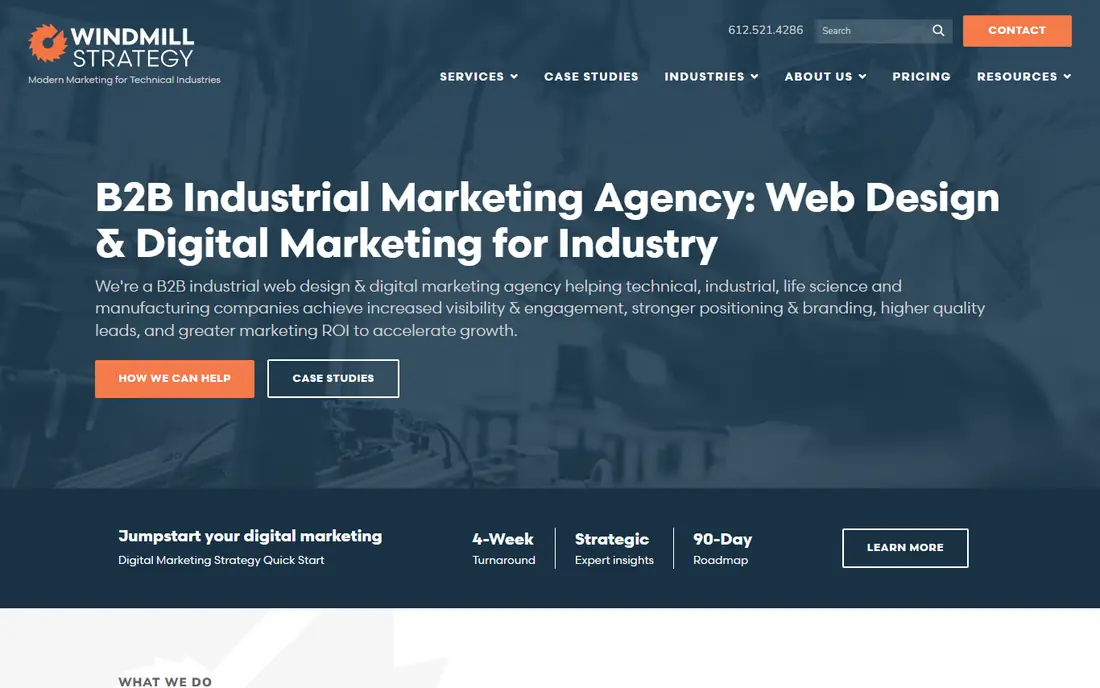
Windmill Strategy pairs website rebuilds with search work, which matters because many manufacturers lose quote requests to slow, confusing sites. Its teams handle technical SEO, user experience, backend optimisation and copywriting for industrial buyers, so product pages can carry CAD downloads, tolerance tables and clear request for quote paths. Recent listings also note a Quick Start strategy option at $5,500.
As a boutique firm, Windmill cannot take on every project at once, and its AI search practice is newer than its established SEO and web work. For a manufacturer that needs a website and search program rebuilt together, that combined skill set is still hard to beat. Ask for timelines and team capacity early if your launch date is fixed.
- Long industrial focus since 2006
- Website design paired with technical SEO
- Content written for technical buyers
- Boutique size limits capacity
- Newer AI search work has a shorter track record
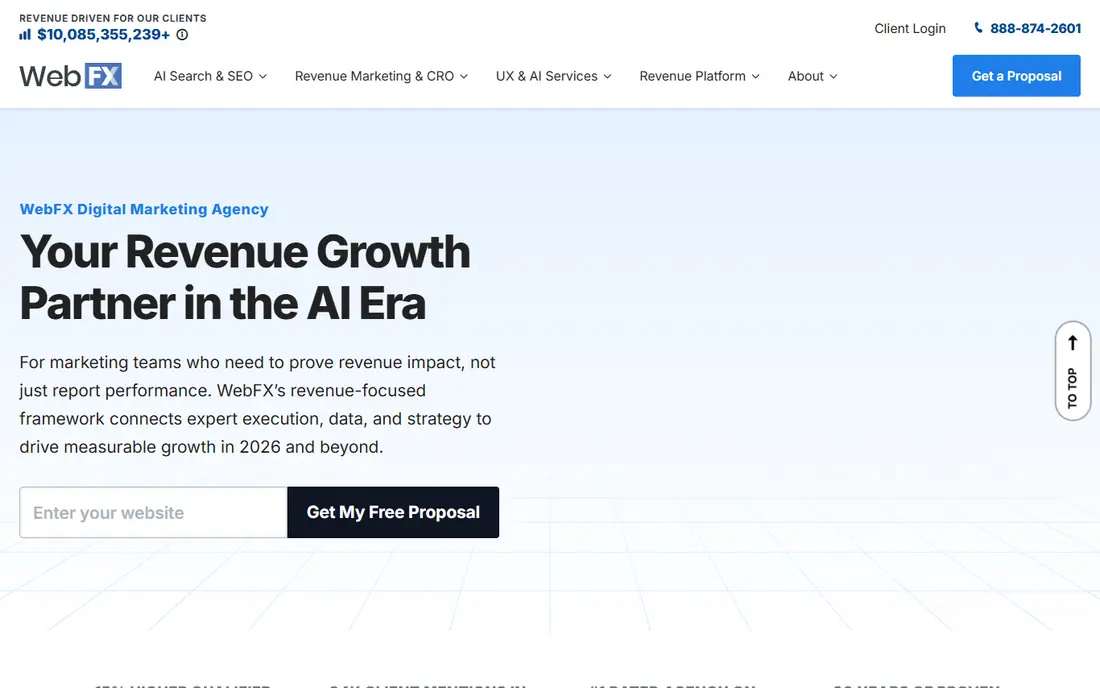
WebFX brings scale that boutique industrial agencies cannot match. It offers SEO, paid search, content, web design and analytics from one large team, and its reporting tools aim to tie leads and sales back to marketing spend. That breadth helps distributors and suppliers with large catalogues, where many product pages need optimisation at once.
The weakness is specialisation. WebFX serves many industries, so a manufacturer should ask who on the account team has industrial experience and how technical content will be reviewed. When the team understands part numbers, processes and buyer roles, scale becomes an asset. Without that knowledge, campaigns can chase traffic that never turns into quote requests.
- Large team across SEO, paid media and web design
- Revenue focused reporting
- Suits suppliers with many product lines
- Less industrial only than specialist rivals
- Service quality can vary by account team
TREW Marketing focuses on reaching engineers and technical decision makers, a group that often ignores generic business marketing. Its work includes positioning, technical content, websites and integrated campaigns that speak to product performance, standards and application details. That approach suits companies selling instruments, components and engineered systems.
Pricing is project and retainer based, with published notes placing strategy work in the $10,000 to $30,000 range and monthly programs from about $10,000. Small manufacturers may need a narrower scope to start. For technical companies that already know their buyers want proof, not slogans, TREW offers a credible specialist route.
- Strong focus on technical and engineering buyers
- Content, web and demand programs
- Experience with complex product lines
- Strategy projects and retainers are quote based
- Not a low cost option for small firms
Weidert Group helps manufacturers use HubSpot for inbound marketing, lead scoring and sales follow up. Content, email nurturing and website work are tied to a CRM, so a sales team can see which quote requests came from which pages and campaigns. That closed loop matters in manufacturing, where a single deal can justify months of marketing spend.
The cost stack needs attention. Agency retainers in published notes run from about $15,000 per month, and HubSpot licences are separate. Companies already using HubSpot, or planning to adopt it as a central system, get the most value. Firms that only want SEO help may find a narrower agency cheaper.
- Deep HubSpot experience for manufacturers
- Inbound content and lead nurturing
- Clear process for complex sales cycles
- Monthly retainers are high for small firms
- HubSpot costs sit on top of agency fees
Elevation Marketing works with enterprise and mid market manufacturers that need consistent branding across divisions and channels. Its services cover strategy, branding, content, digital campaigns and sales support, which helps when a company sells through distributors and direct channels at the same time. Large industrial clients value that ability to keep messaging consistent at scale.
That enterprise process can feel heavy for a small manufacturer that needs a fast website fix or a single campaign. Budgets and timelines reflect larger programs. For a company with multiple product lines, channel partners and a need for polished brand work, Elevation is a strong fit.
- Experience with large industrial brands
- Integrated branding, content and demand work
- Suits multi division companies
- Enterprise pricing and process
- Smaller manufacturers may find it too formal
TopSpot Internet Marketing
Great for: Suppliers and distributors wanting SEO plus paid search
TopSpot Internet Marketing suits suppliers and distributors that want search traffic and paid leads handled by one team. SEO work targets part numbers, product categories and application terms, while paid search fills gaps where organic rankings take time. Together, those channels can produce a steadier flow of quote requests than either channel alone.
TopSpot is less of a brand strategy firm than Gorilla 76 or TREW, so companies needing a full repositioning may need extra help. For a supplier whose website already explains its products well, but whose search visibility is weak, TopSpot offers a practical, lead focused program.
- Strong supplier and distributor focus
- SEO and paid search run together
- Practical lead tracking for industrial sites
- Less known for brand strategy work
- Creative scope varies by package
Kula Partners focuses on account based marketing, which fits manufacturers that sell to a defined list of large customers rather than to the open market. Campaigns target buying committees inside named accounts, with content and website experiences tailored to those companies and roles. That precision can beat broad advertising when deal sizes are large.
The model only works with good target data. A company without a clear account list, or with thousands of small buyers, may get more from SEO and inbound content. For OEMs and industrial suppliers chasing a short list of strategic accounts, Kula gives that focused strategy a proper structure.
- Account based marketing for named target accounts
- Website and content built around buying committees
- B2B manufacturing focus
- Account based programs need a clear target list
- Pricing is quote based
How we picked these
We compared agency websites, service descriptions and published pricing notes, plus recent roundups of manufacturing marketing firms. We kept only agencies with a clear, current manufacturing or industrial practice in October 2026, and we favoured firms that explain their strategy in concrete terms, such as technical content, search, website conversion and sales follow up. General agencies without industrial evidence were left out.
How to build a manufacturing marketing strategy that wins quotes
Start with buyer research, not channels. Interview recent customers about how they found you, what specs they checked, who else approved the purchase and what almost stopped them. Turn those answers into product pages, comparison guides and case studies that answer real questions, with clear paths to request a quote, download a CAD file or talk to an engineer.
Next, fix the website and measurement before scaling spend. A fast site with clear product categories, technical documents and quote forms will convert search and paid traffic far better than a pretty site with no conversion path. Track quote requests, qualified calls and won deals by source, not just visits, and review that data monthly with sales. Finally, keep sales in the loop, since fast follow up and useful content for later buying stages often decide deals that marketing alone cannot close.
Frequently asked questions
What is the best marketing strategy for a manufacturing company?
There is no single best channel, but a strong core is technical SEO, a conversion focused website and content that helps engineers compare products. Paid search can add leads while organic rankings grow, and account based campaigns help when target accounts are few and large. Measure quote requests and won deals, not traffic alone.
How much does a manufacturing marketing agency cost?
Costs vary widely by scope. Published notes in October 2026 show strategy projects from about $5,500 at Windmill Strategy to $30,000 elsewhere, and monthly retainers from about $4,000 to $30,000 depending on services and media. Always ask what is included, whether media spend is separate and how reporting ties to leads.
Should manufacturers use social media?
Social media helps for brand awareness, recruitment and staying visible to buyers, but it rarely closes complex industrial deals on its own. LinkedIn and YouTube work well for technical explainers, plant tours and customer stories. Treat social as support for search and sales, not as a replacement for a strong website.
How long does manufacturing SEO take to work?
Technical fixes and paid search can improve leads in weeks, while organic rankings for competitive product terms often take several months. Content that targets specific part numbers and applications can rank faster than broad industry terms. A good agency should set monthly lead and quote targets, not just ranking promises.
Do small manufacturers need an agency?
Not always. A small shop can start with a clear website, basic local search and a few strong case studies. An agency becomes valuable when growth targets, product complexity or competition outgrow internal time and skills. Start with a defined project, such as a website rebuild or a search audit, before signing a long retainer.
Sources
See where you really rank - block by block
ProMapRanker scans Google Maps across a grid of your service area. Simple monthly plans from $19, white-label on every plan.
Start freeKeep reading
 worlds best local seo company
8 Worlds Best Local SEO Companies for Map Pack Growth in 2026
Compare the worlds best local seo company options for Google Business Profile work, citations, reviews, and multi-location rankings and reporting in 2026.
Read → world's best web hosting company
World's Best Web Hosting Company in 2026
Searching for the world's best web hosting company? We compared 10 hosts on price, renewal rates, speed, and support to help you choose well today in 2026.
Read → who's got the best nanny tax services
Who's Got the Best Nanny Tax Services in 2026
We answer who's got the best nanny tax services, comparing full filing, back taxes, software, and pricing so families can handle nanny taxes correctly.
Read →