 ProMapRanker
Best Market Intelligence Platforms in 2026

Key takeaways
- No single platform covers every kind of market intelligence well, so most teams combine a competitor tool with a traffic or financial tool.
- Crayon and Klue lead on competitor tracking and sales enablement, while Similarweb and Semrush lead on digital traffic and search data.
- AlphaSense suits financial and strategy research, while Crunchbase suits startup and funding research at a lower entry cost.
- Quote-only pricing is common here, so budget for an annual contract and confirm what data, seats and integrations are included.
Quick comparison
| Pick | Great for | Pricing starts at | Free tier | |
|---|---|---|---|---|
 Crayon | Competitor tracking and battlecards | See website | No | Visit |
 Klue | Sales-focused competitor intelligence | See website | No | Visit |
 Similarweb | Traffic and market benchmarking | See website | Yes | Visit |
 Semrush | Search and advertising intelligence | $139.95 per month | Yes | Visit |
 AlphaSense | Financial and strategy research | See website | Free trial | Visit |
 Crunchbase | Company and funding intelligence | Free | Yes | Visit |
 Owler | Company news and alerts | See website | Yes | Visit |
 BuzzSumo | Content and social intelligence | $199 per month | Free trial | Visit |
The best market intelligence platforms
Market intelligence covers competitor moves, market size, traffic trends, funding news and content performance, and different platforms specialise in different slices of that work. This list groups them by job, so you can pick the tool that answers your actual question rather than buying the longest feature list. We compared official pricing and feature pages for platforms live in October 2026.
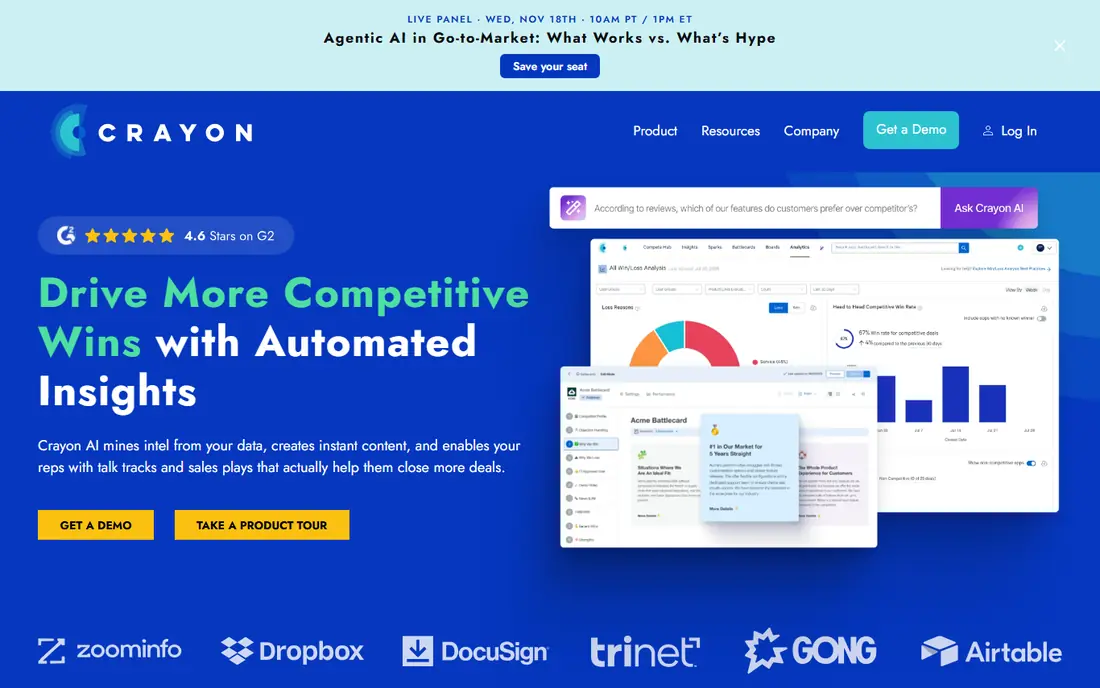
Crayon is built for teams that run a formal competitor programme. It tracks competitor websites, pricing pages, product updates, reviews and messaging changes, then turns those signals into battlecards that sales teams can use in live deals. That link from tracking to sales enablement is why mid-market and enterprise teams choose Crayon over a simple monitoring tool.
The cost and effort are real. Pricing is quote-based and typically annual, and Crayon works best when someone owns the programme, curates signals and keeps battlecards current. If you only need occasional competitor checks, a cheaper traffic or monitoring tool will do the job for far less.
- Automated competitor tracking across many sources
- Battlecards for sales teams
- Alerts and newsletters for key changes
- Quote-only enterprise pricing
- Needs a dedicated owner to get full value
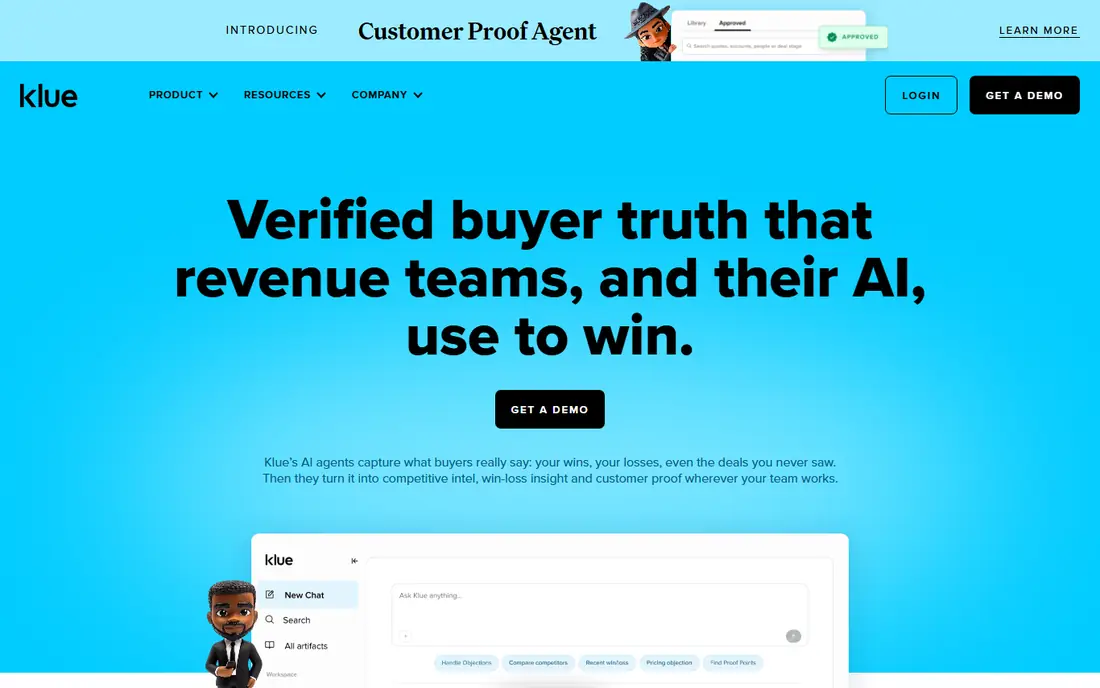
Klue takes a similar path to Crayon but leans harder into sales workflows. Battlecards appear inside CRM records and sales tools, so a rep can check a competitor position during a deal without opening a separate dashboard. Klue also supports win and loss research, which helps product and sales teams learn why deals were won or lost, not just what competitors changed on their sites.
Klue is also quote-based and demo-led, which means budgeting requires a sales conversation and a clear scope for seats and data sources. Choose Klue when sales enablement is the main goal and your sales leaders will actually use battlecards in deals. If marketing research is the main goal, Similarweb or Semrush may fit better.
- Battlecards integrated with CRM and sales workflows
- Win and loss insights
- Curated competitor content
- Quote-only pricing
- Setup needs buy-in from sales leadership
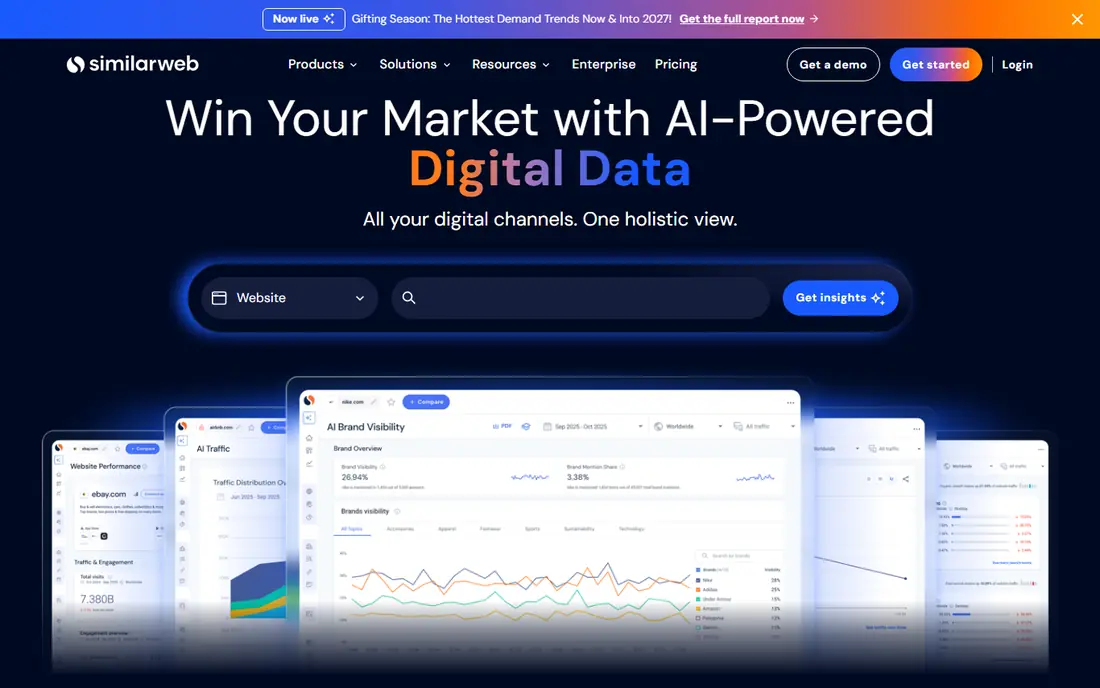
Similarweb answers questions about size and movement: how much traffic does a competitor get, where does it come from, and how does a market segment trend over time. That makes it useful for strategy, partnerships and marketing planning, where relative scale matters more than exact visitor counts. A limited free tier lets you test basic traffic views before paying.
Treat traffic numbers as estimates, not as audited figures, and check the method behind any segment or market share claim before using it in a board report. Similarweb pricing varies by plan and data depth, so confirm the current rate on the Similarweb site for the traffic and app data you need.
- Website traffic and audience estimates
- Market share and segment benchmarking
- App data in some plans
- Traffic figures are estimates
- Full market data needs higher tiers
- Pricing varies by plan
Semrush is the most practical market intelligence tool for marketing teams, because it shows how competitors perform in search and paid advertising, which keywords they target, and which pages attract traffic. That data helps you decide where to compete, what content to build, and which ad angles are already crowded. The Pro plan is listed at $139.95 per month, with a capped free plan for basic checks.
Semrush is not a full competitor enablement platform like Crayon or Klue, and it will not give you battlecards or win and loss research at the same depth. Use Semrush when search visibility and advertising intelligence are the main questions, and pair it with a competitor tracking tool if sales enablement also matters.
- Search, keyword and advertising competitor data
- Site audit and content tools
- Capped free plan for testing
- Learning curve for new users
- Full competitive data needs higher tiers
AlphaSense suits strategy, finance and corporate development teams that need to search earnings calls, filings, broker research and news in one place. Its AI search can surface answers across documents, rather than forcing you to read each filing separately, which saves time on market sizing, M and A research and competitor financial analysis. A free trial is available in many cases, with pricing handled by quote.
AlphaSense is not the right tool for tracking a competitor website change or building a sales battlecard. It is a research platform, priced for professional teams, and smaller marketing teams will get more value from Similarweb or Semrush at a lower cost.
- AI search across filings, transcripts, news and research
- Strong financial document coverage
- Analyst-grade sources
- Quote-only pricing
- Overkill for simple competitor tracking
Crunchbase is the best low-cost starting point for company and funding intelligence. You can look up a startup, see its funding history, investors, leadership and news, and track companies in a sector without an enterprise contract. The free tier covers basic research, which is enough for many founders, investors and partnership teams.
Data quality varies, especially for smaller private companies, so cross-check funding figures against a press release or filing before using them in a report. Paid plans add advanced search, lists and exports, but the free tier already answers the most common question: who raised money, when, and from whom.
- Company profiles, funding rounds and people data
- Free tier for basic research
- Useful for startup tracking
- Data depth varies by company
- Advanced search and exports need paid plans
Owler is a lighter, cheaper way to follow companies. You can track competitors, receive news alerts, view funding and leadership changes, and build lists of companies in a sector. That simplicity suits small teams and individual researchers who want to stay informed without running a full competitor programme.
Owler does not offer the same battlecard, win and loss or workflow depth as Crayon or Klue, and its data is best used for awareness rather than deep analysis. Use Owler as an alert layer, then turn to Similarweb, Semrush or AlphaSense when you need traffic, search or financial depth on a specific competitor.
- Company news, alerts and competitor lists
- Simple tracking for many companies
- Free tier available
- Depth is lighter than Crayon or Klue
- Advanced features need paid plans
BuzzSumo answers a content question: what topics, formats and publishers are gaining attention in your market, and who shares them. You can find top-performing articles, track mentions, identify influencers and study which headlines and angles work, which helps content and PR teams plan with evidence rather than guesswork. Paid plans start around $199 per month, with a free trial for testing.
BuzzSumo is not a market sizing or financial research tool, so it should sit alongside a traffic or funding tool rather than replace one. Choose BuzzSumo when content and social signals drive your market view, and pair it with Similarweb for traffic context.
- Content performance and trending topics
- Influencer and journalist search
- Backlink and mention tracking
- Higher starting price for small teams
- Content focus means limited financial or traffic depth
How we picked these
We compared official pricing and feature pages for platforms live in October 2026, covering competitor tracking, digital traffic, search intelligence, financial research, company data and content signals. We kept platforms with a clear intelligence job and a current product, and we noted where pricing is quote-only or where traffic and sales figures are estimates. Where published prices conflicted across sources, we wrote See website rather than presenting one figure as a vendor price.
How to build a market intelligence stack without overspending
Start with the question you must answer every month. If it is "what are competitors doing", pick Crayon or Klue. If it is "how big is the market and who is growing", pick Similarweb. If it is "where do we win in search", pick Semrush. If it is "what do filings and calls say", pick AlphaSense. One clear question prevents buying three overlapping tools.
Next, assign an owner and a rhythm. A platform that nobody checks weekly becomes an expensive dashboard, no matter how good its data is. Set a short weekly review for competitor changes and a monthly review for traffic and market trends, and share only the signals that change a decision.
Finally, check data method before you quote a figure. Ask each vendor where its traffic, funding or content data comes from, how often it updates, and what it estimates rather than measures. A platform that explains its method plainly is usually safer to cite than one that hides it behind a polished chart.
Frequently asked questions
What are the best market intelligence platforms?
Crayon and Klue lead on competitor tracking and sales enablement, Similarweb leads on traffic benchmarking, Semrush leads on search intelligence, and AlphaSense leads on financial research. Most teams combine two of these rather than buying one platform for every job.
What is the best market intelligence software for competitors?
Crayon is the best dedicated competitor platform for most mid-market teams, because it tracks changes automatically and turns them into battlecards. Klue is a close alternative when sales workflow integration and win and loss insights matter more.
What are the best competitive intelligence tools?
Crayon, Klue, Similarweb, Semrush and Owler are the most practical competitive intelligence tools, covering battlecards, traffic, search and news alerts. The best choice depends on whether your main user is sales, marketing or strategy.
What is the best market intelligence tool for small businesses?
Similarweb free tier, Crunchbase free tier and Owler free tier give small businesses useful traffic, funding and news data without an enterprise contract. Semrush is the next step when search and advertising intelligence become a weekly need.
Which market intelligence platform is the best for app data?
Similarweb offers app data in some plans, alongside website traffic and market benchmarking, which makes it a practical pick for app market research. For deeper app store data, check whether the Similarweb plan you price includes the app metrics you need before buying.
How much do market intelligence platforms cost?
Costs range from free tiers at Crunchbase and Owler up to quote-only annual contracts for Crayon, Klue and AlphaSense, with Semrush at $139.95 per month and BuzzSumo around $199 per month. Always confirm seats, data depth and renewal terms, since headline prices rarely include every module.
Sources
See where you really rank - block by block
ProMapRanker scans Google Maps across a grid of your service area. Simple monthly plans from $19, white-label on every plan.
Start freeKeep reading
 zoho inventory alternatives
6 Alternatives to Zoho Inventory, Compared on Price and Fit
Zoho Inventory alternatives: 6 tools compared on price, free plans and fit. Katana leads the list for manufacturers. Fit and flaws are laid out for each entry.
Read → zoho crm alternatives
Best Zoho CRM Alternatives (2026)
Need Zoho CRM alternatives? We compare 7 tools on cost, free access and who each suits. Every pick gets a straight assessment. Built for quick decisions.
Read → zelle alternatives
Best Zelle Alternatives in 2026
Compare the best Zelle alternatives for sending money to friends, paying sellers and moving funds abroad, with honest notes on fees, speed and safety in 2026.
Read →