 ProMapRanker
Best Macro Tracking App for Weight Loss in 2026

Key takeaways
- MacroFactor offers the strongest adaptive coaching, adjusting targets from weight trends, but it has no free tier.
- MyNetDiary and Cronometer let you set fixed gram targets for free, which matters when calories change.
- MyFitnessPal has the largest food database, while Lose It is the friendliest start for new trackers.
- Calorie and macro figures are estimates, so judge progress by weight trends across weeks, not one day.
Quick comparison
| Pick | Great for | Pricing starts at | Free tier | |
|---|---|---|---|---|
 MacroFactor | Adaptive macro coaching | $71.99 per year | Free trial | Visit |
 MyNetDiary | Free gram targets | Free | Yes | Visit |
 Cronometer | Verified nutrient data | Free | Yes | Visit |
 MyFitnessPal | Largest food database | Free | Yes | Visit |
 Lose It | Beginner-friendly tracking | Free | Yes | Visit |
 Carb Manager | Low-carb macros | Free | Yes | Visit |
 Yazio | Recipes plus fasting | Free | Yes | Visit |
 Lifesum | Guided diet plans | Free | Yes | Visit |
The best macro tracking apps for weight loss
These apps provide general information only, not medical advice, and calorie and macro figures are estimates. We compared official pricing pages, feature pages, and recent macro comparisons, and we kept only tools that track protein, carbs, and fat with custom targets. The best app is the one you still use in week six, since steady logging beats a perfect database you abandon.
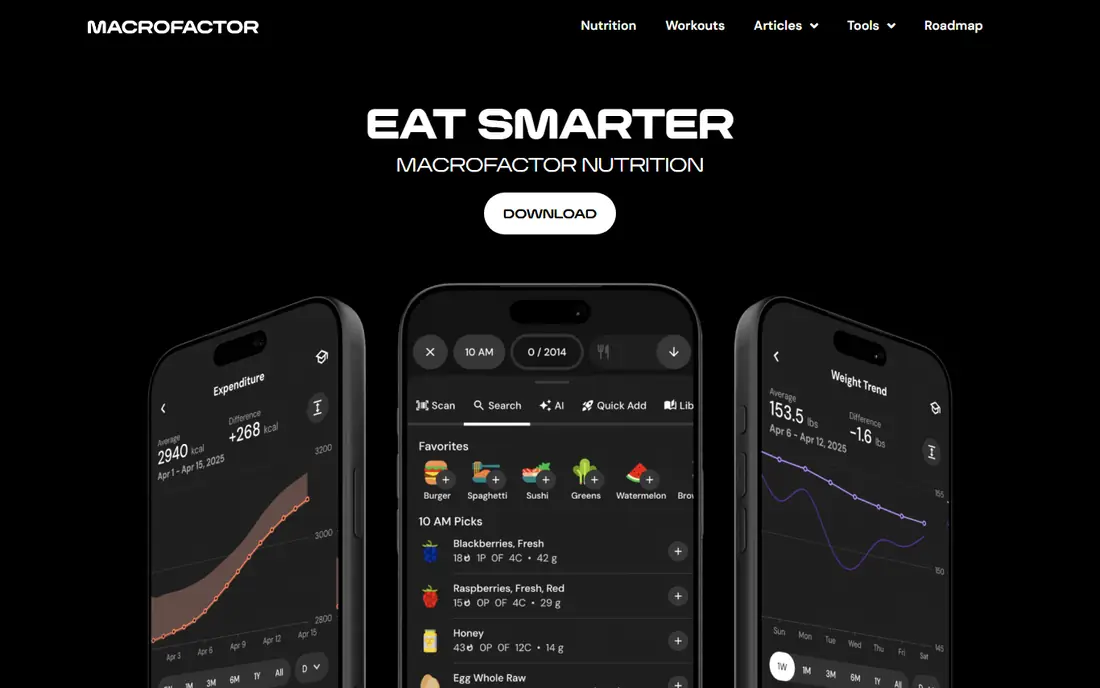
MacroFactor suits people who want coaching, not just a diary. It estimates your energy expenditure from logged intake and weight change, then adjusts calorie and macro targets each week. That feedback loop helps when progress stalls, since targets move with real trends rather than staying fixed.
The app states it will never offer a free tier, never serve ads, and never sell user data, which is a clear trade: you pay from day one for a cleaner product. The interface focuses on targets, trends, and adherence, without social noise. For structured fat loss or lean muscle phases, that focus is valuable.
The catch is cost and commitment. There is no free plan, only a 7-day trial, and the system needs regular weigh-ins to estimate expenditure well. If you dislike weighing often, or you want a free start, pick MyNetDiary or Cronometer. For adaptive coaching, MacroFactor leads.
- Adaptive targets based on intake and weight trends
- No ads and no data sale
- Clear expenditure estimates
- No free tier, only a 7-day trial
- Needs regular weigh-ins to work well
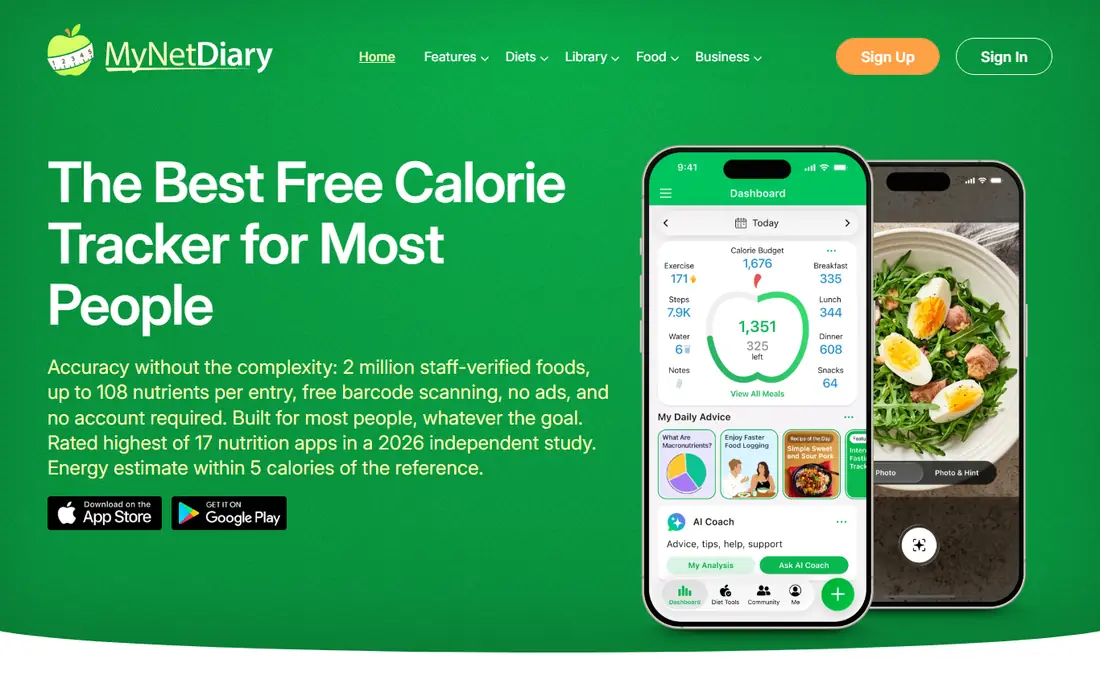
MyNetDiary is our pick for free macro tracking with real control. You can set fixed gram targets for protein, carbs, and fat on the free plan, by grams or percentages. That matters during weight loss, since a fixed protein gram target stays put when calories drop, while a percentage target falls with calories.
Barcode scanning is free with no ads, and the database is staff-verified, which reduces odd entries. The diary is fast, with saved meals and recent foods that cut logging time. Premium at $59.99 per year adds meal scanning, fasting, and deeper planning, with a lifetime option at $179.99.
The weakness is polish. The design feels plain next to newer apps, and some planning tools sit behind Premium. For macro control at no cost, though, the free plan covers the core job better than most rivals. It is a strong first pick for weight loss tracking.
- Fixed gram targets free
- Barcode scanner free with no ads
- Staff-verified database
- Design feels plain
- Advanced planning tools need Premium

Cronometer suits people who want macro tracking plus nutrient depth. The free plan lets you set custom macro targets, including fixed grams, and tracks a large set of nutrients beyond protein, carbs, and fat. Verified food data keeps entries consistent, which helps when you eat whole foods often.
Charts and reports make it easy to see macro trends across days, not just one meal. Device integrations cover wearables and health apps, so activity and weight can sit alongside food. That wider view helps you judge whether a target is working.
The trade-off is ads on the free plan and a seven-day history limit for free users. Gold at $59.99 per year removes ads, extends history, and adds a day-by-day macro scheduler. For free macro tracking with strong data quality, Cronometer is a top choice.
- Fixed gram targets free
- Tracks many nutrients
- Verified food data
- Free plan shows ads
- Free history view limited to seven days
MyFitnessPal remains the easiest app for finding branded and restaurant foods. Its database is the largest on this list, which saves time when you eat packaged or chain-restaurant meals. Device integrations are broad, covering many watches, scales, and fitness apps.
The free plan covers basic calorie and macro logging, with percentages for macro targets. Premium at $79.99 per year adds barcode scanning, gram targets, per-meal targets, and more analysis, with Premium Plus at $99.99 per year adding a meal planner. That paid layer is where macro control lives.
The catch is the paywall around core macro tools. Barcode scanning moved to Premium, and gram targets need Premium too, which weakens the free plan for macro-focused users. If database breadth matters most, it still wins. If free gram targets matter most, pick MyNetDiary or Cronometer.
- Largest branded and restaurant database
- Broad device integrations
- Large community
- Barcode scanner needs Premium
- Gram targets and per-meal targets need Premium
Lose It suits new trackers who want a simple, friendly start. The free plan gives a calorie budget, food logging, and weight tracking in a clean layout that is easy to learn. That simplicity helps people who have never tracked macros before and want a gentle first week.
The app also covers a large food database, so common branded items are easy to find. Weight trends and daily budgets are shown clearly, which helps you see progress without digging through charts. The tone stays encouraging rather than technical.
The limit is Premium gating. Barcode scanning, smart photo logging, and custom gram targets sit in Premium, listed at $79.99 per year in recent October 2026 comparisons. If you want free scanning or free gram targets, another app here fits better. For a friendly free start, Lose It works well.
- Simple calorie budget and weight logging
- Friendly design
- Large food database
- Barcode scanning and gram targets need Premium
- Free plan shows ads
Carb Manager fits weight loss plans built around low-carb or keto eating. The free plan includes daily macro targets, barcode scanning, and a database built around carb counts. Net carb math is handled clearly, which saves manual work for keto users.
The app also tracks calories, weight, and exercise, so it works as a general diary too. Premium at $39.99 per year adds per-meal targets, day-of-week targets, and deeper reports. That tier suits people who vary macros by training day or by weekday.
The weakness is narrowness. If you eat a balanced diet without a carb focus, the keto framing can feel like extra noise. Some target options also need Premium, which may frustrate people who want full control for free. For low-carb macro tracking, the free plan is generous.
- Daily macro targets free
- Low-carb and keto tools
- No third-party ads on free plan
- Per-meal and day-of-week targets need Premium
- Keto focus may feel narrow
Yazio suits people who combine macro tracking with recipes and intermittent fasting. The free plan covers basic calorie and macro tracking, with a fasting timer in the same app. Recipes help when you need meal ideas that fit a macro target, not just a diary entry.
The food database is large, covering many branded and generic items, and the diary is easy to read. Pro adds photo scanning, recipes in full, and deeper analysis, at about $47.90 per year in recent comparisons. Check the store price in your region before paying.
The catch is plan clarity. Listings differ on which features sit in Pro, so confirm photo scanning and recipe access before you buy. For free macro tracking plus fasting and recipes, Yazio is a useful all-round option.
- Recipes and fasting timer in one app
- Large food database
- Simple diary
- Photo scanning and deeper analysis need Pro
- Plan details vary by listing
Lifesum fits people who want guidance alongside macro tracking. The free plan includes barcode scanning and basic calorie and macro tracking, with a clean daily view. Diet plans on Premium add structure for people who want a plan to follow, not just a diary.
Premium costs from $9.99 per month or $49.99 per year on published plans, and it adds diet plans, recipes, and deeper guidance. That structure helps new trackers who feel lost with a blank diary. The design stays modern and easy to read.
The limit is macro depth. Lifesum does not offer the adaptive coaching of MacroFactor or the free gram control of MyNetDiary and Cronometer in the same depth. For guided, simple macro tracking, it is a good pick. For serious macro coaching, look at the top of this list.
- Guided diet plans and daily overview
- Barcode scanning on free plan
- Clean design
- Diet plans and recipes need Premium
- Macro control is lighter than MacroFactor
How we picked these
We compared official pricing pages, feature pages, and recent macro comparisons, and we kept only tools that track protein, carbs, and fat with custom targets. We checked whether gram targets are free or paid, since that difference matters during weight loss. We also checked database breadth, barcode access, and whether targets adapt or stay fixed.
How to set macros for weight loss without overcomplicating it
Start with protein. A fixed gram target for protein helps you keep muscle while calories drop, and it is easier to follow than a percentage that shifts each week. MyNetDiary, Cronometer, and MacroFactor all support fixed gram targets, while MyFitnessPal and Lose It gate gram targets behind Premium.
Next, set calories from a realistic deficit, not an extreme one. A small, steady deficit you can keep for months beats a large deficit you abandon in two weeks. Track weight trends across weeks, not daily swings, since water and food volume move daily weight a lot. MacroFactor excels here, since it adjusts from trends.
Then log consistently, even on imperfect days. A missed day or an estimated meal still beats no record, since trends need data. Weigh or measure foods when you can, especially calorie-dense items like oils, nuts, and cheese, where small errors add up fast. Check serving sizes on labels before you trust a scanned entry.
Finally, talk to a clinician or dietitian if you have a health condition, are pregnant, or plan a large dietary change. These apps give general information only, and they do not replace professional advice. A tracker can support a plan, but a professional can check whether that plan fits your health.
Frequently asked questions
What is the best macro tracking app for weight loss?
MacroFactor is best for adaptive coaching, while MyNetDiary is best for free gram targets. Cronometer suits nutrient detail, MyFitnessPal suits database breadth, and Lose It suits beginners. Pick by coaching, free control, or database, not by popularity alone.
Do I need to pay to track macros?
No, not for basic tracking. MyNetDiary, Cronometer, MyFitnessPal, Lose It, Carb Manager, Yazio, and Lifesum all track macros on free plans. Paid plans add gram targets in some apps, adaptive coaching, photo scanning, and deeper reports, so check what your chosen app gates.
Are fixed gram targets better than percentages?
For weight loss, fixed grams are often better for protein, since the target stays put when calories drop. Percentage targets fall as calories fall, which can cut protein just when you need it most. MyNetDiary and Cronometer offer fixed grams for free.
How accurate are macro counts in these apps?
They are estimates. Label rounding, portion size, and database entries all add error, so daily totals can drift. Use trends across weeks, weigh foods when accuracy matters, and check scanned entries against labels for packaged foods.
Should I track macros every day?
Daily tracking helps at first, since it builds awareness of portions and food choices. Over time, many people track on weekdays and estimate on weekends, or track only protein and calories. Pick a rhythm you can keep, since steady logging beats perfect logging that stops.
Can macro tracking help if I do not want to lose weight?
Yes. The same tools support maintenance, muscle gain, and general awareness of eating patterns. Set targets that match your goal, and adjust from weight and energy trends over weeks. Talk to a professional if your goal involves a health condition or a large change.
Sources
See where you really rank - block by block
ProMapRanker scans Google Maps across a grid of your service area. Simple monthly plans from $19, white-label on every plan.
Start freeKeep reading
 zyte alternatives
Best Zyte Alternatives in 2026
These zyte alternatives cover managed scraping APIs, proxy networks and no code tools for lawful collection from your own or consented sources only in 2026.
Read → zerto alternatives
Best Zerto Alternatives in 2026
Compare the best zerto alternatives for disaster recovery and replication, with recovery targets, cloud options and honest trade-offs for teams in 2026.
Read → zerofox alternatives
Best ZeroFox Alternatives in 2026
We compared 9 zerofox alternatives for brand protection, phishing takedowns, dark web monitoring, and social impersonation, with clear coverage notes.
Read →