 ProMapRanker
Best Macro App for Weight Loss in 2026

Key takeaways
- MacroFactor is the best pick for adaptive macro coaching, since it adjusts targets from your logged intake and weight.
- Cronometer is best for nutrient depth, with lab-verified data and more than 80 nutrients tracked.
- MyNetDiary is the best free all-rounder, with gram targets free and no ads on the free tier.
- MyFitnessPal has the largest food database, but gram targets and barcode scanning need Premium.
- Carb Manager is best for low-carb and keto macros, while Lose It is best for beginners who want a simple diary.
Quick comparison
| Pick | Great for | Pricing starts at | Free tier | |
|---|---|---|---|---|
 MacroFactor | Adaptive macro coaching | $11.99 per month | Free trial | Visit |
 Cronometer | Micronutrients and verified data | Free | Yes | Visit |
 MyNetDiary | Free gram targets and fast logging | Free | Yes | Visit |
 MyFitnessPal | Largest food database | Free | Yes | Visit |
 Lose It | Simple weight-loss diary | Free | Yes | Visit |
 Carb Manager | Low-carb and keto macros | Free | Yes | Visit |
 YAZIO | Meal planning and fasting tools | Free | Yes | Visit |
 Lifesum | Simple plans and healthy habits | Free | Yes | Visit |
The best macro apps for weight loss
A macro app should show protein, carbs, and fat in grams, let you set targets that fit your goal, and make logging fast enough to do daily. These eight do that in different ways, from adaptive coaching to simple diaries. This is general information only, not medical advice, and you should talk to a clinician before starting a restrictive diet.
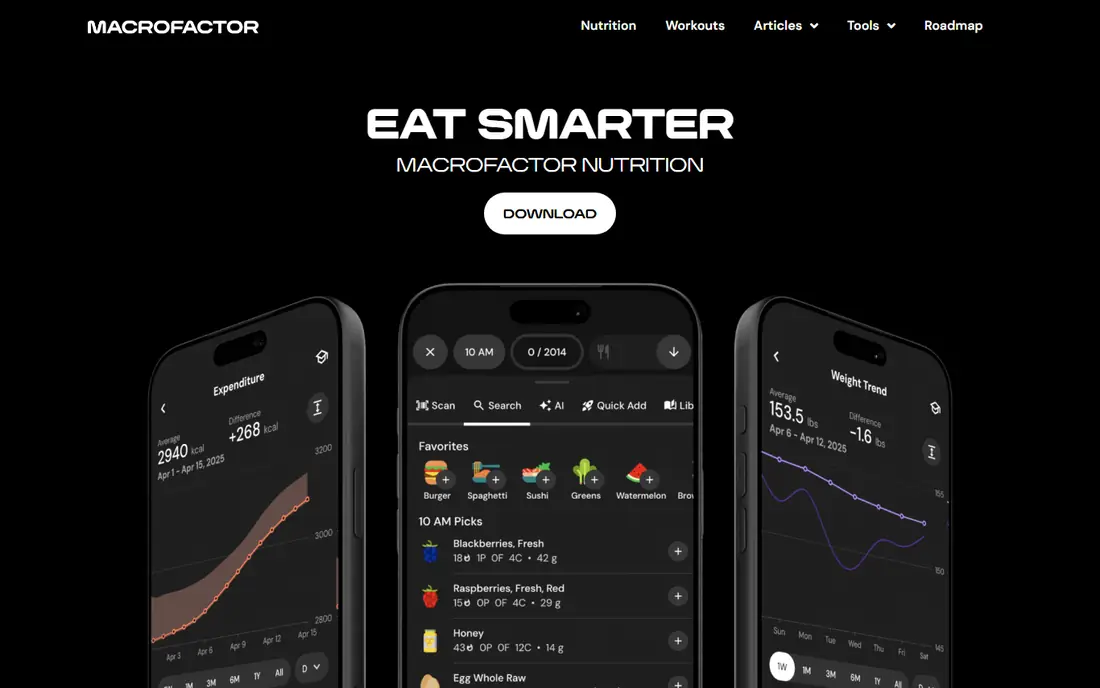
MacroFactor is built for people who want macros that change with their results. You log food and weight, and its algorithm recalculates your expenditure and adjusts calorie and macro targets over time. That adaptive approach suits lifters and dieters who have hit a plateau with fixed targets, since the plan responds to what actually happens rather than staying frozen.
Pricing is $11.99 per month, $47.99 for six months, or $71.99 per year, with a 7-day free trial and no free tier. Logging is fast, with barcode scanning, photo logging, and a verified database of more than 1.36 million entries listed on its site. The catch is consistency: if you log only half your meals, the algorithm has poor data to work with. For committed loggers, it is the most capable macro coach here.
- Targets adjust weekly from your intake and weight
- Verified food database
- Barcode, photo, and description logging
- No permanent free tier
- Needs consistent logging to adapt well
- Yearly cost is higher than free apps

Cronometer is the accuracy pick. Its free Basic plan includes barcode scanning and a database of lab-analysed or verified foods, and it tracks macros plus more than 80 micronutrients, including vitamins, minerals, and amino acids. That depth helps people who want to check not just calories and protein, but also iron, fibre, sodium, and other nutrients.
Gold, listed at $10.99 per month or $59.99 per year, adds an ad-free experience, photo logging, and custom charts. Logging is slower than in lighter apps, since the detail takes more taps, and the interface can feel dense at first. If you care about data quality and nutrient detail, Cronometer is worth the learning curve. If you only want a quick calorie diary, a simpler app will feel faster.
- Free plan with barcode scanning
- Lab-verified food data
- Tracks more than 80 nutrients
- Depth can feel overwhelming for simple goals
- Photo logging needs Gold
- Learning curve is steeper
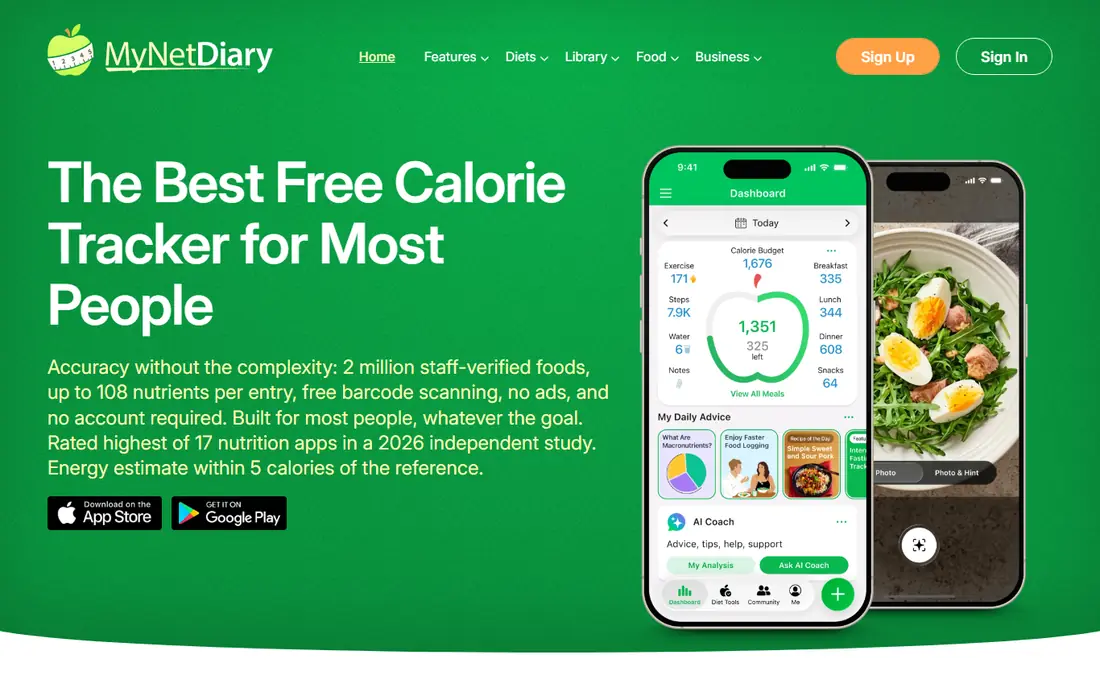
MyNetDiary is the best free all-rounder on this list. You can set custom macro targets by grams or percentages on the free tier, log foods quickly, and use it without ads. Premium, listed at $59.99 per year, and Premium Plus at $99.99 per year, add coaching, meal planning, and advanced tools, but the free tier already covers core macro tracking well.
In a January 2026 logging speed test cited by MyNetDiary, it needed fewer taps than other apps tested to log the same foods, which matches its reputation for fast entry. The food database is smaller than MyFitnessPal, so you may need to add custom foods more often. For a free macro app that does not push gram targets behind a paywall, MyNetDiary is our first suggestion.
- Custom gram targets free
- Free tier with no ads
- Fast logging in independent speed tests
- Premium coaching needs a paid plan
- Database is smaller than MyFitnessPal
- Interface feels plain to some users
MyFitnessPal remains the most widely used food diary, largely because its database is huge, with more than 20.5 million foods listed, including many restaurant dishes. That size means you will find branded foods quickly, and it connects with more than 35 apps and devices for activity and weight sync. Free logging covers calories and basic macros by percentage.
Premium, listed at $19.99 per month or $79.99 per year, adds gram-level macro goals, per-meal targets, barcode scanning, meal scanning, and voice logging. Premium Plus, at $24.99 per month or $99.99 per year, adds more coaching features. The free tier is useful, but serious macro tracking really needs Premium here, and user-submitted entries vary in accuracy, so double-check entries for foods you eat often.
- Very large food database with restaurant dishes
- Connects with many apps and devices
- Free basic logging
- Gram targets and per-meal targets need Premium
- Barcode and meal scanning need Premium
- Ads on free tier
Lose It is the beginner-friendly pick. Set a goal, log meals, and see a simple daily budget with weight trends, without a wall of nutrient charts. The free tier covers basic calorie and macro logging, which is enough to learn the habit. Premium, listed at $79.99 per year in recent checks, adds barcode and photo logging, custom macro goals, and meal planning tools.
That simplicity is also the limit. If you want deep micronutrient data or adaptive coaching, Cronometer or MacroFactor will serve you better. Lose It suits people who want a clear, low-pressure diary and are happy to pay for Premium once the habit sticks. For a first macro app, its gentle learning curve is a real advantage.
- Simple, friendly diary for beginners
- Free basic logging
- Photo and voice logging on Premium
- Custom macro targets need Premium
- Barcode scanning is paid in recent listings
- Fewer nutrient details than Cronometer
Carb Manager is the specialist pick for low-carb, keto, and diabetic-friendly eating. It shows total and net carbs clearly, tracks macros by meal, and includes keto recipes and meal plans. The free tier covers daily macro targets with no third-party ads, which is generous compared with many rivals. Premium, listed at $39.99 per year in recent checks, adds per-meal and day-of-week targets, advanced reports, and more recipes.
If you eat a standard balanced diet, a general app such as MyNetDiary or Cronometer will fit better. If you count net carbs daily, Carb Manager saves time and reduces errors, since its database and tools are built around that goal. Check with a clinician before starting keto, especially if you take medication for blood sugar or blood pressure.
- Built for keto and low-carb tracking
- Net carbs shown clearly
- Free tier with no third-party ads
- Less useful if you do not follow low-carb eating
- Per-meal targets need Premium
- Recipe tools are thinner than general apps
YAZIO combines macro tracking with meal planning and fasting tools in a clean interface. The free tier covers basic calorie and macro logging with barcode scanning, while Pro, listed at about $47.90 per year, adds full macro detail, custom targets, meal plans, and fasting plans. It suits people who want one app for food, fasting windows, and simple recipes.
The limits are platform and paywall. YAZIO has no full web app, so most use is on phones, and the deeper macro controls sit behind Pro. Its database is also smaller than MyFitnessPal. For a phone-first user who wants fasting and meal planning alongside macros, YAZIO is a tidy package. For desktop logging or deep nutrient data, pick Cronometer instead.
- Clean macro dashboard
- Free barcode scanning
- Built-in fasting timer and recipes
- Full macro detail and custom targets need Pro
- No web app
- Some planning tools are paid
Lifesum takes a lifestyle approach to macros. Pick a plan, such as balanced eating or low-carb, log meals with barcode scanning, and track habits such as water and exercise alongside food. The free tier covers basic logging, while Premium adds detailed macro plans, recipes, and meal planning, with pricing that varies by plan and region, so check the in-app price.
Lifesum will not match MacroFactor for adaptive coaching or Cronometer for nutrient depth, and its macro controls are simpler. That simplicity suits people who want guidance without a spreadsheet feel, and who value habit tracking as much as gram counts. If you want precise macro coaching for fat loss or muscle gain, a specialist app will serve you better.
- Simple diet plans and habit tracking
- Clean interface
- Barcode scanning and recipes
- Macro detail is thinner than specialist apps
- Premium pricing varies
- Database is smaller than MyFitnessPal
How we picked these
We compared official pricing pages, app store listings, and public reviews for macro apps that exist and work in October 2026. We required gram-level macro display, custom or adaptive targets at or below the paid tier, and a real food database, and we mixed free apps with paid coaching tools. Prices are US list prices checked in recent reviews, and they can change with promotions. We did not claim hands-on testing we did not do.
How to choose the right macro app
Start with your goal. If you want adaptive targets that change with your weight, pick MacroFactor and commit to logging daily. If you want free gram targets, pick MyNetDiary or Cronometer. If you follow keto, pick Carb Manager. If you want the largest database and do not mind paying, pick MyFitnessPal Premium.
Check logging speed next, since the best app is the one you will use after two weeks, not just on day one. Build saved meals and recipes in week one, use barcode scanning where it is free, and check entries for foods you eat often. Finally, be honest about targets: very low calorie or protein targets can be risky, so talk to a clinician or dietitian if you have a health condition, take medication, or plan a large deficit.
Frequently asked questions
What is the best macros app for weight loss?
MacroFactor is our pick for adaptive macro coaching, since it adjusts targets from your logged intake and weight. For a free option, MyNetDiary gives gram targets free, while Cronometer gives the deepest nutrient data free. Pick MacroFactor for coaching, MyNetDiary for free tracking, and Cronometer for accuracy.
Can I track macros for free?
Yes. MyNetDiary, Cronometer, MyFitnessPal, Lose It, Carb Manager, YAZIO, and Lifesum all offer free macro logging. The difference is what sits behind a paywall: gram targets are free in MyNetDiary and Cronometer, but need Premium in MyFitnessPal and Lose It. Check the free tier limits before you build a habit around one app.
How much protein should I eat for weight loss?
Protein needs vary by body size, activity, and health, so there is no single number that fits everyone. Many general guides suggest a higher protein intake during weight loss to protect muscle, but exact targets should come from a clinician or dietitian who knows your health history. Use the app to track what you eat, not to set a medical target on your own.
Is MacroFactor worth the price?
MacroFactor is worth it if you log consistently and want targets that adapt to your results. At $11.99 per month or $71.99 per year, it costs more than free apps, and it has no free tier beyond a trial. If you log only now and then, a free app such as MyNetDiary will give you similar basic tracking for no cost.
Which macro app is best for keto?
Carb Manager is best for keto, since it shows net carbs clearly and is built around low-carb plans and recipes. Cronometer also tracks net carbs and nutrients well for keto users who want depth. Talk to a clinician before starting keto, especially if you take medication for blood sugar or blood pressure.
Sources
See where you really rank - block by block
ProMapRanker scans Google Maps across a grid of your service area. Simple monthly plans from $19, white-label on every plan.
Start freeKeep reading
 zscaler alternatives
Best Zscaler Alternatives in 2026
Looking for zscaler alternatives? We compare 9 SASE and zero trust platforms on architecture, data protection, pricing, and fit for your network and team.
Read → zapier alternatives free
Best Zapier Alternatives Free in 2026
Nine automation tools for zapier alternatives free in 2026, all with genuinely free tiers, plus free plan limits, starting prices and upgrade paths explained.
Read → which platform is best for online reputation
Which Platform Is Best for Online Reputation in 2026
Wondering which platform is best for online reputation? We compare 8 review, listing, and response tools for small and multi-location businesses and agencies.
Read →