 ProMapRanker
Best Machine Learning Companies in 2026

Key takeaways
- OpenAI, Anthropic and Google DeepMind lead frontier model research and products, with different strengths in consumer, enterprise and science work.
- Meta AI and Mistral AI are the strongest choices for open weight models you can run and adapt yourself.
- Microsoft, Amazon Web Services and NVIDIA provide the cloud and hardware base that most machine learning work runs on.
- xAI is the real time and social data specialist, while Hugging Face style platforms matter for model sharing, though we focus here on model and platform builders.
- No single company is best for every job, so choose by task, data control, cost and deployment needs.
Quick comparison
| Pick | Great for | Pricing starts at | Free tier | |
|---|---|---|---|---|
 OpenAI | Consumer and API frontier models | See website | Yes | Visit |
 Anthropic | Enterprise reasoning and safety focused models | See website | Yes | Visit |
 Google DeepMind | Research led Gemini models and science | See website | Yes | Visit |
 Meta AI | Open weight Llama models | See website | Yes | Visit |
 Microsoft | Enterprise AI on Azure and Copilot | See website | Yes | Visit |
 NVIDIA | AI hardware and compute platforms | See website | No | Visit |
 Amazon Web Services | Cloud machine learning services | See website | Yes | Visit |
 Mistral AI | Open weight European models | See website | Yes | Visit |
 xAI | Real time Grok models and X data | See website | Yes | Visit |
The best machine learning companies
Machine learning companies here include frontier model labs, open model providers, cloud platforms and hardware builders, since real machine learning work usually needs more than one of them. We compared official company pages, product documentation and recent 2026 company comparisons, and we kept only companies that are live in October 2026 and truly build or run machine learning systems at scale. Pricing for models and cloud services changes often, so check vendor pricing pages for current rates.
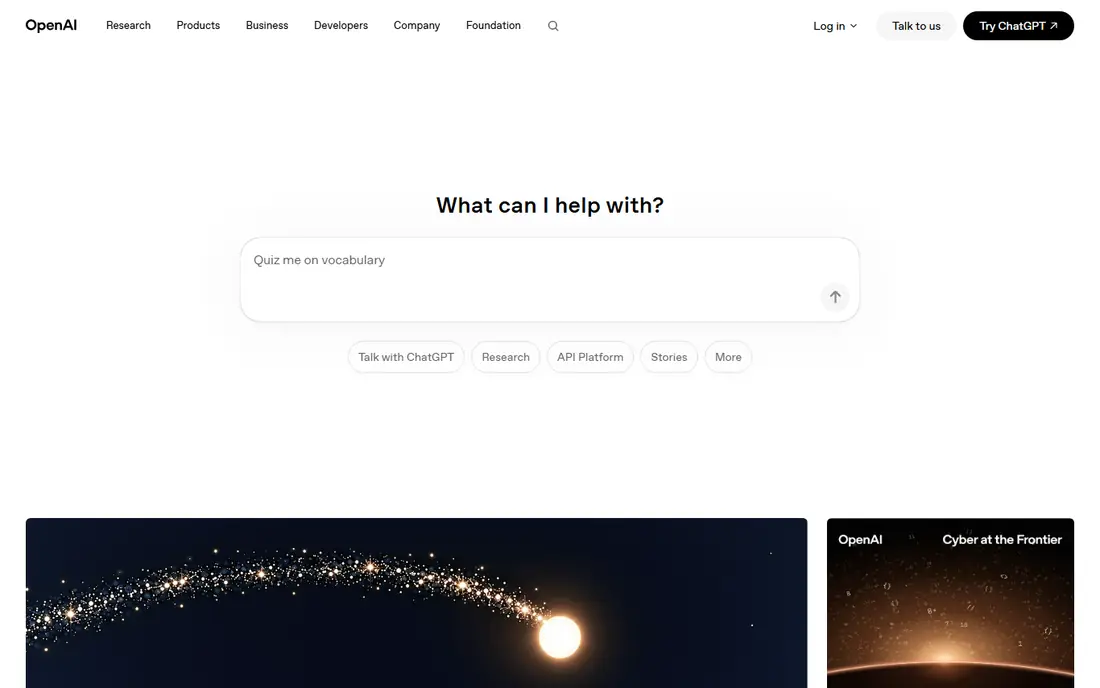
OpenAI remains the most widely recognised machine learning company, thanks to ChatGPT and its GPT model family. Its API platform supports a huge range of applications, from chat and coding to agents and multimodal work, and its product ecosystem makes it easy to start without building infrastructure first.
The trade off is dependence on a fast moving platform. Model versions, pricing and product features change regularly, and enterprise teams need to plan for evaluation, data controls and fallback options. For broad consumer and API use, OpenAI is still the default starting point for many teams.
- Broad ChatGPT product reach
- Large API platform and ecosystem
- Strong general model performance
- Enterprise pricing varies by use
- Model behaviour changes with updates
- Data control needs careful setup

Anthropic, builder of the Claude model family, is the enterprise reasoning pick in this list. Its models are widely used for coding, analysis, long documents and agentic work, with a research focus on safety and reliable behaviour. Many regulated and enterprise teams choose Claude for tasks where careful reasoning and clear outputs matter.
Anthropic does not match OpenAI for consumer product breadth, and its free tier is more limited than a full consumer product. For business and developer use, especially long context and coding tasks, Anthropic is a leading choice alongside OpenAI and Google DeepMind.
- Strong reasoning and long context performance
- Safety research focus
- Growing enterprise adoption
- Product breadth is narrower than OpenAI
- API pricing varies by model
- Availability varies by region
Google DeepMind combines frontier research with Google scale products. Its Gemini models power Google products and the Vertex AI platform, and its science work, including protein structure prediction, shows a research depth few rivals match. For teams already using Google Cloud, DeepMind models are a natural fit.
Access and pricing run through Google Cloud and consumer products, so enterprise teams need to test Vertex AI, quotas and data controls. For research led work and multimodal models, Google DeepMind belongs in any shortlist.
- Deep research base
- Gemini models across text, image and video
- Science work such as protein structure research
- Product access runs through Google platforms
- Enterprise setup can be complex
- Model choice needs testing
Meta AI is the open weight leader in this list. Its Llama model family can be downloaded, run and adapted by developers and companies, which suits teams that want data control, private deployment or custom fine tuning. Meta AI features also appear across Facebook, Instagram and WhatsApp, giving it huge consumer reach.
Open weight use still needs infrastructure, expertise and careful licensing checks. For teams that want to self host or build on an open model base, Meta AI is the strongest starting point, while teams that want a managed API may prefer OpenAI, Anthropic or Google.
- Open weight Llama models for self hosting
- Broad social and consumer product reach
- Strong research output
- Open weight does not mean fully open source in every case
- Support is community and partner led
- Model licensing needs reading
Microsoft is the enterprise platform pick. Through Azure AI, including Azure OpenAI Service, and Copilot across Microsoft 365, GitHub and Dynamics, it brings machine learning into tools many companies already use. Compliance, identity and governance controls are a key reason large organisations choose Microsoft.
The range can be confusing, with many overlapping products and licensing options. For companies already on Microsoft 365 and Azure, Microsoft offers the smoothest path to enterprise AI, while smaller teams may find a direct model API simpler.
- Azure AI and OpenAI service for enterprises
- Copilot across Microsoft 365
- Strong compliance and governance tools
- Product range is broad and complex
- Licensing needs careful reading
- Value is highest inside Microsoft ecosystem
NVIDIA is not a model lab, but it powers much of machine learning. Its GPUs, CUDA software and data centre platforms train and run models from OpenAI, Anthropic, Google and countless smaller labs. For any team building or hosting models at scale, NVIDIA hardware is usually part of the stack, directly or through a cloud provider.
The catch is cost and complexity. Buying GPUs is a capital decision, and most smaller teams will use NVIDIA hardware through cloud services rather than buying it directly. As a company shaping machine learning infrastructure, NVIDIA belongs on this list.
- Leading GPU hardware for training and inference
- CUDA software ecosystem
- Data centre and edge platforms
- Hardware cost is high
- Supply and pricing vary
- Software value depends on your stack
Amazon Web Services, through SageMaker and Bedrock, lets teams build, train and run machine learning models on cloud infrastructure, with access to models from Anthropic, Meta and others alongside Amazon models. That choice is valuable for teams that want to avoid single vendor lock in.
AWS pricing is usage based and can be complex, with compute, storage and model costs to track. For teams that need scale, global reach and model choice in one cloud, AWS is a leading platform, especially when paired with careful cost monitoring.
- Broad machine learning services including SageMaker and Bedrock
- Model choice across providers
- Global cloud scale
- Service range is very broad
- Pricing is usage based and complex
- Learning curve for new teams
Mistral AI is the leading European open weight model company in this list. Its models are known for efficiency and strong performance relative to size, with both API access and open weight downloads for self hosting. For European teams and for companies that want open models outside the largest US labs, Mistral is a strong choice.
The ecosystem is smaller than OpenAI, Google or Meta, so integrations and partner tools are fewer. For teams that value open weights, efficiency and data control, Mistral deserves a place in testing alongside Meta AI.
- Open weight models with strong efficiency
- European base and data options
- API and self hosting paths
- Smaller ecosystem than US giants
- Model range is narrower
- Enterprise support varies by plan
xAI, builder of the Grok model family, is the real time specialist in this list. Its link to X gives Grok access to live social data and trends, which suits news, social analysis and current events work where other models may lag. Its API and consumer products are growing quickly.
As a newer frontier lab, its product set and pricing change more often than established rivals, and its strengths are task dependent. For real time and social data tasks, xAI is worth testing, while for general enterprise work, OpenAI, Anthropic and Google remain safer defaults.
- Grok models with real time data access
- X platform integration
- Growing API and product range
- Newer lab with evolving product set
- Real time data strengths vary by task
- Pricing and access change often
How we picked these
We compared official company pages, product documentation and recent 2026 comparisons of AI and machine learning companies, and we kept only companies live in October 2026 that build frontier models, open models, cloud machine learning platforms or core AI hardware. We included different company types because a complete machine learning stack usually needs a model provider, a cloud platform and hardware, not a single vendor.
How to choose a machine learning company for your work
Start with your job, not with brand size. If you need a managed API for chat, coding or agents, test OpenAI, Anthropic and Google DeepMind on your real tasks. If you need data control or private deployment, test Meta AI and Mistral AI open weight models. If you need enterprise scale, compare Microsoft Azure and AWS, and check whether NVIDIA hardware runs through your cloud provider.
Then test cost and control together. Run the same tasks across two providers, measure accuracy, latency and cost per task, and check data residency, privacy and model update policies. Most serious teams use two or three providers for redundancy, rather than betting everything on one lab.
Frequently asked questions
What is the best machine learning company?
There is no single winner. OpenAI leads for consumer and API breadth, Anthropic leads for enterprise reasoning, Google DeepMind leads for research led models, and Meta AI leads for open weight models.
What is the best machine learning company for business use?
For managed API use, OpenAI and Anthropic dominate enterprise adoption. For cloud native work, Microsoft Azure, AWS Bedrock and Google Vertex AI are the standard platforms, and most enterprises use more than one provider.
Which machine learning company is best for open models?
Meta AI, with Llama, and Mistral AI are the strongest open weight choices. Both let you run and adapt models yourself, though you still need infrastructure and licensing checks.
What is the difference between OpenAI and Anthropic?
OpenAI focuses on broad consumer reach and a large API ecosystem, while Anthropic focuses on safety research, reasoning and enterprise reliability. Testing both on your tasks is the fastest way to see the difference.
Do I need NVIDIA to use machine learning?
No, most users access machine learning through cloud APIs and products that already run on NVIDIA hardware. Direct NVIDIA hardware matters mainly for teams training or hosting large models themselves.
How do I start with machine learning as a small business?
Start with a managed API or a cloud platform, test one clear use case such as support, documents or coding help, and measure time saved and cost per task. Avoid building custom models until a managed option proves too limited.
Sources
See where you really rank - block by block
ProMapRanker scans Google Maps across a grid of your service area. Simple monthly plans from $19, white-label on every plan.
Start freeKeep reading
 zscaler alternatives
Best Zscaler Alternatives in 2026
Looking for zscaler alternatives? We compare 9 SASE and zero trust platforms on architecture, data protection, pricing, and fit for your network and team.
Read → zapier alternatives free
Best Zapier Alternatives Free in 2026
Nine automation tools for zapier alternatives free in 2026, all with genuinely free tiers, plus free plan limits, starting prices and upgrade paths explained.
Read → which platform is best for online reputation
Which Platform Is Best for Online Reputation in 2026
Wondering which platform is best for online reputation? We compare 8 review, listing, and response tools for small and multi-location businesses and agencies.
Read →