 ProMapRanker
Best Log Analysis Software in 2026

Key takeaways
- Splunk suits large enterprises and security teams, while Datadog suits teams already running Datadog for infrastructure and apps.
- Elastic and Grafana Loki suit teams that want open source control, with Elastic for full-text search and Loki for high-volume Kubernetes logs.
- Graylog and SigNoz suit self-hosted and OpenTelemetry-focused teams that want predictable control over data.
- Sumo Logic and ManageEngine Log360 suit security and compliance work, while Papertrail and Loggly suit smaller teams.
- Log pricing is usually per gigabyte or per event, so volume, retention, and indexing choices decide the real bill.
Quick comparison
| Pick | Great for | Pricing starts at | Free tier | |
|---|---|---|---|---|
 Splunk | Enterprise security analytics | See website | Free trial | Visit |
 Datadog Log Management | Datadog-centered observability | See website | Free trial | Visit |
 Elastic Stack | Full-text search with control | Free | Yes | Visit |
 Grafana Loki | High-volume Kubernetes logs | Free | Yes | Visit |
 Graylog | Self-hosted log management | Free | Yes | Visit |
 Sumo Logic | Cloud log analytics | See website | Free trial | Visit |
 Papertrail | Simple small-team log search | See website | Free trial | Visit |
 Loggly | Simple cloud log management | See website | Free trial | Visit |
 SigNoz | OpenTelemetry-native observability | Free | Yes | Visit |
 ManageEngine Log360 | Compliance and SIEM for mid-market | See website | Free trial | Visit |
The best log analysis software
Log analysis software collects logs from apps, servers, and cloud services, then lets teams search, filter, alert, and spot patterns when something breaks. We compared official product pages, pricing pages, and 2026 log management guides, and we focused on search power, deployment, pricing model, and retention, because those decide daily usefulness and cost.
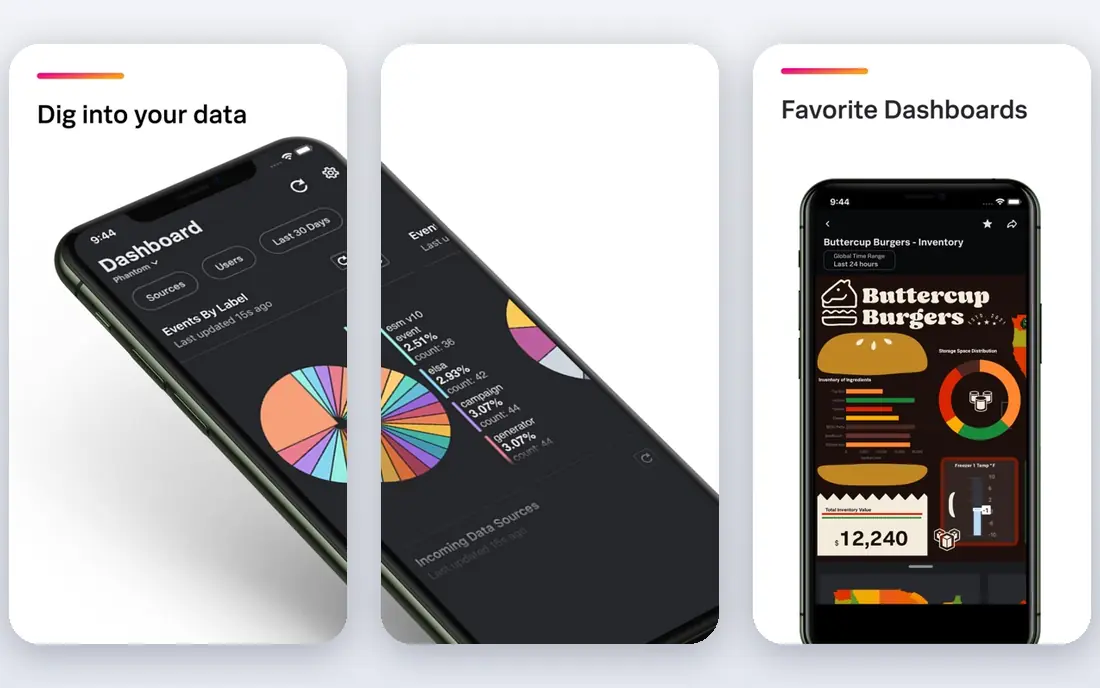
Splunk is the enterprise standard for many security and operations teams, with a powerful search language for digging through large log volumes. It supports SaaS and self-hosted deployment, and its security analytics, dashboards, and alerting suit mature security operations centers. Teams that need to correlate logs with security events often shortlist Splunk first.
The main limits are cost and complexity. Splunk pricing is custom and volume based, often per gigabyte per day, and large volumes can lead to large bills. It also needs skilled staff to design indexes, searches, and retention. For large enterprises with high-value security needs, Splunk's depth justifies the cost. For small teams, an open source or simpler cloud tool will be cheaper.
- Powerful search and analytics
- Strong security and SIEM use
- Broad enterprise integrations
- Custom, volume-based pricing can be high
- Needs expertise to run well
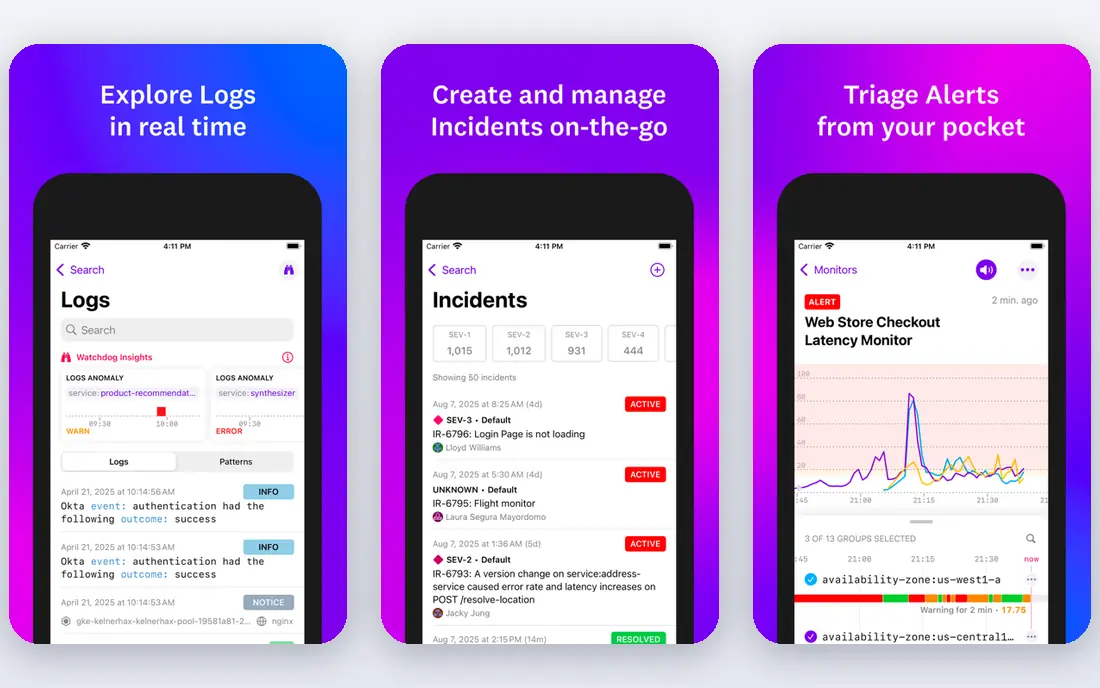
Datadog Log Management suits teams already using Datadog for infrastructure, apps, and traces, because logs sit next to metrics and traces in one view. That context helps teams move from an alert to the exact log lines that explain it, without switching tools. Its integrations cover major cloud providers, containers, and common services.
Log pricing is usage based, per gigabyte ingested plus indexed events in many plans, so teams must manage volume with pipelines, exclusions, and retention settings. Teams that do not use Datadog elsewhere may find a standalone log tool cheaper. For Datadog shops, though, the unified view is hard to beat.
- Logs beside metrics, traces, and alerts
- Strong cloud-native integrations
- Fast search and dashboards
- Usage-based log pricing can grow fast
- Best value requires Datadog adoption
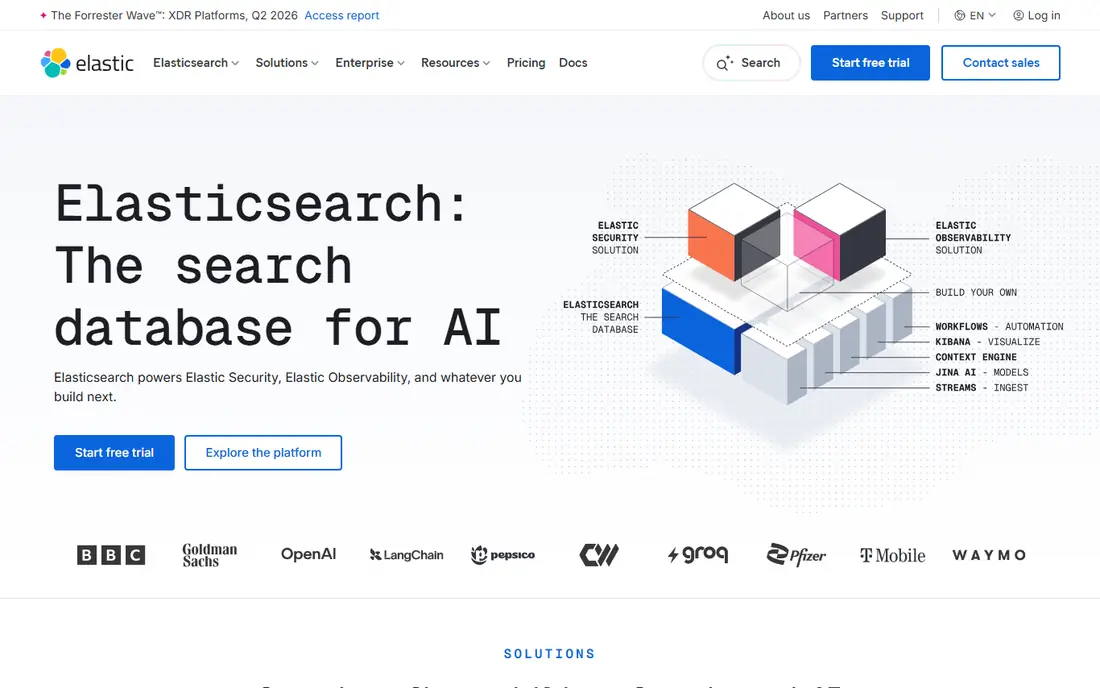
The Elastic Stack, often called ELK, combines Elasticsearch for search, Logstash or Beats for collection, and Kibana for visualization. It gives teams full control over pipelines, indexes, and dashboards, and its full-text search is excellent for digging through unstructured logs. Self-hosted Elastic is free to use, with costs for infrastructure and staff time.
Running Elastic well at scale takes engineering skill, especially for clustering, retention, and upgrades. Elastic Cloud removes much of that work but adds usage-based pricing. For teams with strong engineering and a need for custom search, Elastic is our pick for control and flexibility.
- Open source Elasticsearch, Logstash, and Kibana
- Powerful full-text search
- Self-hosted or Elastic Cloud
- Needs engineering to run at scale
- Managed cloud pricing is usage based
Grafana Loki is built for high-volume logs, especially in Kubernetes, with an index design that keeps costs lower than full-text indexing for many workloads. It pairs naturally with Grafana dashboards, Prometheus metrics, and Tempo traces, giving teams a unified observability view. Self-hosted Loki is free, and Grafana Cloud offers a managed path from $19 per month in third-party listings, plus usage.
Loki is not a full-text search engine like Elastic, so teams that need deep text search across every field may find it less powerful. It also needs storage and Grafana setup to work well. For Kubernetes teams with high log volumes and Grafana already in place, Loki is a smart, cost-aware choice.
- Open source and cost-efficient for high volumes
- Works well with Grafana dashboards
- Kubernetes friendly
- Less full-text power than Elastic
- Needs Grafana and storage setup
Graylog offers open source log management with self-hosted and cloud options, plus enterprise and security tiers for larger teams. It suits operations teams that want to run logs on their own infrastructure, with dashboards, alerts, and pipeline processing. Its flat annual licensing by volume band can make costs more predictable than per-gigabyte billing for some teams.
Graylog's interface and ecosystem feel less polished than Datadog or Elastic Cloud in places, and enterprise pricing starts at a level that small teams may find high. Third-party listings have placed enterprise pricing from around $15,000 per year, so confirm current terms. For self-hosted teams that value control and predictable licensing, Graylog is a solid pick.
- Open source core
- Flat enterprise licensing by volume band
- Self-hosted and cloud options
- Enterprise pricing can be high
- Interface feels less modern than some cloud rivals
Sumo Logic is a cloud log analytics platform with search, dashboards, alerting, and machine learning features for spotting anomalies. It suits cloud-native teams and security teams that need to analyze logs without managing servers. Its cloud SIEM and compliance tools extend it beyond basic log search.
Pricing uses credits, which can be confusing at first, because different actions consume credits at different rates. Teams should model credit use against their volume and retention before committing. For cloud teams that want managed analytics without infrastructure work, Sumo Logic is a strong option.
- Cloud-native log analytics
- Machine learning insights
- Strong security and compliance features
- Credit-based pricing needs care
- Custom pricing for larger use
Papertrail, from SolarWinds, is known for simple, fast log search for small and mid-size teams. Setup is quick, search is real time, and the interface is easy to learn, which suits teams that just need to tail logs and find errors without a large observability project. Third-party listings have placed entry pricing around $7 per month, though current plans should be confirmed.
Papertrail is not built for large enterprise analytics, long retention, or complex security workflows. Volume and retention limits on lower plans can become a constraint as teams grow. For small teams that want logs working today with minimal effort, Papertrail is our pick for simplicity.
- Very simple setup
- Fast real-time search
- Low entry cost for small teams
- Limited depth for large enterprises
- Retention and volume limits on lower plans
Loggly, also from SolarWinds, is a cloud log management service for developers and DevOps teams that want simple collection, search, and alerting. It offers automatic parsing for common log formats and integrates with other SolarWinds products. Third-party listings have placed entry pricing around $79 per month, though current pricing should be confirmed on its site.
Loggly lacks some enterprise security and analytics depth found in Splunk or Sumo Logic, and larger teams may outgrow it. For small to mid-size teams that want a cloud tool without self-hosting, Loggly is a practical, easy-to-learn choice. Pair it with an APM tool if you need full application tracing.
- Cloud-based and easy to use
- Automatic parsing
- SolarWinds integrations
- Less enterprise depth than Splunk or Sumo Logic
- Pricing depends on volume and features
SigNoz is an open source observability platform built around OpenTelemetry, with logs, metrics, and traces in one interface. It suits teams that have standardized on OpenTelemetry and want a single tool without vendor lock-in. Self-hosted SigNoz is free, and cloud pricing has been listed from around $49 per month, plus usage, though current pricing should be confirmed.
SigNoz is newer than the largest vendors, so its ecosystem and enterprise features are still growing. Teams that need mature SIEM workflows may prefer Splunk or Sumo Logic. For OpenTelemetry-native teams that want open source control and unified observability, SigNoz is a compelling modern choice.
- Open source and OpenTelemetry native
- Logs, metrics, and traces in one tool
- Cloud from $49 per month in listings
- Newer than Splunk or Elastic
- Enterprise features still maturing
ManageEngine Log360 combines log management with SIEM features for mid-market security and compliance teams. It offers auditing, alerting, and compliance reports for frameworks that many regulated companies need, with on-premises and cloud deployment. Pricing is per log source, which some teams find easier to predict than per-gigabyte billing.
Log360 pricing depends on source count, with third-party listings placing cloud pricing from around $1,095 per year for smaller setups, though current terms should be confirmed. It fits best in Active Directory and Windows-heavy environments, and cloud-native teams may prefer a different tool. For mid-market compliance work, Log360 is a strong, focused option.
- SIEM and compliance reporting
- Per-log-source pricing
- On-premises and cloud options
- Pricing depends on log source count
- Interface and setup suit Windows and AD-heavy shops best
How we picked these
We compared official product pages, pricing pages, and 2026 log management guides, and we kept only tools that are live in October 2026. We favored a mix of enterprise, cloud, and open source options so teams of different sizes can find a fit. We did not claim hands-on testing. Where pricing was custom or usage based, we wrote See website rather than guessing, and we noted widely listed entry prices only where they appeared in third-party sources.
What to check before you buy
Start with volume and retention. Estimate daily log volume, how long you must keep logs, and how often you need to search old data, because those three numbers drive cost more than seat count. A tool that looks cheap at 1 gigabyte per day can become expensive at 100 gigabytes per day, and retention settings matter as much as ingestion price.
Next, test search and alerting with your real logs. Ingest a sample from your apps, try to find a known error, and set an alert for a real failure pattern. Check how fast search returns, how clear the query language is, and whether dashboards help on-call staff. Finally, check integrations, agent support, and security controls, including role access, audit logs, and data residency.
Controlling log costs
Log costs grow when teams log everything at debug level forever. Use sampling, drop noisy fields, set different retention for hot and archived logs, and review volume by service each month. A good log tool should show volume by source clearly, so you can find the noisiest service and fix it at the source.
Frequently asked questions
What is the best log analysis software?
For large enterprises, Splunk is often the best log analysis software, while Datadog suits Datadog-centered teams. Elastic and Grafana Loki suit open source teams, and Papertrail suits small teams that need simplicity.
What are the best log analysis tools for Kubernetes?
Grafana Loki, Elastic, and Datadog are strong tools for Kubernetes logs, with Loki leading on cost efficiency for high volumes. SigNoz also suits Kubernetes teams that use OpenTelemetry for logs, metrics, and traces.
What is the best platform for log analysis in a small team?
Papertrail and Loggly suit small teams that want fast setup and simple search. SigNoz and Graylog suit small teams that want open source control and are willing to self-host.
What is the best log analysis tool for security teams?
Splunk, Sumo Logic, and ManageEngine Log360 suit security teams, because they add SIEM, alerting, and compliance reporting on top of log search. Choose based on team size, compliance needs, and existing security tools.
How much does log analysis software cost?
Costs vary by pricing model: per gigabyte, per event, per log source, or per host. Open source tools are free to use but need infrastructure and staff time, while cloud tools charge by volume and retention. Always model cost at your real daily volume.
Can I use open source log tools in production?
Yes, Elastic, Grafana Loki, Graylog, and SigNoz all run in production for many teams. Open source success depends on having staff to run, upgrade, and secure the system, or using a managed cloud version for that work.
Sources
See where you really rank - block by block
ProMapRanker scans Google Maps across a grid of your service area. Simple monthly plans from $19, white-label on every plan.
Start freeKeep reading
 zscaler alternatives
Best Zscaler Alternatives in 2026
Looking for zscaler alternatives? We compare 9 SASE and zero trust platforms on architecture, data protection, pricing, and fit for your network and team.
Read → zapier alternatives free
Best Zapier Alternatives Free in 2026
Nine automation tools for zapier alternatives free in 2026, all with genuinely free tiers, plus free plan limits, starting prices and upgrade paths explained.
Read → which platform is best for online reputation
Which Platform Is Best for Online Reputation in 2026
Wondering which platform is best for online reputation? We compare 8 review, listing, and response tools for small and multi-location businesses and agencies.
Read →