 ProMapRanker
Best Local SEO Tools for Medical Transport Services in 2026

Listing management across maps and directories · Pricing starts at: See website
Direct answer
Partoo is my first pick for medical transport services because it keeps your name, address and phone number consistent across map and directory listings, which matters when families and discharge planners search by location. Pricing is quote-based, so check its pricing page. For review requests after a ride, look at Signpost, and for local rank tracking, SE Ranking.
I compared these tools from vendor documentation and public sources, not from hands-on tests. My focus was on how each one fits the way a medical transport operator gets found: local map searches, directory listings, review requests after a ride, and phone calls from discharge planners and family members.
Key takeaways
- Medical transport companies live or die on accurate local listings, because a wrong phone number or service area sends bookings to a competitor.
- Review tools that send a request after a completed trip fit this business better than tools built around walk-in retail.
- Rank tracking should follow the cities and hospital corridors you actually serve, not a single city center pin.
- Call tracking helps you see which listings and pages produce booking calls, but keep the tracking numbers consistent with your Google Business Profile.
- None of these tools fixes a bad profile on its own; you still need correct categories, service areas and hours.
Quick comparison
| Pick | Great for | Pricing starts at | Free tier | |
|---|---|---|---|---|
| Partoo | Listing management across maps and directories | See website | Not stated | Visit |
 Signpost | Automated review requests after a trip | See website | Not stated | Visit |
 SE Ranking | Local rank tracking by city | See website | Free trial | Visit |
 WhatConverts | Call tracking tied to lead sources | See website | Free trial | Visit |
 Trustpilot | Public review profile and invitations | See website | Free plan | Visit |
 Rio SEO | Enterprise local listings and location pages | See website | Not stated | Visit |
 Localo | Google Business Profile management on a budget | See website | Free trial | Visit |
The best local SEO tools for medical transport services compared
Partoo is a listing management platform built around keeping business information consistent across maps, directories and review sites. For a medical transport service with several depots or service areas, that consistency is the main job. One wrong phone number on a directory can send a booking call nowhere, and Partoo is designed to catch those mismatches from a single place.
In practice, you would load each operating location with its address, phone, hours and service description, then let the platform push and monitor that data across its network. You can also collect and reply to reviews from the same dashboard, which suits a business where trust is decided before the first call. If you run wheelchair, stretcher and ambulatory services from different bases, separate location entries help each one rank in its own area.
The limits are mostly about scale and budget. Pricing is quote-based, so you need a conversation before you know the cost, and a single-vehicle operator may not need this level of coverage. Skip it if you only have one location and no plans to expand.
- Central listing sync across many directories
- location pages for multi-branch operators
- review management in the same dashboard
- Quote-based pricing
- smaller operators may find it heavy
Signpost is a marketing automation tool best known for review requests and customer communication. Medical transport is a natural fit because every completed trip is a clear moment to ask for feedback, and the request can go out by text or email shortly after the ride.
The workflow I would set up is simple: your booking or dispatch system passes the customer's contact details, and Signpost sends a review invitation after the trip is marked complete. Replies land in one inbox so you can respond to praise and complaints in the same place. Because families often choose a transport provider based on reviews and a quick look at the map listing, a steady flow of genuine requests helps more than any one-off campaign.
The main requirement is clean contact data and a clear consent process for messages. If your dispatch records are messy or you cannot confirm consent to text customers, fix that first. Smaller operators who prefer to ask for reviews manually may not need the automation.
- Automated review request sequences
- review responses in one inbox
- works with your existing customer contact flow
- Requires clean customer contact data
- pricing needs a quote
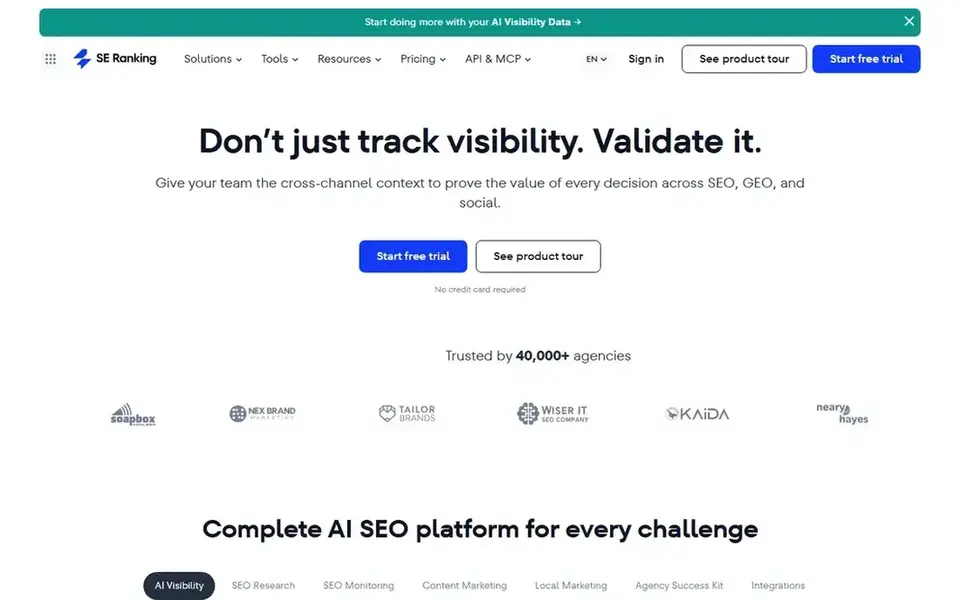
SE Ranking is an SEO platform with rank tracking, competitor analysis and reporting. For medical transport, the useful part is tracking where you appear in map results for searches in the specific towns and hospital areas you serve, rather than one generic city term.
You would create a project per service area, add the keywords that match how people search, such as non-emergency medical transport plus a town name, and check positions over time. Because the tool lets you set the search location, you can see whether your profile shows up near a hospital campus or a senior community. Reports are easy to pass to an owner who wants a monthly summary.
The limit is that local pack tracking and location-level data are not equally available on every plan, so check the plan details before you commit. It also tracks rankings, not listings, so pair it with a listing tool.
- Rank tracking with location-level settings
- competitor tracking
- reporting you can share with a manager
- Local-specific features sit in higher plans
- needs setup per location
WhatConverts is a lead tracking tool that records calls, form submissions and chats and ties each one to the marketing source that produced it. Medical transport runs on phone calls, so knowing which listing, map entry or page generated a booking call is genuinely useful.
The setup involves placing tracking numbers on your site and listings, then routing calls to your dispatch line. You can then see whether calls come from your Google Business Profile, a directory listing or a specific service page. That helps you decide where to spend effort, for example adding more detail to the pages for dialysis or discharge transport.
The caution is number consistency. Keep your main business number as the primary one on your Google Business Profile and use tracking numbers where they will not confuse customers. If you cannot manage that cleanly, skip call tracking for now.
- Tracks calls, forms and chats in one place
- attributes leads to source
- lead reports for owners
- Tracking numbers need careful setup
- quote-based pricing at higher volumes
Trustpilot is a review platform with a public profile page and tools for sending review invitations. For medical transport, a public profile gives families and case managers a place to check feedback beyond the map listing.
You can claim a free profile, collect reviews and reply to them. On paid plans you get automated invitations and widgets that show your rating on your own site. The value depends on your market: in some areas consumers check Trustpilot regularly, in others they rely on Google reviews alone. It works best as a second review source next to your Google Business Profile.
The limit is that it is consumer-facing. Referral partners such as clinics and discharge planners rarely check Trustpilot, so do not treat it as your only review channel. Follow the platform's rules on how you invite reviewers.
- Recognizable review profile
- invitation tools on paid plans
- review widgets for your site
- Consumer brand recognition varies by market
- paid features needed for automation

Rio SEO is a local marketing platform for multi-location brands, covering listings management, local pages and reporting. It fits medical transport groups that operate across several counties or states and need one system for every location.
For a regional operator, the appeal is scale: you can manage listings for each depot, publish location pages from templates, and keep hours and phone numbers aligned. That structure helps when a new branch opens or a service area changes, because updates flow from one place instead of being edited by hand on every directory.
The limit is fit. This is built for larger organizations with marketing staff, and a small fleet will find it more than it needs. Pricing is quote-based, so ask for a demo before deciding.
- Local listings management at scale
- location page templates
- built for multi-location brands
- Aimed at larger organizations
- quote-based pricing
Localo is a local SEO tool focused on Google Business Profile management. It audits your profile, suggests tasks and tracks local rankings, which suits a small medical transport operator who wants a clear to-do list rather than a large platform.
You would connect your profile, work through the audit items such as categories, description and photos, and watch local rankings for your service terms. Review monitoring keeps new feedback visible so you can reply quickly. For a single-location operator, that covers the basics of local visibility without a long setup.
The limit is scope. It does not sync listings across the wider directory network the way Partoo or Rio SEO do, so if data consistency across many sites is your main problem, look elsewhere. It is a good starting point for a small team.
- Profile audit and task list
- rank tracking for local searches
- review monitoring
- Fewer directory integrations
- smaller feature set than enterprise tools
How I chose
I built this list from vendor documentation and public sources, including each product's own feature pages and help content. I did not run hands-on tests, so treat the workflow notes as guidance on how the tools are documented to work, not as a lab review.
My filter was fit for medical transport specifically. That means tools that handle multiple service areas, support review requests after a completed trip, and make phone call attribution clear. I also weighed limits: quote-based pricing, setup effort, and whether a tool is built for a single operator or a multi-state group. Where a product is aimed at larger organizations, I say so rather than pretending it suits everyone. I left out tools I could not verify as currently operating.
What to check before you buy
- Confirm the tool can handle multiple service areas or depots, not just one address.
- Check whether review requests can be triggered after a completed trip rather than on a fixed schedule.
- Ask how the tool handles your primary phone number on Google Business Profile versus tracking numbers.
- Verify that listing sync covers the directories your customers actually use in your region.
- Check whether rank tracking lets you set a search location near the hospitals and communities you serve.
- Read the contract terms for location limits and cancellation before you sign.
Frequently asked questions
Do medical transport companies need local SEO tools at all?
Yes, if you want to be found when someone searches for transport near a hospital or in a specific town. Local SEO tools keep your listings accurate, help you collect reviews and show whether your profile appears in map results. A small operator can start with a profile management tool and add listing sync as they grow.
Which tool is best for getting more reviews?
Signpost is built around automated review requests after a customer interaction, which matches a completed trip. Trustpilot works as a second public profile. Whichever you use, ask every customer the same way, do not filter out unhappy ones, and never offer incentives that break the platform's rules.
Can I track calls from my Google Business Profile?
Yes. Call tracking tools such as WhatConverts can show which source produced a call. Keep your main business number as the primary number on your profile so customers see a consistent line, and use tracking numbers where they will not cause confusion.
How many locations can these tools manage?
It varies by product and plan. Listing platforms such as Partoo and Rio SEO are built for multiple locations, while Localo and SE Ranking suit smaller setups. Check the location limits on the plan you are considering, because pricing often scales with the number of branches.
Is a free plan enough to start?
Sometimes. Trustpilot has a free profile, and SE Ranking, WhatConverts and Localo offer free trials. A free plan usually covers the basics, such as claiming a profile or testing rank tracking, but automated review invitations and wide listing sync typically need a paid plan.
Sources
See where you really rank - block by block
ProMapRanker scans Google Maps across a grid of your service area. Simple monthly plans from $19, white-label on every plan.
Start freeBrowse all guides
← Best Local SEO Tools for Gutter Guard Installers in 2026Best Local SEO Tools for Montessori Schools in 2026 →
 best local seo tools for firewood suppliers
Best Local SEO Tools for Firewood Suppliers in 2026
A practical guide to the best local SEO tools for firewood suppliers in 2026, covering listings, reviews, rank tracking and call tracking.
Read → best local seo tools for cabinet refacing companies
Best Local SEO Tools for Cabinet Refacing Companies in 2026
A practical guide to the best local SEO tools for cabinet refacing companies in 2026, covering GBP management, reviews, rank tracking and call tracking.
Read → best local seo tools for basement finishing companies
Best Local SEO Tools for Basement Finishing Companies (2026)
A practical guide to the best local SEO tools for basement finishing companies in 2026, covering listings, reviews, rank tracking and GBP management.
Read → local seo for bail bonds companies
Local SEO for Bail Bonds Companies
A local SEO guide for bail bonds companies: Google Business Profile setup, reviews, and 24/7 urgent-search local SEO for bail bondsmen.
Read → local seo for flooring companies
Local SEO for Flooring Companies
A local SEO guide for flooring companies: Google Business Profile setup, reviews, and showroom and installation local SEO.
Read → google business profile suspended appeal
Google Business Profile Suspended: How to Appeal and Get Reinstated
A step-by-step guide to appealing a suspended Google Business Profile and getting it reinstated faster.
Read →More in Local SEO & Google Maps · All guides A to Z by date · Latest guides