 ProMapRanker
Best Local SEO Software for Language Schools in 2026
Direct answer
Localo is my top pick for most language schools because it handles Google Business Profile management, local rank tracking and review prompts in one place, which matches how a school with several campus listings actually works. It has no free plan stated, so check its pricing page. SOCi suits schools with many branches that need approvals across locations, and CallRail fits schools that want to see which listings and campaigns produce enquiry calls.
I compared these tools from vendor documentation and public sources, and I did not run hands-on tests. My focus was how each one fits the way a language school operates: a main campus, sometimes extra teaching sites, a steady flow of enquiries from maps, and reviews from students who often move on after a term.
Key takeaways
- Language schools usually have one main campus listing plus seasonal or satellite locations, so multi-location support matters more than raw keyword volume.
- Review requests should go out after a trial lesson or enrolment, not in bulk, and software should let you send them by email or SMS without gating.
- Local rank tracking is useful only when you track the phrases students actually search, such as "English courses near me" or "IELTS preparation [city]".
- Citation consistency matters because students check your address, phone and opening hours across maps and directories before they visit.
- Any tool that promises review gating, bought reviews or keyword-stuffed business names breaks Google's guidelines and puts your listing at risk.
Quick comparison
| Pick | Great for | Pricing starts at | Free tier | |
|---|---|---|---|---|
 Localo | GBP management and local rank tracking | See website | Not stated | Visit |
 SOCi | Multi-campus schools with approval workflows | See website | Not stated | Visit |
 CallRail | Tracking calls from listings and ads | See website | Not stated | Visit |
 Chatmeter | Review and listing management at scale | See website | Not stated | Visit |
 ReviewTrackers | Review monitoring and requests | See website | Not stated | Visit |
 Local Viking | Geo-grid rank tracking for one campus | See website | Free trial | Visit |
 BrightLocal | Citations and local audit reports | See website | Free trial | Visit |
The best local SEO software for language schools compared
Localo is a local SEO platform built around Google Business Profile management, local rank tracking and review collection. For a language school it fits the common setup of one main campus plus a second teaching site or a seasonal summer location, because you can manage each profile from the same place and see how they rank separately.
In practice you would use it to keep opening hours, course categories and photos current on each listing, then track phrases like "Spanish classes [city]" and "English conversation course near me". The review tools let you ask students for feedback after a course ends, which is the moment they are most likely to respond. That workflow keeps your listing active without bulk messaging.
The limits are mostly about scale and integrations. If your school needs deep CRM connections or dozens of locations with formal approval chains, a larger platform fits better. Schools with a single campus and a modest budget may also find a narrower rank tracker enough.
- Manages Google Business Profile listings from one dashboard
- tracks local rankings for chosen phrases
- includes review request tools
- Smaller vendor with fewer third-party integrations
- no free plan stated
SOCi is a local marketing platform for businesses with multiple locations. A language school chain with branches in several cities, or a franchise model where each campus runs its own page, is the kind of organisation it is built for. Head office keeps control while branch staff can still post updates.
For language schools the useful part is consistency. Course names, term dates and contact details stay the same across every campus listing, and a new branch can be added without rebuilding its profile from scratch. Review responses can be drafted centrally and approved locally, which helps when a school wants one tone across all sites.
Skip it if you run a single campus. The setup and approval structure add work that a one-location school does not need, and the quote-based pricing is harder to justify at that size.
- Central management of many location listings
- review and social publishing in one place
- roles and approvals for branch staff
- Aimed at larger organisations
- pricing is quote-based
CallRail is call tracking software. Language schools get a lot of enquiries by phone, especially from adult learners and from parents asking about schedules, and call tracking shows which listing, map result or ad produced each call.
The workflow is straightforward: assign a tracking number to a campus or campaign, let calls route to the front desk, and review which sources generate conversations. That tells you whether your map listing or your paid campaign is doing the work. Recording and routing options help when several staff answer enquiries.
It does not manage your Google Business Profile, citations or reviews, so it sits alongside a local SEO tool rather than replacing one. Schools that get almost all enquiries through web forms can probably skip it.
- Tracks which sources produce phone enquiries
- call recording and routing options
- works with Google Business Profile calls
- Not a listing or review tool
- needs a number strategy per campus
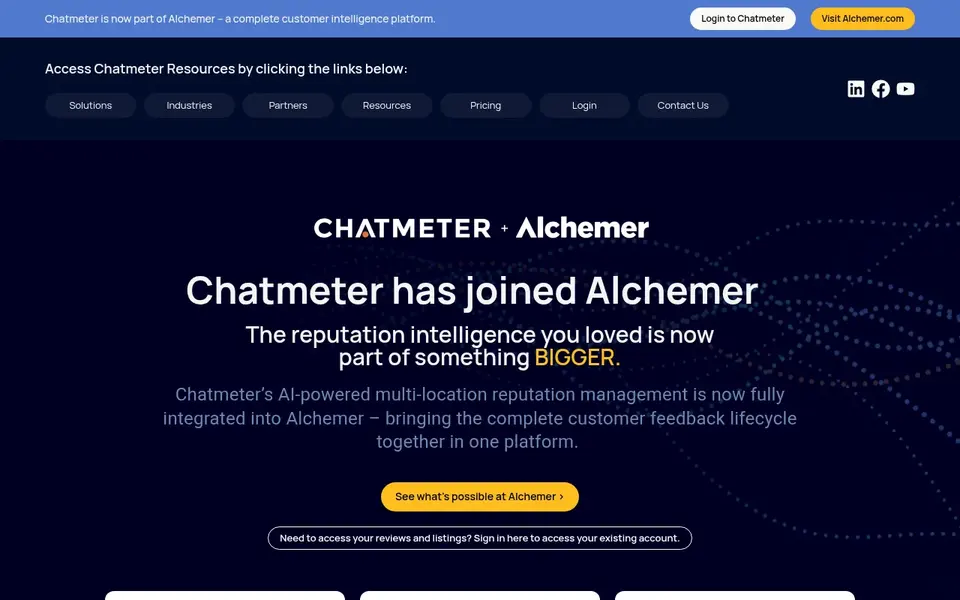
Chatmeter focuses on review and listing management for multi-location brands. A language school group with several campuses can use it to watch reviews across all of them and spot recurring themes, such as comments about class sizes or placement tests.
The listing side checks that your name, address and phone details match across directories, which matters when prospective students compare your map listing with a directory entry before visiting. Sentiment analysis groups feedback so you can see patterns rather than reading every review one by one.
The limits are size and complexity. It is built for organisations with many locations and a marketing team, and a single-campus school will find the setup heavier than the benefit.
- Central review monitoring across locations
- listing accuracy checks
- sentiment analysis for feedback themes
- Enterprise-oriented setup
- overkill for small schools
ReviewTrackers does one job: it gathers reviews from Google and other platforms into a single inbox and helps you request more. For a language school, that means you can see what students say about teachers, timetables and facilities without checking each platform separately.
The request flow fits the school calendar. You can send a request after a course finishes or after a successful exam result, when a student has a clear reason to leave feedback. Responses can be drafted and assigned to staff, which keeps replies timely.
It does not manage your Google Business Profile, citations or rankings, so treat it as a review layer on top of a local SEO tool. Schools that already have review collection inside their main platform may not need it.
- Collects reviews from multiple platforms in one inbox
- automated review requests
- reporting on review trends
- No listing management
- no local rank tracking
Local Viking is a Google Business Profile and local rank tracking tool. Its geo-grid maps show how your school ranks across a city, which is useful when you want to know whether students in a particular suburb see your listing.
For a language school in a large city, that view matters. A campus near the centre may rank well downtown but disappear for searches from outer districts, and the grid makes that visible. Posting tools let you publish updates about new term dates or open days.
The feature set is narrow compared with full suites. If you need citation management and review requests in the same place, you will need another tool alongside it.
- Geo-grid maps show ranking by area
- Google Business Profile posting tools
- simple interface
- Narrow feature set
- not a full local SEO suite
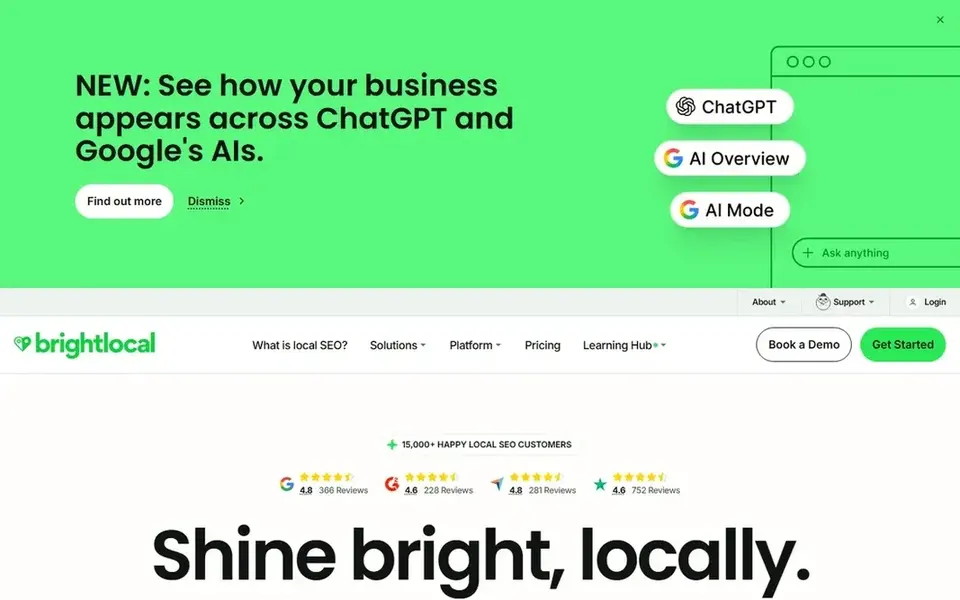
BrightLocal is a long-running local SEO platform with citation building, audit reports and rank tracking. For a language school, the citation side is the main draw: it checks that your address, phone and opening hours match across directories and fixes mismatches.
That matters because students often compare your map listing against a directory or an education portal before they call. Consistent details reduce confusion about which campus they are contacting. The audit reports also give a plain summary of what needs attention on your listings.
The interface carries a lot of options, which can slow down a school office with no dedicated SEO staff. It also does not replace a Google Business Profile posting tool, so plan for that separately.
- Citation building and auditing
- local SEO audit reports
- rank tracking included
- Interface can feel dense for beginners
- not a GBP posting tool at its core
How I chose
I built this list from vendor documentation and public sources, not from hands-on testing. I read what each product says it does, checked which features apply to a language school's daily work, and dropped tools whose main strength is something a school rarely needs, such as heavy enterprise analytics.
The second filter was fit. A school with one campus and a small office needs something quick to set up, while a chain needs approvals and consistent listings across branches. I also noted where a tool covers only part of the job, so you can see which combinations make sense rather than assuming one product does everything.
What to check before you buy
- Confirm the tool supports the number of Google Business Profile locations you have now, plus any summer or satellite sites you add each year.
- Check whether review requests can be sent by email and SMS, and whether the tool allows you to choose recipients rather than messaging everyone in bulk.
- Ask how local rank tracking handles the phrases students search, such as course type plus city, rather than generic keywords.
- Verify citation coverage for your country, since education directories differ between markets.
- Check whether call tracking needs a separate number per campus and how that affects your main phone line.
- Read the vendor's documentation on Google guidelines so you know the tool does not push review gating or keyword-stuffed business names.
Frequently asked questions
Do language schools need local SEO software at all?
If you rely on students finding you through Google Maps and local search, yes. A tool helps keep your listing details accurate, tracks how you rank for course-related searches in your city, and makes review collection routine. A single-campus school with steady word-of-mouth referrals can start with a narrow tool and add more later.
Which tool is best for a school with several campuses?
SOCi and Chatmeter are built for multi-location management, with central control and local roles. Localo also handles several profiles well at a smaller scale. The right choice depends on how much approval structure you need between head office and branch staff.
How should a language school collect reviews?
Ask students after a course ends, a test result arrives or an enrolment is completed, and send the request by email or SMS to that person. Do not offer incentives for positive reviews, do not filter out unhappy students, and do not ask staff to write reviews. Reply to every review, including critical ones.
Can these tools help with seasonal courses?
Yes, in a limited way. You can update Google Business Profile details and post about summer intensives or exam preparation courses, and track how those phrases rank during the season. The software supports the listing work, but the content and timing still come from your school.
Is call tracking worth it for a small school?
It depends on how enquiries arrive. If most prospective students phone the front desk, call tracking shows which listings and campaigns produce those calls. If almost all enquiries come through web forms or walk-ins, the value is lower and you can put the budget into listings and reviews instead.
Sources
See where you really rank - block by block
ProMapRanker scans Google Maps across a grid of your service area. Simple monthly plans from $19, white-label on every plan.
Start freeBrowse all guides
← Best Local SEO Software for Fire Protection Companies in 2026Best Local SEO Software for Paint Stores in 2026 →
 best local seo software for craft stores
Best Local SEO Software for Craft Stores in 2026
A practical guide to the best local SEO software for craft stores in 2026, covering listings, reviews, rank tracking and Google Business Profile tools.
Read → best local seo software for car audio shops
Best Local SEO Software for Car Audio Shops in 2026
A guide to the best local SEO software for car audio shops in 2026, covering listing management, GBP tools, review software and local rank tracking.
Read → best local rank tracking tools for water treatment companies
Best Local Rank Tracking Tools for Water Treatment Companies (2026)
A practical guide to the best local rank tracking tools for water treatment companies, compared from vendor documentation and public sources.
Read → local seo agency
Local SEO Agency: A Complete Guide
Everything you need to know about local seo agency: what it is, why it matters for local SEO, and exactly how to act on it.
Read → google maps ranking checker
Google Maps Ranking Checker: How to Check Where You Really Rank
Stop guessing your Maps rank. Learn why a geo-grid ranking checker shows your true position across every neighborhood.
Read → google my business categories
Google My Business Categories: How to Choose the Right Ones
How to choose the right Google My Business categories to maximize relevance and rankings.
Read →More in Local SEO & Google Maps · All guides A to Z by date · Latest guides