 ProMapRanker
Best Local SEO Software for Craft Stores in 2026
Direct answer
Uberall is my top pick for craft stores because it handles listings, Google Business Profile locations and review requests in one place, which suits a shop that sells in person and online. Pricing is quote-based, so check its pricing page for a quote. If you mainly want to track how your shop ranks in Google Maps, look at SE Ranking, and if review requests matter most, look at Grade.us.
I compared these tools from vendor documentation and public sources rather than running hands-on tests. I looked at what each one does for a shop that depends on walk-ins, phone calls about stock and class sign-ups, and I left out anything that did not fit that pattern.
Key takeaways
- Craft stores usually need listing accuracy and review management more than heavy content SEO, so pick a tool that covers those first.
- A single-location shop can start with a lighter tool, while a store with a workshop space, a second booth at a market or several branches needs multi-location support.
- Google Business Profile work matters most: categories, hours, photos of new stock and seasonal class schedules all affect whether people find you.
- Review requests should follow Google's guidelines, meaning you ask every customer the same way and never filter out unhappy ones.
- Check that the tool can handle your product mix, since craft stores often sell supplies, finished goods and classes under one roof.
Quick comparison
| Pick | Great for | Pricing starts at | Free tier | |
|---|---|---|---|---|
 Uberall | Listings, GBP and reviews together | See website | Not stated | Visit |
 SE Ranking | Local rank tracking and competitor checks | See website | Free trial | Visit |
 Grade.us | Review requests after visits and classes | See website | Free trial | Visit |
 Synup | Multi-location craft stores and market booths | See website | Not stated | Visit |
 Localo | Simple Google Business Profile management | See website | Free trial | Visit |
 Whitespark | Citation building and local rank checks | See website | Not stated | Visit |
 CallTrackingMetrics | Tracking calls about stock and classes | See website | Free trial | Visit |
The best local SEO software for craft stores compared
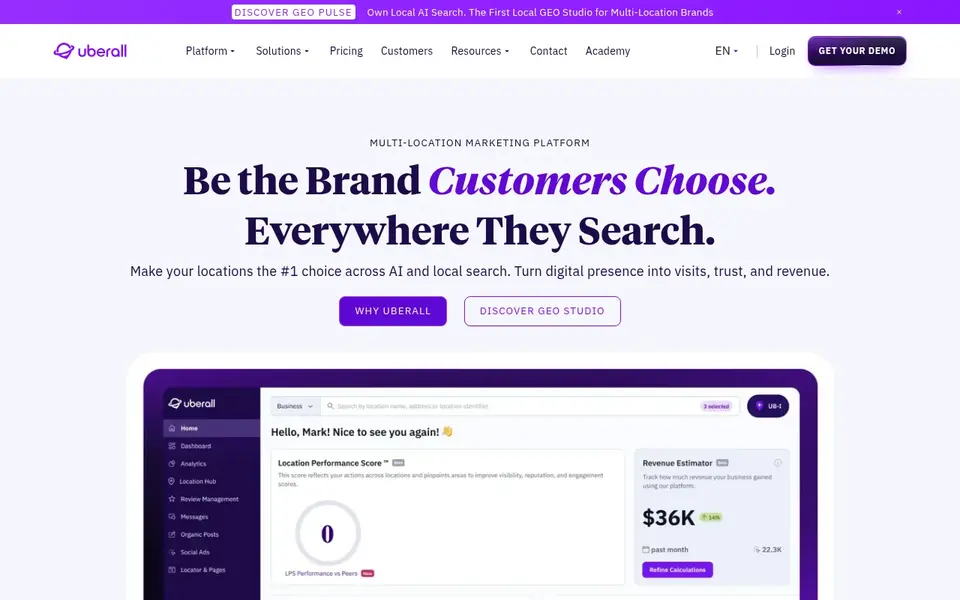
Uberall is a listings and location-marketing platform built for businesses that appear in many places online. For a craft store, that means your shop address, opening hours and phone number stay the same across Google, Apple Maps, Facebook and the directories people check before a weekend trip. It also covers review requests, which matters when a customer has just finished a knitting class and is likely to leave feedback.
The workflow suits a shop with more than one presence. If you run a main store plus a stall at a local market or a second branch in a nearby town, Uberall keeps each location's details separate and consistent. You can update seasonal hours, add photos of new stock and push the same information to every directory, which saves the manual editing that causes wrong hours to linger online.
The limit is scale. A single small shop with one address may find the platform more than it needs, and because pricing is quote-based you have to talk to sales before you know the cost. Skip it if you want a quick self-serve signup for one location.
- Manages listings across many directories from one place
- connects Google Business Profile locations to review requests
- handles multiple branches or market locations
- Pricing is quote-based
- more than a single small shop may need
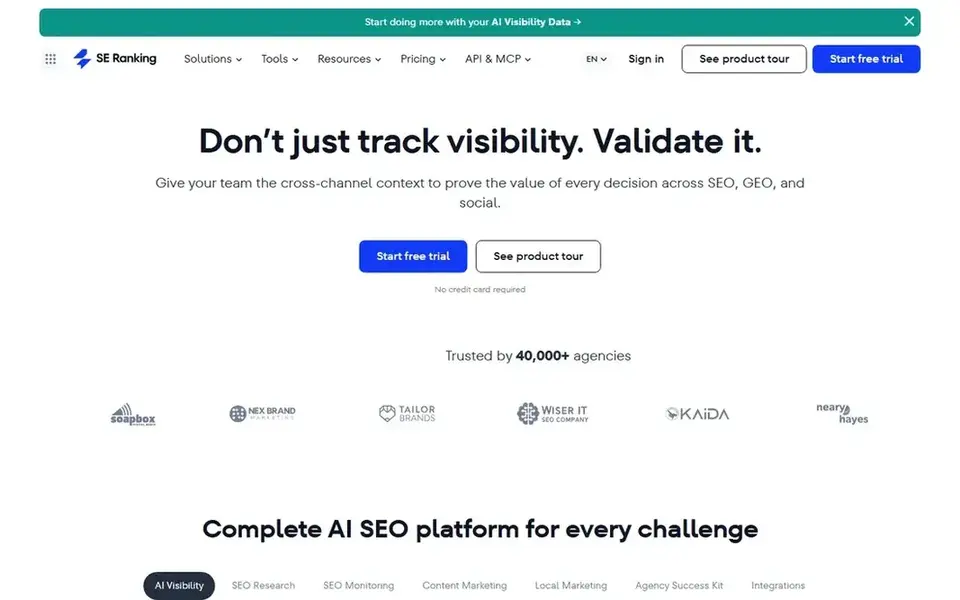
SE Ranking is an SEO platform with a local rank tracking module. For a craft store, the useful part is seeing where you appear when someone nearby searches for "yarn shop near me" or "pottery class" and how that changes week to week. You can watch a few keywords tied to your actual stock and classes rather than broad terms that bring no walk-ins.
The tool also lets you check which competitors appear in the local pack for the same searches. If a nearby hobby store outranks you for a class term, that tells you where to put effort, such as updating your Google Business Profile description or adding a page about the class. Reports can be shared with a helper or a freelancer if you do not do the work yourself.
The limit is that rank tracking is not listing management. It will not fix a wrong address on a directory or send review requests. Skip it if your main problem is inconsistent business information rather than visibility.
- Tracks Google Maps and local pack positions
- shows how nearby competitors rank
- includes broader SEO tools in the same account
- Local features are part of a larger suite
- not a listings manager
Grade.us is a review management tool focused on asking customers for feedback. A craft store has natural moments to ask: after a workshop, after a custom order is collected, or after a busy Saturday. The tool lets you send a request at that point and route people to your Google Business Profile or another review site.
It follows the practice of asking every customer the same way rather than only the happy ones. That keeps you within Google's guidelines and avoids the review gating that can get profiles penalised. You can also see which requests led to reviews so you know whether the timing works.
The limit is that it does not manage your listings or track rankings. If your address and hours are wrong across directories, fix that first. Skip it if you rarely collect customer contact details.
- Sends review requests by email or text
- supports multiple review sites
- tracks which requests led to reviews
- Limited listing management
- needs a steady customer flow to be useful
Synup is a listings and local marketing platform aimed at businesses with more than one location. For a craft store that has grown into a second shop or runs regular pop-ups, it keeps each location's name, address, hours and categories consistent across directories. You can also monitor reviews per location so you know which branch needs attention.
The workflow is built around bulk edits. When you change winter hours or add a new class space, you update it once and push it out. That is useful for a store that changes hours around holiday markets or craft fairs. Review monitoring helps you reply to feedback from the right location.
The limit is that it is more than a single shop needs, and pricing is quote-based. Setup also takes some planning to get location data right. Skip it if you have one address and no plans to add another.
- Manages listings for several locations
- includes review monitoring
- supports local pages per branch
- Quote-based pricing
- setup needs planning
Localo is a tool built around Google Business Profile management. For a craft store, that means keeping categories, hours, photos and posts up to date, which is where most local visibility comes from. It shows how complete your profile is and where it falls short, so you can fix gaps without guessing.
The workflow is straightforward. You check the profile, add photos of new stock or a class in progress, publish a post about a weekend workshop and watch local rank for a few keywords. That suits an owner who does the work between customers rather than a marketing team.
The limit is that citation building and multi-directory listings are lighter here. If your business information is scattered across many directories, a listings platform covers more. Skip it if you need deep listing management across dozens of sites.
- Focused on Google Business Profile tasks
- shows profile completeness and local rank
- simple interface for a small shop
- Lighter on citation building
- fewer integrations than larger platforms
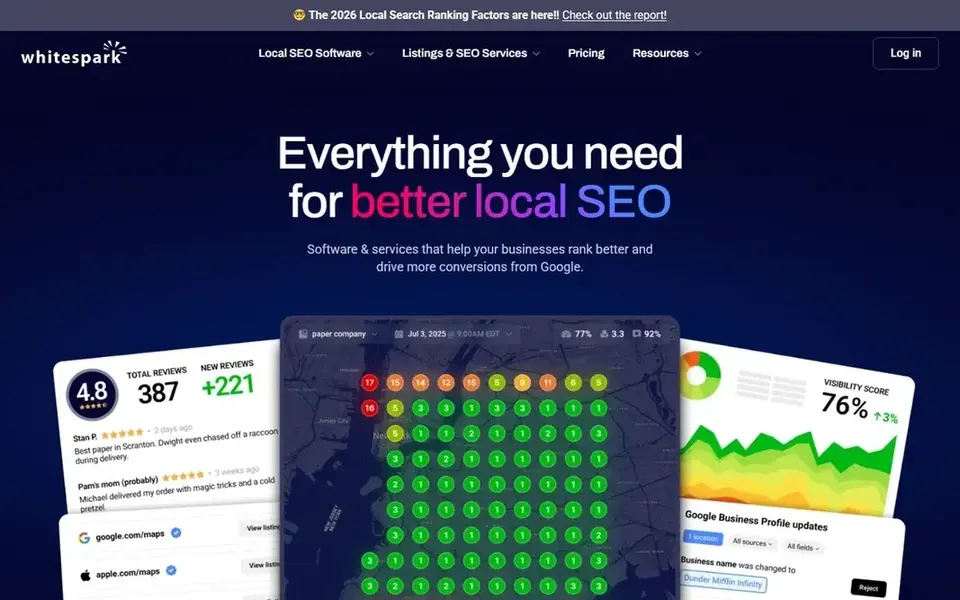
Whitespark is a local search company known for citation building and local rank tracking. For a craft store, citation building means getting your name, address and phone number listed correctly on the directories people use to find shops, which supports trust in your Google Business Profile. It is a project you do once and revisit rather than a daily task.
The rank tracking side lets you see where you appear for local searches tied to your stock and classes. That helps you decide whether to put effort into a class page or a supplier page. The citation service is useful if you have moved, changed your name or never cleaned up old listings.
The limit is that citation work does not replace profile management or review requests. Skip it if your listings are already clean and your problem is visibility for specific searches.
- Citation building service and tools
- local rank tracking
- focused on local search rather than general SEO
- Citation work is periodic, not daily
- pricing needs a quote or check
CallTrackingMetrics is a call tracking platform. A craft store gets calls about whether a specific yarn is in stock, whether a class has space and whether a custom order is ready. Tracking which source led to those calls tells you whether your Google Business Profile, a directory listing or an ad is bringing in the right people.
The workflow is to assign numbers to sources and review call data over time. If most calls come from your profile, keep it updated. If a directory sends calls that never convert, you know where to spend less effort. It also records call details for follow-up.
The limit is that it does not manage listings or reviews. It answers "where do calls come from" but not "is my address right everywhere". Skip it if you mainly want profile and listing work.
- Tracks which marketing led to a call
- records call data for follow-up
- works with Google Ads and local listings
- Does not fix listings or reviews
- call tracking alone is a narrow fix
How I chose
I picked these tools by reading vendor documentation and public sources, then matching each one to how a craft store actually operates. That means a shop that depends on walk-ins, phone questions about stock and sign-ups for classes, often with a second presence at a market or a workshop space. I did not run hands-on tests, so treat the notes as a starting point for your own trial.
I weighed fit and limits rather than feature counts. A single shop does not need multi-location listing management, and a store with three branches does not need a tool built for one address. I also checked that review features follow Google's guidelines, meaning requests go to all customers rather than a filtered group. Where pricing is quote-based, I say so instead of guessing a figure.
What to check before you buy
- Confirm the tool can manage your Google Business Profile categories and hours, since craft stores often change hours around markets and holidays.
- Check whether it handles more than one location if you run a stall, a workshop space or a second branch.
- Make sure review requests go to every customer the same way, with no filtering, so you stay within Google's guidelines.
- Ask whether citation building is included or a separate service, because old listings with a previous address cause real problems.
- Test whether the tool can track searches that match your stock and classes, not just broad local terms.
- Check how photos and posts are handled, since new stock and class schedules are what make a craft store profile useful.
Frequently asked questions
Do craft stores really need local SEO software?
Most craft stores depend on people nearby finding them, so yes. The work is smaller than for a chain, but keeping your Google Business Profile accurate, your listings consistent and your reviews coming in makes a difference. A light tool often covers it, and you can add more only when you open a second location or start running regular classes.
What should a single-location craft store start with?
Start with your Google Business Profile and a review request habit. A tool like Localo covers the profile side, and Grade.us covers asking for reviews after classes and purchases. Listing cleanup matters if you have moved or changed your shop name. Rank tracking can wait until the basics are in place.
How do I get more reviews without breaking Google's rules?
Ask every customer the same way, at the same point, and never filter out people you think will leave a bad review. Do not offer incentives for reviews or ask only happy customers. A review tool helps you send requests consistently, but the practice itself is what keeps you within the guidelines.
Can one tool handle listings, reviews and rank tracking?
Some platforms cover all three, but they tend to be priced for multi-location businesses. For a single craft store, it is often cheaper and simpler to combine a profile tool with a review tool. If you have several branches or market booths, a listings platform like Uberall or Synup makes more sense.
Does call tracking help a craft store?
It helps if you get a lot of phone questions about stock, class space or custom orders. Tracking which source led to a call tells you where to put effort. It does not fix listings or reviews, so treat it as an addition rather than the main tool.
Sources
See where you really rank - block by block
ProMapRanker scans Google Maps across a grid of your service area. Simple monthly plans from $19, white-label on every plan.
Start freeBrowse all guides
← Best Local SEO Software for Car Audio Shops in 2026Best Local SEO Software for Fire Protection Companies in 2026 →
 best local rank tracking tools for water treatment companies
Best Local Rank Tracking Tools for Water Treatment Companies (2026)
A practical guide to the best local rank tracking tools for water treatment companies, compared from vendor documentation and public sources.
Read → best local rank tracking tools for stone fabricators
Best Local Rank Tracking Tools for Stone Fabricators in 2026
A practical guide to local rank tracking tools for stone fabricators, compared from vendor documentation and public sources, with grid and keyword options.
Read → best local rank tracking tools for outdoor lighting installers
Best Local Rank Tracking Tools for Outdoor Lighting Installers (2026)
A practical guide to the best local rank tracking tools for outdoor lighting installers, with grid tracking, review monitoring and GBP management compared.
Read → local seo for wedding venues
Local SEO for Wedding Venues
A local SEO guide for wedding venues: Google Business Profile setup, reviews, and photo-heavy GBP profiles and venue listings.
Read → local seo for barbershops
Local SEO for Barbershops
How barbershops can rank higher in local search and fill more chairs with GBP and review strategy.
Read → local seo for landscapers
Local SEO for Landscapers: Growing Leads Across Your Service Area
A landscaper's local SEO guide: service-area GBP, photos, reviews, and geo-grid tracking for more leads.
Read →More in Local SEO & Google Maps · All guides A to Z by date · Latest guides