 ProMapRanker
Best Local Rank Tracking Tools for Costume Shops in 2026
Direct answer
SE Ranking is my first pick for costume shops because its local rank tracking lets you watch grid points around a store and see how "costume shop near me" style searches move by neighbourhood. Pricing is quote-based through its sales team, so check its pricing page. Places Scout suits agencies running many shop locations, and Uberall fits shops that want rank tracking tied to listing management.
I compared these tools from vendor documentation and public sources, not from hands-on tests. I looked at what each one says it tracks, how it handles map results, and whether the workflow makes sense for a costume shop that gets busy in bursts.
Key takeaways
- Costume shops live on seasonal demand, so you need rank tracking that shows daily movement around Halloween, school play season and party weekends.
- A grid-based local rank tracker is more useful than a single national position because customers search from a few miles away, not from a national average.
- Track the keywords that match how people actually search: "costume shop near me", "kids Halloween costumes [city]" and "cosplay store open late".
- Rank tracking only helps if your Google Business Profile categories, hours and photos are accurate, so pair the tool with profile management.
- Check whether each tool counts map pack positions separately from organic results, because map visibility is what drives walk-ins.
Quick comparison
| Pick | Great for | Pricing starts at | Free tier | |
|---|---|---|---|---|
 SE Ranking | Grid-based local rank tracking | See website | Free trial | Visit |
 Places Scout | Agencies tracking many shop locations | See website | Free trial | Visit |
 Uberall | Rank tracking tied to listings | See website | Not stated | Visit |
 Localo | GBP checks with rank tracking | See website | Free trial | Visit |
 Synup | Listings plus local visibility | See website | Not stated | Visit |
 CallTrackingMetrics | Calls from map searches | See website | Free trial | Visit |
 WhatConverts | Tying leads to local campaigns | See website | Free trial | Visit |
The best local rank tracking tools compared
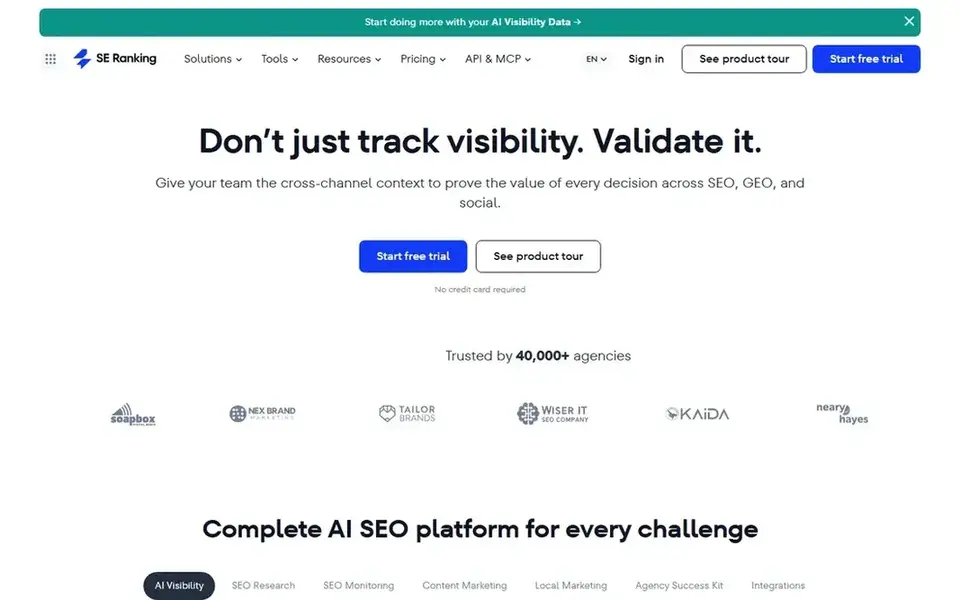
SE Ranking is a general SEO platform with a local rank tracking module. For a costume shop, the useful part is the ability to set a point on the map, such as your storefront, and see how positions change across nearby grid points. That matters because someone searching for a costume shop two streets away and someone searching from the next town over can see very different map results.
In practice, you would add your main money keywords, set the grid around the shop, and check it weekly through September and October when Halloween searches climb. Outside peak season, a monthly check is enough. You can also watch terms like "cosplay shop" and "costume rental" if you sell or rent those, and compare against the party store down the road.
The limits are mostly about plan tiers and the fact that local grids are a heavier feature than plain keyword tracking. A single small shop that only wants a rough position check may find it more than it needs, while a shop with two or three branches will get more value from the grid view.
- Local grid tracking around a set address
- keyword and competitor tracking in one place
- reporting you can share with a shop owner
- Local grid features depend on the plan you pick
- data can take time to build a full history
Places Scout is a local search tracking platform aimed at agencies and consultants who manage several locations. If you run a small agency with costume shops as clients, or you own a shop plus a seasonal pop-up location, the multi-location view saves you from juggling separate accounts.
For costume shops, the practical use is comparing a permanent store against a temporary Halloween location. You can see whether the pop-up ranks in its own neighbourhood and whether it pulls attention away from the main shop. That is a real question in October, when a second location can either help or split your map visibility.
The trade-off is complexity. It is not a tool you open once a month and forget; it rewards someone who checks it regularly and understands local grid data. A single shop owner with no SEO background should look at simpler options first.
- Built around local search and grid-style rank checks
- handles multiple locations in one account
- useful reporting for client shops
- Desktop-oriented workflow
- more setup than a simple tracker
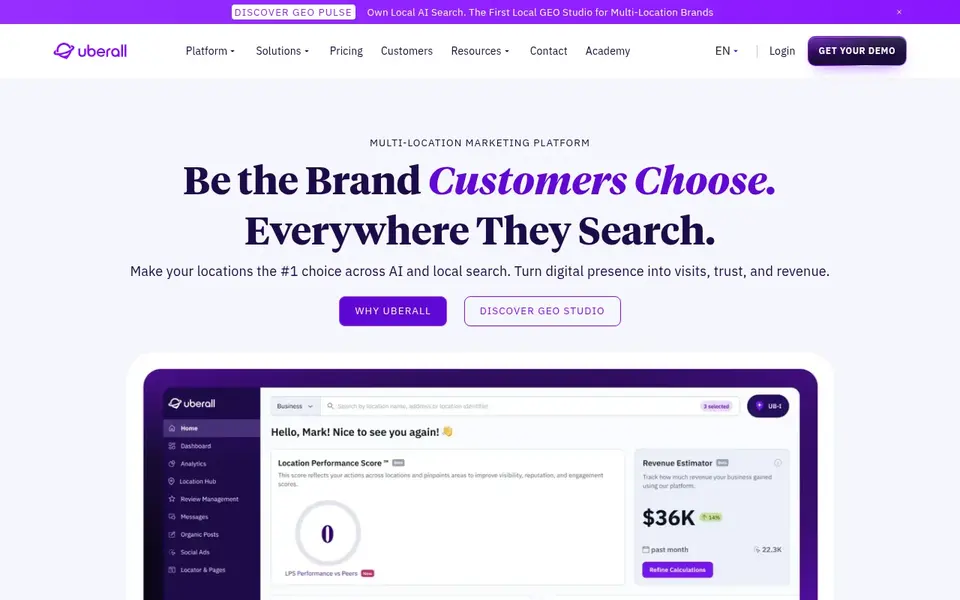
Uberall is a listings and local presence platform. Rank tracking sits alongside tools for keeping your business name, address, phone number, hours and categories consistent across directories. For a costume shop, that consistency matters because a wrong October closing time on a directory can send a family to your door after you have shut.
The rank side shows how your shop appears in local search and maps, and it pairs with the listing data so you can spot when a bad directory entry is dragging your visibility. If you have several shops across a city, this combined view is easier than stitching together a tracker and a listings tool.
The main limit is fit. Uberall is built with multi-location brands in mind, so a single independent costume shop may find the setup and quote-based pricing heavier than needed. It makes most sense once you have two or more locations or a franchise arrangement.
- Combines listing management with local visibility tracking
- keeps store hours and categories consistent across directories
- reporting for multi-location businesses
- Aimed at larger brands
- pricing is quote-based
Localo is a Google Business Profile-focused tool with rank tracking built in. It suits the costume shop owner who wants to know where the shop shows up in the map pack and what to fix on the profile, without learning a full SEO platform.
The workflow is straightforward: connect the profile, add the keywords that match how people search for costumes in your area, and check the map positions. Because it also flags profile gaps such as missing photos or thin descriptions, you can act on the ranking data instead of just staring at it. In the run-up to Halloween, that loop of check, fix, recheck is more useful than a raw position number.
The limits are depth. Entry plans cap how many keywords you can track, and the reporting is not built for an agency managing a dozen shops. If you need to prove results to clients, a platform with fuller reports is a better fit.
- Focused on Google Business Profile tasks
- rank checks sit next to profile improvement suggestions
- simple enough for a shop owner to use
- Smaller keyword sets on entry plans
- not a deep agency reporting suite
Synup handles listings, local pages and local visibility reporting. For a costume shop with a website and a Google Business Profile, the value is keeping the shop's details aligned everywhere and seeing how that affects local search presence.
The rank and visibility side is most useful when you compare it against listing health. If a directory still lists last year's address or a phone number that rings out, the visibility report gives you a reason to fix it. For shops that also run seasonal pages, such as a "Halloween costumes 2026" landing page, the reporting helps you see whether the page and the profile are working together.
One limitation is setup effort. Synup is designed for businesses that want a managed local presence, and a single shop will spend more time configuring it than it saves. It fits better once you have several locations or a marketing person handling the work.
- Manages listings and local pages in one place
- visibility reporting alongside listing health
- suits multi-location retail
- Setup takes time
- quote-based pricing
CallTrackingMetrics is a call tracking platform, not a rank tracker. I include it because costume shops get a lot of phone calls: "Do you have a size 10 pirate costume?", "Are you open Sunday?", "Can I reserve a rental?". Knowing which calls come from map searches or a specific ad tells you whether your local visibility is turning into real enquiries.
The setup involves tracking numbers and routing rules, which takes a bit of planning. Once it is running, you can see whether the spike in map rankings in October actually produced calls, and which keywords or campaigns drove them. That closes the gap between a rank position and a customer at the counter.
The limit is obvious: it will not tell you where you rank. Use it alongside a tracker rather than instead of one, and skip it if your shop mostly gets walk-ins and online orders with few calls.
- Tracks which calls come from local search and ads
- call recordings and routing
- ties phone activity to campaigns
- Rank tracking is not the core feature
- needs a tracking number setup
WhatConverts is a lead tracking tool. It records where each enquiry came from, whether that is a phone call, a form on your costume hire page or a chat message. For a shop that takes online bookings for fittings or rentals, that tells you which local searches actually convert.
The useful angle for costume shops is seasonal landing pages. If you build a page for "school play costumes [city]" and another for "Halloween costumes [city]", WhatConverts shows which one produces enquiries, so you can put your effort behind the page that works. Rank tracking tells you where you appear; this tells you what happens next.
The limits are setup and scale. You need consistent tracking on forms and calls, and a small shop with a handful of enquiries a month may not need the detail. It is best for shops that already invest in local pages and want to measure them.
- Captures form fills, calls and chats in one lead view
- shows which source produced each lead
- works with local landing pages
- Needs clean tracking setup
- overkill for a shop with few online leads
How I chose
I started with vendor documentation and public sources for each tool: what the vendor says it tracks, how it describes local grid or map pack data, and what its help centre says about setup. I did not run hands-on tests, so I am reporting what the vendors publish rather than my own benchmark results. Where a vendor does not state a free plan clearly, I marked it as not stated.
I then filtered by fit for a costume shop. That means seasonal demand, a small number of locations, and a mix of walk-ins, calls and online bookings. Tools built for large multi-location brands stayed in the list but lower down, and I noted where setup effort or quote-based pricing makes them a poor match for a single shop. I also avoided any tool whose main job is something else unless it adds a clear piece the shop needs, such as call attribution.
What to check before you buy
- Confirm the tool tracks map pack positions separately from organic results, because map visibility is what brings walk-ins.
- Check whether you can set a grid around your storefront rather than a city-wide average, since customers search from a few miles away.
- Ask how many keywords and locations your plan covers, and whether you can add a temporary Halloween location.
- Look for daily or weekly refresh rates, and make sure the schedule matches your seasonal peaks.
- Check that reports are readable by a shop owner, not just an SEO, if you plan to share them.
- Confirm the tool does not encourage review gating or keyword-stuffed business names, and that any review features follow Google's guidelines.
Frequently asked questions
Do costume shops really need local rank tracking?
Yes, if you want to know whether people nearby can find you. Costume shops depend on "near me" searches and map results, and a single national ranking tells you little. A local tracker shows whether you appear in the map pack for the neighbourhoods where your customers live, which is the visibility that turns into a visit.
Which keywords should a costume shop track?
Track the terms customers actually type: "costume shop near me", "kids Halloween costumes [city]", "cosplay store [city]", "costume rental [city]" and any seasonal terms such as "school play costumes". Add your main product lines if you specialise, and review the list before each season because search language shifts.
How often should I check local rankings?
Weekly during your busy season and monthly the rest of the year is a sensible rhythm. Costume shops see sharp swings around Halloween and school productions, so a weekly check in those weeks catches changes while you can still act. Monthly checks outside peak season are enough to spot a slow decline.
Can rank tracking fix a drop in map visibility?
No, it only shows you the drop. You then check the basics: Google Business Profile categories, hours, photos, recent reviews and listing consistency. A wrong closing time or a missing category can push you down the map pack, and the tracker helps you confirm whether a fix worked.
Is a free trial enough to judge a local rank tracker?
Usually yes, if you set up your real keywords and location during the trial. Add your storefront, a handful of seasonal terms and one competitor, then check whether the data looks plausible against what you see in Google Maps yourself. A trial with dummy data tells you nothing useful.
Sources
See where you really rank - block by block
ProMapRanker scans Google Maps across a grid of your service area. Simple monthly plans from $19, white-label on every plan.
Start freeBrowse all guides
← Best Local Rank Tracking Tools for Batting Cages in 2026Best Local Rank Tracking Tools for Janitorial Services in 2026 →
 best listing management software for vintage stores
Best Listing Management Software for Vintage Stores in 2026
A practical guide to the best listing management software for vintage stores in 2026, compared from vendor documentation and public sources.
Read → best listing management software for skate shops
Best Listing Management Software for Skate Shops in 2026
A practical guide to the best listing management software for skate shops in 2026, comparing tools for store hours, directions, reviews and local rankings.
Read → best listing management software for office furniture stores
Best Listing Management Software for Office Furniture Stores (2026)
A practical guide to the best listing management software for office furniture stores in 2026, covering accuracy, reviews, and local map visibility.
Read → reputation management local seo
Reputation Management for Local SEO: Reviews as a Ranking Lever
How reputation management doubles as a local SEO lever by turning reviews into rankings.
Read → local service ads examples
Local Service Ads Examples: A Complete Guide
Everything you need to know about local service ads examples: what it is, why it matters for local SEO, and exactly how to act on it.
Read → local seo ranking report tool
Local SEO Ranking Report Tool: Building Reports Clients Actually Read
Choose a local SEO ranking report tool that produces clear, branded reports your clients understand and value.
Read →More in Local SEO & Google Maps · All guides A to Z by date · Latest guides