 ProMapRanker
Best LLM Tracking Tools in 2026

Key takeaways
- Langfuse and Arize Phoenix suit teams that want open source tracing and the option to self host.
- LangSmith suits teams already building with LangChain and LangGraph, where native integration saves setup time.
- The best llm tracking tool depends on whether tracing, evaluation, cost control, or prompt management matters most.
- Free tiers are useful for small apps, but retention, volume limits, and per seat pricing change the real cost fast.
- Self hosting gives more control over prompt data, but it also adds maintenance work that cloud tools handle for you.
Quick comparison
| Pick | Great for | Pricing starts at | Free tier | |
|---|---|---|---|---|
 LangSmith | LangChain teams | $39 per seat per month | Yes | Visit |
 Langfuse | Open source tracing | $29 per month | Yes | Visit |
 Arize Phoenix | Open source debugging | Free | Yes | Visit |
 Braintrust | Evaluation first teams | See website | Yes | Visit |
 Portkey | AI gateway routing | $49 per month | Yes | Visit |
 Opik | Open source observability | $19 per month | Yes | Visit |
 HoneyHive | Agent evaluation | See website | Yes | Visit |
 Traceloop | OpenTelemetry tracing | See website | Yes | Visit |
 Weights and Biases Weave | Experiment tracking | See website | Yes | Visit |
The best llm tracking tools
LLM tracking means recording what a model was asked, what it returned, how long it took, how much it cost, and whether the answer was good. Without that record, teams cannot debug a bad answer, control spend, or prove that a change improved quality. The tools below cover tracing, prompt management, evaluation, and cost tracking in different mixes. We compared official pricing and feature pages, and we focused on tools that are actively maintained in October 2026.
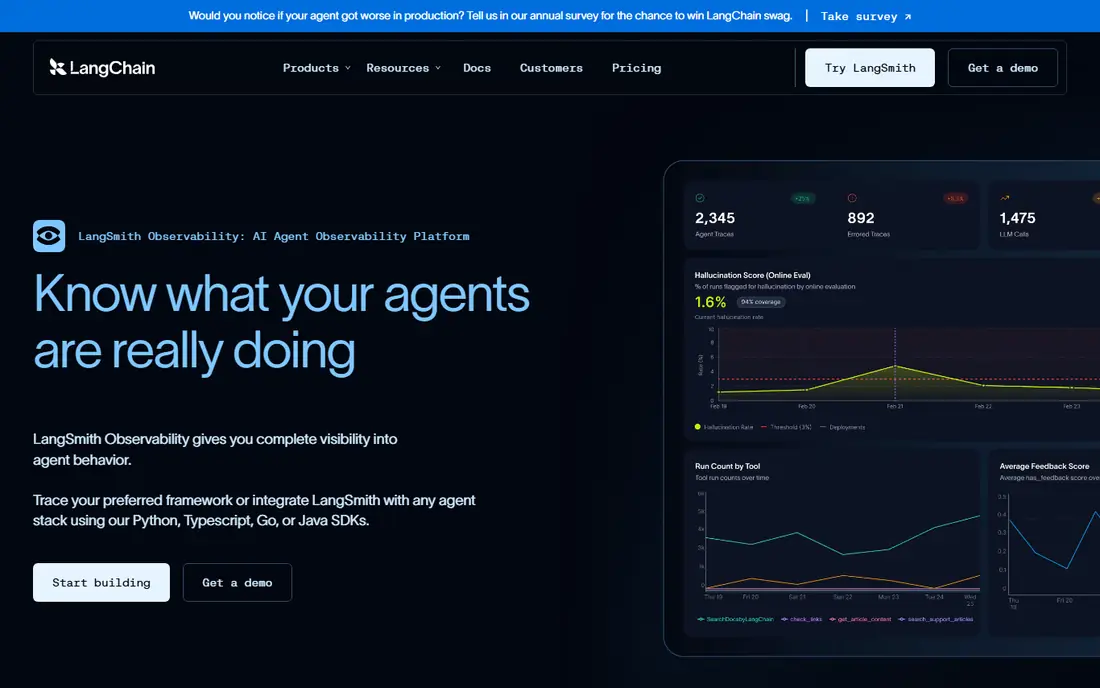
LangSmith is the natural choice for teams already building with LangChain. Traces, prompts, datasets, and evaluation runs connect without extra glue code, and debugging a multi step agent is easier when each step is recorded in order. Teams can compare prompt versions and test changes against saved datasets before shipping.
The limits are cost and lock in. Per seat pricing means a growing team pays more even if trace volume stays flat, and the platform is cloud first rather than a self hosted option for most users. Teams that use many frameworks, or that must keep prompt data inside their own infrastructure, may prefer a more neutral tool. For LangChain heavy teams, the time saved on setup often outweighs those limits.
- Deep LangChain and LangGraph integration
- Tracing, datasets, and evaluations in one place
- Hosted platform with collaboration features
- Per seat pricing can rise with larger teams
- Cloud only for most plans
- Less framework neutral than open source rivals
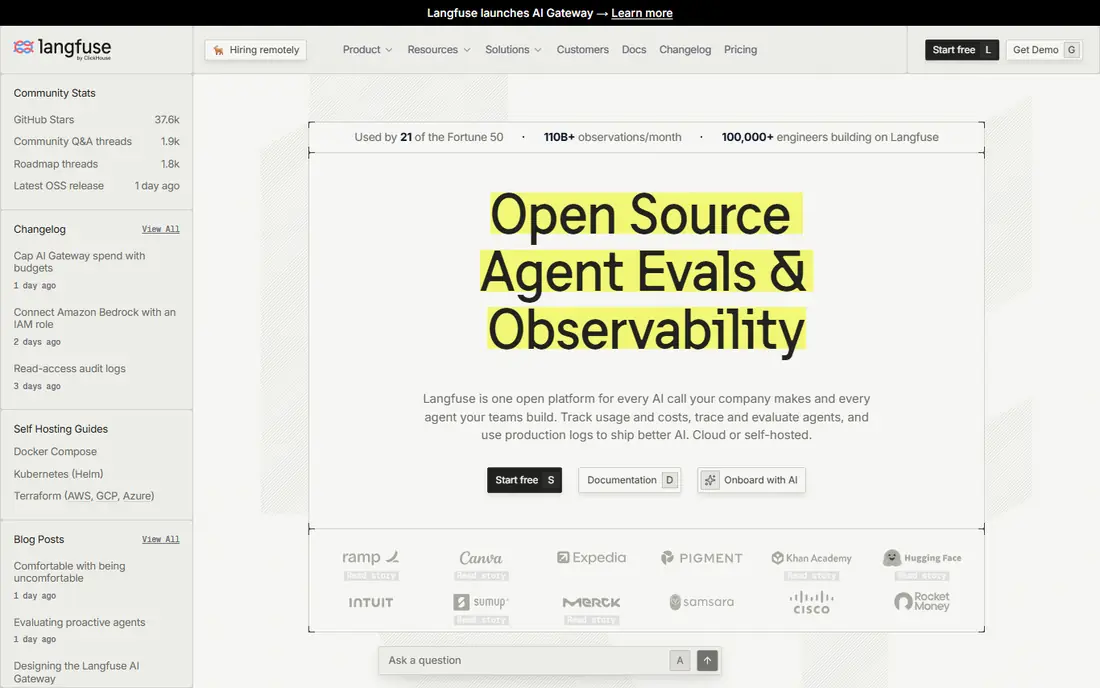
Langfuse suits teams that want tracing without being tied to one framework. It supports LangChain, LlamaIndex, and direct model SDK use, and it combines traces, prompt versions, scores, and datasets in one dashboard. The open source version can run on your own infrastructure, which helps teams with strict data rules.
Self hosting is not free in effort. Updates, storage, and retention still need someone to own them, and cloud pricing scales with volume, so a high traffic app should model costs early. For teams that value openness and framework choice, Langfuse offers one of the best balances of features, price, and control on this list.
- Open source with self hosting option
- Tracing, prompt management, and evaluations
- Broad framework support beyond LangChain
- Self hosting adds maintenance work
- Cloud pricing scales with usage
- Evaluation depth varies by plan
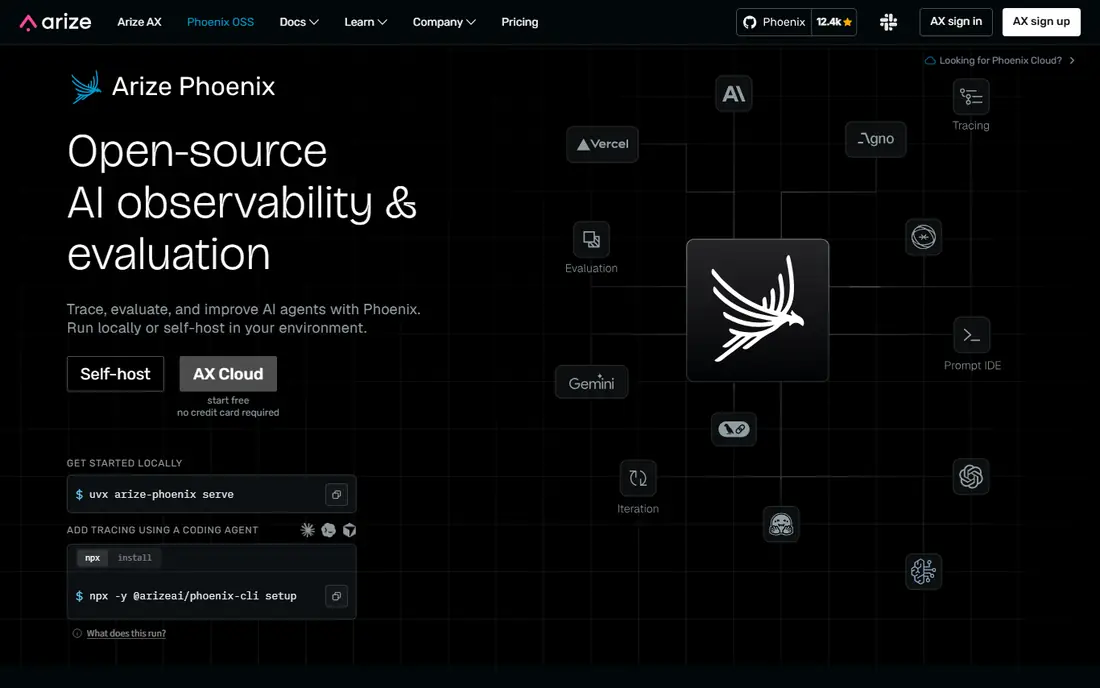
Arize Phoenix is a strong choice for developers who want to inspect traces locally and run evaluations with an open library. It uses OpenTelemetry standards, which helps teams that already use observability tools for other services. The evaluation tools cover common quality checks such as relevance, faithfulness, and hallucination patterns, which matter once an app moves past simple demos.
Phoenix is less of a turnkey hosted product than LangSmith or Langfuse cloud. Teams that want a managed dashboard, long retention, and support will likely use the paid Arize platform, which has its own pricing. For open source users and teams that already run their own observability stack, Phoenix is a flexible and cost effective starting point.
- Open source tracing built on OpenTelemetry
- Strong evaluation library
- Free self hosted option for local debugging
- Cloud platform pricing is separate from the open source tool
- Setup needs more technical skill
- Some enterprise features need the paid platform
Braintrust fits teams whose main problem is quality, not just logging. It helps teams build datasets, run experiments, score outputs, and compare prompt or model changes with evidence. That workflow suits product teams that ship LLM features often and need to know whether a change helped or harmed quality.
The trade off is price and scope. Paid entry pricing sits above several tracing focused tools, and teams that mainly need cheap trace storage may find Braintrust more than they need. For teams where a bad answer has real product or customer cost, the evaluation focus justifies the price. Use the free tier to test whether experiment workflows fit your release process.
- Strong focus on evaluations and experiments
- Prompt versioning and scoring
- Designed for teams that test before shipping
- Entry paid pricing is higher than some rivals
- Tracing is less central than in Langfuse
- Smaller self hosting options
Portkey suits teams that use several model providers and need one control point for routing, keys, and spend. It can route requests, apply fallbacks when a provider fails, and track cost by provider, key, and team. That control matters for apps that mix models for cost, speed, and quality reasons.
Portkey is not a direct replacement for deep SDK tracing in every case. Agent step detail can be lighter than in Langfuse or LangSmith, so teams with complex agents may pair Portkey with a tracing tool. For teams whose first problem is provider sprawl and cost visibility, Portkey gives a clear and practical answer.
- Gateway routing across many model providers
- Cost and usage tracking by key and user
- Fallbacks and caching features
- Gateway focus means less deep agent tracing than SDK tools
- Enterprise features need higher tiers
- Pricing scales with usage
Opik, from Comet, suits teams that want open source LLM observability with experiment tracking. It records traces, supports datasets and evaluations, and can be self hosted for teams that need control over data. The entry cloud price is low compared with several rivals, which helps small teams start with real volume.
The main risk is maturity. Opik has a smaller community and integration range than the longest running tools on this list, so teams should check support for their exact framework before committing. For teams that already use Comet for machine learning experiments, Opik fits naturally. For others, it is a promising lower cost option worth testing.
- Open source tracing and evaluation
- Dataset and experiment support
- Self hosting option
- Newer ecosystem than Langfuse or LangSmith
- Integration range is still growing
- Paid features vary by plan
HoneyHive suits teams building agents where testing matters more than simple log storage. It supports datasets, experiments, and evaluation flows that help teams check agent behavior across many cases before release. Collaboration features help product managers and engineers review the same results.
Pricing transparency is a weakness, because some tiers require a sales conversation. Teams should request a clear quote based on trace volume and seats before rolling out widely. HoneyHive is best for teams that already feel the pain of untested agent changes and want evaluation to become part of their release process.
- Evaluation and testing for agents and LLM apps
- Dataset and experiment workflows
- Collaboration for product and engineering teams
- Pricing is not fully published on all tiers
- Tracing depth varies by use case
- Smaller community than leading tools
Traceloop suits engineering teams that already use OpenTelemetry for services and want LLM traces in the same model. It provides SDKs that record prompts, completions, and tool calls in a standard format, which makes it easier to connect LLM work to existing dashboards and alerts. Open source options give teams flexibility in how they deploy it.
Teams that need rich evaluation libraries or prompt management as a primary feature may find Traceloop lighter than Langfuse or Braintrust. It is strongest as a tracing layer, not as a full evaluation platform. For observability focused teams, that focus is a benefit, because it avoids duplicating tools they already own.
- OpenTelemetry based tracing for LLM apps
- Open source SDK options
- Fits teams with existing observability stacks
- Evaluation features are lighter than evaluation first tools
- Hosted pricing varies
- Setup needs technical familiarity
Weave, from Weights and Biases, suits teams that already track machine learning experiments and want LLM traces in the same system. It supports tracing, evaluation, and comparison of runs, which helps teams that iterate on models, prompts, and datasets together. The wider Weights and Biases platform adds value for teams with both traditional ML and LLM work.
LLM only teams may find the platform broader than they need, and pricing depends on plan and usage, so check the current page before budgeting. For ML teams that already use Weights and Biases, Weave is a natural extension. For pure LLM product teams, a dedicated tracing tool may be simpler to adopt.
- Tracing and evaluation from Weights and Biases
- Experiment comparison for models and prompts
- Strong machine learning ecosystem
- Pricing varies by plan and usage
- Interface can feel broad for LLM only teams
- Some features need paid tiers
How we picked these
We compared official feature and pricing pages for tools that record LLM traces, costs, prompts, or evaluations in production or testing. We favored tools that are actively maintained, support common frameworks or OpenTelemetry, and offer a free tier or open source option. We excluded tools reported as discontinued or in maintenance mode only, because this list should reflect tools teams can adopt today. Prices are starting prices checked in October 2026, and where pricing is quoted we wrote See website rather than guessing.
What to check before you buy
LLM tracking tools look similar on a feature page, but they differ sharply in data control, cost model, and evaluation depth.
Decide what you need to prove
Tracing answers what happened. Evaluation answers whether it was good. Cost tracking answers what it cost. Prompt management answers which version shipped. Pick the tool that excels at your top question, and treat the other features as secondary, because no tool leads on all four at once.
Model cost by volume and seats
Some tools charge per seat, some by trace volume, and some by both. Estimate monthly traces, retention needs, and team size before comparing headline prices. A cheap per seat plan can become expensive at high volume, and a cheap volume plan can become expensive with a large team.
Check data handling for prompts
Prompts and outputs can contain customer data, so check retention, redaction, region, and self hosting options. If your app handles sensitive data, test redaction and data deletion before production use. A tracing tool should never become a new privacy risk.
Test evaluation on your own failures
Run each shortlisted tool against real bad outputs from your app, not just demo data. Check whether it catches the failure type you care about most, such as wrong facts, missing citations, or broken tool calls. A tool that scores well on generic tests but misses your main failure mode will not help in production.
Frequently asked questions
What is the best llm tracking tool?
Langfuse suits most teams that want open source tracing and evaluation, LangSmith suits LangChain teams, and Arize Phoenix suits open source debugging. The best llm tracking tool for you depends on your framework, data rules, and whether evaluation or cost control matters most.
Do LLM tracking tools work with any model provider?
Most tools on this list support major providers through SDKs or OpenTelemetry, and gateway tools such as Portkey support many providers by design. Check support for your exact provider and framework, because depth varies. Some tools trace agent steps in detail, while others only log raw requests and responses.
Can I self host an LLM tracking tool?
Yes, Langfuse, Arize Phoenix, Opik, and Traceloop offer open source or self hosted options. Self hosting gives more control over prompt data and retention, but it adds maintenance work for storage, updates, and backups. Cloud plans remove that work but keep data with the vendor.
How much do LLM tracking tools cost?
Free tiers cover small apps, while paid entry prices on this list range from about $19 to $49 per month, plus per seat or usage charges on some plans. High volume apps should model trace volume and retention, because those factors often matter more than the entry price.
What is the difference between tracing and evaluation?
Tracing records what happened in a model call or agent run, including prompts, outputs, latency, and cost. Evaluation judges whether the output was good, using tests, scores, or human review. Tracing helps you debug, while evaluation helps you decide whether a change is safe to ship.
Sources
See where you really rank - block by block
ProMapRanker scans Google Maps across a grid of your service area. Simple monthly plans from $19, white-label on every plan.
Start freeKeep reading
 zoro.to alternatives
Best Zoro.to Alternatives in 2026
We compare the best zoro.to alternatives in 2026, listing only legal licensed anime streaming services, from Crunchyroll to free options for fans today.
Read → zip alternatives
Best Zip Alternatives in 2026
We compare the best zip alternatives for buy now, pay later in 2026, covering pay-in-4 plans, fees, spending limits, and credit reporting options today.
Read → yesware alternatives
Best Yesware Alternatives in 2026
Compare the best yesware alternatives for sales email tracking, templates, and sequences, with current pricing and honest tradeoffs for small sales teams.
Read →