 ProMapRanker
Best LLM SEO Tracking Software in 2026


enterprise brands that need deep AI search tracking · Pricing starts at: See website
Key takeaways
- Otterly.AI is the lowest-cost credible entry point in published guides, while Profound and Brandlight sit at the enterprise end with deeper reporting.
- Peec AI suits B2B and SaaS teams that need daily tracking and multi-country coverage, with unlimited seats on every plan in published guides.
- Scrunch AI adds crawler analytics and content action on top of tracking, which suits brand teams that want to act on gaps, not just watch them.
- Semrush and Nightwatch suit teams that already pay for classic SEO tracking and want AI visibility in the same report.
- Treat visibility scores as trends, not exact measures, because each vendor defines prompts, engines, and scoring differently.
Quick comparison
| Pick | Great for | Pricing starts at | Free tier | |
|---|---|---|---|---|
| Profound | enterprise brands that need deep AI search tracking | See website | Free trial | Visit |
 Otterly.AI | small teams that want low-cost daily tracking | $29 per month | Free trial | Visit |
 Peec AI | B2B and SaaS teams that want daily multi-country tracking | See website | Free trial | Visit |
 Scrunch AI | brands that want tracking plus content action | See website | Free trial | Visit |
 Brandlight | enterprise brands that need compliance and reporting depth | See website | No | Visit |
 AthenaHQ | teams that want action steps from tracking data | See website | Free trial | Visit |
 Semrush AI Visibility Toolkit | teams already paying for Semrush | See website | Free trial | Visit |
 Nightwatch | SEO teams that want classic rankings plus AI tracking | $32 per month | Free trial | Visit |
The best LLM SEO tracking software
We compared LLM SEO tracking tools on prompt coverage, engine coverage, citation tracking, competitor comparison, and reporting, using vendor pages, pricing pages, and public reviews.
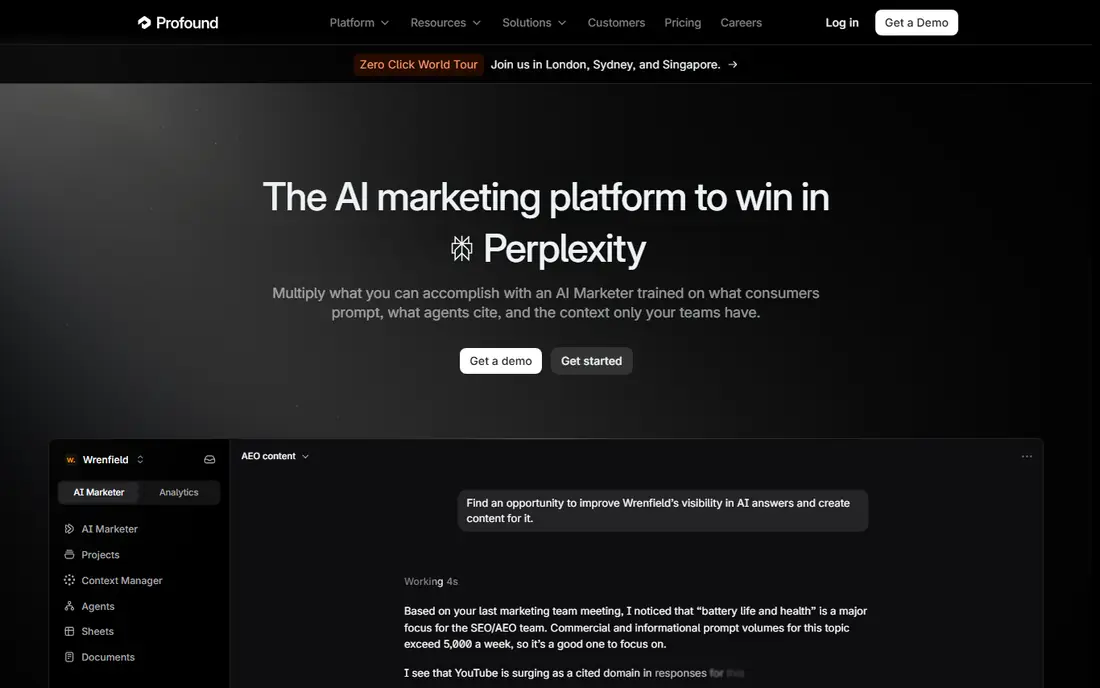
For enterprise marketing teams, Profound is a practical starting point because it keeps the core workflow in one place. It is built around enterprise AI search tracking with citation and answer analysis. The design favours routine use over occasional use, which matters when a tool only helps if people return to it every week. What stands out in Profound is answer-level detail that shows how a brand is described, not just whether it appears. It also helps a team keep one version of the truth, instead of keeping the same detail in email, chat, and a spreadsheet at the same time. The catch is small teams should check trial limits before planning a rollout. A short trial with real data gives a clearer answer than a feature list alone.
- Broad engine coverage on enterprise plans
- Citation and conversation analysis
- Agency workspaces and reporting for large teams
- Self-serve starter plans were withdrawn in published September 2026 guides, so entry is now trial plus custom pricing
- Cost suits larger budgets
If small marketing teams and freelancers need a tool that is easy to explain to a new team member, Otterly.AI deserves a close look. It is built around low-cost daily AI search tracking for brands and agencies. The design favours routine use over occasional use, which matters when a tool only helps if people return to it every week. What stands out in Otterly.AI is a simple dashboard that a small team can read each week. It also helps a team keep one version of the truth, instead of keeping the same detail in email, chat, and a spreadsheet at the same time. The catch is check prompt and brand limits on the entry plan. A short trial with real data gives a clearer answer than a feature list alone.
- Low entry price in published guides at 29 dollars a month
- Daily tracking across ChatGPT, Perplexity, Google AI Overviews, and Copilot in published guides
- Clear citation views
- Depth and custom reporting are lighter than enterprise rivals
- Prompt limits rise with plan, so larger tracking needs a higher tier
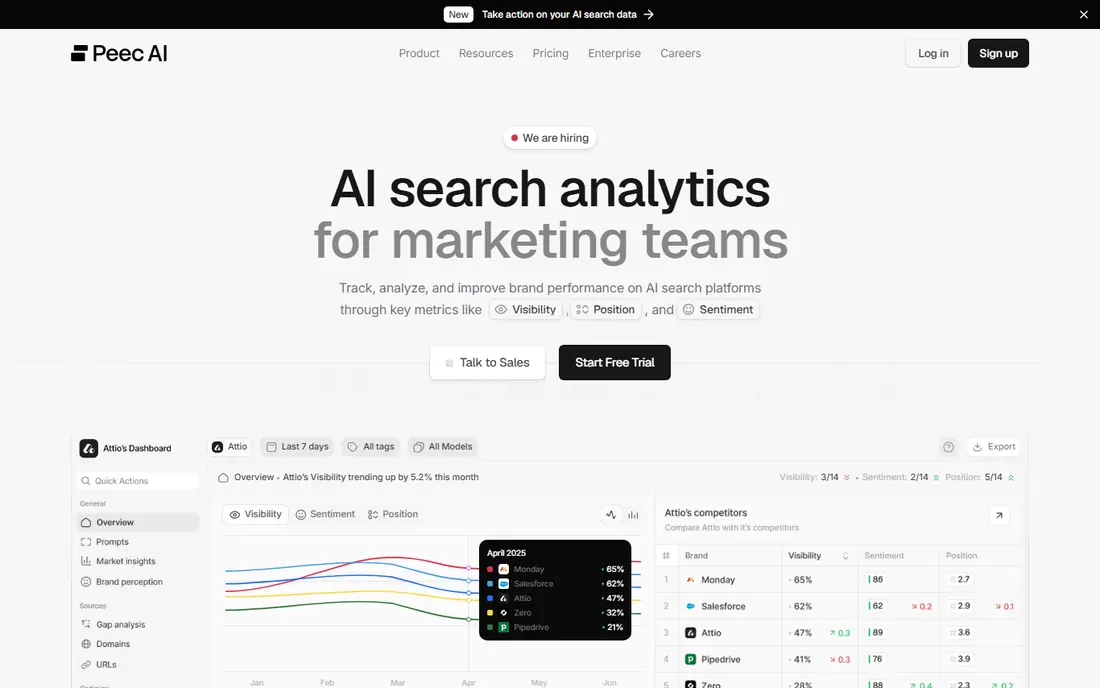
A good fit when B2B and SaaS marketing teams want depth without a long setup, Peec AI focuses on the work that matters most. It is built around daily AI visibility tracking with sentiment and competitor views. The design favours routine use over occasional use, which matters when a tool only helps if people return to it every week. What stands out in Peec AI is clean reporting that suits a weekly marketing review. It also helps a team keep one version of the truth, instead of keeping the same detail in email, chat, and a spreadsheet at the same time. The catch is teams should confirm the current price before a trial ends. A short trial with real data gives a clearer answer than a feature list alone.
- Daily prompt tracking with visibility, position, and sentiment views
- Multi-country coverage
- Unlimited seats on every plan in published guides
- Public pricing is no longer shown to logged-out visitors in published guides, so budgeting needs a sales check
- Entry cost is higher than Otterly
Teams that value clarity over a long feature list often settle on Scrunch AI after a short trial. It is built around AI search tracking tied to content and crawler insight. The design favours routine use over occasional use, which matters when a tool only helps if people return to it every week. What stands out in Scrunch AI is crawler analytics that show whether AI bots can reach key pages. It also helps a team keep one version of the truth, instead of keeping the same detail in email, chat, and a spreadsheet at the same time. The catch is small teams may find the platform larger than they need. A short trial with real data gives a clearer answer than a feature list alone.
- Tracking plus AI crawler analytics and an Agent Experience Platform in published guides
- Journey views that show how answers shape a brand story
- Entry price is higher than low-cost trackers in published guides
- Platform depth needs onboarding time
When enterprise brand teams need to move from scattered files to one shared record, Brandlight makes that shift plain. It is built around enterprise AI brand tracking with reporting depth. The design favours routine use over occasional use, which matters when a tool only helps if people return to it every week. What stands out in Brandlight is reporting that suits board and compliance readers. It also helps a team keep one version of the truth, instead of keeping the same detail in email, chat, and a spreadsheet at the same time. The catch is cost and setup time rule it out for most small teams. A short trial with real data gives a clearer answer than a feature list alone.
- Enterprise reporting and compliance features in published guides
- Brand tracking across AI answers with competitor views
- Suited to regulated or large brands
- Quote-only pricing in published guides, so small teams cannot budget from a public page
- Setup is enterprise-led
For growth and SEO teams who want a clear daily routine, AthenaHQ puts the next step in front of the user. It is built around AI visibility tracking with practical next steps. The design favours routine use over occasional use, which matters when a tool only helps if people return to it every week. What stands out in AthenaHQ is action views that turn a visibility gap into a task. It also helps a team keep one version of the truth, instead of keeping the same detail in email, chat, and a spreadsheet at the same time. The catch is confirm engine and prompt limits on the plan you buy. A short trial with real data gives a clearer answer than a feature list alone.
- Prompt tracking with competitor comparison and action suggestions
- Clear visibility trends over time
- Agency-friendly reporting in published guides
- Smaller brand presence than Profound or Peec, so case studies are fewer
- Engine coverage should be checked for your market
A steady choice for SEO teams on Semrush, Semrush AI Visibility Toolkit balances useful controls with a layout that stays readable. It is built around AI search tracking inside a familiar SEO platform. The design favours routine use over occasional use, which matters when a tool only helps if people return to it every week. What stands out in Semrush AI Visibility Toolkit is one login for classic rankings and AI visibility. It also helps a team keep one version of the truth, instead of keeping the same detail in email, chat, and a spreadsheet at the same time. The catch is teams outside Semrush gain less from the add-on. A short trial with real data gives a clearer answer than a feature list alone.
- AI visibility tracking inside a full SEO suite
- Per-domain pricing in published guides
- Familiar reporting for SEO teams
- Extra cost on top of a Semrush base plan
- Per-domain price adds up for many brands
If SEO agencies and in-house teams care most about follow-through, Nightwatch is built to turn a plan into visible progress. It is built around combined SEO and AI visibility tracking in one tool. The design favours routine use over occasional use, which matters when a tool only helps if people return to it every week. What stands out in Nightwatch is a single report for Google rankings and AI answers. It also helps a team keep one version of the truth, instead of keeping the same detail in email, chat, and a spreadsheet at the same time. The catch is check which AI engines are in your plan tier. A short trial with real data gives a clearer answer than a feature list alone.
- Classic rank tracking plus AI share of voice, mention rate, citations, and sentiment in published guides
- White-label options for agencies
- AI tracking depth varies by plan
- Setup needs a clear prompt list to give useful results
How we picked these
We compared official feature pages, pricing pages, app store listings, privacy policies, and public reviews for each product in this guide. We checked whether each product exists and works in October 2026, whether it fits the topic, and whether its price, free tier, and plan limits could be confirmed from a vendor source or a recent published guide. We did not claim hands-on testing, and we did not invent awards, user counts, ratings, or features. Where a price could not be confirmed from a vendor page at the time of writing, we wrote See website, so a reader can check the live price before buying. Prices and plan limits change, so the vendor page remains the final source.
How to choose LLM SEO tracking software without chasing a score
AI visibility tracking is useful when it changes a decision. Pick a tool that covers the prompts your buyers actually ask, shows citations you can check, and reports in a form your team will read each week.
Start with 30 to 50 real buyer prompts
List the questions buyers ask before they buy, plus the comparison and problem prompts in your category. Track those first, with competitors included, before adding hundreds of vanity prompts. A focused prompt set gives a clearer trend and a lower bill.
Check engines, citations, and refresh rate
Confirm which engines are in your plan, how often prompts refresh, and whether you can see the cited sources behind a mention. Citation detail matters, because it shows which pages to fix when a brand is missing or misdescribed.
Judge reporting by the weekly review
A tool that no one opens each week is wasted money. Check whether reports can be shared, scheduled, and filtered by brand, prompt group, or engine. Agency teams should also check white-label and multi-workspace support.
Frequently asked questions
What is the best LLM SEO tracking software?
Otterly.AI is the best low-cost entry point in published guides, Peec AI suits B2B teams that need daily multi-country tracking, and Profound suits enterprise brands that need deep citation and conversation analysis. The best pick follows budget, prompt count, and reporting needs.
What are the best LLM SEO tracking tools for agencies?
Otterly.AI, Peec AI, and Nightwatch suit agencies in this list, because they offer multi-workspace or white-label reporting in published guides. Profound also offers agency workspaces on enterprise plans. Check seat limits and client reporting before you commit.
How do LLM SEO tracking tools work?
They run a set of prompts across AI systems such as ChatGPT, Perplexity, Gemini, and Google AI Overviews, then record whether a brand appears, how it is described, which sources are cited, and how competitors compare. Results are tracked over time as trends.
Are LLM visibility scores exact?
No. Each vendor uses its own prompt set, engine mix, and scoring method, so scores differ across tools. Use them to spot trends, gaps, and competitor moves, and check citations before acting on a single score change.
How many prompts should I track?
Start with 30 to 50 commercial prompts that match real buyer questions. Scale to 80 to 150 for a category leader. Tracking thousands of prompts usually adds cost without adding decisions.
Sources
See where you really rank - block by block
ProMapRanker scans Google Maps across a grid of your service area. Simple monthly plans from $19, white-label on every plan.
Start freeKeep reading
 zendesk alternatives
Best Zendesk Alternatives in 2026
Compare the best Zendesk alternatives in 2026, from budget help desks to AI-first support tools, with current pricing, free plans, and honest trade-offs.
Read → wordpress alternatives
Best WordPress Alternatives in 2026
Looking for the best WordPress alternatives? We compare 8 free and paid options for blogs, business sites, stores, and developer-led projects in 2026.
Read → which real estate company has the best training
Best Real Estate Company Training in 2026
Compare which real estate company has the best training, from Keller Williams and eXp to Compass and Coldwell Banker, by program, mentor, and fit in 2026.
Read →