 ProMapRanker
Best Literature Review Writing Service Help in 2026

Key takeaways
- Scribbr, Editage and Enago lead for human editing of a draft you have written, with subject editors and clear per-document pricing.
- Elicit, Scite and Consensus help with finding and checking papers, while Zotero keeps references organised across a long project.
- No service here should replace your authorship, and none can guarantee a grade, because markers judge your own analysis and argument.
- Use editing and research help as study support, check your institution rules first, and keep every draft and source note in your own words.
Quick comparison
| Pick | Great for | Pricing starts at | Free tier | |
|---|---|---|---|---|
 Scribbr | thesis and dissertation editing | See website | No | Visit |
 Editage | journal manuscript editing | See website | No | Visit |
 Enago | premium journal preparation | See website | No | Visit |
 Wordvice | editing for non-native English writers | See website | No | Visit |
 PaperTrue | budget human editing | See website | No | Visit |
 Elicit | systematic search and extraction | Free | Yes | Visit |
 Scite | checking how papers were cited | See website | Yes | Visit |
 Zotero | reference management | Free | Yes | Visit |
The best literature review writing service help
A literature review needs your own reading, synthesis and argument. The options below help with editing, searching, checking citations and organising sources. They are study aids, not a substitute for writing the review yourself.
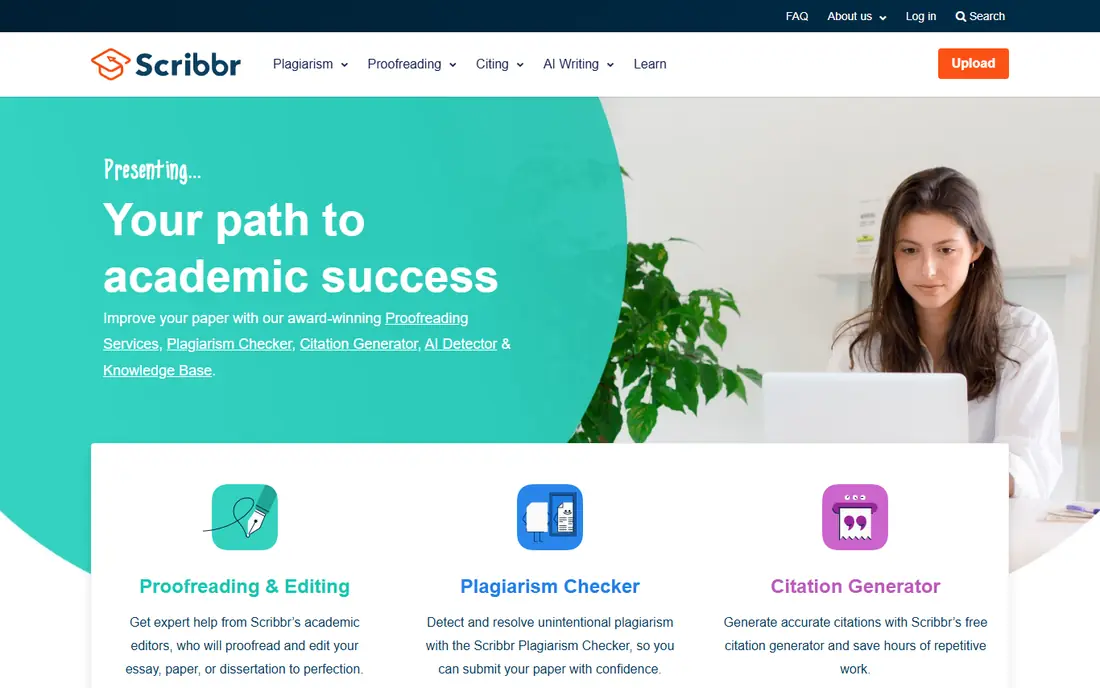
Scribbr fits students near the final stages of a thesis or dissertation chapter. Editors work on structure, clarity and academic style, and the pricing calculator shows the cost for your word count and turnaround before you commit. That transparency helps when a chapter is long and the budget is tight.
The catch is cost over a whole project. Editing every draft at full price quickly becomes expensive, so many students use Scribbr for a near-final chapter and rely on supervisor feedback and self-editing for earlier drafts. Keep the editor comments as learning notes, and apply the same fixes to later chapters yourself.
- Editors trained for long academic documents
- Clear pricing calculator
- Plagiarism check add-on
- Per-document cost adds up for frequent drafts
- Turnaround depends on length and deadline
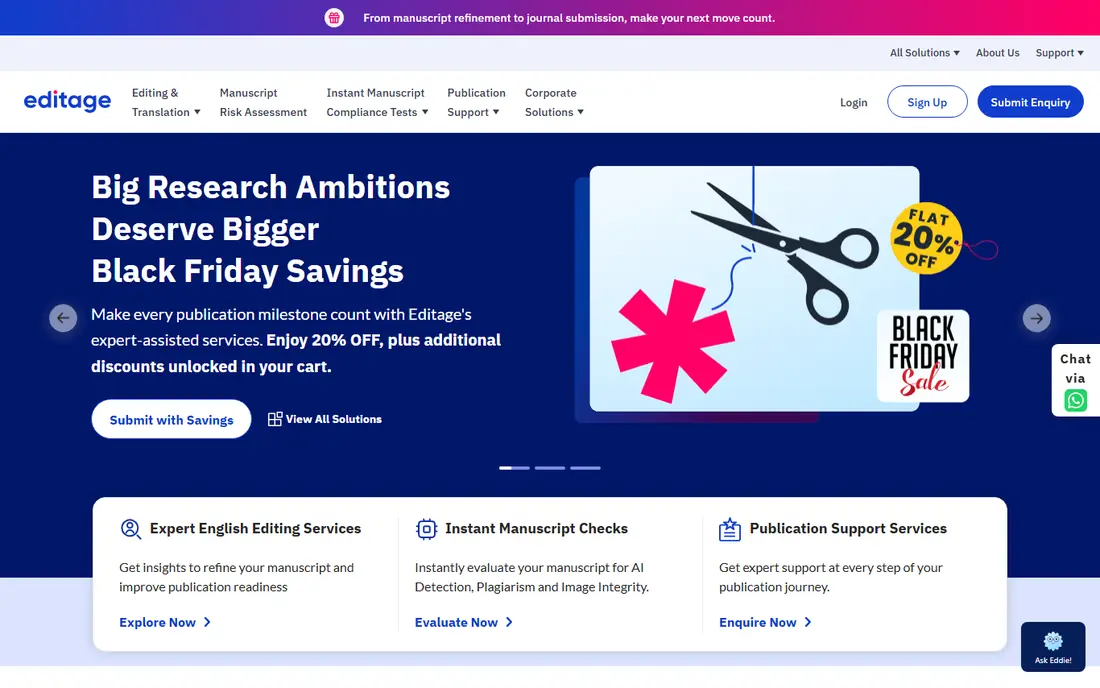
Editage suits researchers preparing a manuscript for journal submission, including a review article. Subject experts edit language and logic, and some services include formatting and a check of reviewer response letters. That depth matters when a journal expects polished academic English and consistent formatting.
Price is the main limit. Editage sits at the premium end, and longer documents need a quote rather than a single published rate. For a student literature review chapter, a thesis-focused editor may offer better value, while Editage makes more sense for a submission-ready manuscript.
- Large pool of subject experts
- Two rounds of review on some services
- Formatting help
- Premium pricing
- Quote needed for longer or specialist work
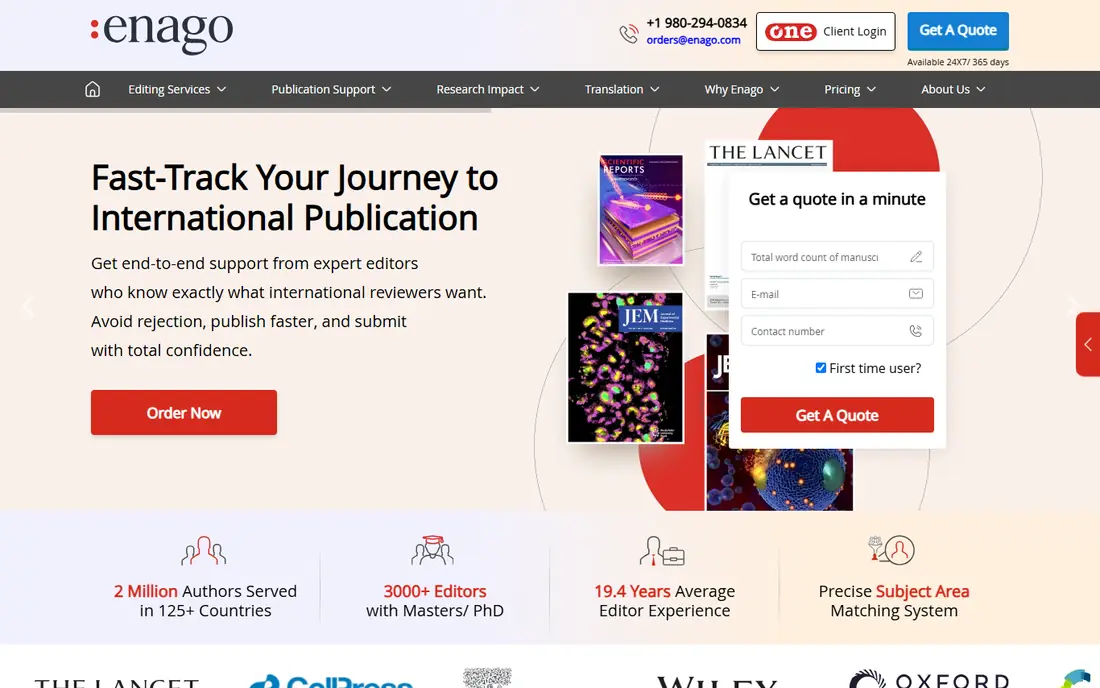
Enago is another premium option for researchers who want a manuscript checked by a subject specialist before submission. Services cover language editing, structural comments and journal formatting, and some plans include a certificate confirming professional editing. That paper trail can be useful for journals that ask about editing support.
The trade-off is the same as with Editage: strong expertise at a higher price. A literature review for coursework rarely needs the full premium package, so compare the editing-only service against a thesis editor before paying for journal extras you do not need yet.
- Subject-matched editors
- Journal readiness checks
- Editing certificates on some plans
- Higher cost than budget editors
- Turnaround varies by service level
Wordvice helps writers who think clearly in their field but struggle with academic English phrasing. Editors correct grammar and sentence flow while keeping technical terms intact, and faster turnaround options help when a supervisor deadline is close. The service tiers make it easier to choose between a light proofread and a deeper edit.
As with other human editors, cost depends on length and speed, so a rushed long chapter will cost more than a planned short one. Send the draft early when you can, and note any field terms or abbreviations in advance so the editor does not change a technical phrase by mistake.
- Experienced academic editors
- Fast turnaround options
- Clear service tiers
- Pricing varies by document and speed
- Specialist topics may need extra matching time
PaperTrue suits students who need a human edit but cannot pay premium rates. It covers essays, theses and research documents, with turnaround options as short as a day for shorter pieces in published comparisons. For a draft that mainly needs grammar, clarity and formatting fixes, that price point is attractive.
The limit is depth. A budget edit may catch language issues without challenging the argument or synthesis as deeply as a specialist editor would. Use PaperTrue for polishing a draft you have already revised for content, and ask your supervisor or a peer to review the argument separately.
- Lower prices than premium editors
- Fast turnaround options
- Covers academic documents
- Less specialist depth than premium services
- Quality can vary by editor
Elicit helps at the research stage, before any writing begins. You ask a research question, and it searches papers and extracts methods, samples and findings into a table you can compare. That structure helps when a review covers dozens of studies and a simple list of PDFs becomes hard to manage.
The key caution is verification. AI summaries can miss nuance or misstate a finding, so every row that matters for your argument should be checked against the original paper. Treat Elicit as a screening and organising aid, and cite only papers you have read and understood yourself.
- Question-driven paper search
- Extracts findings into tables
- Useful for screening
- Free plan has limits
- AI summaries must be checked against the original papers
Scite answers a question that matters for a literature review: has later research supported, disputed or retracted a paper you plan to rely on? Its citation statements show how other authors used a finding, which helps you avoid building an argument on a claim that later work challenged. That check is especially useful for older landmark studies.
Coverage is not uniform across fields, and the free plan has limits, so Scite works best alongside a library search rather than as the only source. When Scite flags a dispute, read the disputing paper itself before changing your argument, because a single citation rarely tells the full story.
- Shows supporting and disputing citations
- Flags retractions
- Helps verify key claims
- Coverage varies by field
- Paid features needed for deeper reports
Zotero is the quiet backbone of a long literature review. It captures papers from your browser, stores notes and PDFs, and inserts citations and a bibliography in Word or Google Docs. That workflow prevents the common problem of losing a source halfway through writing, and it keeps citation styles consistent.
The free storage limit is the main catch. The software itself is free, but cloud sync for a large PDF library may need paid storage, or local storage with your own backup. Set up collections by theme early, so the review structure grows from your reference library instead of from a scattered downloads folder.
- Free and open source
- Browser capture
- Word and Google Docs plugins
- Free cloud storage is limited to 300 MB
- Large PDF libraries need a paid storage upgrade
How we picked these
We compared official service pages and published 2026 comparisons of academic editing and research tools, favouring services that are actively sold, state their editing or research scope clearly, and do not promise grades or authorship replacement. We treated editing and research tools as study support only, and we did not claim hands-on testing. Prices for human editing vary by word count and turnaround, so use each vendor pricing calculator or quote for your exact document.
How to use this help without breaking academic rules
Start by reading your institution rules on editing and AI support, because policies differ by university and by assignment type. In general, language editing, reference management and search help are accepted forms of support, while submitting work written by someone else is not. When in doubt, ask your supervisor before you pay for a service.
Next, build the review in stages. Use a research tool to find papers, read them yourself, and write a source matrix with the question, method, sample, findings and limits for each study. Then draft thematically, grouping studies by finding or debate rather than summarising one paper after another. Editing help works best on that kind of draft, because an editor can improve clarity without having to fix a missing argument.
Finally, keep an audit trail. Save your notes, drafts and editor comments, and make sure every citation points to a paper you have checked. That record protects you if a marker asks about a claim, and it makes revision faster when feedback arrives.
Frequently asked questions
Can a service write my literature review for me?
You should not submit a review written by someone else as your own work, and most institutions treat that as academic misconduct. The services in this guide are for editing, searching, checking and organising help, while the analysis and writing remain yours.
How much does literature review editing cost?
Human editing usually prices by word count and turnaround, so a short chapter with a standard deadline costs far less than a long chapter needed overnight. Use the vendor pricing calculator for your exact word count, and compare a light proofread against a deeper edit before choosing.
Is AI research help allowed for a literature review?
It depends on your institution and assignment rules, and you should check them first. Where it is allowed, use AI tools to find and screen papers, then verify every important claim in the original paper and write the synthesis yourself.
What is the best tool for organising references?
Zotero is a strong free choice for most students, because it captures sources, stores notes and formats citations in common styles. Mendeley and Paperpile offer similar workflows, so pick the one that works with your word processor and library access.
How many sources should a literature review include?
There is no fixed number that fits every topic, level and discipline. Markers usually reward depth of synthesis, coverage of key debates and a clear argument, rather than a long list of brief summaries, so focus on the studies that shape your question.
Sources
See where you really rank - block by block
ProMapRanker scans Google Maps across a grid of your service area. Simple monthly plans from $19, white-label on every plan.
Start freeKeep reading
 worlds best local seo company
8 Worlds Best Local SEO Companies for Map Pack Growth in 2026
Compare the worlds best local seo company options for Google Business Profile work, citations, reviews, and multi-location rankings and reporting in 2026.
Read → world's best web hosting company
World's Best Web Hosting Company in 2026
Searching for the world's best web hosting company? We compared 10 hosts on price, renewal rates, speed, and support to help you choose well today in 2026.
Read → who's got the best nanny tax services
Who's Got the Best Nanny Tax Services in 2026
We answer who's got the best nanny tax services, comparing full filing, back taxes, software, and pricing so families can handle nanny taxes correctly.
Read →