 ProMapRanker
Best LIMS Software in 2026


Enterprise QA and QC and regulated manufacturing labs · Pricing starts at: See website
Key takeaways
- LabWare, STARLIMS, and LabVantage lead for regulated QA and QC work, but they need a serious implementation project and a quote.
- Benchling and SciNote suit research teams better, because they pair sample tracking with notebooks and research workflows.
- QBench and CloudLIMS are the clearest modern cloud options for testing labs that want faster setup.
- LabCollector gives smaller labs a lower-cost route with a published per-user annual figure.
- Always get implementation and validation costs in writing, since services can match or exceed the licence cost on enterprise systems.
Quick comparison
| Pick | Great for | Pricing starts at | Free tier | |
|---|---|---|---|---|
| LabWare | Enterprise QA and QC and regulated manufacturing labs | See website | No | Visit |
 STARLIMS | Multi-industry labs needing a full informatics platform | See website | No | Visit |
 LabVantage | Enterprise lab informatics on one platform | See website | No | Visit |
 Benchling | Biotech and pharma research teams | Free | Yes | Visit |
 SciNote | Academic, government, and startup labs | Free | Yes | Visit |
 CloudLIMS | SaaS LIMS for testing and clinical labs | See website | No | Visit |
 QBench | Modern configurable LIMS for growing labs | $16,500 per year | No | Visit |
 LabCollector | Smaller labs wanting published pricing and flexibility | 400 euros per user per year | Free trial | Visit |
 Labguru | Research labs needing ELN plus LIMS and sample operations | See website | Free trial | Visit |
The best LIMS software
We compared official product pages, pricing transparency, deployment options, and fit by lab type. Our pick for most regulated enterprise labs is LabWare, and our pick for most research teams is Benchling.
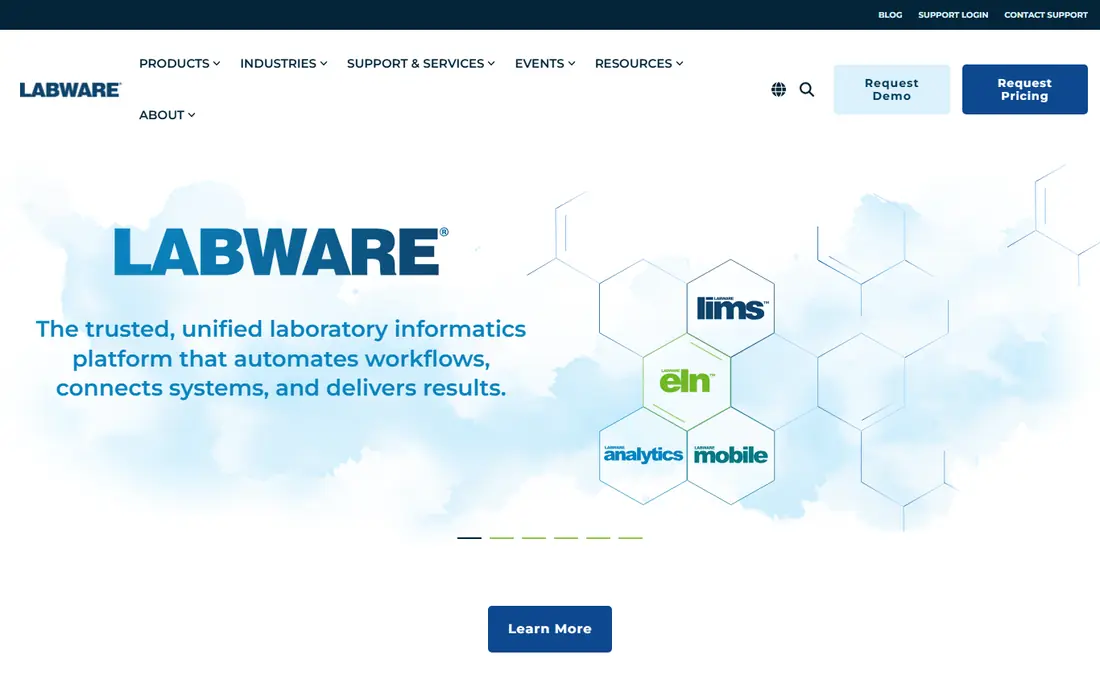
LabWare is the default shortlist name for a lab that must prove control over samples, results, and audit trails. It covers sample login, testing, review, approval, and reporting in one system, and it connects to instruments so results do not rely on manual transcription. For a manufacturing or pharmaceutical QC lab, that depth is the point.
The cost is not just the licence. Implementation, validation, training, and interfacing take months in a complex lab, and those services should be quoted alongside the software. A small lab that does not need that depth will find LabWare heavy, but a regulated multi-site lab will find the control worth the project.
- Deep QA and QC workflows
- Strong instrument interfacing
- Multi-site support
- Quote-only pricing
- Long implementation for complex labs
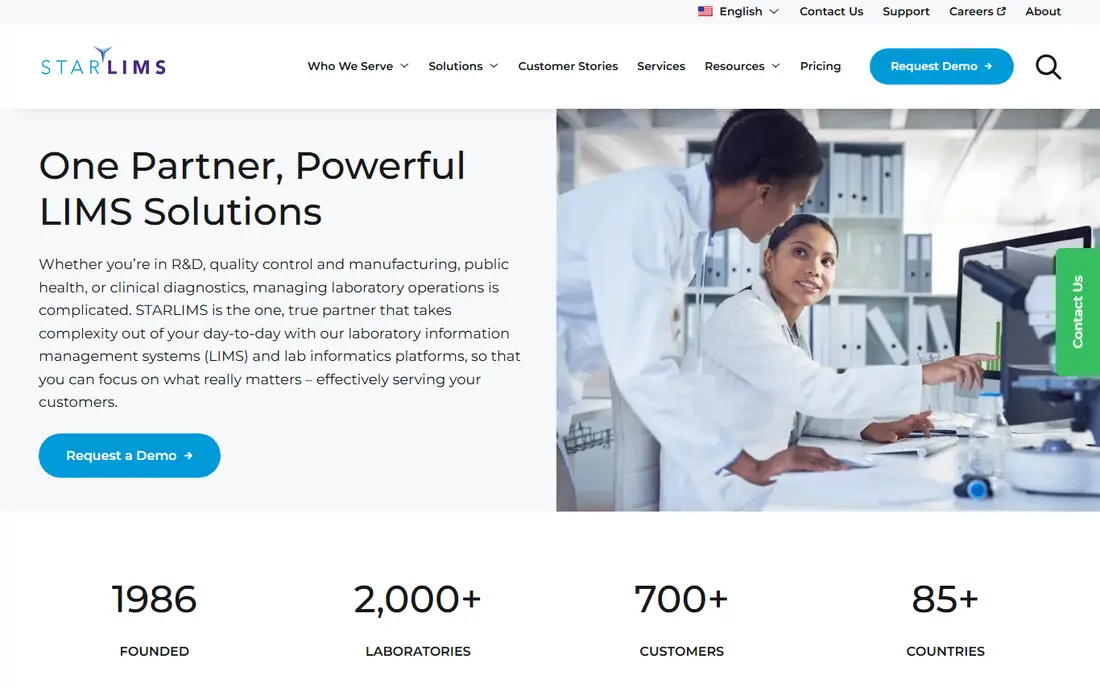
STARLIMS covers a wide range of lab types, from public health and environmental testing to pharma and manufacturing. Its strength is configuration: workflows, sample types, tests, and reports can be shaped to the lab rather than forcing the lab to fit a fixed template. That flexibility helps labs with unusual sample chains or reporting rules.
Flexibility has a price in project time. A team should plan for workflow analysis and testing before go-live, and should ask which changes lab staff can make alone after launch. Labs that want a fast, fixed SaaS setup will find STARLIMS slower to start, while labs with complex rules will value the control.
- Broad industry coverage
- Configurable workflows
- Strong compliance features
- Quote-only pricing
- Configuration can be complex
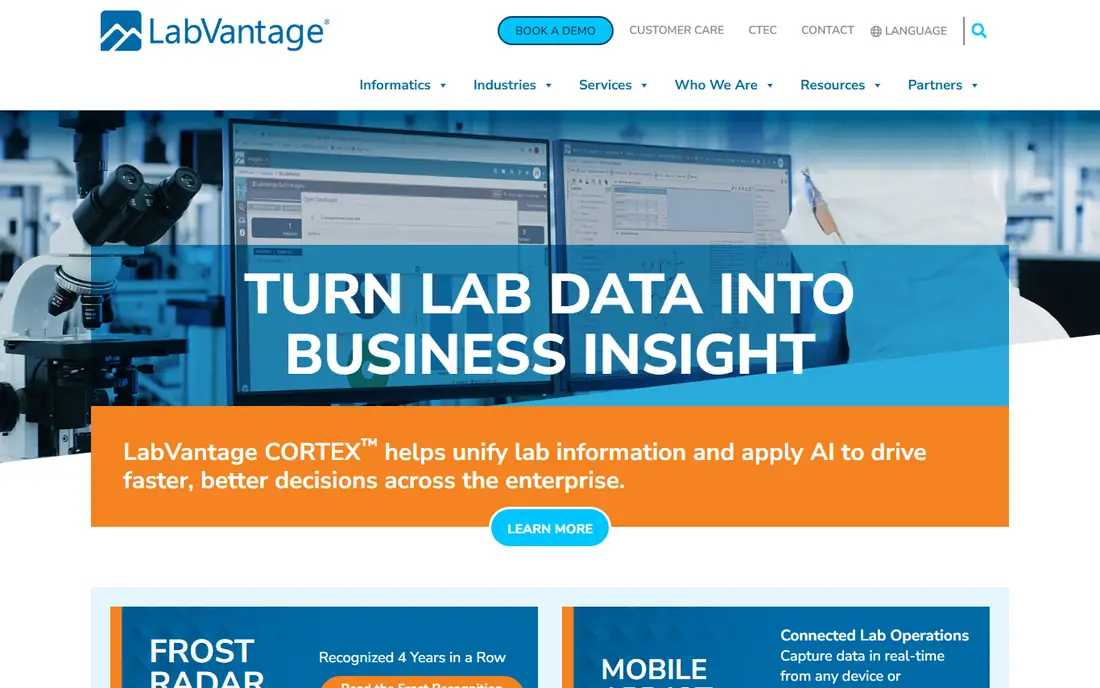
LabVantage aims to be the single informatics platform for a large lab organisation. It brings sample management together with electronic notebooks and execution workflows, so research, QC, and manufacturing data sit in one place. That unity helps when results must move between teams without re-keying or exporting files.
Smaller labs should be cautious. The platform is built for scale, and the implementation effort reflects that. A mid-size testing lab may get a faster return from QBench or CloudLIMS, while a large enterprise with several sites and shared standards is the natural LabVantage buyer.
- LIMS, ELN, and LES in one platform
- Broad enterprise features
- API and integration options
- Expensive for smaller labs
- Configuration is not simple for new users
Benchling is built for discovery work, not just routine testing. Scientists can register molecules and sequences, record experiments, and track samples in the same system, which reduces the split between a notebook, a spreadsheet, and a sample database. For a growing biotech, that single research record is a real advantage.
The free tier for academics makes it easy to start, but commercial teams should get a written quote early. Benchling is also not the best pick for a lab whose main job is high-throughput QC with strict manufacturing controls, where LabWare or STARLIMS fit better.
- Research-native tools for sequences and molecules
- ELN plus LIMS in one system
- Free tier for academics
- Commercial pricing is quote-based
- Less suited to high-volume routine QC than LabWare
SciNote is the most accessible research option here. A small academic or startup lab can start on the free tier, organise experiments, track inventory, and keep a clear record without an enterprise budget. Its compliance features also help government and regulated research teams that need traceability.
The limit is scale and routine QC depth. A large manufacturing lab will outgrow SciNote faster than it will outgrow LabWare, and the paid plan price is not published, so budget planning needs a sales conversation. For research teams, though, the low barrier to entry is a genuine strength.
- Accessible free tier
- Inventory plus compliance features
- Open approach to research data
- Paid and regulated plans are priced on request
- Less enterprise QC depth than LabWare
CloudLIMS suits a testing lab without a large IT team. Because it is delivered as a service, the lab avoids server setup and can focus on sample workflows, results, and reports. That speed matters for a new lab or a lab moving off spreadsheets for the first time.
The trade-off is customisation depth. A lab with highly unusual workflows may hit limits that an enterprise platform would handle through deeper configuration. Check sample types, report formats, and instrument needs during a demo, and confirm the plan that covers your user count.
- Pure cloud delivery
- Faster setup than enterprise platforms
- Built for testing workflows
- Pricing varies by plan and user count
- Less customisation than enterprise systems
QBench is the clearest modern choice for a growing testing or QC lab. Its Foundation plan is published at 16,500 dollars per year and includes five users, which makes early budgeting far easier than with quote-only rivals. Workflows, fields, and automations can be changed by the lab team, which keeps the system close to how the lab actually works.
The published price is a starting point, not a final quote for every lab. Higher tiers add users and features, and a lab should still plan time for workflow setup and staff training. Compared with enterprise platforms, however, QBench reaches go-live much faster for most mid-size labs.
- Published Foundation price for five users
- Configurable workflows without heavy custom code
- Cloud-based
- Annual cost rises with users and tiers
- Implementation still needs planning
LabCollector
Great for: Smaller labs wanting published pricing and flexibility
LabCollector is a strong value pick for a small or mid-size lab. It covers samples, inventory, experiments, and workflows, and it can run in the cloud or on premises. The published price of 400 euros per user per year gives a small lab a firm budget figure, which is rare in this category.
Add-ons change the total, so a lab should price the full pack it needs, including any ELN or extra modules. The interface is also more functional than modern, which matters less for a lab that values control and price over polish. For a lab on a tight budget, LabCollector is hard to beat.
- Published per-user annual price
- LIMS, ELN, and inventory in one system
- Cloud or on-premises options
- Add-ons add cost
- Interface feels older than QBench or Benchling
Labguru, from BioData, sits between a pure notebook and a full enterprise LIMS. Research teams can plan experiments, track samples and reagents, and keep inventory in one place. That combination helps a lab that has outgrown spreadsheets but does not need a manufacturing QC platform.
The quote-based pricing means a team cannot budget from the website alone. A research lab should compare Labguru with Benchling and SciNote on experiment workflows and inventory depth, and pick the one whose daily workflow feels closest to how its scientists already work.
- Combines ELN, LIMS, and inventory
- Built for research teams
- Sample tracking across projects
- Pricing is quote-based
- Less suited to routine manufacturing QC
How we picked these
We compared official product and pricing pages, deployment options, and fit by lab type, from regulated QC to academic research. We kept only systems that are sold and supported now, and we favoured published pricing where it exists. Where a vendor does not publish a price, we wrote See website rather than repeating an unverified third-party figure.
What to check before you buy
Start with lab type, not feature count. A regulated QC lab needs audit trails, instrument interfacing, and validation support, while a research lab needs notebooks, sample registration, and flexible experiment records. A system built for one will feel wrong for the other, even if the feature list looks similar.
Next, map the implementation. Ask how long setup takes, who configures workflows, how instruments are connected, and what validation help is included. Get services costs in writing, since they can match the licence cost on enterprise systems. Finally, run a pilot with real samples, real reports, and real users, and check reporting, exports, and permissions before signing a multi-year deal.
Questions to ask every vendor
Ask whether lab staff can change fields and workflows without vendor help. Ask how audit trails, electronic signatures, and version history work. Ask what happens to your data if you leave, and in what format it can be exported. The answers to those three questions separate a system you own from a system you rent with no exit.
Frequently asked questions
What is the best LIMS software?
For regulated enterprise QC, LabWare is our pick. For research teams, Benchling is our pick. For a growing testing lab that wants published pricing and faster setup, QBench is our pick. The best choice follows lab type, not a single ranking.
What do the best LIMS software reviews usually highlight?
Reviews tend to highlight configurability, instrument interfacing, and support quality for enterprise systems, and ease of use and speed of setup for cloud systems. They also warn about implementation time and total cost, which is why a pilot and a written services quote matter more than a demo alone.
What is a top LIMS software option for a small lab?
LabCollector and SciNote are the strongest small-lab options here. LabCollector gives published annual pricing and broad coverage, while SciNote gives a free tier and research-friendly workflows. CloudLIMS and QBench are the next step up when a small lab needs a fuller SaaS testing system.
What is a top 10 LIMS software list missing if it only names enterprise systems?
It misses the research and small-lab segment. Benchling, SciNote, Labguru, LabCollector, and QBench serve labs that would find LabWare or STARLIMS too large and too slow to implement. A useful shortlist mixes at least one enterprise, one cloud, and one research option.
How much does the best LIMS software review process cost in time?
A cloud pilot can take weeks, while an enterprise implementation can take six to eighteen months including workflow analysis, configuration, interfacing, validation, and training. Plan the timeline around validation and interfacing, not around software installation alone.
Is a LIMS the same as an ELN?
No. A LIMS manages samples, tests, and results, while an electronic lab notebook records experiments and research notes. Many modern platforms, including Benchling, SciNote, and Labguru, combine both, which suits research labs. Routine QC labs often need LIMS depth first and notebook features second.
Sources
See where you really rank - block by block
ProMapRanker scans Google Maps across a grid of your service area. Simple monthly plans from $19, white-label on every plan.
Start freeKeep reading
 zscaler alternatives
Best Zscaler Alternatives in 2026
Looking for zscaler alternatives? We compare 9 SASE and zero trust platforms on architecture, data protection, pricing, and fit for your network and team.
Read → zapier alternatives free
Best Zapier Alternatives Free in 2026
Nine automation tools for zapier alternatives free in 2026, all with genuinely free tiers, plus free plan limits, starting prices and upgrade paths explained.
Read → which platform is best for online reputation
Which Platform Is Best for Online Reputation in 2026
Wondering which platform is best for online reputation? We compare 8 review, listing, and response tools for small and multi-location businesses and agencies.
Read →