 ProMapRanker
Best Lead List Companies in 2026

Key takeaways
- ZoomInfo and Cognism suit larger teams that need deep coverage, intent signals and compliance controls, at enterprise prices.
- Apollo.io is the strongest all-round starting point for smaller teams, since it pairs a contact database with outreach tools.
- Lusha and RocketReach suit quick lookups, while UpLead and LeadIQ suit teams that want credit refunds or workflow integrations.
- All of these tools must be used for lawful business contact only, with attention to consent, opt-outs and local privacy law.
Quick comparison
| Pick | Great for | Pricing starts at | Free tier | |
|---|---|---|---|---|
 ZoomInfo | Enterprise sales teams | See website | No | Visit |
 Apollo.io | Small and mid-sized sales teams | $49 per user per month | Yes | Visit |
 Cognism | EMEA-focused and compliance-led teams | See website | No | Visit |
 Lusha | Quick prospect lookups | $36 per user per month | Yes | Visit |
 Seamless.AI | Teams wanting AI-assisted prospecting | See website | Free trial | Visit |
 RocketReach | Individual prospectors and small teams | $39 per month | Yes | Visit |
 UpLead | Teams that want verified contacts | $99 per month | Yes | Visit |
 LeadIQ | Sales teams working in the browser | See website | Free trial | Visit |
 SalesIntel | US-focused teams wanting human-verified data | See website | No | Visit |
The best lead list companies
Lead list companies sell business contact data and tools to find decision makers. Used well, they save research time, but used badly, they damage sender reputation and break privacy rules. We compared official pricing, feature pages and privacy material, and we frame every entry for lawful business contact only.
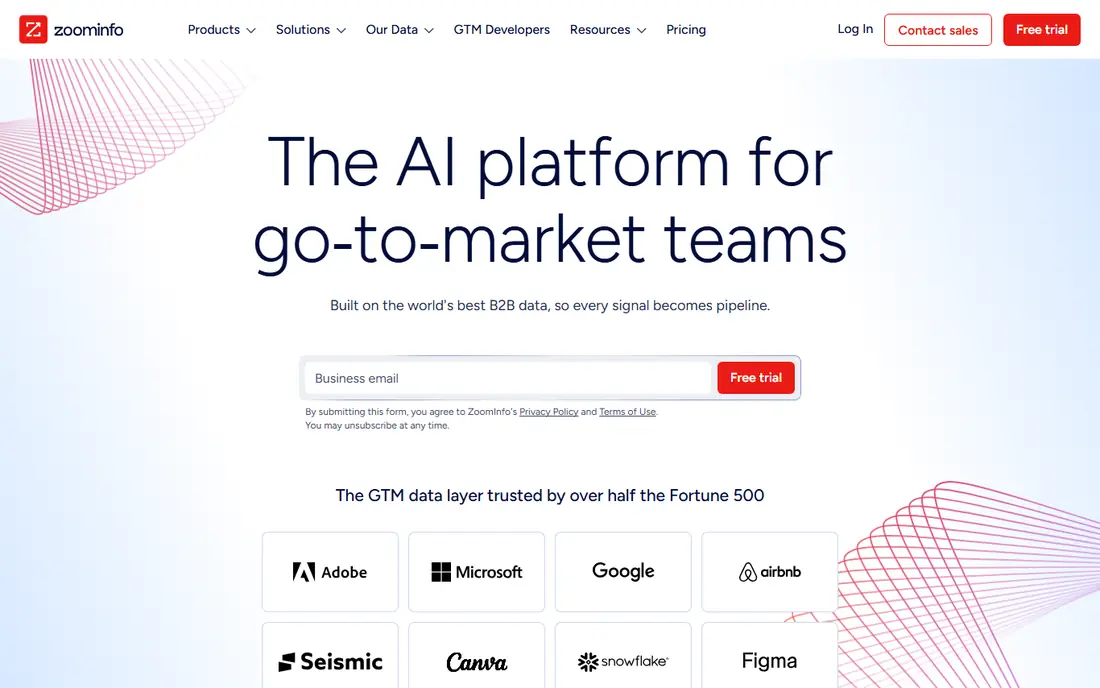
ZoomInfo is the enterprise default for many large sales teams, with a large database, intent signals and tools that plug into common CRMs. It suits organisations that need coverage across many roles and companies, and that can use its workflow features every day.
The cost is the honest barrier. Pricing is quoted per team and usually annual, and modules add up, so smaller teams should get a full written quote and test coverage in their exact market before signing.
- Very large business database
- Intent and workflow tools
- Strong CRM integrations
- Enterprise pricing with annual contracts
- Add-ons can raise the total cost sharply
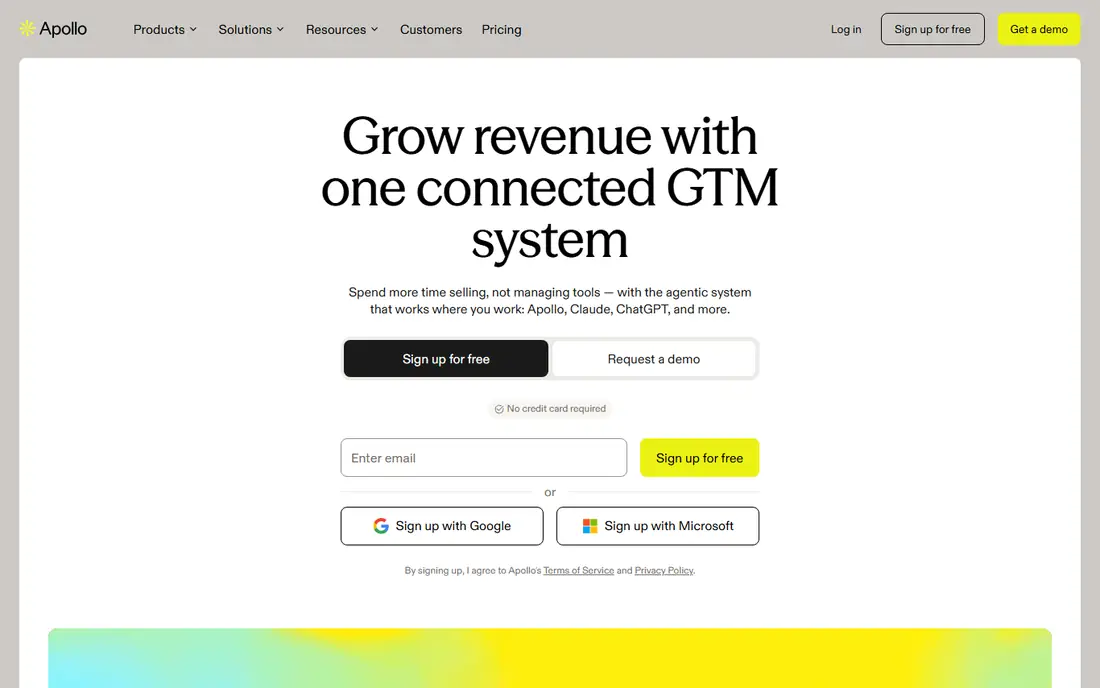
Apollo.io combines a contact database with email sequences in one product, which is why many smaller teams start here. The self-serve model and free tier make it easy to test, and the monthly price is clear compared with enterprise-only rivals.
Credits are the limit to watch. Larger campaigns can burn through credits fast, and accuracy varies by region and role, so teams should verify a sample list and check bounce rates before scaling a campaign.
- Contact database plus outreach sequences
- Self-serve pricing
- Useful free tier
- Credit limits can bind on larger campaigns
- Data quality varies by market
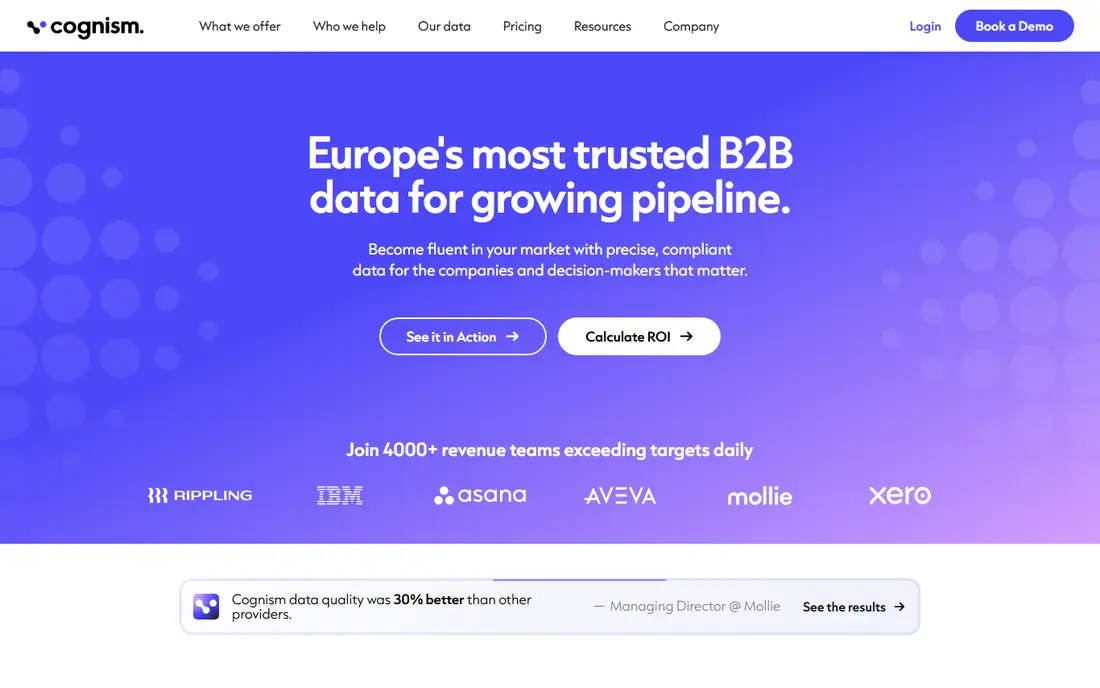
Cognism is the compliance-led choice for teams selling into Europe, with phone-verified mobile numbers and screening against do-not-call lists. That focus matters for companies that must show care with personal data and local rules.
The trade-off is price and contract size. Cognism is built for teams that can commit annually, so a small team with occasional prospecting may find a self-serve tool cheaper, even if its European coverage is thinner.
- Strong European coverage
- Phone-verified mobiles
- Compliance-first positioning
- Enterprise pricing and annual terms
- Less suited to very small teams
Lusha is built for speed, with a browser extension that shows contact details while a rep browses company and profile pages. It suits individual reps and small teams that need quick lookups rather than bulk list building.
Coverage is the limit. Lusha is smaller than the enterprise databases, and some markets and senior roles are thinner, so teams should test it against their target accounts and not assume every lookup will return a direct number.
- Fast browser extension for lookups
- Simple credit model
- Useful free credits
- Smaller database than ZoomInfo
- Accuracy can vary by market and role
Seamless.AI uses AI-assisted search to help reps build lists by company, role and technology, and it connects to common CRMs. It appeals to teams that want a faster way to turn a target account list into contact records.
Pricing transparency is weaker than for self-serve rivals, so buyers should ask for a written quote and trial the product on their own accounts. Accuracy also varies, so a verification step before sending remains essential.
- AI-assisted search across companies and roles
- CRM integrations
- Large contact index
- Pricing is not fully transparent online
- Data accuracy varies by segment
RocketReach keeps prospecting simple, with search by person, company, title and location, plus email and phone details where available. It is a good fit for founders and small teams that need a straightforward lookup tool without enterprise complexity.
Scale is where it shows its limits. Bulk exports and team controls are thinner than enterprise platforms, and coverage outside major markets can be patchy, so larger teams should test it before making it their main source.
- Simple search by person, company and role
- Email and phone lookups
- Free searches to start
- Bulk and team features are limited
- Coverage varies outside major markets
UpLead focuses on verified contacts and offers credits back for bad records, which helps teams that have been burned by stale lists. Its filters for industry, company size and technology make it useful for building a focused list.
The monthly cost can grow as seats and credits are added, and its database is smaller than the largest rivals. Teams should test verification in their own market and track bounce rates, since a refund policy does not undo a damaged sender reputation.
- Real-time verification claims
- Credit refunds for bad contacts
- Firmographic filters
- Monthly price rises with seats and credits
- Database is smaller than ZoomInfo
LeadIQ is designed for reps who prospect in the browser, capturing contact details as they work and pushing them into a CRM or sequencing tool. That workflow fits teams that already live in LinkedIn and company pages for research.
The catch is setup. Value depends on clean CRM mapping and a sensible outreach process, and pricing for team plans often needs a quote. Without those pieces, LeadIQ becomes another extension rather than a reliable list source.
- Browser-based capture while prospecting
- CRM and sequencing integrations
- Team workflows
- Pricing requires a quote for many plans
- Value depends on CRM setup
SalesIntel positions itself on human-verified data, which appeals to teams tired of guessed emails and stale records. Its intent and technology filters also help narrow a list to companies that look ready to buy.
Pricing leans enterprise, and its strongest coverage is in the United States, so international or very small teams should test it first. As with every provider here, a sample and a bounce check matter more than a database size claim.
- Human-verified contact claims
- Intent and technographic data
- US coverage focus
- Enterprise-leaning pricing
- Less suited to very small or non-US teams
How we picked these
We compared official pricing pages, feature pages and privacy material, and we checked public reviews for accuracy complaints and contract terms. We favoured providers that are still sold in October 2026, that explain data sources and opt-out routes, and that offer a trial or a sample where possible.
We did not claim hands-on testing, and we did not invent accuracy percentages or database sizes. Where pricing was not published, we wrote See website, and we treated all contact data as business data that still needs consent and opt-out handling.
How to buy a lead list without harming your reputation
Start with a small, well-defined list, not a bulk export. Pick one market, one role and one clear reason to contact each person, then verify emails, check for recent job changes and remove anyone who has opted out.
Then protect your sending reputation. Warm up new domains, keep volumes modest, personalise the first line with a real business reason, and honour replies and opt-outs at once. A list that produces complaints will cost more in deliverability than it gains in meetings.
- Ask how data is sourced, how often it is refreshed and how a person can opt out.
- Test a sample of 100 contacts in your exact market and measure bounce and reply rates.
- Check do-not-call and suppression rules for the countries you will contact.
- Use business contact only, never personal emails or phone numbers scraped without a lawful basis.
- Keep records of consent, opt-outs and list sources so a complaint can be answered clearly.
This article is general information only, not legal advice. Business contact rules vary by country and by channel, so check consent, opt-out and privacy requirements before any outreach campaign.
Frequently asked questions
Are lead lists legal to use?
Business contact data can be used lawfully in many cases, but rules vary by country, channel and data type. Use a reputable provider, respect opt-outs and do-not-call lists, and get legal advice for regulated markets.
Why do lead lists go stale so fast?
People change jobs, companies restructure and contact details change, so any list decays over time. Providers that refresh often and verify records tend to produce fewer bounces, but no list stays perfect.
Is ZoomInfo worth the price for a small team?
Often not, unless the team uses its intent and workflow tools daily. A self-serve tool such as Apollo.io or UpLead usually covers a small team at a much lower cost.
What is the difference between a lead list and a prospecting tool?
A lead list is a set of records, while a prospecting tool adds search, verification, CRM sync and outreach. Many products here do both, so compare the workflow, not just the record count.
How many contacts should I buy at first?
Start small, with a focused list you can research and personalise. A few hundred well-matched contacts with a clear business reason will usually beat thousands of generic records.
Sources
See where you really rank - block by block
ProMapRanker scans Google Maps across a grid of your service area. Simple monthly plans from $19, white-label on every plan.
Start freeKeep reading
 worlds best local seo company
8 Worlds Best Local SEO Companies for Map Pack Growth in 2026
Compare the worlds best local seo company options for Google Business Profile work, citations, reviews, and multi-location rankings and reporting in 2026.
Read → world's best web hosting company
World's Best Web Hosting Company in 2026
Searching for the world's best web hosting company? We compared 10 hosts on price, renewal rates, speed, and support to help you choose well today in 2026.
Read → who's got the best nanny tax services
Who's Got the Best Nanny Tax Services in 2026
We answer who's got the best nanny tax services, comparing full filing, back taxes, software, and pricing so families can handle nanny taxes correctly.
Read →