 ProMapRanker
Best Lead Generation Tools for Small Businesses in 2026


Inbound capture and free CRM · Pricing starts at: Free, paid from $15 per seat per month
Key takeaways
- HubSpot is the best free starting point for inbound leads, with forms, landing pages, and a CRM in one place.
- Apollo.io is the best all-in-one outbound tool for small teams, combining a B2B database with sequences and email sending.
- Hunter.io, Snov.io, and Lusha suit smaller budgets and simpler needs, such as finding and verifying a single contact.
- Credit-based pricing can look cheap until volume grows, so calculate cost per contacted lead before committing.
Quick comparison
| Pick | Great for | Pricing starts at | Free tier | |
|---|---|---|---|---|
| HubSpot | Inbound capture and free CRM | Free, paid from $15 per seat per month | Yes | Visit |
 Apollo.io | Outbound prospecting and sequences | Free, paid from $49 per user per month | Yes | Visit |
 Hunter.io | Finding and verifying emails | Free, paid from $34 per month | Yes | Visit |
 Snov.io | Budget outbound email | $39 per month | Yes, limited | Visit |
 Lusha | Quick contact lookups | Free, paid from $29 per user per month | Yes | Visit |
 Pipedrive | Small team pipeline management | $14 per seat per month | No, free trial | Visit |
 OptinMonster | Website popups and lead capture | $9 per month | No, free trial | Visit |
 Leadpages | Fast landing pages for campaigns | $49 per month | No, free trial | Visit |
The best lead generation tools for small businesses
Lead generation covers two motions: inbound, where visitors raise a hand through a form or landing page, and outbound, where a team finds and contacts prospects. A small business usually needs one of each, not every tool on the market. The eight tools below cover both motions, all live in October 2026.
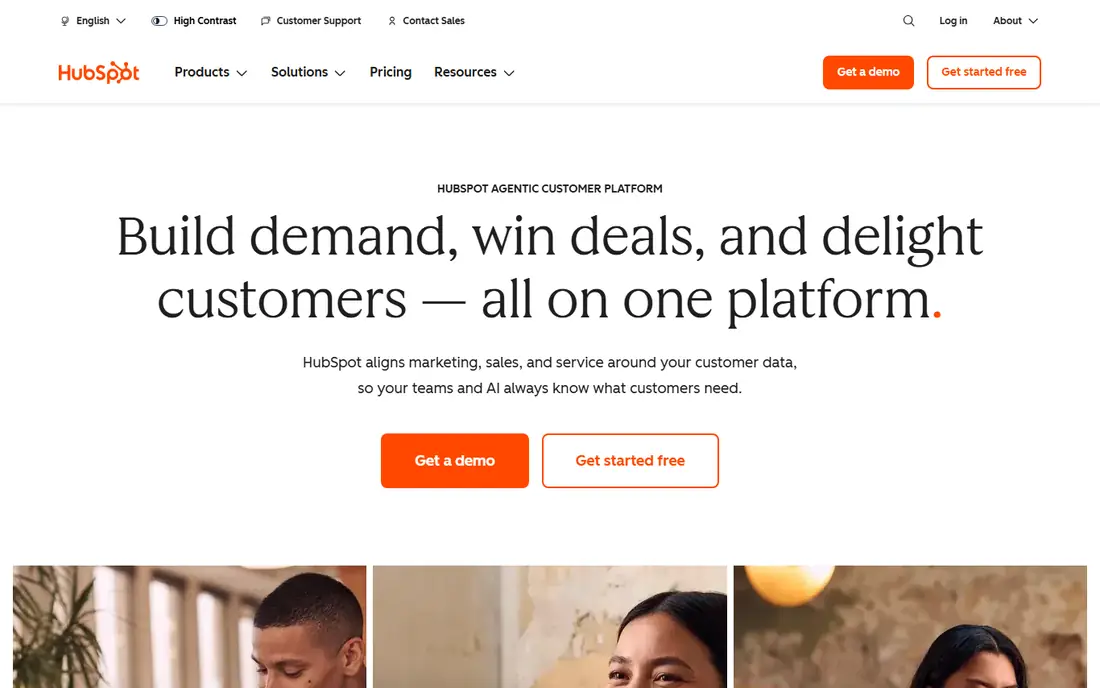
HubSpot is the default starting point for inbound lead generation because its free tier already includes forms, popups, live chat, landing pages, and a CRM to store every lead. A small business can capture leads from its site, follow up by email, and track which pages and campaigns produce enquiries, without paying at first.
Paid plans add automation, scoring, and deeper reporting, but they also raise costs in steps. Marketing Hub pricing, in particular, climbs as contacts and features grow. HubSpot suits businesses that will use the CRM daily and that want inbound and sales in one system, rather than businesses that only need a single form tool.
- Free CRM, forms, landing pages, and chat, strong reporting as teams grow, wide integrations
- Marketing Hub costs rise sharply on higher tiers, contact-based pricing needs care
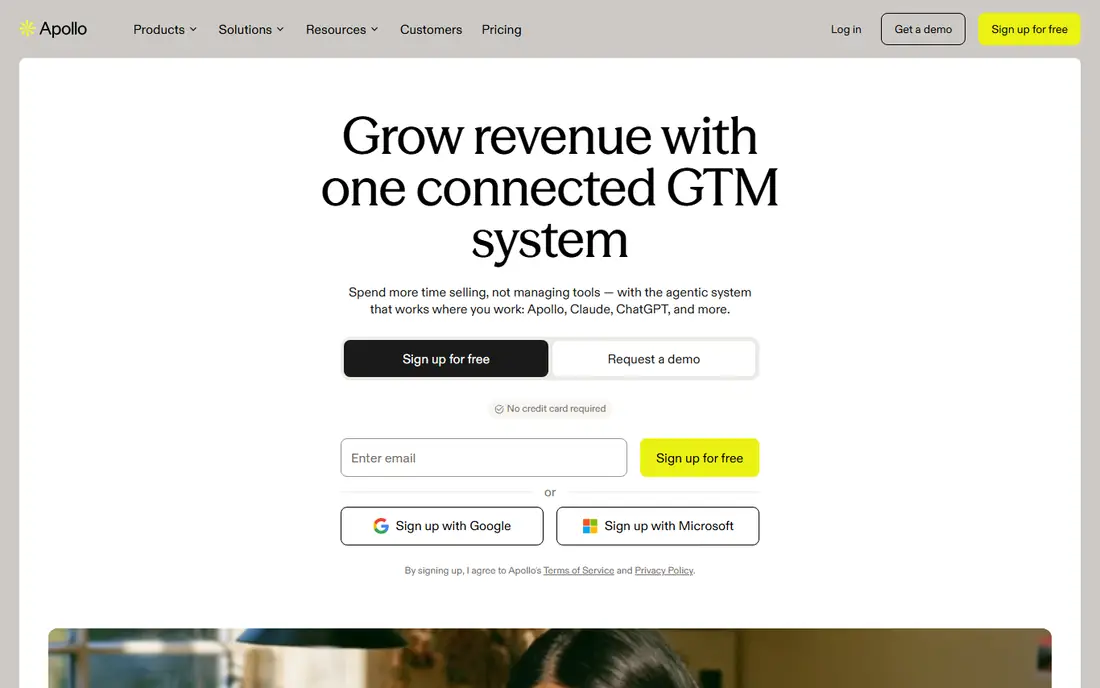
Apollo.io combines a B2B contact database with email verification, sequencing, and a basic CRM, so a small outbound team can find a prospect, check the email, and start a sequence without buying three tools. That all-in-one design is why it is popular with small businesses that cannot afford a separate data provider and sales engagement platform.
Data quality is not uniform. US and UK data tend to be stronger than data for smaller markets, so teams selling internationally should test a sample list before committing. Apollo also focuses on outbound, so a business that mainly needs website forms and landing pages will still need HubSpot or Leadpages alongside it.
- Large B2B database, email verification, sequences and CRM in one tool
- Data accuracy varies by region, outbound focus means inbound capture is thinner
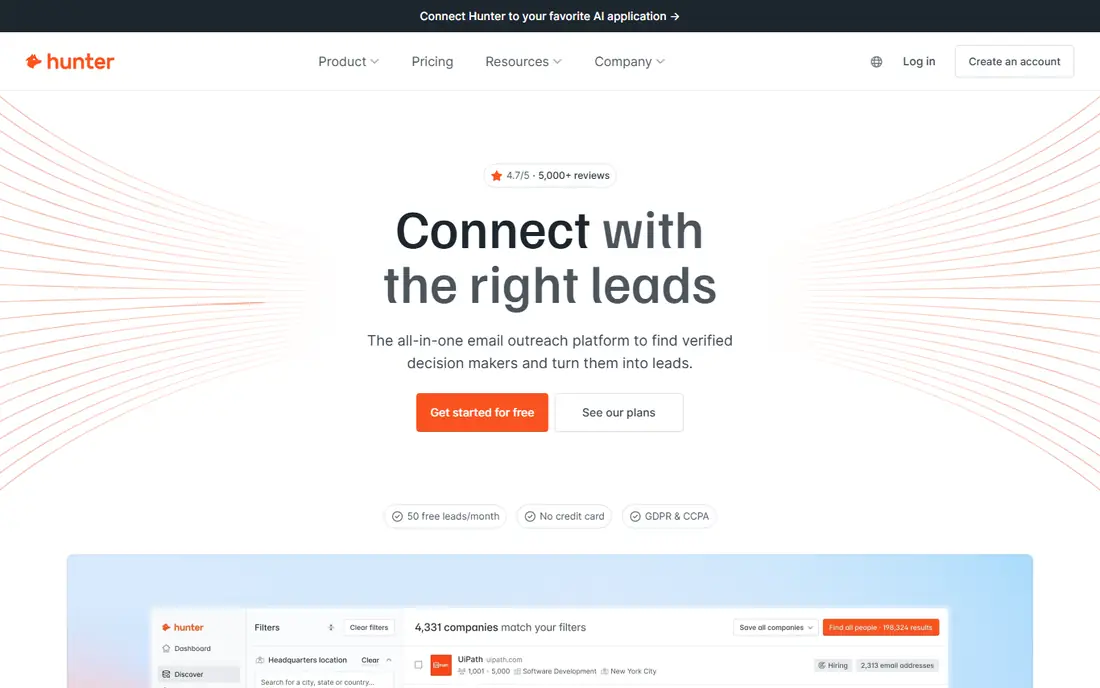
Hunter.io does one job well: finding an email address for a person at a company, and verifying whether that address looks deliverable. Domain search shows likely patterns for a company, and the verifier helps avoid bounces that harm sender reputation. For a small team that already has a list of target companies, Hunter is a fast, transparent tool.
It is not a full outbound platform. There are no sequences, no CRM pipeline, and no large database browsing in the Apollo sense. Hunter suits businesses that need to find a few dozen contacts a month accurately, and that already handle outreach in another tool.
- Simple email finder and verifier, domain search, transparent credit pricing
- No sequencing or CRM depth, credits limit volume
Snov.io offers a budget path to outbound email, combining an email finder, verifier, and drip campaign tool in one subscription from $39 per month in published pricing. A small team can build a list, verify addresses, and run a multi-step email sequence without paying for a separate engagement platform.
The database is smaller than Apollo, and results vary by market and industry. Email deliverability also depends on domain setup, warm-up, and list quality, not just the tool. Snov.io suits solo founders and tiny teams who want a single, affordable outbound tool and who are willing to test lists carefully.
- Email finder, verifier, and drip campaigns in one tool, lower price than Apollo, LinkedIn extension
- Database is smaller than Apollo, deliverability needs careful setup
Lusha is built for quick lookups. A sales rep browsing LinkedIn or a company site can pull a contact email or phone number through the browser extension, without leaving the page. That speed helps small teams that prospect one company at a time, rather than building large lists in bulk.
Credit limits are the main constraint. A free or low-tier plan covers only a limited number of lookups per month, and heavy prospecting will need a higher plan. Lusha suits teams that need accurate, on-the-spot contact details for warm prospects, rather than teams that need thousands of contacts per month.
- Fast browser extension lookups, direct dials in many cases, simple credit model
- Credits run out fast at volume, data coverage varies by region
Pipedrive is a CRM first, and a lead tool second. It helps a small team track leads from first contact to closed deal, with a visual pipeline that shows where each lead sits. Web forms and automation on higher plans help capture and route leads, but Pipedrive does not include a prospect database like Apollo.
That focus is a strength for sales-led businesses. A team that already generates leads, through referrals, ads, or outbound, needs a clean place to work them. Pipedrive suits teams that want a simple, sales-focused CRM without the broader marketing suite and price steps of HubSpot.
- Visual sales pipeline, easy lead tracking, automation on higher plans, simple setup
- No B2B database included, lead capture tools are lighter than HubSpot
OptinMonster helps a business turn existing website traffic into leads. Exit-intent popups, slide-ins, and targeted offers can capture emails from visitors who would otherwise leave. Targeting rules, such as page, location, or returning visitor status, help show the right offer to the right visitor, and A/B testing shows which version converts better.
It only works if the site already gets traffic. A new site with few visitors will see few leads, no matter how good the popup is. Popups also need restraint: too many, or poorly timed, popups annoy visitors and harm trust. OptinMonster suits businesses with steady traffic that want to convert more of it into enquiries.
- Exit-intent popups, targeting rules, A/B testing, many integrations
- No prospect database, value depends on website traffic, popups need careful design
Leadpages focuses on landing pages that convert ad and email traffic into leads. Templates for lead magnets, webinars, and trial signups help a small business launch a campaign page quickly, without building a full website. A/B testing and integrations with email tools and CRMs complete the capture workflow.
The starting price, at $49 per month in published pricing, is higher than a simple form tool, so it suits businesses running paid campaigns or regular lead magnets. A business that only needs one form on an existing site may not need Leadpages. A business that tests many campaign pages will get more value from its speed and templates.
- Fast landing page builder, templates for lead magnets, A/B testing, integrations
- Higher starting price than some rivals, no prospect database, page builder is narrower than a full site builder
How we picked these
We compared official feature pages, pricing pages, app store listings, privacy policies, and public reviews for tools live in October 2026. We included inbound capture tools, outbound data tools, and CRM tools, because small businesses need more than one type of lead tool. We favoured tools with a free tier or low starting price, and we left out enterprise-only platforms that a small team cannot realistically buy. We did not run live outbound campaigns for this guide, and we based prices and limits on published pages.
What to check before you buy
Decide inbound, outbound, or both
A business with website traffic needs capture tools like HubSpot, OptinMonster, or Leadpages. A business with a clear target list needs outbound tools like Apollo, Hunter, or Snov.io. Buying both types before knowing which motion works wastes budget. Start with the motion that matches how customers already find the business.
Calculate cost per contacted lead
Credit tools charge per lookup, verification, or enrichment, while seat tools charge per user. Multiply credits per lead by monthly volume to get the true cost. A tool that looks cheap at 100 leads can become expensive at 1,000 leads, while a seat-based tool becomes cheaper per lead as volume grows.
Check data quality for your market
B2B data accuracy varies by country, industry, and company size. Test a sample of 50 to 100 contacts from your actual target market before buying an annual plan. Check bounce rates, job title accuracy, and phone coverage, not just the total database size claimed on a marketing page.
Respect outreach rules and consent
Cold email and cold calling rules vary by country, and inbox providers penalise high bounce rates and spam complaints. Use verified addresses, honour opt-outs quickly, and keep outreach relevant to the recipient. A tool does not make an irrelevant message compliant, and poor deliverability can harm a domain for months.
Frequently asked questions
What is the best lead generation software for small businesses?
HubSpot is the best starting point for most small businesses, because its free CRM, forms, and landing pages cover inbound capture at no cost. Apollo.io is the best outbound choice for small teams that need a database and sequences in one tool. The best overall stack for many small businesses is HubSpot for inbound, plus Apollo or Hunter for outbound.
What are the best B2B lead generation companies for small teams?
Apollo.io, Hunter.io, Snov.io, and Lusha are the most practical B2B data options for small teams, thanks to free tiers and lower starting prices. ZoomInfo offers deeper enterprise data, but its annual contracts and pricing put it out of reach for most small businesses. Small teams should test data quality in their own market before choosing.
Is there a free lead generation tool?
Yes, HubSpot offers a free CRM with forms, landing pages, and chat. Apollo.io, Hunter.io, Snov.io, and Lusha also offer free tiers with limited credits or contacts. Free tiers work well for testing and for low volume, but growing teams usually need a paid plan for higher limits, automation, and reporting.
How do lead generation tools find emails?
Data tools gather publicly available business contact information, company websites, and other sources, then verify addresses to reduce bounces. Accuracy varies, so verification and bounce monitoring matter. Tools like Hunter.io focus on finding and verifying a specific address, while Apollo.io and Lusha combine finding with broader database search.
How much should a small business spend on lead generation tools?
A solo founder can start for free with HubSpot and a free data tier, then add a $30 to $50 per month outbound tool when volume grows. A small team of two to five people often spends $100 to $500 per month across capture, data, and CRM tools. Spend should be judged against cost per qualified lead and closed revenue, not against the tool price alone.
Sources
See where you really rank - block by block
ProMapRanker scans Google Maps across a grid of your service area. Simple monthly plans from $19, white-label on every plan.
Start freeKeep reading
 youtube alternatives
Best YouTube Alternatives in 2026
Looking for youtube alternatives in 2026? We compare Vimeo, Dailymotion, Twitch, Rumble, and more on price, audience, monetization, control and privacy.
Read → what's the best ai tool for photo editing
What Is the Best AI Tool for Photo Editing in 2026
What is the best AI tool for photo editing? We compare ten tools for 2026, from Photoshop and Lightroom to Luminar, Topaz, Canva and mobile editors today.
Read → twitter alternatives
Best Twitter Alternatives in 2026
Compare the best twitter alternatives for 2026, from Bluesky, Threads, and Mastodon to Reddit, Tumblr, and Micro.blog, with free plans and audience notes.
Read →