 ProMapRanker
Best Lead Generation Software in 2026


All-in-one prospecting and outreach · Pricing starts at: $49 per user per month
Key takeaways
- Apollo.io is the strongest all-in-one starting point, since it combines a contact database with outreach and a free plan.
- HubSpot suits teams that want leads, marketing and a CRM in one system, while ZoomInfo suits larger teams that need depth and intent data.
- Free tools are genuinely useful for finding emails and building pages, but contact quality and limits matter more than a free label.
- Price lead tools by usable contacts and seats, not by headline price, because credits and seat minimums change the real monthly cost.
Quick comparison
| Pick | Great for | Pricing starts at | Free tier | |
|---|---|---|---|---|
| Apollo.io | All-in-one prospecting and outreach | $49 per user per month | Yes | Visit |
 HubSpot | Inbound leads plus CRM in one place | Free | Yes | Visit |
 ZoomInfo | Enterprise contact and intent data | See website | Free trial | Visit |
 Hunter | Finding and verifying emails | $34 per month | Yes | Visit |
 Lusha | Quick contact details for small teams | See website | Yes | Visit |
 Clay | Enrichment across many data providers | $167 per month | Yes | Visit |
 Leadpages | Fast landing pages that capture leads | $49 per month | Free trial | Visit |
 Unbounce | Landing pages with testing built in | $99 per month | Free trial | Visit |
The best lead generation software
Lead generation software covers two different jobs: finding the right people, and turning visitors into enquiries. This list mixes both, so you can pick a prospecting database, a landing page builder, or a combined platform depending on where your leads actually come from. We compared official pricing pages and feature pages, and we kept only tools that are live in October 2026.

Apollo.io is our pick for most small sales teams because it removes the need to buy a database, an email tool and a tracker separately. You can search for companies and contacts, enrich a list, then run email sequences and track replies without leaving the platform. Basic pricing starts at $49 per user per month when billed annually, and a free plan lets you test the data quality first.
The credit system is the part to watch. Emails cost fewer credits than phone numbers, and unused credits do not roll over in the usual way, so a team that burns through dials will hit limits faster than expected. Apollo.io still wins on value for most teams, because the combination of data and outreach in one subscription is hard to beat at this price.
- Contact database plus sequences in one tool
- Free plan for testing
- CRM integrations included
- Credits expire each billing cycle
- Direct dials cost more credits than emails
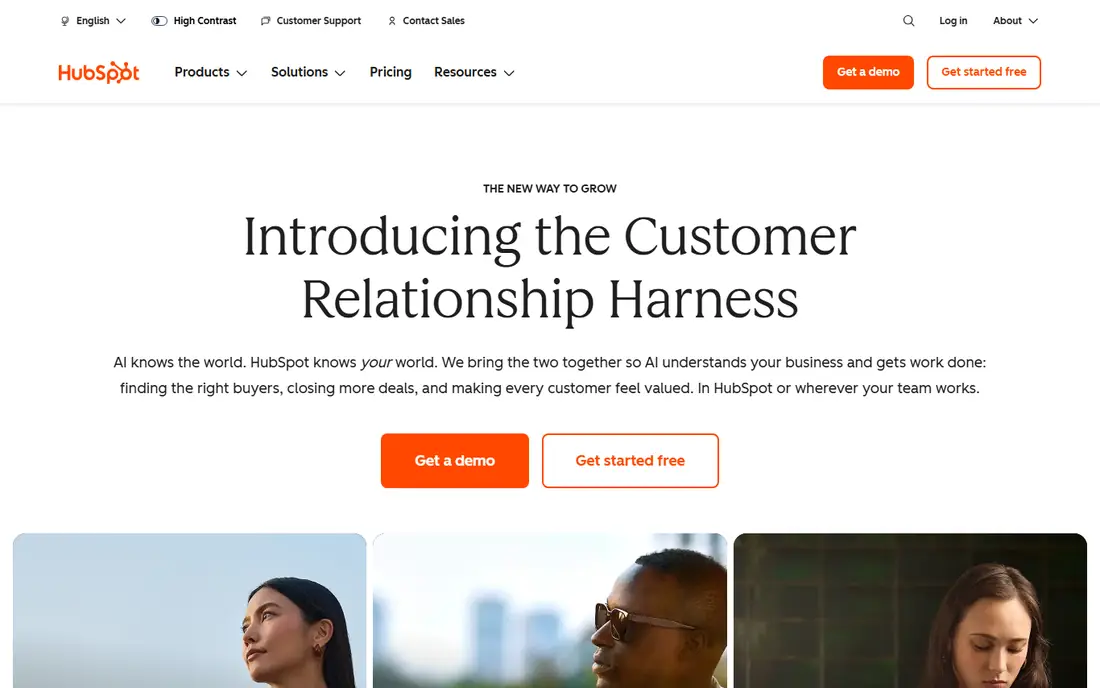
HubSpot suits teams that get leads from their website, content and ads rather than from cold outreach alone. The free CRM captures form submissions, tracks each lead journey and keeps marketing and sales on the same record, which prevents leads from getting lost between tools. Paid plans start from $20 per month for some HubSpot products, while Marketing Hub paid tiers are higher, so check which hub you actually need.
The risk with HubSpot is scope creep. It is easy to start free, then add hubs, seats and add-ons until the bill looks nothing like the starting price. HubSpot is still a strong choice when inbound is your main channel, because few tools match its combination of capture, nurturing and reporting in one place.
- Free CRM with forms and lead capture
- Strong marketing and sales handoff
- Wide integration range
- Paid Marketing Hub tiers rise quickly
- Advanced features sit behind higher plans
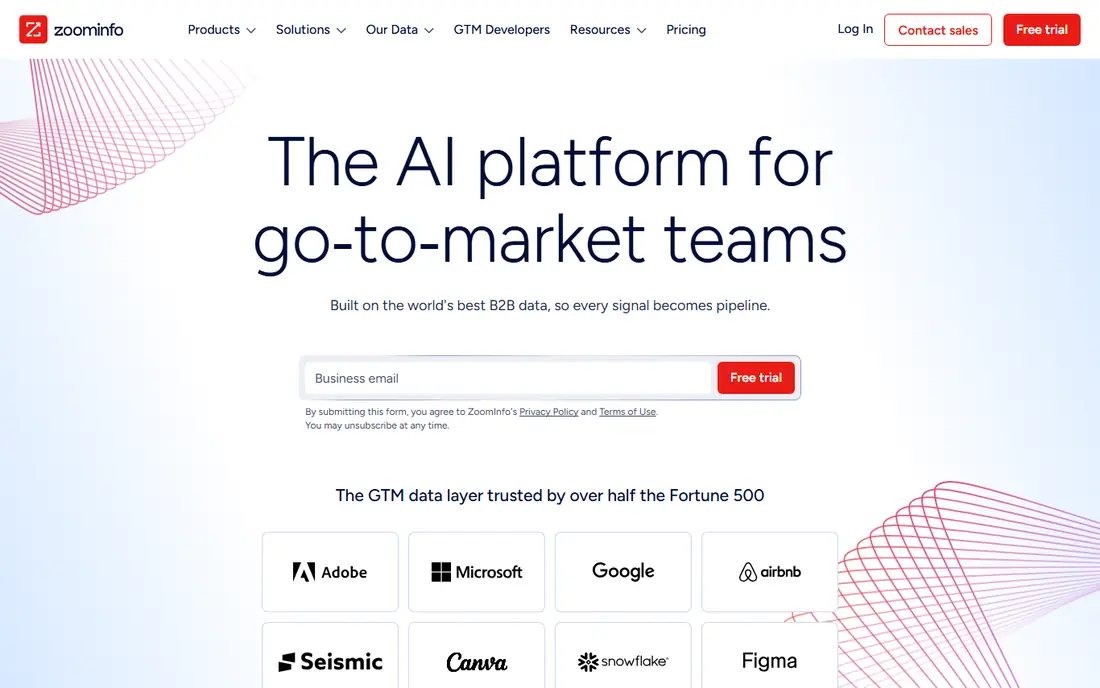
ZoomInfo is the enterprise answer to a simple question: who should we contact, and are they showing buying signals now. Its database covers companies, contacts, hierarchies and technographic details, and its intent data helps larger teams prioritise accounts that are actively researching a topic. That depth is why many mid-market and enterprise sales teams standardise on it.
Small teams should think twice. Pricing is quote-based, often with seat minimums and annual contracts, and the total cost can be far higher than the self-serve tools on this list. ZoomInfo earns its place when coverage, intent and enterprise controls matter more than a low monthly bill.
- Deep company and contact coverage
- Intent signals for prioritising accounts
- Strong enterprise integrations
- Quote-only pricing
- Minimum seats and annual terms make it a poor small-team fit
Hunter does one job well: it finds email addresses tied to a domain and checks whether they look deliverable. That focus makes it a good companion tool for teams that already have a CRM or outreach system but need cleaner contact data. Starter pricing is $34 per month when billed annually, and a free plan gives a small monthly credit allowance for testing.
Hunter is not a full prospecting platform. It will not give you phone numbers, company intent or built-in sequences at the same level as Apollo.io or ZoomInfo. Use Hunter when email accuracy is the bottleneck, and pair it with a landing page or CRM tool rather than expecting it to run your whole pipeline.
- Focused email finder and verifier
- Free plan with monthly credits
- Simple to use for small teams
- Email only, no phone database or outreach sequences
- Credit limits cap larger lists
Lusha is built for speed. A salesperson browsing LinkedIn or a company site can pull a contact email or direct dial through the browser extension without switching tools or importing a list. That workflow suits small teams and individual prospectors who want contact details at the moment they find a prospect, rather than through a bulk list build.
The limits matter. Lusha works on credits, and the free plan covers only light use, so heavy prospectors will need a paid plan and should confirm the current rate on the Lusha site before budgeting. Lusha is a practical pick for quick, individual lookups, while Apollo.io or ZoomInfo suit teams that build and enrich lists at scale.
- Fast browser extension for prospecting
- Direct dials and emails
- Free plan for light use
- Pricing varies by billing period
- Credit limits apply
- Data depth is narrower than ZoomInfo
Clay is a different kind of lead tool. Instead of relying on one database, it runs lookups across many data providers in a waterfall, so if one source misses an email or phone number, another may fill it. It also includes an AI research agent that can gather company details from public sources, which helps revenue teams build richer lists than a single database allows.
That power brings complexity. Clay Launch starts at $167 per month when billed annually, and teams must budget both actions and data credits, which makes costs harder to predict at first. Clay is best for revenue operations teams that already know their ideal customer profile and want list quality above simplicity.
- Waterfall enrichment across many providers
- AI research agent
- No charge when enrichment finds nothing on some lookups
- Setup takes time
- Two meters to budget, actions and data credits
- CRM sync needs higher tiers
Leadpages suits small businesses that need a landing page live this week, not a marketing platform project. You can pick a template, add a form, connect an email tool and publish without writing code, which is exactly what a local business or solo founder needs for a lead magnet, webinar or service enquiry. Paid plans start at $49 per month.
Leadpages does not find leads for you. It captures visitors you already attract through ads, search or social media, so it pairs well with a prospecting tool like Apollo.io or with HubSpot forms. Choose Leadpages when speed and simplicity matter more than advanced testing and personalisation.
- Fast code-free page building
- Templates for lead capture
- Built-in forms and testing basics
- No prospecting database
- Conversion features are narrower than Unbounce at higher tiers
Unbounce is the landing page pick for teams that test and optimise, not just publish. Its builder supports A/B testing, so you can compare headlines, forms and offers and keep the version that converts better, rather than guessing which page works. That discipline pays off for paid traffic, where a small conversion gain can cut cost per lead noticeably.
The starting price of $99 per month is higher than Leadpages, so Unbounce suits teams already spending on ads and measuring results. If you only need one simple page and a form, Leadpages will do the job for less. Pick Unbounce when testing is part of your weekly routine.
- Strong landing page builder
- A/B testing and optimisation features
- Templates for many campaign types
- Higher starting price than Leadpages
- No built-in prospecting data
How we picked these
We compared official pricing and feature pages for tools live in October 2026, covering prospecting databases, email finders, enrichment platforms and landing page builders. We kept tools with a clear lead generation job, a current pricing page or a stated quote model, and a free plan or trial where one is offered. Where pricing was quote-only or varied by billing period, we wrote See website rather than presenting a third-party figure as a vendor price.
How to choose without overspending
Start with your lead source. If most leads come from outbound prospecting, pick a database first, such as Apollo.io, and add a landing page tool only if you also run inbound campaigns. If most leads come from your website, pick a capture and CRM tool first, such as HubSpot or Leadpages, and add a finder like Hunter only for follow-up research.
Next, run a small paid test before an annual contract. Build one list of 100 prospects, check how many emails verify, send one sequence, and measure replies, not just opens. That test tells you more than any feature list, because data quality varies by industry and region.
Finally, watch the credit and seat math. A cheap seat price with expensive phone credits can cost more than a higher seat price with generous email credits. Ask each vendor what happens to unused credits, whether minimum seats apply, and what the renewal price will be after any introductory period.
Frequently asked questions
What is the best lead generation software?
Apollo.io is the best all-in-one pick for most small teams, because it combines prospecting data and outreach with a free plan and Basic pricing at $49 per user per month. HubSpot is better for inbound teams, and ZoomInfo is better for larger teams that need intent data.
What is the best lead generation service?
A service usually means a done-for-you agency or a managed database, while software means a tool your team runs itself. Apollo.io, ZoomInfo and Lusha are software platforms, whereas an agency would handle list building and outreach for you at a higher, usually monthly, fee.
What are the best lead generation services for small businesses?
Small businesses should start with a free or low-cost tool such as HubSpot CRM, Apollo.io free plan or Hunter, then add a landing page builder like Leadpages if website leads matter. That combination keeps costs low while you learn which channel actually produces customers.
What are the best free lead generation tools?
HubSpot CRM, Apollo.io and Hunter all offer free plans, and Leadpages and Unbounce offer free trials rather than permanent free tiers. Free plans are best for testing data quality and page conversion, but expect credit limits and fewer features than paid plans.
How much does lead generation software cost?
Costs range from free plans up to quote-only enterprise contracts for ZoomInfo, with mid-range tools such as Apollo.io at $49 per user per month, Hunter at $34 per month and Clay at $167 per month. Always budget for credits, seats and any CRM add-ons.
Do I need a CRM as well as a lead generation tool?
Most teams do, even if it is only a free CRM. A lead tool finds or captures contacts, while a CRM tracks follow-ups, deals and customer history, so leads do not get lost in inboxes or spreadsheets. HubSpot covers both jobs, while Apollo.io, Hunter and Leadpages integrate with common CRMs.
Sources
See where you really rank - block by block
ProMapRanker scans Google Maps across a grid of your service area. Simple monthly plans from $19, white-label on every plan.
Start freeKeep reading
 zscaler alternatives
Best Zscaler Alternatives in 2026
Looking for zscaler alternatives? We compare 9 SASE and zero trust platforms on architecture, data protection, pricing, and fit for your network and team.
Read → zapier alternatives free
Best Zapier Alternatives Free in 2026
Nine automation tools for zapier alternatives free in 2026, all with genuinely free tiers, plus free plan limits, starting prices and upgrade paths explained.
Read → which platform is best for online reputation
Which Platform Is Best for Online Reputation in 2026
Wondering which platform is best for online reputation? We compare 8 review, listing, and response tools for small and multi-location businesses and agencies.
Read →