 ProMapRanker
Best Last Mile Delivery Companies in 2026

Key takeaways
- Software platforms such as Onfleet, Bringg and DispatchTrack give retailers control over their own drivers, while carriers such as UPS and FedEx move parcels through large national networks.
- Live tracking and proof of delivery are now baseline features, so we gave more weight to routing quality, exception handling and how delivery data flows back to order systems.
- Veho stands out for branded, customer-facing delivery in dense urban areas, while Route4Me suits smaller teams that mainly need strong multi-stop routing.
- Pricing is mostly quoted per business, so we used See website where a public starting price could not be verified from the vendor page.
Quick comparison
| Pick | Great for | Pricing starts at | Free tier | |
|---|---|---|---|---|
 Onfleet | Courier and on-demand fleets | See website | No | Visit |
 Bringg | Enterprise multi-carrier orchestration | See website | No | Visit |
 DispatchTrack | Scheduled and bulky deliveries | See website | No | Visit |
 FarEye | Enterprise retail and logistics operations | See website | No | Visit |
 UPS | Wide national and global parcel network | See website | No | Visit |
 FedEx | Fast and international parcel delivery | See website | No | Visit |
 Veho | Branded urban delivery experience | See website | No | Visit |
 Route4Me | Small-team multi-stop routing | See website | Free trial | Visit |
The best last mile delivery companies
We compared last mile delivery companies and platforms that help retailers move orders from a warehouse or store to a customer door in 2026. Some entries in this list are software platforms that manage your own drivers, while others are carriers that move parcels themselves, so we note that difference for each entry. We focused on routing quality, live tracking, proof of delivery, integrations and coverage, since those factors decide cost per delivery and customer trust.
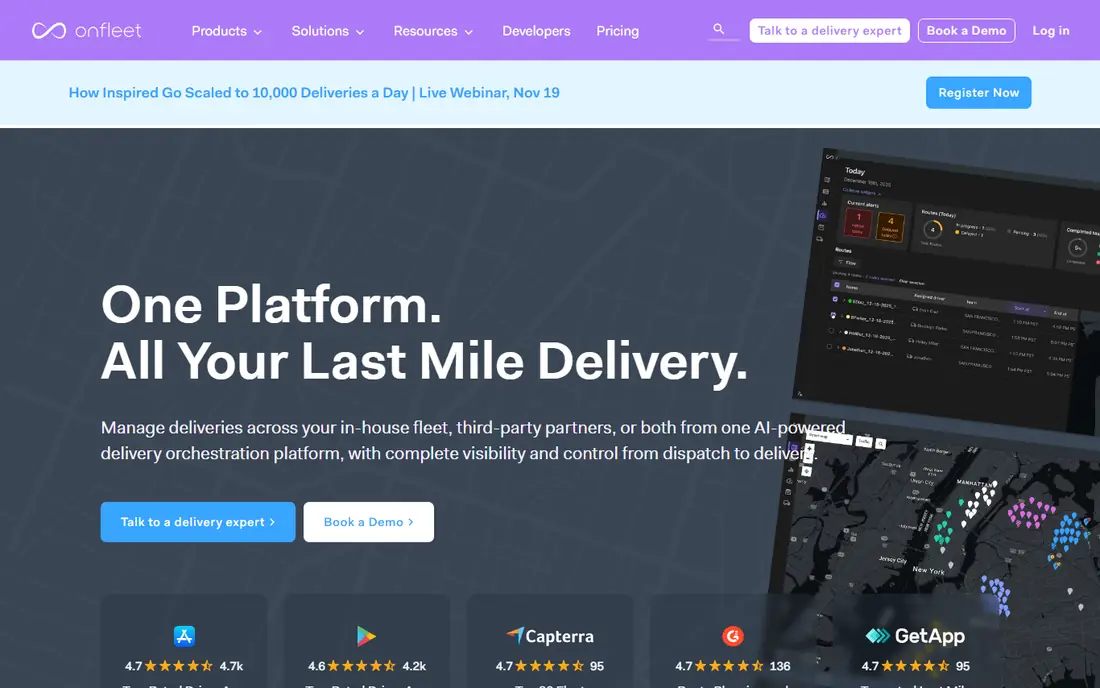
Onfleet is a good starting point for courier and local delivery teams that want a clean system without a long setup. Its dispatcher dashboard, driver app, auto-assignment and live ETA tools are widely praised in public reviews, and customers receive tracking links and notifications that reduce support calls about order status. Setup is cloud based, so a small team can start with a defined delivery area and add drivers as demand grows. Task-based pricing can become costly at high volume, and teams with complex routing rules, such as strict vehicle capacity or time-window limits, may find the routing options less deep than enterprise tools.
Test Onfleet with your busiest delivery area first, and check how failed deliveries and rescheduling appear in the dispatcher view. Ask for the total cost in writing before you agree to any term, and keep a copy of the offer for your records.
We placed Onfleet on this list for readers who value courier and on-demand fleets, and we suggest checking its current page for the latest terms before you apply, since offers and eligibility can change between batches and by location.
- Polished dispatcher dashboard
- Strong driver app
- Live ETAs and notifications
- Task pricing can rise at high volume
- Advanced routing limits noted
Bringg suits larger retailers that use several carriers and fleets and need one view across all of them. Its platform orchestrates deliveries across owned fleets, third-party carriers and crowdsourced drivers, with branded tracking and customer communication tools that keep the retailer brand in front of the customer. Integrations with order and warehouse systems help delivery status flow back to the business, rather than sitting in a separate tool. Enterprise scope brings enterprise setup time and cost, so a small local fleet may find the platform more than it needs, and pricing requires a quote rather than a public starting rate.
Ask Bringg for a pilot on your top delivery lanes, and confirm which carriers and systems are included in the quoted scope. Compare that offer with one other option before you sign, since small differences in fees can add up over time.
We placed Bringg on this list for readers who value enterprise multi-carrier orchestration, and we suggest checking its current page for the latest terms before you apply, since offers and eligibility can change between batches and by location.
- Multi-carrier orchestration
- Enterprise integrations
- Delivery experience tools
- Enterprise pricing and setup time
- May be heavy for small teams
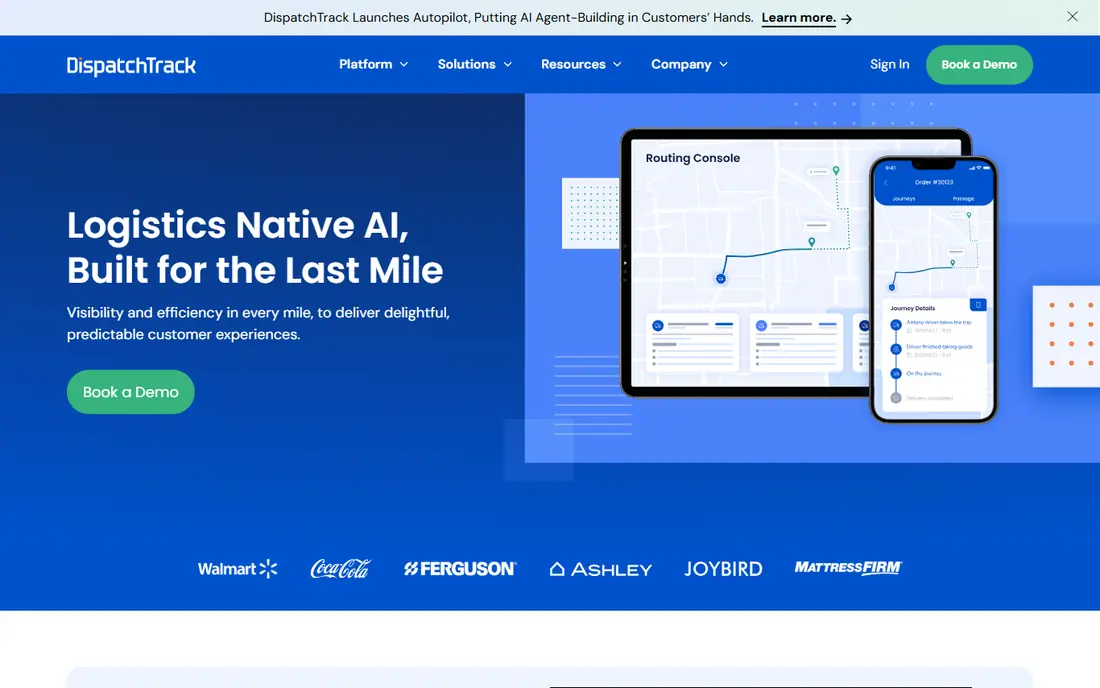
DispatchTrack is a strong fit for scheduled deliveries, including furniture, appliances and other bulky goods that need time windows and careful handling. Its scheduling, route planning and proof of delivery tools help teams plan deliveries that cannot simply be dropped at a door, and customers can receive updates that reduce missed appointments. The platform is used by retailers and distributors that run regular routes with time-sensitive stops. Implementation can take several weeks for larger operations, and the feature depth that helps bulky delivery can feel heavy for a team that only needs simple courier dispatch.
Map your appointment windows and vehicle types before a demo, so you can see how DispatchTrack handles your hardest delivery type. Read the terms for fees, deadlines and early repayment before you commit, and ask questions where wording is unclear.
We placed DispatchTrack on this list for readers who value scheduled and bulky deliveries, and we suggest checking its current page for the latest terms before you apply, since offers and eligibility can change between batches and by location.
- Strong scheduling tools
- Proof of delivery
- Route planning for large items
- Setup can take weeks
- Pricing requires a quote
FarEye targets enterprise retail and logistics teams that need orchestration across many orders, hubs and delivery partners. Its platform covers order allocation, routing, driver management and customer communication, with analytics that show on-time rates and failed delivery reasons. Reviewers often praise the driver app, which matters because driver adoption decides whether tracking data is reliable. Enterprise implementation is not a quick setup, and some reviews note routing challenges in areas with informal addressing, so teams should test the platform in their actual delivery geography.
Run a trial in a region with your most difficult addresses, and ask how exceptions are handled when a driver cannot complete a stop. Check whether the option fits your timeline and budget, and do not rush a decision under sales pressure.
We placed FarEye on this list for readers who value enterprise retail and logistics operations, and we suggest checking its current page for the latest terms before you apply, since offers and eligibility can change between batches and by location.
- Enterprise orchestration
- Advanced driver app praised in reviews
- Analytics
- Complex setup
- Addressing limits in some regions noted in reviews
UPS is the practical choice for retailers that need broad coverage without building their own fleet. Its ground, express and international services cover a wide range of parcel sizes and speeds, and business tools help shippers print labels, track parcels and manage returns. For a retailer that ships to many states, that coverage removes the need to stitch together regional carriers. Costs vary by parcel size, weight, zone and speed, and residential delivery surcharges can raise the total for home deliveries, so the cheapest headline rate is not always the final cost.
Compare UPS rates on your actual parcel mix, including residential and rural deliveries, before you commit volume to one carrier. Get the key terms in writing, including fees and deadlines, so you can compare offers on equal footing.
We placed UPS on this list for readers who value wide national and global parcel network, and we suggest checking its current page for the latest terms before you apply, since offers and eligibility can change between batches and by location.
- Large network
- Many service levels
- Strong tracking and business tools
- Per-parcel pricing varies by size and speed
- Residential surcharges can add up
FedEx suits retailers that need speed, especially for express and international orders where delivery dates matter. Its express network, ground service and international options give retailers a range of delivery speeds, with tracking tools that customers and support teams can use without extra software. Business accounts can access negotiated rates based on volume and shipping profile. Express speed costs more than ground options, and negotiated rates depend on volume, so a small shipper may not get the same terms as a large account.
Test FedEx on your time-sensitive lanes first, and check delivery commitments for your most common destinations. Test the fit against your real workload first, and confirm the limits that matter most to your team.
We placed FedEx on this list for readers who value fast and international parcel delivery, and we suggest checking its current page for the latest terms before you apply, since offers and eligibility can change between batches and by location.
- Strong express network
- International reach
- Business shipping tools
- Express pricing is higher
- Account rates vary by volume
Veho is built for brands that want delivery to feel like part of the brand, not like a generic parcel drop. In the metro areas it serves, Veho offers scheduled delivery windows, live tracking and a delivery experience designed around the retailer brand, with returns handling in some markets. That focus helps direct-to-consumer brands that compete on service in dense cities. Coverage is limited to the metros where Veho operates, so a brand with national rural demand still needs other carriers, and service details vary by market.
Check Veho coverage for your top metro areas first, and confirm delivery windows and returns support for those markets. Confirm coverage, limits and exclusions in the policy document itself, not only in a marketing summary.
We placed Veho on this list for readers who value branded urban delivery experience, and we suggest checking its current page for the latest terms before you apply, since offers and eligibility can change between batches and by location.
- Customer-facing delivery experience
- Urban density
- Returns handling in some markets
- Coverage is metro-focused
- Not a national parcel carrier for all areas
Route4Me is a sensible pick for smaller teams whose main problem is planning efficient multi-stop routes. Its routing tools help drivers cover many stops in a sensible order, with maps and route sharing that a small team can learn quickly. Cloud setup means a team can plan routes the same day, without a long implementation project. It is mainly a routing tool rather than a full dispatch and customer-experience platform, so teams that need deep proof-of-delivery workflows or carrier orchestration may need another tool alongside it.
Trial Route4Me with a real week of stops, and compare total miles and time against your current manual routes. Ask what happens if a claim or deadline goes wrong, and note the answer before you choose.
We placed Route4Me on this list for readers who value small-team multi-stop routing, and we suggest checking its current page for the latest terms before you apply, since offers and eligibility can change between batches and by location.
- Affordable routing focus
- Fast setup
- Multi-stop optimisation
- Less full dispatch depth than enterprise tools
- Driver app is simpler
How we picked these
We compared official feature pages, pricing pages, app store listings, privacy policies and public reviews for delivery platforms and carriers. We kept companies that are operating in 2026 and that publish clear service or platform details, and we separated software platforms from carriers in our notes so readers do not mistake one for the other. We also weighed routing quality and exception handling above marketing claims. A platform that handles failed deliveries, rescheduling and proof of delivery cleanly scored better than one that only plans routes well on a good day.
How to choose a last mile delivery partner
Start with your delivery shape, not with a feature list. A courier fleet needs dispatch and driver tools, a bulky-goods retailer needs scheduling and time windows, and a national ecommerce brand needs carrier coverage and returns handling. Write down your average stops per route, parcel sizes, delivery windows and return rate, then test each option against those numbers. Check total cost per successful delivery, not only the platform fee or parcel rate. Failed deliveries, redelivery attempts, support calls and driver time all add cost, so ask for first-attempt success rates and exception workflows during a trial. A slightly higher rate that cuts failed deliveries can be cheaper overall.
Choose software for local fleets and carriers for national reach
A local fleet gains most from dispatch and routing software, while national shipping gains most from carrier coverage and negotiated rates. Many retailers use both, with software for deliveries near a store or warehouse and carriers for orders that travel across the country.
Test exception handling in a trial
Ask how a failed delivery, a wrong address or a customer reschedule appears in the system, and who is notified. A platform that handles exceptions cleanly will save support time on your busiest days.
Frequently asked questions
Software or carrier, which do I need?
Software manages your own drivers or fleets, while a carrier moves parcels with its own network. Many retailers use both, with software for local deliveries and carriers for national or international parcels.
How do I reduce failed deliveries?
Use accurate address checks, live ETAs, delivery instructions and photo proof of delivery. Clear customer communication before arrival also helps, since many failures come from access problems or absent recipients.
What proof of delivery should I require?
Photo capture, electronic signature and location confirmation are common options. Choose the level that fits parcel value and customer expectations, and make sure the proof flows back to your order system.
Do I need same-day delivery?
Only if your customers expect it or your products require it. Same-day service raises cost and complexity, so test it in dense areas first and measure whether it changes conversion or repeat orders.
How long does setup take?
Small routing tools can start the same day, mid-market dispatch platforms often take days to weeks, and enterprise orchestration can take weeks to months. Ask for a setup timeline tied to your integrations during the sales process.
Sources
See where you really rank - block by block
ProMapRanker scans Google Maps across a grid of your service area. Simple monthly plans from $19, white-label on every plan.
Start freeKeep reading
 worlds best local seo company
8 Worlds Best Local SEO Companies for Map Pack Growth in 2026
Compare the worlds best local seo company options for Google Business Profile work, citations, reviews, and multi-location rankings and reporting in 2026.
Read → world's best web hosting company
World's Best Web Hosting Company in 2026
Searching for the world's best web hosting company? We compared 10 hosts on price, renewal rates, speed, and support to help you choose well today in 2026.
Read → who's got the best nanny tax services
Who's Got the Best Nanny Tax Services in 2026
We answer who's got the best nanny tax services, comparing full filing, back taxes, software, and pricing so families can handle nanny taxes correctly.
Read →