 ProMapRanker
Best Language Learning Apps for Speaking in 2026

Key takeaways
- Speaking improves fastest when you talk often, not when you only tap answers on a screen.
- Live tutors on italki and Preply give real correction, while AI apps such as Speak give unlimited practice without scheduling.
- Pimsleur suits audio-first learners who want to speak from the first lesson, even without a screen.
- Babbel, Busuu, and Duolingo build the grammar and vocabulary that make conversation easier, but they work best paired with speaking practice.
- Start with one speaking method you will use daily, then add a second app only if the first one becomes a habit.
Quick comparison
| Pick | Great for | Pricing starts at | Free tier | |
|---|---|---|---|---|
 italki | Live one-to-one tutoring | See website | No | Visit |
 Preply | Matched live tutors | See website | No | Visit |
 Speak | AI conversation practice | See website | Free trial | Visit |
 Pimsleur | Audio-first speaking lessons | $20.99 per month | Free trial | Visit |
 Babbel | Structured conversation courses | See website | Free first lessons | Visit |
 Duolingo | Daily speaking habit | Free | Yes | Visit |
 Busuu | Community feedback on speaking | Free | Yes | Visit |
 Lingoda | Live small-group classes | See website | Free trial | Visit |
 Cambly | On-demand tutor chat | See website | Free trial | Visit |
The best language learning apps for speaking
Speaking is a separate skill from reading and listening. You can recognize many words on a page and still freeze in a real conversation, because speaking needs quick recall, pronunciation, and confidence under time pressure. The apps below all include speaking in a real sense: live conversation, AI dialogue, pronunciation feedback, or audio lessons that require you to answer out loud.
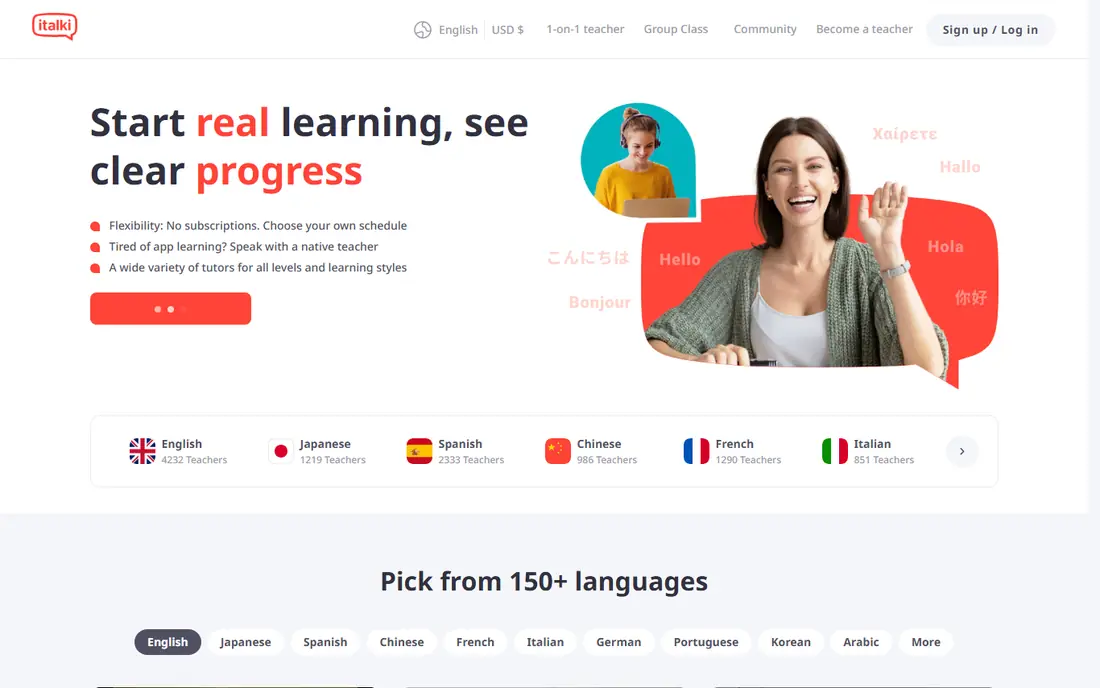
italki is our top pick for learners who want real conversation with a human teacher. You choose a professional teacher or community tutor, book a lesson at a time that suits you, and talk through topics you care about. Tutors can correct pronunciation in context, explain why a phrase sounds unnatural, and adjust the difficulty as you improve.
The main effort is selection and scheduling. With many tutors available, trial lessons are worth using to find someone whose pace and style fit you. Prices are set by each tutor, so costs vary widely. If you book one or two lessons a week and prepare a topic in advance, italki gives the fastest route to confident, natural speech.
- Large tutor pool across many languages
- Pay per lesson
- Trial lessons help you test a tutor
- Quality varies by tutor
- Scheduling takes effort
- No fixed curriculum unless the tutor provides one
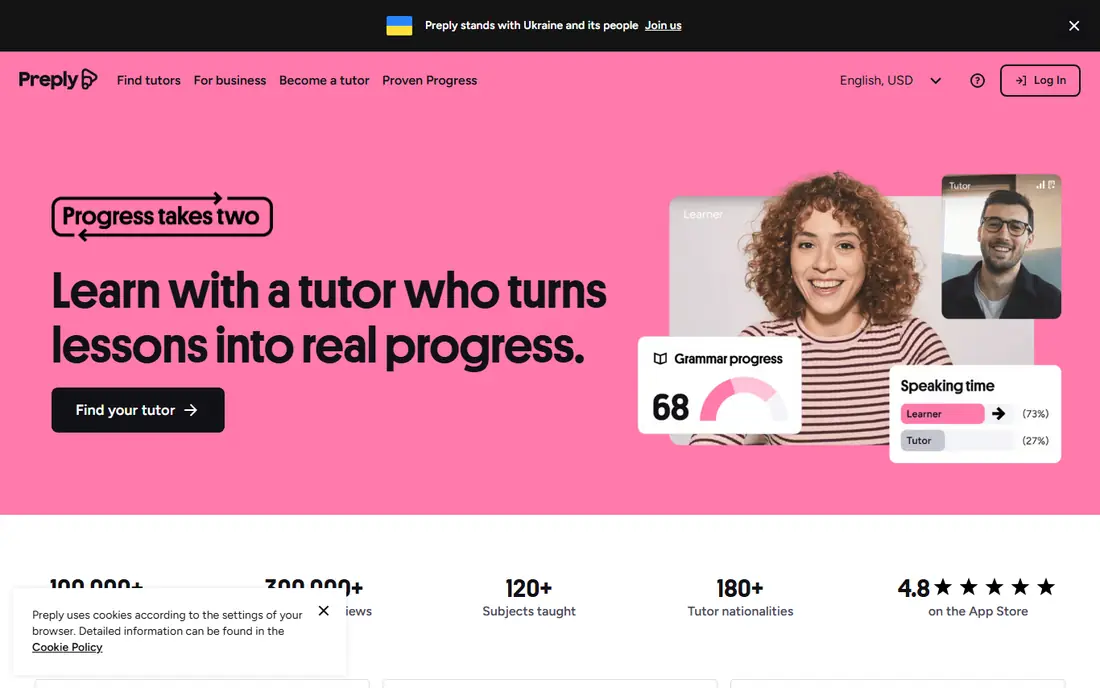
Preply suits learners who want the guidance of a tutor plus a clearer structure than a fully open marketplace. After you state your goals, level, and schedule, Preply suggests tutors and helps you book regular lessons. Many tutors follow a lesson plan, set homework, and track progress, which helps if you need accountability.
The subscription model is the trade-off. Preply generally works through lesson packages, so it fits regular weekly study better than occasional practice. If your schedule changes often, check the cancellation and rescheduling rules before you buy a package. For steady learners, the structure is a strength, not a burden.
- Tutor matching by goals and availability
- Structured lesson plans
- Progress tracking in the platform
- Subscription model can feel rigid
- Tutor prices vary
- Changing tutors takes a few steps
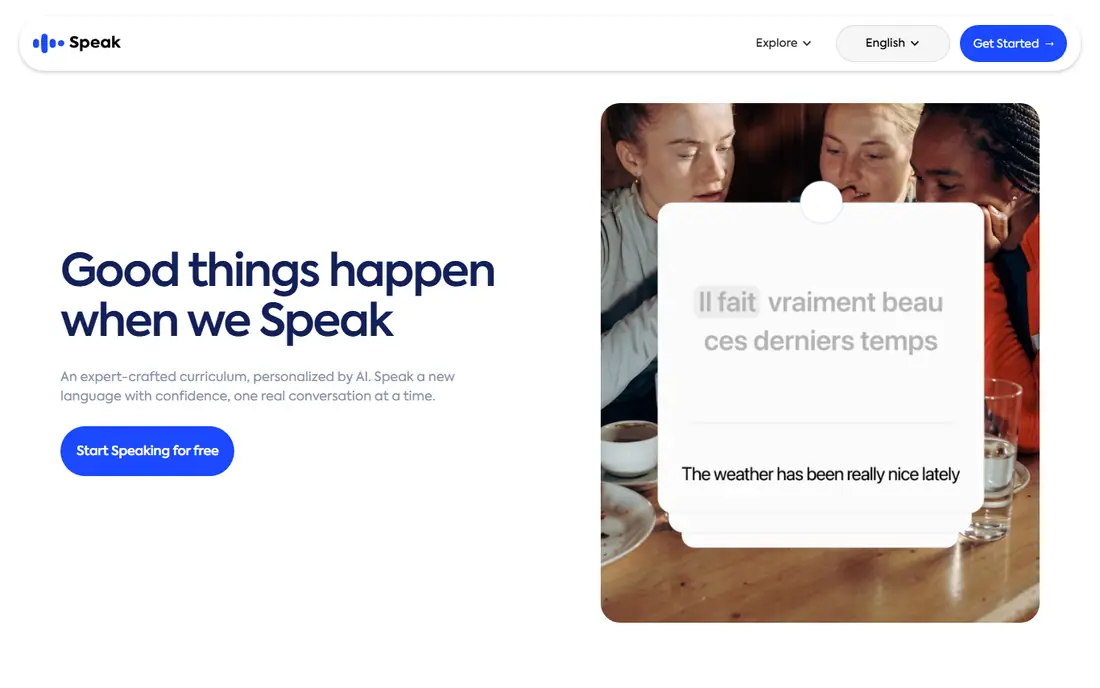
Speak is built for learners who want to talk every day without booking a tutor. You hold conversations with an AI tutor, get feedback on pronunciation, and work through a curriculum that builds from simple exchanges to longer discussions. Because there is no scheduling, it is easy to fit ten minutes of speaking into a lunch break.
AI practice has limits. The tutor will not catch every cultural nuance, and it cannot replicate the unpredictability of a real human conversation. Language coverage is also narrower than apps that teach dozens of languages. Use Speak for volume and confidence, then add a live tutor session each week if you want human correction on top of it.
- Unlimited AI conversation without scheduling
- Pronunciation feedback
- Structured curriculum for supported languages
- Language coverage is narrower than larger apps
- AI feedback cannot replace human nuance
- Subscription cost adds up
Pimsleur remains the best audio-first method for speaking. Each 30-minute lesson asks you to listen, repeat, and answer prompts out loud, with spaced repetition that brings words back just as you are about to forget them. Because it is audio only, you can study while driving, walking, or doing chores, which makes daily practice easier to sustain.
The fixed pace can feel slow if you already know some of the language, and the method gives less attention to reading and writing. It also costs more than a basic app subscription. If your main goal is to speak on a trip or in meetings, and you have 30 minutes a day for audio study, Pimsleur is a strong, focused choice.
- Forces you to speak in every lesson
- Hands-free for driving and walking
- Proven spaced repetition method
- Lessons follow a fixed pace
- Reading and writing get less attention
- Subscription is higher than some rivals
Babbel teaches speaking through short dialogues set in real situations, such as ordering food, asking directions, or talking about work. Speech recognition checks your pronunciation as you repeat lines, and lessons build grammar in small steps so you can reuse phrases in new sentences. The structure suits learners who want a clear path from beginner to intermediate.
Free conversation is not the main focus. You will speak a lot, but mostly within set dialogues, so you still need open practice with a tutor or AI app to handle unexpected replies. Language coverage is also smaller than some rivals, with a focus on European languages. Pair Babbel with weekly conversation for the best result.
- Dialogue-based lessons built around real situations
- Speech recognition in lessons
- Clear progression by level
- Language list is smaller than Duolingo
- Live classes are limited in some markets
- Speaking is structured, not free conversation
Duolingo is the easiest way to start a daily speaking habit, because the free app is genuinely usable and lessons take only a few minutes. Speaking exercises ask you to say words and sentences aloud, and the streak system helps many learners return each day. For beginners, that daily contact matters more than a perfect method.
The speaking practice itself is limited. You repeat set sentences rather than holding a conversation, and pronunciation feedback is basic. Advanced learners will outgrow the speaking exercises quickly. Use Duolingo as a habit builder and vocabulary base, then add a conversation app once you can form simple sentences.
- Free core app
- Short daily lessons build a habit
- Speaking exercises in many courses
- Speaking practice is limited and scripted
- Ads on the free tier
- Depth is thin for advanced learners
Busuu adds a human element that many self-study apps lack. You record spoken answers to set tasks, and native speakers in the community can correct your pronunciation and grammar. That feedback, even when short, helps you notice errors you would miss on your own. The courses follow a clear level structure, which makes progress easy to track.
Community feedback is not instant, and quality varies by reviewer. You also need a premium plan for the full course and offline access. Busuu works best as a middle step: study the course, record your answers, review corrections, and then use that vocabulary in a live conversation.
- Native speakers can correct your spoken exercises
- Structured courses by level
- Free tier covers core lessons
- Feedback speed depends on the community
- Premium features need a subscription
- Speaking exercises are still set tasks
Lingoda is the closest option here to a real language school online. Classes are live, small, and taught by qualified teachers following a curriculum aligned to CEFR levels. You speak in every class, hear other learners, and get correction in a structured setting. For learners who want classroom discipline without travel, that format is valuable.
Cost and schedule are the limits. Lingoda costs more than self-study apps, and classes run at set times, so you need a stable schedule. Group pace can also feel fast or slow depending on classmates. If you can commit to regular class times, Lingoda gives speaking practice with more structure than one-to-one tutoring alone.
- Live classes with qualified teachers
- Small groups give speaking time
- Curriculum follows CEFR levels
- Costs more than self-study apps
- Class times are fixed
- Group pace may not match every learner
Cambly suits learners who want to talk now, without booking days ahead. Tutors are often available on demand, so you can start a conversation when you have a free half hour. Lessons are conversation-led, which helps English learners who need fluency and listening practice more than grammar drills.
The open format is also a weakness. Without a fixed curriculum, progress depends on the tutor and on how well you guide the conversation. Frequent use can become expensive, so set a weekly budget and prepare topics in advance. For English speaking practice on a flexible schedule, Cambly is a practical option.
- Tutors available on demand in many hours
- Conversation-led lessons
- Good for English learners in particular
- Lesson quality varies by tutor
- Costs rise with frequent use
- Less structured than a full course
How we picked these
We compared official feature pages, pricing pages, app store listings, and public help pages for apps available in October 2026. We kept only apps with a real speaking component, such as live tutoring, AI conversation, pronunciation feedback, or audio lessons that require spoken answers. We excluded apps that only teach vocabulary or reading, even if they are popular for general study. We favored a mix of human tutoring, AI practice, and audio methods so readers can match the method to their schedule and budget.
What to check before you subscribe
Match the app to your bottleneck. If you freeze in conversation, choose live tutoring or AI dialogue for volume. If you cannot find time to study, choose Pimsleur for hands-free audio or Duolingo for short daily lessons. If you need structure, choose Babbel, Busuu, or Lingoda for a clear curriculum.
Test before you pay. Use trial lessons on italki and Preply, the free trial on Speak and Pimsleur, and the free tiers on Duolingo and Busuu. Prepare a short introduction and three topics you want to discuss, and see which tutor or AI style keeps you talking. Check cancellation rules, lesson expiry, and whether prices are monthly or annual, because annual billing lowers the monthly figure but locks you in longer.
Frequently asked questions
How often should I practice speaking to improve?
Short daily practice beats a long session once a week for most learners. Aim for at least 15 minutes of speaking most days, plus one longer conversation each week if you can arrange it. Regular output helps you recall words faster and builds confidence for real conversations.
Is AI conversation practice as good as a live tutor?
AI practice is excellent for volume, pronunciation drills, and low-pressure repetition, but it cannot fully replace human feedback on nuance, culture, and unexpected replies. Many learners get the best result by combining daily AI practice with a weekly live tutor session.
Can I learn to speak only with an app, without classes?
You can build a strong base with apps, especially for everyday conversation, but live interaction helps you handle real speed, accents, and interruptions. Apps teach patterns, while conversation teaches you to use those patterns under pressure.
Which app is best for speaking before a trip?
Pimsleur is a strong choice for trip preparation, because its audio lessons focus on spoken phrases you can use at once. Speak also helps for quick dialogue practice. Add a few italki lessons focused on travel topics if you want human correction before you leave.
Do I need to know grammar before I start speaking?
No. You can start speaking with simple sentences and learn grammar as you go, and most tutors and AI apps correct grammar in context. A basic course such as Babbel or Busuu helps you expand sentences, but waiting until your grammar is perfect will delay speaking progress.
How do I choose between italki and Preply?
Choose italki if you want to pick tutors lesson by lesson and control your schedule fully. Choose Preply if you want more structure, tutor matching, and progress tracking in one platform. Trial lessons on both will tell you quickly which style fits you.
Sources
See where you really rank - block by block
ProMapRanker scans Google Maps across a grid of your service area. Simple monthly plans from $19, white-label on every plan.
Start freeKeep reading
 zoro.to alternatives
Best Zoro.to Alternatives in 2026
We compare the best zoro.to alternatives in 2026, listing only legal licensed anime streaming services, from Crunchyroll to free options for fans today.
Read → zip alternatives
Best Zip Alternatives in 2026
We compare the best zip alternatives for buy now, pay later in 2026, covering pay-in-4 plans, fees, spending limits, and credit reporting options today.
Read → yesware alternatives
Best Yesware Alternatives in 2026
Compare the best yesware alternatives for sales email tracking, templates, and sequences, with current pricing and honest tradeoffs for small sales teams.
Read →