 ProMapRanker
Best Language Learning Apps in 2026

Key takeaways
- Duolingo and Busuu offer the strongest free starting points, while Babbel and Pimsleur suit learners who want more structure.
- No single app covers grammar, speaking, listening, and real conversation equally well, so pairing two tools often works better than paying for one expensive plan.
- Monthly prices rise sharply when you pay month to month, so check the annual price before you commit to a paid plan.
- Audio learners should start with Pimsleur, visual learners with Memrise, and grammar-focused learners with Babbel or LingoDeer.
Quick comparison
| Pick | Great for | Pricing starts at | Free tier | |
|---|---|---|---|---|
 Duolingo | Daily habit building | Free | Yes | Visit |
 Babbel | Structured grammar lessons | $13.95 per month | Free trial | Visit |
 Rosetta Stone | Immersion without translation | $19.99 per month | Free trial | Visit |
 Pimsleur | Audio and speaking practice | $20.95 per month | Free trial | Visit |
 Busuu | Feedback from native speakers | $13.95 per month | Yes | Visit |
 Memrise | Vocabulary with real videos | Free | Yes | Visit |
 Mondly | Short lessons in many languages | $15.90 per month | Free trial | Visit |
 LingoDeer | Asian language foundations | $14.99 per month | Free trial | Visit |
 LingQ | Reading and listening to real content | $14.99 per month | Free trial | Visit |
The best language learning apps
We compared official feature pages, pricing, app store listings, and public reviews to find apps that teach in different ways, not just apps that look similar. The list below mixes free tools, structured courses, and audio programs so you can match the method to your time, budget, and goal.
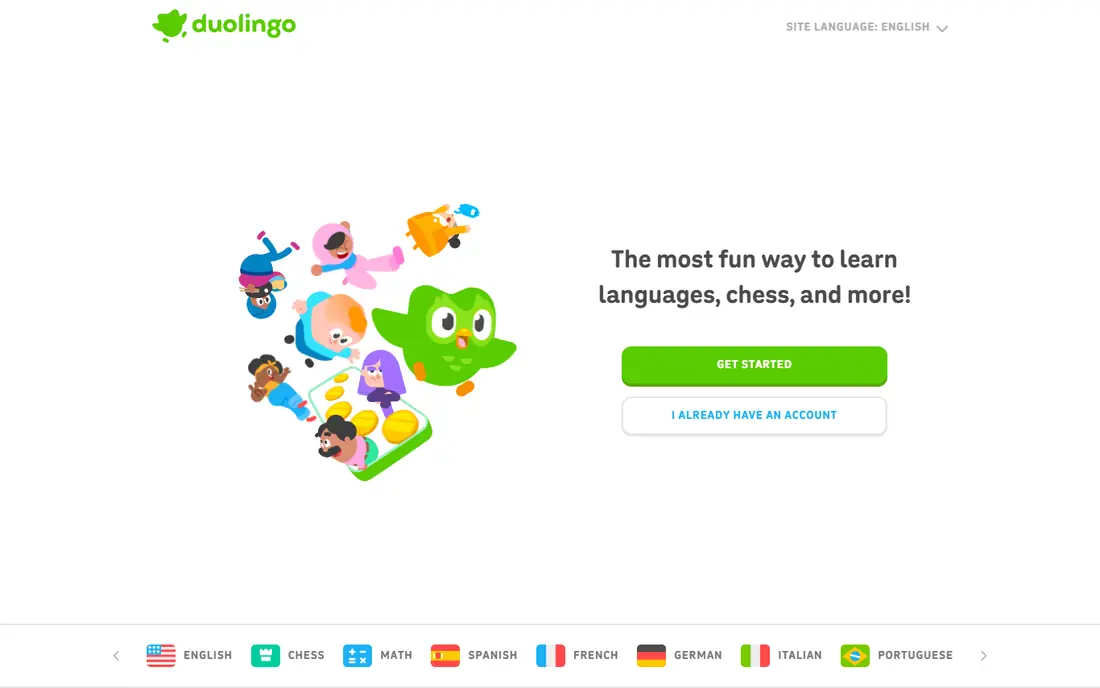
Duolingo remains the easiest place to start, mainly because the free tier covers core lessons without forcing a payment first. Lessons are short, the streak system gives a clear daily target, and the app covers reading, listening, and basic speaking in one place. For a learner who has ten minutes a day and wants to build a habit before spending money, that combination is hard to beat.
The catch is depth. Duolingo teaches patterns through repetition more than through clear grammar rules, so many learners reach a point where they can recognize words but struggle to build their own sentences. Paid plans remove ads and add extra features, but they do not turn the app into a full course on their own. Use it as a daily base, then add a grammar or conversation tool when you want to move past the beginner stage.
- Large free core course
- Short lessons that fit a busy day
- Wide language choice
- Limited grammar explanation in some courses
- Conversation practice stays shallow
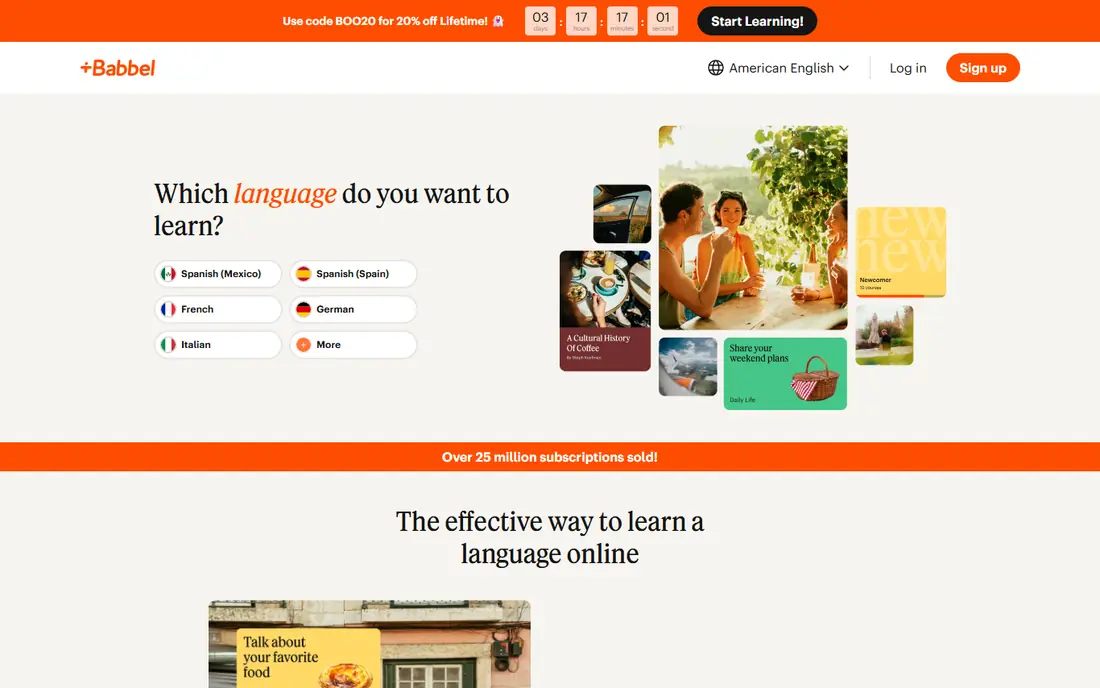
Babbel suits learners who want to understand why a sentence works, not just repeat it. Lessons follow a clear order, explain grammar in plain terms, and use dialogues based on travel, work, and daily life. That structure helps if you have tried a free app and felt lost about what to study next. Review tools also bring back older vocabulary at useful intervals.
The smaller language list is the main limit. Babbel covers major European languages and a few others, but it does not match the range of Duolingo or Mondly. The price also rewards longer commitments, so the monthly rate looks steep next to the annual equivalent. If your language is covered and you prefer a course with a clear path, Babbel is one of the strongest paid options here.
- Clear grammar explanations
- Lessons built around real situations
- Review sessions built in
- Fewer languages than Duolingo
- Monthly price is high compared with the annual plan
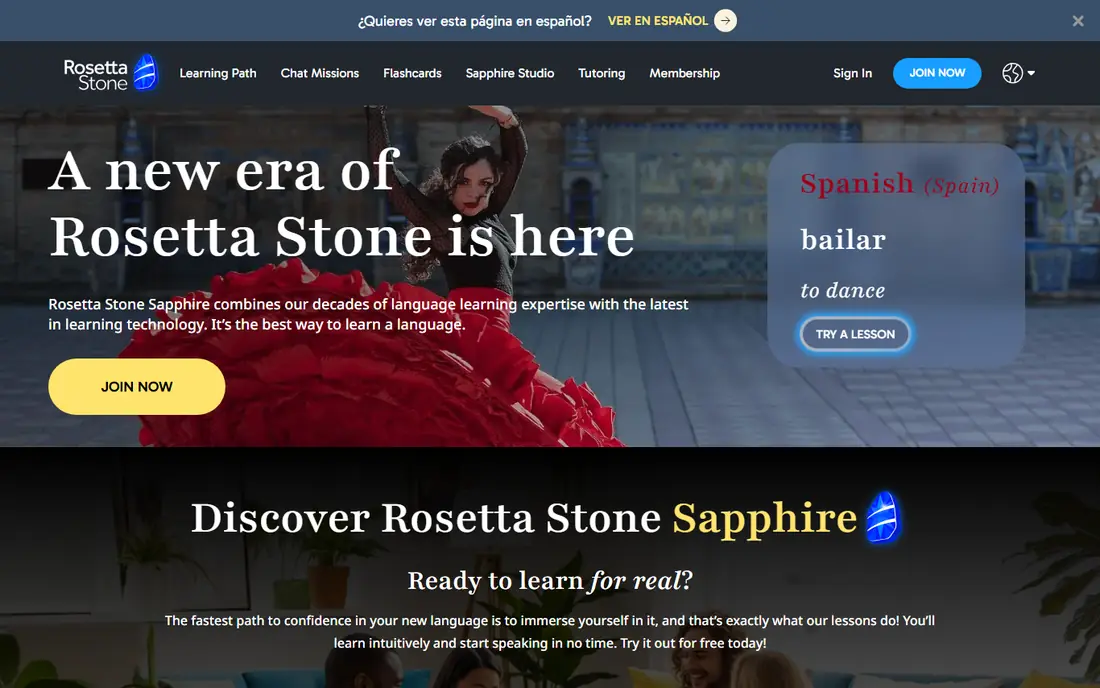
Rosetta Stone teaches by showing images, audio, and text together, without translating into your first language. That approach can build strong listening habits and pronunciation awareness, especially for learners who rely too much on word-for-word translation. Its speech recognition tool gives feedback on how close your pronunciation is to the model, which helps early speaking confidence.
For some learners, the same method becomes a drawback. Without explanations, grammar rules must be inferred, and that takes patience. Lessons can also feel repetitive when you are working through similar image sets day after day. Rosetta Stone fits learners who like a steady, visual method and are willing to stay with it, rather than learners who want quick explanations and fast progress through levels.
- Pronunciation feedback through speech recognition
- Consistent immersion method
- Lifetime option listed on its site
- No translation can frustrate beginners
- Progression can feel slow and repetitive
Pimsleur is built for people who learn by listening and speaking. Each lesson is about 30 minutes, asks you to respond out loud, and revisits earlier material in later lessons. That format works well in a car, on a walk, or while doing chores, where a screen-based app would be impractical. Many learners find they can say useful phrases sooner with Pimsleur than with a reading-heavy app.
The price reflects that specialist focus, and it is not the best value if you want a broad course with reading, writing, and grammar in one place. Pimsleur also covers fewer interactive exercises than app-based rivals. If speaking is your main goal, and you have regular audio time each day, it earns its place. If you mostly study at a desk, a cheaper structured app may give you more for the money.
- 30-minute audio lessons suit commutes
- Strong focus on speaking from the first lesson
- Offline listening on mobile
- Among the most expensive options here
- Less reading and writing practice than course apps
Busuu stands out because other learners, including native speakers, can correct your written and spoken exercises. That feedback adds a human layer that most self-study apps lack, and it helps you notice mistakes that automated checks miss. Lessons are organized by level, which makes it easier to see where you stand and what comes next.
The free tier is useful for testing the format, but full courses and some review features sit behind the paid plan. The language list is also narrower, with a focus on major languages rather than a very wide catalog. For learners who want short structured lessons plus real corrections, Busuu is a strong middle ground between a free game-style app and a paid tutor service.
- Free tier for basic lessons
- Community corrections from native speakers
- Clear level structure
- Language range is smaller than Duolingo
- Some advanced content is thinner than beginner content
Memrise focuses on helping words stick. Short clips of native speakers show how phrases sound in real contexts, and spaced repetition brings words back before you forget them. That makes it a good companion app for learners who already have a main course but keep losing vocabulary between sessions. The free tier gives enough room to test whether the video style suits you.
Memrise is not a full course replacement. Grammar explanations are thin, and learners who rely on it alone may know many words without knowing how to join them into accurate sentences. The Pro plan adds offline access and extra review tools, but the value depends on how much you use those features. Pair Memrise with Babbel or a similar structured course for a more complete routine.
- Native-speaker video clips show real usage
- Spaced repetition helps recall
- Free tier covers core vocabulary work
- Grammar teaching is limited
- Pro pricing varies by store and plan, so check before paying
Mondly covers a broad set of languages, which matters if your target language is not offered by Babbel or Busuu. Lessons are short, vocabulary is introduced in themed groups, and a chatbot gives a low-pressure way to practice simple exchanges. Speech recognition adds a speaking element that some budget apps skip, and the daily lesson format suits learners with limited time.
Depth is uneven across languages, so a popular language may feel fuller than a less common one. The chatbot also follows set patterns, so it will not challenge you the way a real conversation will. Mondly works best as a flexible daily app for building vocabulary and basic phrases, especially for languages that other structured apps do not cover well.
- Wide language choice
- Short daily lessons
- Chatbot and speech recognition for speaking practice
- Depth varies by language
- Conversation practice is not a substitute for real speaking
LingoDeer earns its place for learners focused on East Asian languages. It teaches writing systems from the start, explains grammar points that other apps gloss over, and keeps lessons in a clear sequence. For Japanese, Korean, and Chinese learners, that foundation matters more than a large catalog of unrelated languages. The app also includes review and speaking exercises alongside reading and listening.
Outside those languages, the case for LingoDeer weakens, because its catalog is limited. Advanced learners may also outgrow it and need reading material, tutors, or native content. Think of it as a specialist starter course: excellent for building a base in its strongest languages, and best paired with LingQ, conversation practice, or a tutor as you advance.
- Strong start for Japanese, Korean, and Chinese
- Alphabet and grammar notes included
- Clear lesson order
- Language list is much smaller than general apps
- Less useful once you pass the intermediate stage
LingQ takes a different path from most apps on this list. Instead of fixed lessons, it lets you read and listen to stories, articles, and other real content, with new words saved and reviewed as you go. That method suits intermediate learners who already know basic grammar and want to grow vocabulary through content they enjoy. Importing your own articles or transcripts adds flexibility that fixed courses cannot match.
Beginners should approach it with care. Without a clear course order, it is easy to pick material that is too hard and lose momentum. LingQ works best after a structured start, or alongside a course app that handles grammar. If you like reading and listening, and you want your study material to feel like real language rather than textbook drills, LingQ is a strong addition.
- Large library of real texts and audio
- Vocabulary tracking built into reading
- Import your own content
- Less structured than a course app
- Beginners may feel lost without a set lesson path
How we picked these
We compared official feature pages, pricing, app store listings, privacy policies, and public reviews for each app. We favored apps with a clear teaching method, current availability, and a free tier or trial that lets you test the format before paying. We also looked for a mix of methods, because a habit app, a grammar course, and an audio program serve different learners. We did not claim hands-on testing, and prices here reflect published monthly or starting rates that can vary by store, region, and promotion.
How to choose the right app for your goal
Start with your main weakness, not the app with the longest feature list. If you never study, pick the app you will open daily, even if it is simpler. If you study often but cannot speak, add audio or conversation practice. If you know words but cannot build sentences, choose a structured course with grammar notes.
Match the method to your day
Audio time favors Pimsleur. Desk time favors Babbel, Rosetta Stone, or LingoDeer. Short gaps favor Duolingo, Busuu, or Mondly. Reading time favors LingQ, and vocabulary gaps favor Memrise. A routine that uses two methods, for example a course plus a vocabulary app, often beats a single app used in a scattered way.
Check language coverage first
Before you compare prices, confirm that your language has a full course, not just a short phrase list. Coverage, lesson depth, and speech recognition can vary a lot by language within the same app. A free trial or free tier is the fastest way to check this, and it also shows whether the teaching style suits you.
Set a budget rule
Pay monthly only while you are testing an app. If you use it for three or four weeks without a break, the annual plan usually costs much less per month. If you stop using it, cancel before renewal and keep the free tier or a cheaper companion app for maintenance. Avoid paying for two full-priced courses at once unless you have a clear plan for both.
Frequently asked questions
What is the best language learning app for beginners?
Duolingo is a strong free start for beginners because core lessons are free and short, while Babbel is a better paid choice if you want grammar explained from the start. The best app to learn a language depends on whether you need habit, structure, or speaking practice most. Try the free tier first, then move to a paid plan only if you use the app most days.
What is the best app for learning languages for free?
Duolingo and Memrise offer the most useful free tiers on this list, and Busuu also gives free access to basic lessons. Free plans usually limit advanced review, offline access, or full courses, but they are enough to build a habit and test a language. If you need full grammar or conversation practice, a free app alone may not be enough.
Which is the best language app for speaking practice?
Pimsleur is the strongest choice for speaking practice in this list because lessons require spoken responses and fit audio-only time. Busuu adds human corrections, and Mondly offers chatbot exchanges with speech recognition. For real conversation, none of these replace speaking with a tutor or language partner, but they can build confidence before that step.
Is Babbel or Duolingo better for grammar?
Babbel is generally better for grammar because lessons explain rules and sentence structure in context. Duolingo teaches patterns through repetition, which works for recognition but can leave gaps when you try to create new sentences. Learners who want the best language learning software for structured study often pair Babbel with a vocabulary or speaking app.
What is the best foreign language learning app for Asian languages?
LingoDeer is a strong pick for Japanese, Korean, and Chinese foundations because it teaches writing systems and grammar from the start. Duolingo and Mondly also cover some Asian languages, but their depth varies. For reading and listening at the intermediate stage, LingQ is a useful next step once basic grammar is in place.
Can one app make me fluent?
No app alone is likely to make you fluent, because fluency needs speaking, listening, reading, and writing in real situations. Apps build vocabulary, grammar, and confidence, but progress speeds up when you add conversation, native content, or a tutor. Treat the best apps for learning languages as part of a routine, not as a complete replacement for real use.
Sources
See where you really rank - block by block
ProMapRanker scans Google Maps across a grid of your service area. Simple monthly plans from $19, white-label on every plan.
Start freeKeep reading
 youtube alternatives
Best YouTube Alternatives in 2026
Looking for youtube alternatives in 2026? We compare Vimeo, Dailymotion, Twitch, Rumble, and more on price, audience, monetization, control and privacy.
Read → what's the best ai tool for photo editing
What Is the Best AI Tool for Photo Editing in 2026
What is the best AI tool for photo editing? We compare ten tools for 2026, from Photoshop and Lightroom to Luminar, Topaz, Canva and mobile editors today.
Read → twitter alternatives
Best Twitter Alternatives in 2026
Compare the best twitter alternatives for 2026, from Bluesky, Threads, and Mastodon to Reddit, Tumblr, and Micro.blog, with free plans and audience notes.
Read →