 ProMapRanker
Best Landscaping Business Software in 2026

Key takeaways
- The best app for landscaping business work depends on crew size and job type, not on the longest feature list.
- Solo operators can start free or low cost with Yardbook or Jobber, while larger companies need estimating and job costing depth.
- Quote based tools such as Aspire, LMN, and SingleOps need a demo and a written total for your crew count before you judge price.
- Route work, recurring visits, and payments should be tested with real jobs during a trial, not just in a demo.
Quick comparison
| Pick | Great for | Pricing starts at | Free tier | |
|---|---|---|---|---|
 Jobber | Small crews and route work | $49 per month | Free trial | Visit |
 Housecall Pro | Service growth and marketing | $79 per month | Free trial | Visit |
 Yardbook | Free core for solo operators | Free | Yes | Visit |
 LMN | Estimating and job costing | See website | No | Visit |
 Aspire | Large companies and reporting | See website | No | Visit |
 SingleOps | Tree and green industry work | See website | No | Visit |
 Arborgold | Tree care and proposals | $129 per month | No | Visit |
 Service Autopilot | Recurring lawn routes | $49 per month | No | Visit |
 ServiceTitan | Large fleets and franchises | See website | No | Visit |
The best landscaping business software
Good software for this trade handles the full job cycle: quote, schedule, route, crew assignment, invoice, and payment. The tools below cover that cycle at very different prices and depths.
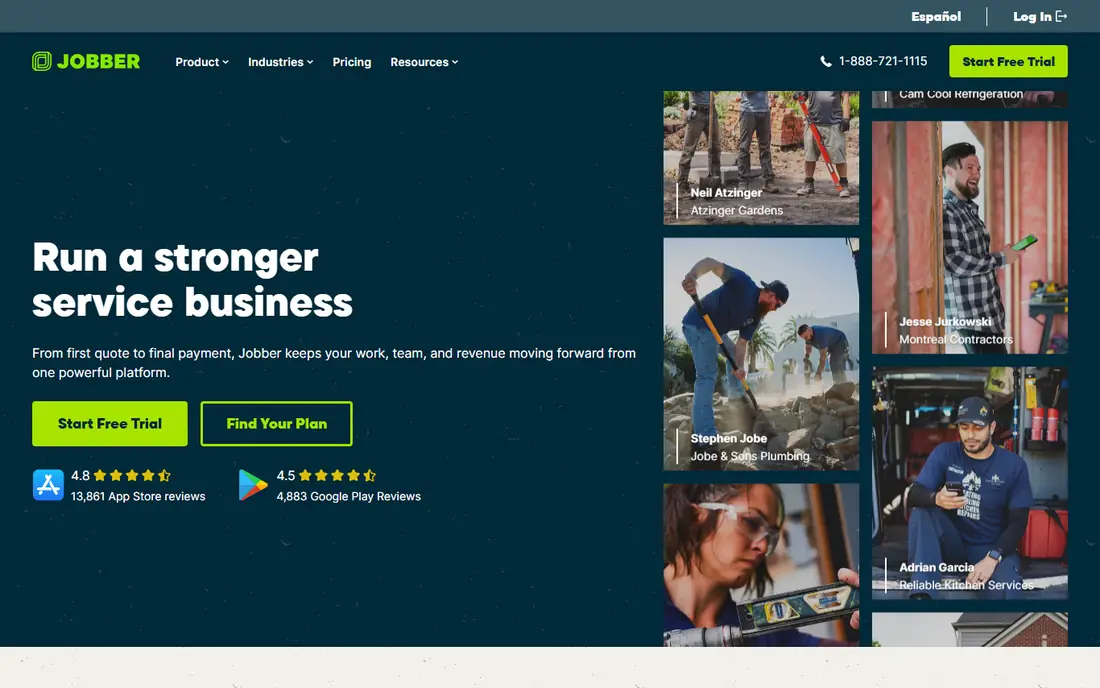
Jobber is our pick for most small companies because it covers the core workflow without a heavy setup. You can take online requests, send quotes, schedule crews, optimize routes, invoice, and collect payments in one system. That chain matters for mowing, cleanups, and other recurring work where a missed visit or late invoice hurts cash flow.
Larger design build work may need deeper estimating. Jobber quotes handle many jobs well, but a company that prices large installs from detailed labor and material costs may want LMN or Aspire beside it. For a one to five crew company, Jobber is a strong, approachable starting point.
- Online booking and quotes
- Route optimization
- Invoicing and payments
- Job costing depth depends on plan
- Advanced marketing tools cost more
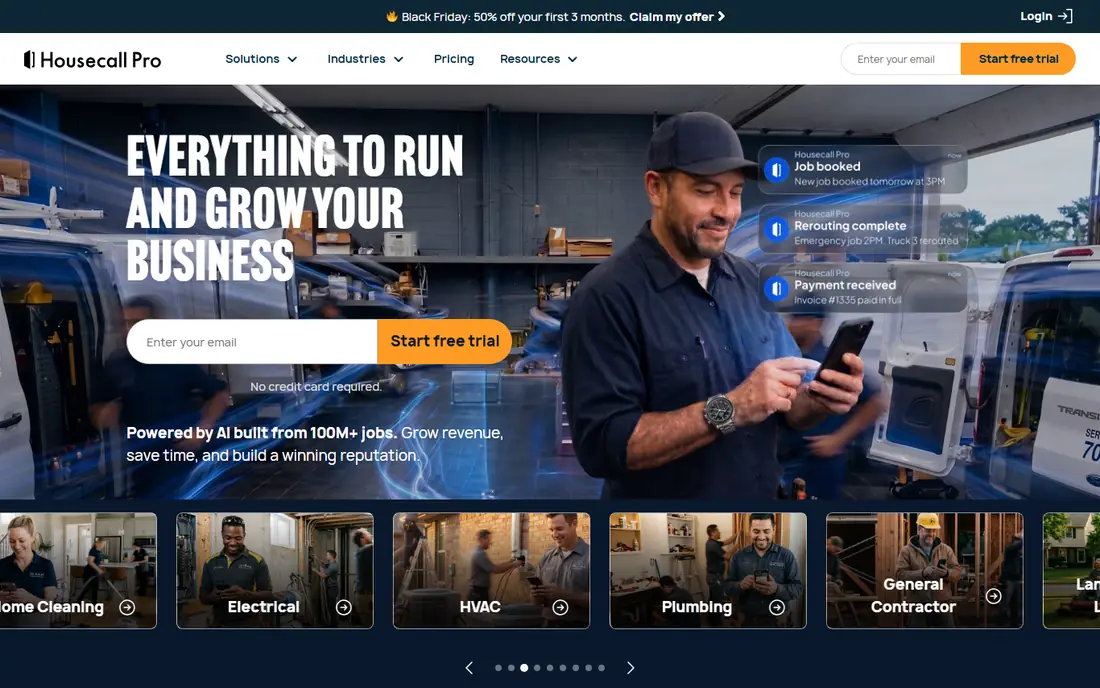
Housecall Pro suits a service company that wants growth tools built in. Automated customer texts, review requests, online booking, and dispatch keep the office load down, while financing and price book features help sell larger jobs. A company that relies on repeat residential work will feel that value daily.
The entry price is higher than Jobber, and the bill grows as you add users. Price the plan for your full crew, not just the owner, and check which features sit on each tier. If marketing and customer communication are the bottleneck, Housecall Pro justifies the extra cost.
- Online booking and dispatch
- Automated texts and review requests
- Price book and financing options
- Higher entry price than Jobber
- Per user costs grow with team size
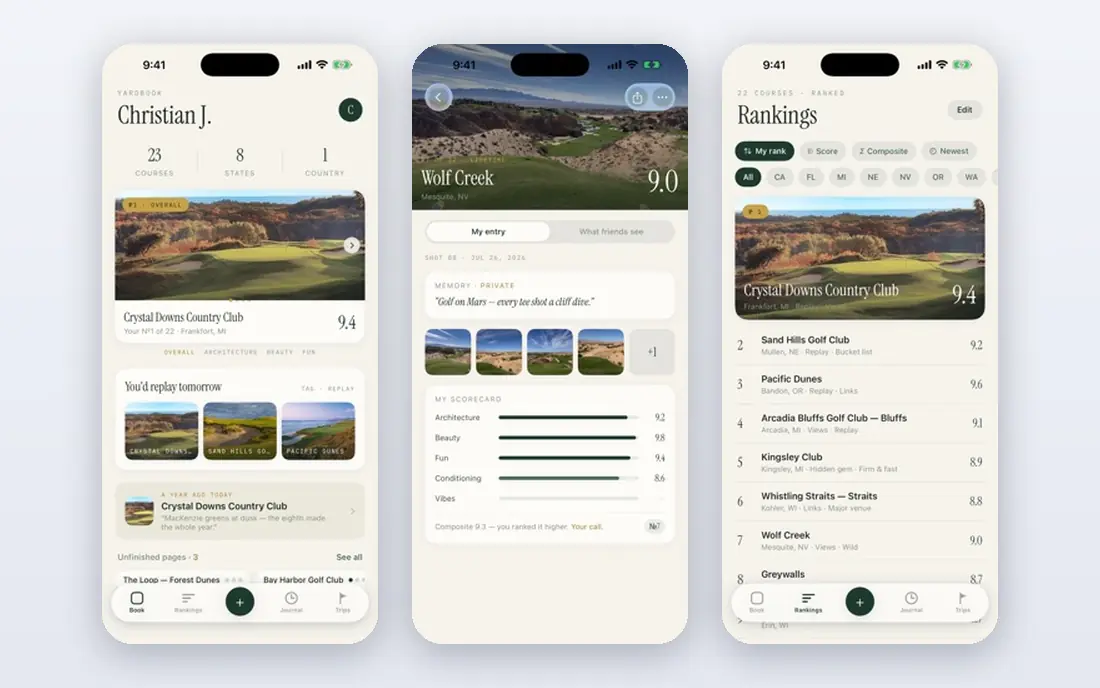
Yardbook is the best free starting point for a solo operator. Its core covers scheduling, routing, invoicing, expenses, and chemical tracking, which is enough to move off spreadsheets without a monthly bill. Paid tiers add more capacity for a growing team.
Expect limits as work grows. Reporting, crew tools, and integrations are thinner than Jobber or Housecall Pro, and mobile access is web and Android focused, so test it on your phone first. Use Yardbook to prove the workflow, then move up when jobs or crews outgrow it.
- Free core scheduling and invoicing
- Routing and chemical tracking
- Low barrier to start
- Depth is thinner than paid rivals
- Growing companies often outgrow it
LMN, short for Landscape Management Network, is built for companies that win or lose on estimating accuracy. It builds bids from your actual labor, equipment, material, and overhead costs, tracks crew time against the budget, and reports whether a job hit its target margin. That discipline helps design build and larger maintenance companies protect profit.
The price and setup reflect that depth. LMN is quote based, with published entry figures varying by source, so get a written quote for your crew size and ask about onboarding fees. It is overkill for a solo mowing route, but it is a serious contender for a company with install revenue.
- Detailed estimating from labor and material costs
- Crew time tracking
- Budget to actual reporting
- Quote based pricing
- Setup and onboarding take time
Aspire is the enterprise standard for many large companies in this trade. It handles estimating, scheduling, job costing, fleet tracking, and reporting across many crews and branches, with analytics that help managers spot losing jobs early. A company past one million dollars in revenue often needs that level of control.
Small companies should skip it for now. Custom pricing, structured implementation, and training time only pay back at scale. Shortlist Aspire when reporting, margin control, and multi crew coordination are the main constraints on growth.
- Enterprise reporting and job costing
- Fleet and operations tools
- Suited to multi crew companies
- Custom pricing
- Implementation takes weeks in places
SingleOps serves tree care and green industry companies with tools that general software lacks. It handles tree inventory, specialized proposals, crew work orders, and renewal automation, which speeds up a tree job from estimate to completion. Route and scheduling tools keep crews moving across varied job types.
Pricing is quote based, so ask for a total that includes users, onboarding, and any add ons. A pure lawn mowing company may not need the tree specific depth, but a company that mixes tree work with yard care will find SingleOps fits better than a general tool.
- Tree and green industry workflows
- Fast proposals with upsells
- Route and work order tools
- Quote based pricing
- Less suited to pure mowing routes alone
Arborgold is a second strong tree care option, with estimating, scheduling, equipment management, and a customer portal. Tree companies use it to price complex jobs, track equipment, and keep clients informed without extra phone calls. The proposal tools help sell add on services during a visit.
Solo lawn operators will find it pricey for basic scheduling. It earns its place when tree work, proposals, and equipment tracking shape daily work, and when the company wants one system for the whole tree job cycle.
- Tree care estimating and scheduling
- Customer portal
- Equipment tracking
- Price suits tree companies rather than solo lawn operators
- Learning curve for new users
Service Autopilot focuses on recurring lawn and yard care routes. It automates scheduling, dispatch, invoicing, and client messages for repeat visits, which cuts office work for a route dense company. Job costing and automation tools help managers see which routes make money.
Check tier details carefully. Route optimization, advanced automation, and some integrations sit on higher plans, and a signup fee may apply. Trial it with a real route week, including rain delays and skip requests, before committing a whole season to it.
- Recurring route automation
- Dispatch and job costing
- Text and email automation
- Higher tiers hold some automation and integrations
- Signup fee may apply on some plans
ServiceTitan suits large fleets and franchises that need tight control across many technicians and locations. It offers deep dispatch, job costing, marketing, price book, and reporting tools, with controls that help a franchise keep standards consistent. Companies with ten or more field staff often consider it.
For a small company, the price and setup are too much. Get a written quote only when crew size, job volume, and reporting needs justify an enterprise platform, and compare it against Aspire and LMN for this trade before signing.
- Deep job costing and dispatch
- Marketing and reporting at scale
- Franchise friendly controls
- Custom pricing that runs high
- Setup is heavy for small teams
How we picked these
We compared official feature pages, pricing pages, and public reviews for software that handles quoting, scheduling, routing, invoicing, and crew work for yard care, tree care, and install companies. We kept tools that are live in October 2026 and that serve this trade directly or through strong field service workflows. Where vendors do not publish a clear price, we wrote See website rather than repeating third party estimates as fact.
Choosing software for your company size
Start with job type. A mowing route company needs recurring scheduling, route density, and fast invoicing. A design build company needs estimating from real costs and budget tracking. A tree company needs inventory, proposals, and equipment tracking. Pick the tool that leads on your main job type, not the one with the most features overall.
Next, trial with real work. Load a week of real customers, build a real quote, route a real day, and send a real invoice. Check how crews use the mobile app in the field, how customers book and pay, and how rain or a skipped visit is handled. A demo with sample data hides those friction points.
Finally, get the total price in writing. Count users, crews, vehicles, and locations, and ask about onboarding, payment processing, texting, and add ons. A low entry price can double once the whole crew is added, while a quote based tool can include training that saves weeks. Choose the tool your office and crews will actually use every day.
Frequently asked questions
What is the best software for landscaping businesses overall?
Jobber is the best starting point for most small companies, thanks to its balance of quoting, routing, and payments at a clear price. Larger companies should compare LMN and Aspire for estimating depth, and tree companies should compare SingleOps and Arborgold.
What is the best app for landscaping business work on a budget?
Yardbook offers a free core that covers scheduling, routing, and invoicing for solo operators. Jobber is the next step up when you need stronger payments, online booking, and crew tools at a low monthly price.
Which software is best for estimating large jobs?
LMN and Aspire lead for estimating, since both build bids from labor, equipment, material, and overhead costs. SingleOps and Arborgold also offer strong proposals for tree and green industry work, with upsell options built in.
Is there free software for this trade?
Yes, Yardbook offers a free core plan for basic operations. It suits solo operators well, though growing companies usually move to a paid tool within a season or two as reporting and crew needs grow.
How much does this software cost per month?
Expect free to about 49 dollars per month for solo and small team entry plans, 79 to 129 dollars per month for midsize tools, and quote based pricing for Aspire, LMN, SingleOps, and ServiceTitan. Always confirm the total for your crew count in writing.
Sources
See where you really rank - block by block
ProMapRanker scans Google Maps across a grid of your service area. Simple monthly plans from $19, white-label on every plan.
Start freeKeep reading
 zscaler alternatives
Best Zscaler Alternatives in 2026
Looking for zscaler alternatives? We compare 9 SASE and zero trust platforms on architecture, data protection, pricing, and fit for your network and team.
Read → zapier alternatives free
Best Zapier Alternatives Free in 2026
Nine automation tools for zapier alternatives free in 2026, all with genuinely free tiers, plus free plan limits, starting prices and upgrade paths explained.
Read → which platform is best for online reputation
Which Platform Is Best for Online Reputation in 2026
Wondering which platform is best for online reputation? We compare 8 review, listing, and response tools for small and multi-location businesses and agencies.
Read →