 ProMapRanker
Best Landline Services in 2026

Key takeaways
- Modern home phone service is usually VoIP or cellular, not copper, and that changes how it behaves during a power or internet outage.
- Ooma and magicJack offer the lowest ongoing costs, while Community Phone offers a simpler no-internet option at a higher monthly price.
- Traditional carrier lines and cable bundles vary sharply by address, so a price quoted for one home may not apply to another.
- Availability varies by location and address, and prices and fees vary, so confirm coverage, taxes, and equipment costs before ordering.
Quick comparison
| Pick | Great for | Pricing starts at | Free tier | |
|---|---|---|---|---|
 Ooma Telo | Low-cost home VoIP | $9.99 per month | No | Visit |
 Community Phone | No-internet cellular home phone | $39.99 per month | No | Visit |
 magicJack | Lowest yearly cost | $39.99 per year | No | Visit |
 Vonage | Home and business VoIP | See website | No | Visit |
 AT&T Home Phone | Traditional carrier line | See website | No | Visit |
 Verizon Home Phone | Traditional carrier line | See website | No | Visit |
 Xfinity Voice | Cable bundle phone | See website | No | Visit |
 Spectrum Voice | Cable bundle phone | See website | No | Visit |
 Phone.com | Small business VoIP | See website | No | Visit |
The best landline services
Landline now means several different technologies, and the right choice depends on your home setup. A traditional copper line, a VoIP adapter on your internet connection, and a cellular base station all give you a home phone with a familiar handset, but they differ on outage behaviour, monthly cost, and address availability. This list covers all three, with honest notes on where each one falls short.
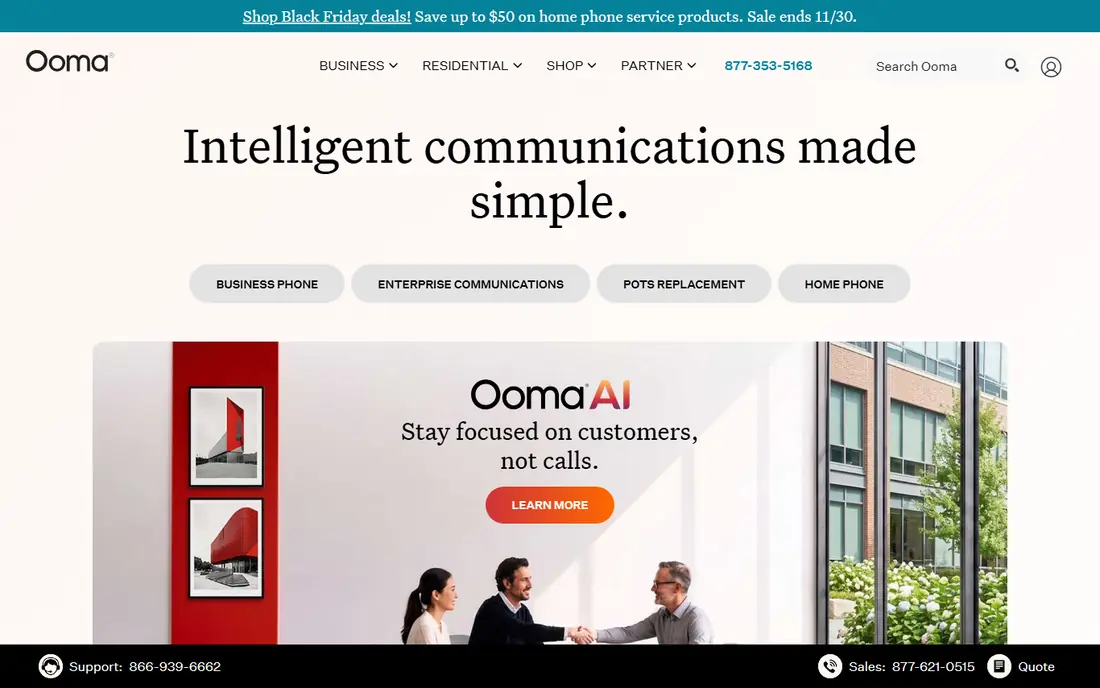
Ooma Telo is the low-cost pick for households that already have reliable broadband and want a familiar home phone without a large monthly bill. After buying the Telo device, basic service covers unlimited US calling with caller ID, call waiting, voicemail, and 911 service, with only taxes and fees each month. The Premier plan at 9.99 dollars a month adds call forwarding, voicemail to email, multi-ring, and enhanced privacy features for households that want more control.
The limit is dependence on your internet connection and power. If broadband goes down, or power fails without backup for your router, calls stop, which is different from a traditional copper line. Device cost is also upfront, so the first-year total is higher than the monthly figure alone suggests. Ooma fits best when broadband is stable, the household mainly calls within the US, and low ongoing cost matters most.
- Low ongoing cost after device purchase
- Unlimited US calling on basic service
- Works with ordinary home phones
- Needs broadband and power
- Device purchase adds upfront cost
- Taxes and fees vary by location
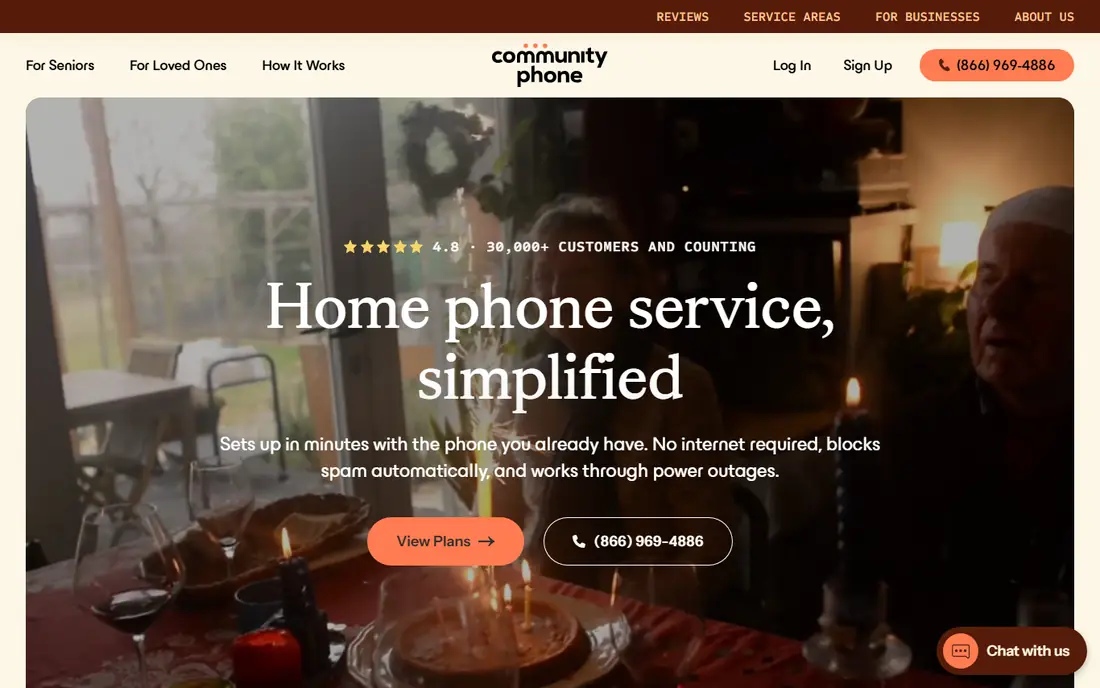
Community Phone suits households that want a landline feel without depending on broadband. Its base station connects over a cellular network, so it keeps working when cable internet goes down, and battery backup keeps calls going for several hours during a power outage. Plans are listed at 39.99 dollars a month with unlimited nationwide calling and no annual contract, and support is a stated selling point for customers who want help by phone rather than chat alone.
The price is the trade-off, since 39.99 dollars a month is several times the ongoing cost of Ooma basic service. Cellular coverage at your address also decides whether it works well, so rural or low-signal homes should check coverage before ordering. Community Phone fits best when internet reliability is poor, when outage resilience matters, or when a household wants a simple phone that does not depend on a router.
- Works without internet
- Battery backup in the base station
- Unlimited nationwide calling with no annual contract
- Higher monthly price than VoIP rivals
- Needs cellular coverage at your address
- Device and setup details vary
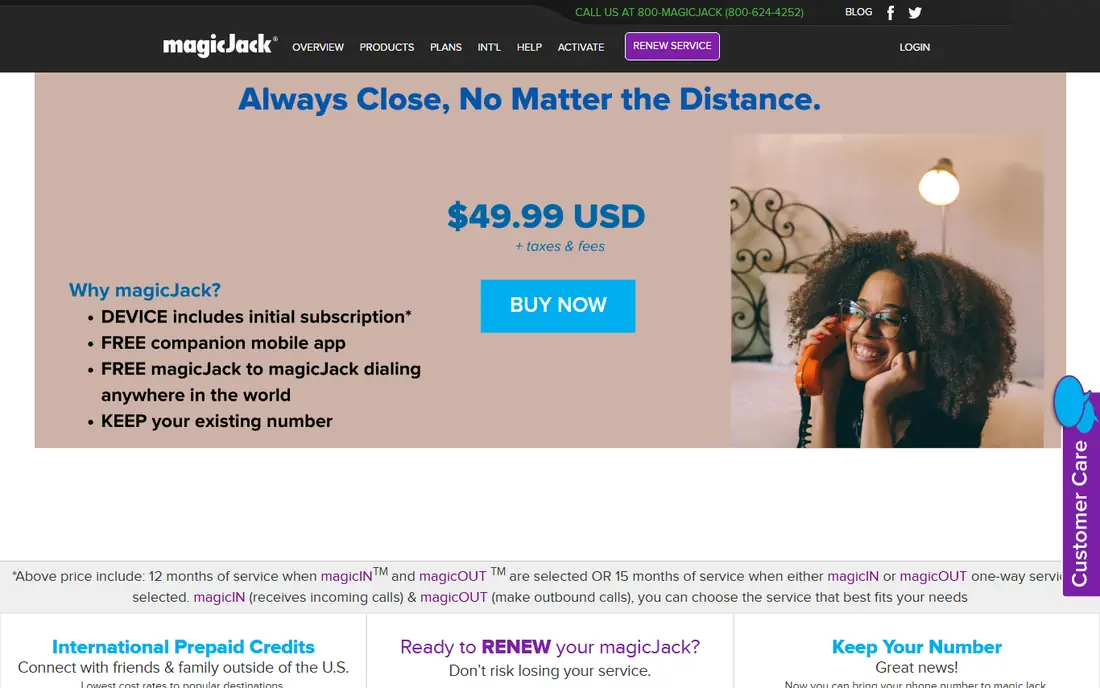
magicJack is the cheapest route to a home phone number for households that already have broadband and mainly call within the US and Canada. Residential service is listed at 39.99 dollars a year for unlimited US and Canada calling, with voicemail, caller ID, call waiting, and call forwarding included. That yearly figure works out to a little over 3 dollars a month, which undercuts almost every rival in this list.
The experience is basic, and that is the honest catch. The device depends on your internet connection, setup and app polish lag behind larger VoIP brands, and customer support draws frequent complaints in public reviews. magicJack fits best as a second line, a low-use home phone, or a budget line for a household that rarely needs support and already has stable broadband.
- Very low yearly cost
- Unlimited US and Canada calling
- Voicemail and caller ID included
- Needs internet and power
- Device and app experience is basic
- Support quality is a common complaint
Vonage offers both residential home phone service and business communications, and readers should be careful not to mix the two up. Residential plans are marketed for home use with unlimited domestic calling, while business plans start around 19.99 dollars a line a month before annual discounts, with video meetings, team messaging, and recording on higher tiers. Mobile and desktop apps let you take calls away from the home handset, which suits households and small teams that want one number across devices.
The confusion is the weakness. Search results mix residential and business prices, and business features such as video meetings and call recording sit on higher tiers, so the headline business price does not buy the full feature set. We list the starting price as See website because the right figure depends on whether you need home or business service and on current promotions. Vonage fits best when you want a known VoIP brand with apps, and when you check the exact plan type before comparing prices.
- Well-known VoIP brand
- Mobile and desktop apps
- Business plans with video and messaging on higher tiers
- Home and business pricing are easy to confuse
- Business tiers add cost for video and recording
- Fees vary
AT&T home phone service is a traditional carrier option for households that prefer a carrier line over a VoIP adapter. Where available, it offers unlimited nationwide calling with voicemail and caller ID, and it can be bundled with AT&T internet or TV for a combined bill. For households that already use AT&T services, bundling can simplify billing and support, and a carrier line may feel more familiar than a third-party adapter.
The limit is address dependence. AT&T landline availability, technology, and price vary by location, and copper infrastructure is being reduced in some areas as carriers shift investment to newer networks. Standalone pricing can also be high compared with VoIP, and fees vary. We list the price as See website for that reason. AT&T fits best when a carrier line is available at your address, when bundling helps, and when you prefer a traditional carrier over an internet-based adapter.
- Traditional carrier service where available
- Bundled options with internet and TV
- Familiar support channels
- Availability and price vary sharply by address
- Copper service is being phased back in some areas
- Standalone prices can be high
Verizon home phone service follows the same pattern as AT&T, with a traditional carrier line available in its service areas and bundle options alongside internet and TV. Unlimited local and long-distance calling, voicemail, and call waiting are typical features, and carrier support channels suit customers who prefer dealing with one large provider. For households already on Verizon mobile or internet, a bundle can simplify account management.
The same address caveat applies. Verizon landline availability and pricing vary by location, and copper lines are less central to carrier investment than they once were. Standalone prices can exceed VoIP alternatives by a wide margin once fees are added. We list the price as See website. Verizon fits best when it serves your address, when a bundle makes sense, and when carrier familiarity matters more than the lowest monthly cost.
- Traditional carrier service where available
- Bundled options
- Strong network reputation
- Availability varies by address
- Standalone pricing can be high
- Copper availability is shrinking in some areas
Xfinity Voice is a VoIP add-on for households that already subscribe to Xfinity internet, and it makes most sense as part of that bundle. It offers unlimited nationwide calling with voicemail, caller ID, and call waiting, and it uses the home internet connection to deliver calls. For an Xfinity household that wants one bill and one provider for internet and phone, adding Voice is straightforward.
The weakness is dependence on the bundle. Xfinity Voice requires an active Xfinity internet subscription, and it stops working when that internet connection goes down, which is a different outage profile from a cellular home phone. Bundle prices also change over time, and dropping another bundle service can affect the phone rate. We list the price as See website because bundle pricing varies by address and package. Xfinity Voice fits best for existing Xfinity internet customers who want a simple add-on, not as a standalone phone choice.
- Convenient add-on for Xfinity internet customers
- Unlimited nationwide calling
- Voicemail and caller ID included
- Requires Xfinity internet
- Goes down with internet outages
- Bundle pricing changes can affect the phone rate
Spectrum Voice plays the same bundle role as Xfinity Voice, for households on Spectrum internet. It offers home phone service with unlimited calling, voicemail, and caller ID features, delivered over the Spectrum broadband connection. For a Spectrum household, adding Voice keeps billing and support in one place, and the service works with ordinary home handsets.
The limits mirror other cable VoIP services. It requires Spectrum internet, it depends on that connection and on power for the home equipment, and availability and pricing vary by address and bundle. We list the price as See website. Spectrum Voice fits best for existing Spectrum internet customers who want a bundled phone line, rather than for households seeking a standalone or outage-resilient phone.
- Convenient add-on for Spectrum internet customers
- Unlimited calling in the US, Canada, and Mexico on many plans
- Voicemail included
- Requires Spectrum internet
- Goes down with internet outages
- Availability varies by address
Phone.com is the small-business pick in this list, rather than a home phone service. It offers virtual receptionist features, extensions, call routing, and a mobile app, which suit a small business that wants a professional phone presence without a traditional office system. Calls can be managed from a desk phone, a mobile app, or a browser, which helps owners who work away from the office.
The trade-off is that business pricing depends on plan, user count, and features, so a single headline price would mislead, and we list it as See website. Setting up physical phones can also take more care than a simple home adapter. Phone.com fits best when the goal is a business line with extensions and routing, not when a household simply needs a cheap home phone.
- Built for small business use
- Virtual receptionist and extensions
- Mobile app for business calls
- Business pricing varies by plan and user count
- Setup for physical phones can take care
- Home users may find it more than they need
How we picked these
We compared official provider pages, plan descriptions, and public pricing comparisons checked in October 2026. We included VoIP, cellular, cable bundle, and traditional carrier options, because readers searching for landline services meet all four, and the outage and availability differences matter. Where pricing varied by address, bundle, or promotion, we listed See website rather than a figure that might not apply to your home. Availability varies by location and address, and prices and fees vary, so confirm coverage and total monthly cost before ordering.
How to choose a home phone that still works when it matters
Start with outage behaviour, since that is where these services differ most. A traditional copper line historically kept working during a power cut, but copper is shrinking, and most modern options depend on power, internet, or cellular coverage in different ways. A cellular base station with battery backup handles a broadband outage better than a VoIP adapter, while a VoIP adapter handles a cellular dead spot better than a cellular base station. Pick the failure mode you can live with, not just the monthly price.
Next, check the total first-year cost, including device purchase, installation, taxes, and fees, rather than the advertised monthly rate alone. A service with a low monthly rate and a 100-dollar device can cost more in year one than a higher monthly plan with no device. Finally, confirm number porting, 911 registration, and international calling rates if any of those matter to you. Porting your existing number, registering the correct service address for 911, and checking international rates before you need them will prevent most post-purchase surprises.
Frequently asked questions
Is a VoIP phone a real landline?
A VoIP phone gives you a home phone number and a handset, but calls travel over the internet rather than a copper line. For everyday calling it feels like a landline, but it behaves differently during internet or power outages. A cellular home phone is another modern option that does not need internet at all.
Will my home phone work during a power outage?
It depends on the technology. A cellular base station with battery backup can keep working for several hours, while a VoIP adapter stops when your router loses power unless you have backup power for the router. Traditional copper lines historically worked during power cuts, but copper availability is shrinking. Check backup behaviour before you buy.
Can I keep my existing phone number?
Most providers support number porting, but timing, eligibility, and fees vary. Do not cancel your old service until the port completes, since cancelling first can lose the number. Ask the new provider to confirm porting for your number and area before ordering.
Do I need internet for a landline service?
VoIP services need broadband, cable bundle phones need that cable internet service, and cellular home phones need cellular coverage instead of internet. Traditional carrier lines do not need your broadband, but availability varies by address. Match the service to the connection you actually have and trust.
Are taxes and fees included in the advertised price?
Usually not in full. VoIP and carrier prices often exclude taxes, regulatory fees, and equipment costs, which vary by location. Ask for the total monthly charge including taxes and fees, plus any device or installation cost, before comparing providers.
Which landline service is cheapest overall?
magicJack has the lowest yearly cost in this list, and Ooma basic service has the lowest ongoing monthly cost after a device purchase. The cheapest choice depends on whether you count the device, how much you call internationally, and whether you need outage resilience. Compare first-year totals, not monthly headlines alone.
Sources
See where you really rank - block by block
ProMapRanker scans Google Maps across a grid of your service area. Simple monthly plans from $19, white-label on every plan.
Start freeKeep reading
 worlds best local seo company
8 Worlds Best Local SEO Companies for Map Pack Growth in 2026
Compare the worlds best local seo company options for Google Business Profile work, citations, reviews, and multi-location rankings and reporting in 2026.
Read → world's best web hosting company
World's Best Web Hosting Company in 2026
Searching for the world's best web hosting company? We compared 10 hosts on price, renewal rates, speed, and support to help you choose well today in 2026.
Read → who's got the best nanny tax services
Who's Got the Best Nanny Tax Services in 2026
We answer who's got the best nanny tax services, comparing full filing, back taxes, software, and pricing so families can handle nanny taxes correctly.
Read →