 ProMapRanker
Best Kid Friendly Footwear Companies in 2026

Key takeaways
- Stride Rite and See Kai Run focus most directly on growing feet, with fit systems and flexible soles for toddlers and young children.
- Nike, Adidas, New Balance, and ASICS suit active school age children who need cushioning, grip, and styles they will actually wear.
- Skechers and Crocs win on easy on and off wear, which matters for busy mornings and for children who dress themselves.
- Measure both feet, leave thumb width room at the toe, and recheck fit every few months, since children outgrow shoes faster than adults.
- Prices vary by style and size, so check the brand site for the current price of the exact shoe and size you need.
Quick comparison
| Pick | Great for | Pricing starts at | Free tier | |
|---|---|---|---|---|
 Stride Rite | Toddlers and first walkers | See website | No | Visit |
 Nike Kids | Sporty styles and cushioning | See website | No | Visit |
 Adidas Kids | Everyday sport style | See website | No | Visit |
 New Balance Kids | Wide feet and support | See website | No | Visit |
 Skechers Kids | Easy slip-on comfort | See website | No | Visit |
 Crocs Kids | Water friendly easy wear | See website | No | Visit |
 See Kai Run | Flexible toddler shoes | See website | No | Visit |
 ASICS Kids | Running and school sport | See website | No | Visit |
The best kid friendly footwear companies
We compared kids footwear brands on fit for growing feet, ease of putting shoes on, durability for daily play, and the range of sizes and widths on offer.
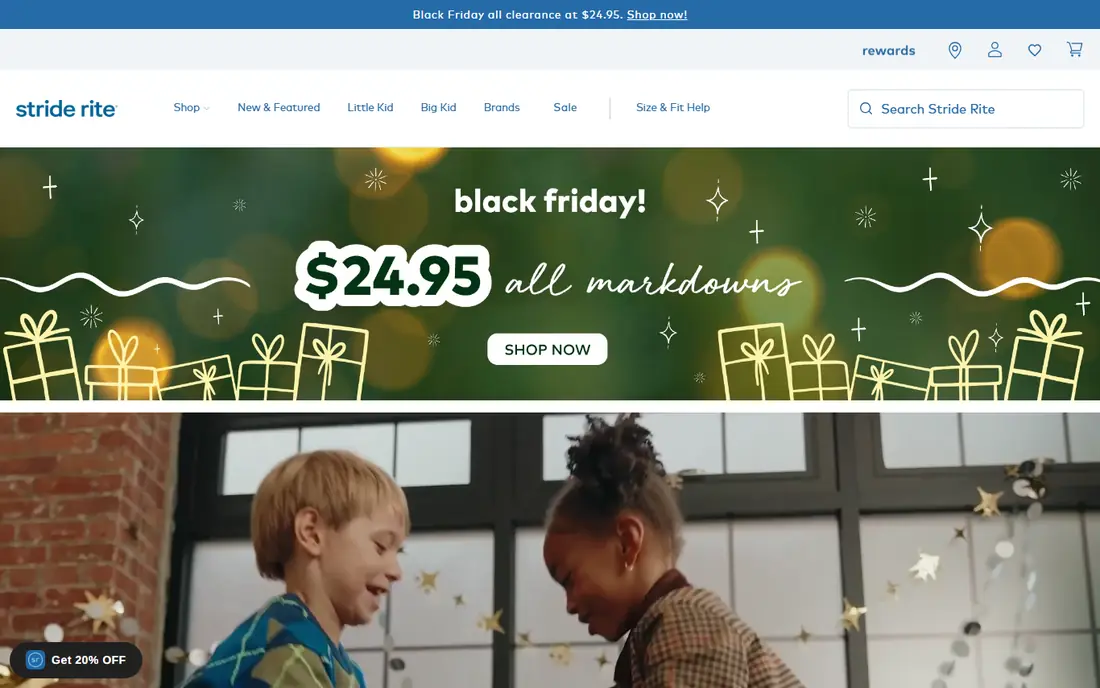
Stride Rite has built its name around children's feet rather than scaled down adult shoes, and that focus shows in its toddler and preschool ranges. Soft Motion and Made2Play lines offer flexible soles, rounded edges for stability, and memory foam footbeds in many styles, with oversized openings that help parents get shoes on small feet. For first walkers and early school children, that combination of fit help and easy wear is hard to beat.
The trade-off is style. Older children who want the latest sport look may prefer Nike or Adidas, and Stride Rite prices vary enough that you should compare the exact line rather than the brand average. Still, for toddlers, preschoolers, and children who need a dependable school shoe, Stride Rite remains our first suggestion to try. Use the brand fit guidance and measure both feet before ordering.
- Long focus on children's fit
- Flexible soles for early walkers
- Wide size range for toddlers
- Styles can look more practical than sporty
- Prices vary by line and size
Nike Kids covers infants, toddlers, little kids, and big kids, with running, court, and everyday styles that children often ask for by name. Lightweight foam cushioning, breathable uppers, and hook and loop closures on many younger styles make Nike a practical choice as well as a popular one. Flex Runner and Revolution styles are common starting points for parents who want a light, flexible everyday sneaker.
Fit is the thing to watch. Nike models differ in width and toe shape, so a size that fits in one style may feel tight in another. Check the product details for closure type, since lace only styles can frustrate younger children, and use Nike size charts with a fresh foot measurement. If your child is between sizes, try the larger size first and check toe room with the child standing.
- Wide kids range from infant to big kid
- Lightweight cushioning
- Many hook and loop styles
- Popular styles sell out in common sizes
- Fit varies between models
Adidas Kids offers a good balance of sport performance and everyday wear, with Lite Racer, Superstar, and running inspired styles that hold up to playground use. Many younger styles use hook and loop straps or elastic laces, which help children who cannot yet tie laces reliably. The brand also covers a wide age range, so families can stay with one brand from toddler sizes through big kid sizes.
Some Adidas styles run narrow, so children with wider feet should check width notes and reviews for the exact model before buying. Cushioning and grip are generally strong for school and light sport, but serious young athletes may prefer a dedicated running shoe from New Balance or ASICS. For most school days, Adidas is a dependable middle ground between style, durability, and price.
- Durable everyday sneakers
- Many hook and loop options
- Strong range for school and sport
- Some styles run narrow
- Premium styles cost more than budget brands
New Balance Kids stands out for width choice, which matters a great deal for children whose feet do not fit standard medium widths. Many kids styles come in wide options, with cushioned midsoles and firm heel counters that give steady support for all day school wear. The 990 style in kids sizes is a frequent recommendation for children who need structured support, while simpler running styles suit everyday play.
The downside is mostly about looks. New Balance kids shoes tend to look practical rather than flashy, and some older children may resist them for that reason alone. If fit and comfort matter more than peer approval, that trade is easy to accept. Measure width as well as length, and use the brand width guide, since a longer shoe does not fix a width problem.
- Multiple widths in many kids styles
- Cushioned support
- Durable school shoes
- Styles can look plain next to Nike and Adidas
- Some lines cost more
Skechers Kids is the easiest brand on this list for mornings, thanks to slip-on designs, stretch laces, and hook and loop closures across much of the range. Soft cushioning and light builds suit children who spend long days on their feet at school, and the fun colors and light up options help with the harder job of getting children to wear the shoes at all. For children who dress themselves, Skechers removes a daily friction point.
Support is the honest limit. Very soft slip-on styles may not suit children who need firmer ankle or arch support, or who play high impact sport regularly. Check the sole and heel structure for the exact style, and keep a firmer pair for sport if needed. For everyday school wear and casual play, though, Skechers comfort and ease are difficult to beat.
- Many slip-on and hook and loop styles
- Soft cushioning
- Fun designs children like
- Some slip-on styles offer less ankle support
- Durability varies by line
Crocs Kids, built around the Classic Clog, is a summer and water friendly favorite for good reason. The shoes are light, easy to slip on, simple to clean, and comfortable for beach days, pool visits, garden play, and quick trips. Backstraps on many kids styles help keep the clog in place, and the range now includes sandals, sneakers, and lined styles for cooler weather.
Crocs are not a replacement for a structured sneaker. They offer less lateral support and protection than a lace or strap sneaker, so they suit casual wear better than running, court sport, or hiking. Keep a proper sneaker for school sport and active play, and use Crocs for the easy days they do best. Sizing runs roomy by design, so check the brand guide rather than guessing.
- Very easy to put on
- Water friendly
- Light and easy to clean
- Less structured support than a sneaker
- Not ideal for running sport or rough trails
See Kai Run focuses on babies, toddlers, and young children, with flexible soles that allow natural foot movement and soft materials that suit early walkers. The brand divides its range by stage, from soft sole first shoes to flexible sneakers for confident walkers, which helps parents choose a shoe that matches a child's walking stage rather than just an age label. Leather and canvas options also give a softer, more breathable feel than many sport shoes.
The range narrows for older children, so See Kai Run is best as an early years brand rather than a full childhood solution. Availability can also be patchier than Nike or Stride Rite, depending on your area. If you are buying first shoes or toddler sneakers and you value flexibility and a stage based fit, See Kai Run deserves a place on your shortlist alongside Stride Rite.
- Designed for developing feet
- Flexible soles
- Soft leather and canvas options
- Smaller range for older children
- Less widely stocked than big sport brands
ASICS Kids brings its adult running knowledge to children's sizes, with GEL cushioning, durable outsoles, and structured support that suit running, physical education, and school sport. The GT-1000 style in grade school sizes is often recommended for children who need more stability, while simpler Contend and Gel Excite styles suit everyday running and play. For children who run regularly or who complain of tired feet after sport, ASICS is a strong choice.
Casual style is thinner than at Nike or Adidas, and some models fit narrow, so try before you buy where possible. ASICS also tends to cost more than budget supermarket brands, but the durability for active children often balances that out over a school term. If your child is active and hard on shoes, start with ASICS or New Balance and compare fit side by side.
- GEL cushioning in many kids running styles
- Good grip
- Structured support for active children
- Running focus means fewer casual fashion styles
- Fit varies by model
How we picked these
We compared kids footwear brands on fit guidance for growing feet, closure types for young children, sole flexibility and support, size and width ranges, and durability for school and play. We used brand product pages, size guides, and published kids shoe guides, and we favored brands with a current, widely available kids range in the US. We did not claim hands-on testing, and we did not invent prices, since prices vary by style, size, and retailer.
How to buy kids shoes that fit
Measure first, every time
Measure both feet while the child is standing, late in the day when feet are slightly larger, and use the larger foot as your guide. Leave about a thumb width between the longest toe and the end of the shoe. Recheck every two to four months for toddlers and every four to six months for school age children, or sooner if the child complains of tightness.
Choose closures children can manage
Hook and loop straps, elastic laces, and slip-on designs help younger children dress themselves and keep shoes fastened during play. Laces suit older children who can tie them reliably and who need a snug, adjustable fit for sport. Avoid shoes that constantly come undone, since loose shoes cause trips and blisters.
Match the shoe to the activity
One pair rarely covers every need. Use a structured sneaker for school and sport, a water friendly pair for pools and beaches, and a dress shoe for formal occasions. Trail and hiking shoes need better grip and toe protection than a light canvas sneaker. Buying for the main activity first gives you the best value.
Check wear and replace on time
Check the sole, heel, and upper each month for worn tread, crushed heels, or holes. Shoes that tilt inward, show uneven wear, or leave red marks after wear are ready to replace, even if they still look presentable. A shoe that is too small can affect gait and comfort, so do not wait for a child to outgrow it completely before replacing it.
Frequently asked questions
How often should children get new shoes?
Toddlers may need new shoes every two to four months, and school age children every four to eight months, depending on growth and wear. Check fit regularly rather than relying on a calendar, since growth spurts vary. Replace shoes sooner if the sole is worn, the heel is crushed, or the child reports pain.
Should kids shoes have arch support?
Most children do not need corrective arch support, and flexible shoes that allow natural movement suit many toddlers. Older children who are active, who have flat feet with pain, or who have gait concerns may benefit from more structured shoes. If a child has persistent pain, unusual fatigue, or gait concerns, ask a pediatrician or podiatrist rather than buying corrective shoes on your own.
Are expensive kids shoes worth it?
Not always. Fit, flexibility, and durability for the child's activity matter more than brand price. A well fitting mid priced shoe beats a poorly fitting premium shoe every time. Spend more when you need specific features, such as wide widths, structured running support, or durable school shoes for a very active child.
What is the best shoe for a first walker?
Soft, flexible shoes with a light sole, a wide toe box, and an easy closure suit most first walkers. Stride Rite and See Kai Run both design for this stage, with soles that bend easily and openings that help parents fit small feet. Barefoot time indoors also helps foot development, so shoes matter most for outdoor protection and grip.
Do kids need different shoes for sport and school?
For light play, one good sneaker can cover both. For regular running, court sport, or soccer, sport specific shoes give better grip, support, and protection. Keep school sneakers for daily wear and add a sport pair when the activity becomes frequent or competitive, rather than buying every type at once.
Sources
See where you really rank - block by block
ProMapRanker scans Google Maps across a grid of your service area. Simple monthly plans from $19, white-label on every plan.
Start freeKeep reading
 zoro.to alternatives
Best Zoro.to Alternatives in 2026
We compare the best zoro.to alternatives in 2026, listing only legal licensed anime streaming services, from Crunchyroll to free options for fans today.
Read → zip alternatives
Best Zip Alternatives in 2026
We compare the best zip alternatives for buy now, pay later in 2026, covering pay-in-4 plans, fees, spending limits, and credit reporting options today.
Read → yesware alternatives
Best Yesware Alternatives in 2026
Compare the best yesware alternatives for sales email tracking, templates, and sequences, with current pricing and honest tradeoffs for small sales teams.
Read →