 ProMapRanker
Best Jewelry Store Management Software in 2026

Key takeaways
- Jewelry stores need serialized inventory, repair tracking and appraisals, which general retail software handles only in part.
- Purpose-built tools such as Jewel360 and The Edge cover jewelry workflows in depth, while Lightspeed and Square suit simpler or online-first stores.
- One-time purchase tools can cost less over time, but cloud tools offer easier multi-location access and updates.
- High-ticket sales make payment processing rates important, so compare processing cost alongside software fees.
Quick comparison
| Pick | Great for | Pricing starts at | Free tier | |
|---|---|---|---|---|
 Jewel360 | Cloud jewelry management | See website | No | Visit |
 The Edge | Established jewelry POS and repairs | See website | No | Visit |
 Jewelry Shopkeeper | Serialized jewelry inventory | See website | No | Visit |
 Lightspeed Retail | Multi-location retail management | $89 per month | No | Visit |
 Square for Retail | Low-cost start for small jewelers | Free | Yes | Visit |
 Shopify POS | Online-first jewelry selling | See website | No | Visit |
 Clover | Bundled hardware for retail | See website | No | Visit |
 Epos Now | Flexible retail POS | See website | No | Visit |
 Valigara | Jewelry and diamond inventory online | See website | No | Visit |
The best jewelry store management software
We compared software that helps jewelry stores sell, track one-of-a-kind pieces, manage repairs and custom orders, and handle appraisals, layaway and customer records. General retail tools are included where they are a realistic choice for a small or online-first jeweler.
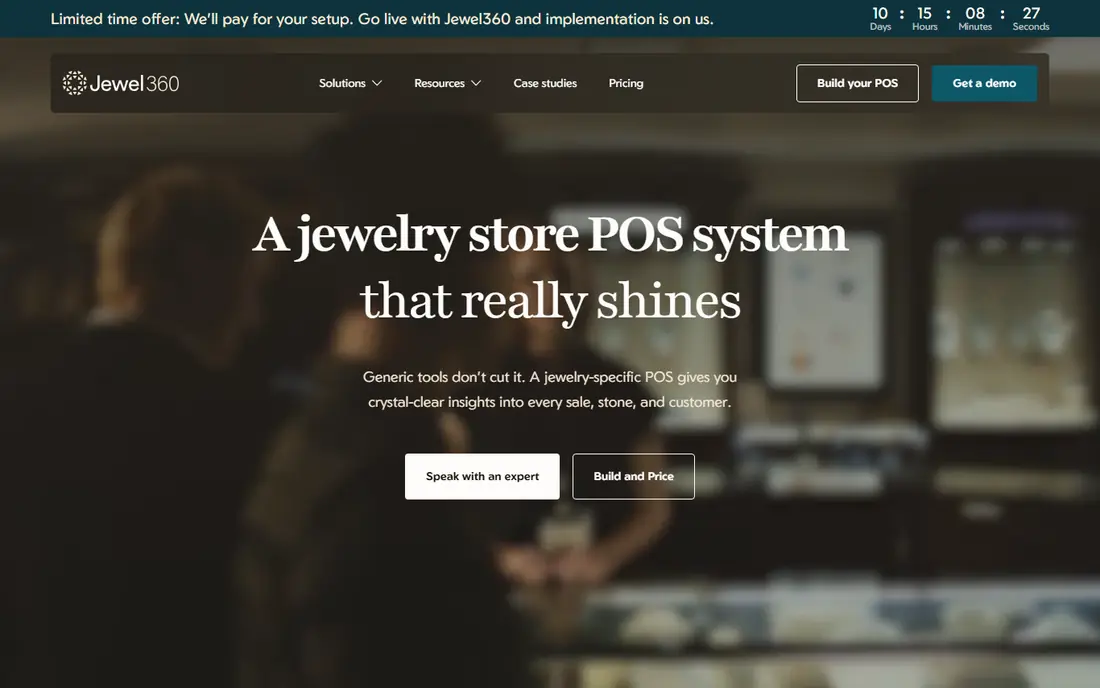
Jewel360 is built for jewelry stores rather than adapted from general retail, and that shows in its handling of serialized pieces, stone details, repairs and custom jobs. Cloud access lets owners check sales and inventory from outside the store, which helps for multi-location groups and for owners who split time between shop and shows. Built-in marketing and customer tools also support repeat sales, which matter for high-value purchases.
Pricing is quote based, so you need a demo and a written quote to compare it fairly with Lightspeed or Square. Jewel360 also has less marketplace breadth than a general platform, since its strength is jewelry workflow rather than selling on every channel at once. For a store where repairs and custom work are central, Jewel360 is the cloud-first choice to test first.
- Built for jewelers
- Cloud access
- Repair, appraisal and marketing tools
- Quote-based pricing
- Less marketplace depth than general retail platforms
The Edge, from Abbott Jewelry Systems, is a long-standing jewelry point of sale and management system with deep coverage of repairs, custom jobs, appraisals, special orders and serialized inventory with RFID support. Its reporting suite covers sales, inventory performance and staff activity, and multi-store support handles transfers across locations. Many independent jewelers have used The Edge for years, which speaks to its fit for traditional store work.
The model is different from cloud tools. The Edge runs on Windows machines with data on an in-store server, and pricing has been reported as a one-time purchase starting around $4,600 for a single store and workstation, with annual support renewal at 20 percent of purchase price after the first year. That can cost less over time than a monthly subscription, but it needs in-store hardware and IT care. For a bricks-and-mortar jeweler who prefers on-site data, The Edge remains a strong choice.
- Deep jewelry feature set
- Repair and appraisal workflows
- Long track record
- Windows-based, on-premise model
- One-time purchase plus support renewal
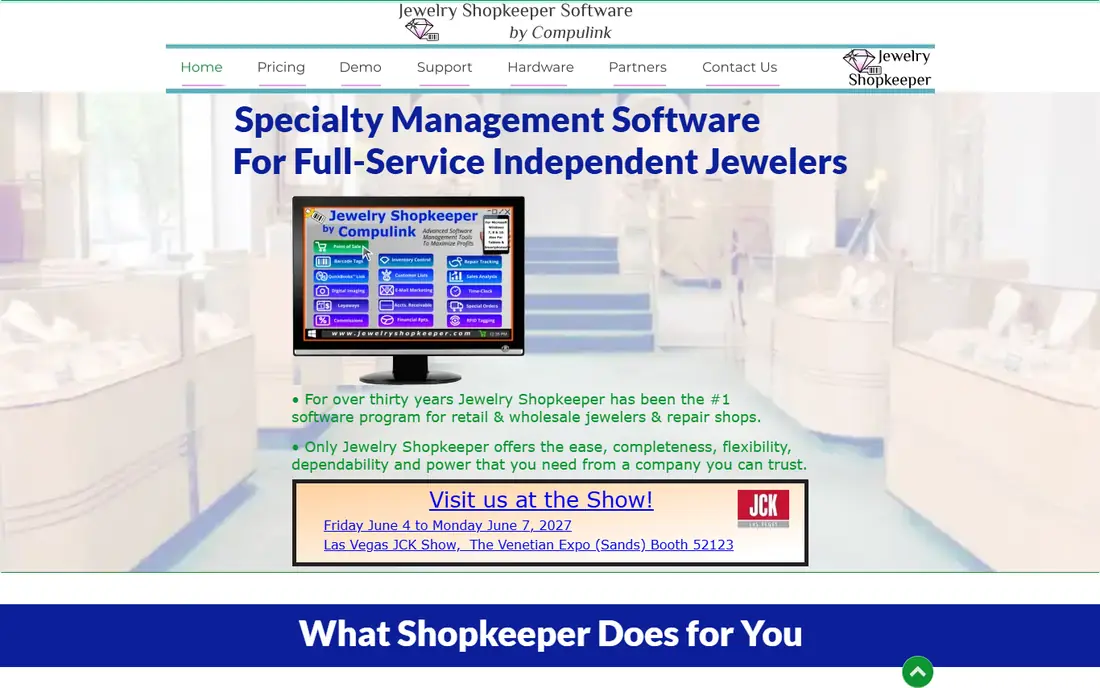
Jewelry Shopkeeper, from Data Age, focuses on the core job of a jewelry store: tracking individual pieces, managing repairs, handling vendors and keeping customer records in order. Its serialized approach suits stores where two pieces that look similar can have very different stones, metals and values. That precision reduces errors at sale time and during stock counts.
The vendor profile is smaller than Lightspeed or Square, so support, integrations and update pace should be checked during a demo. Pricing is also quote based, which makes direct comparison slower. For a jeweler who wants a focused, jewelry-only system without the breadth of a general retail platform, Jewelry Shopkeeper is worth a demo alongside Jewel360 and The Edge.
- Jewelry-specific inventory
- Repair and vendor tools
- Focused feature set
- Smaller vendor profile than Lightspeed
- Pricing needs a quote
Lightspeed Retail is a cloud retail platform that many jewelry stores use for multi-location inventory, reporting and online selling. It handles serialized inventory through custom fields, customer profiles, loyalty and repair tracking through its services module. Integrations with marketing, marketplaces and accounting tools give a growing retailer room to expand without changing systems.
The limit is specialization. Lightspeed does not offer native jewelry workflows such as consignment, trade-in and GIA certificate handling at the depth of Jewel360 or The Edge. Plans start at $89 per month billed annually, with Core at $149 and Plus at $289 reported for stores that need more depth. Lightspeed fits a jewelry retailer who values multi-location retail strength over deep bench and appraisal workflows.
- Strong multi-location tools
- Broad integrations
- Repair and serialized tracking in part
- General retail platform, not jewelry-only
- Higher tiers needed for full depth
Square for Retail suits a small jeweler, a market stall seller or a new studio that needs to take payments and track basic inventory without a large monthly bill. The free plan covers simple selling and reporting, with paid retail plans adding inventory depth and staff tools. Setup is fast, hardware is familiar, and processing rates are published, which helps a new business budget.
Jewelry-specific work is where Square falls short. Serialized piece tracking, detailed repair envelopes, appraisals and layaway need workarounds or separate tools. Processing fees also matter more on high-ticket jewelry sales than on low-price retail, so a store with steady high-value sales should compare total processing cost with Lightspeed or a jewelry platform. For a simple start, Square is hard to beat on price and ease.
- Free entry plan
- Simple setup
- Clear processing rates
- Mobile hardware
- Limited jewelry-specific workflows
- Processing fees rise on high-ticket sales
Shopify POS fits a jewelry brand that sells mainly online and uses a physical store or pop-up as a second channel. In-store sales write back to Shopify orders and customer records, keeping online and offline history aligned. That unified view helps with marketing, repeat purchases and customer service for a direct-to-consumer brand.
In-store jewelry workflows are thinner than on Jewel360 or The Edge, since Shopify is built around SKUs rather than unique serialized pieces with stone and metal details. Advanced POS features and hardware also add cost on top of a Shopify plan. For an online-first jeweler, Shopify POS is a practical choice. For a traditional store built around repairs and appraisals, a jewelry platform fits better.
- Strong online store integration
- Unified customer records
- Good for direct-to-consumer brands
- Thin jewelry-specific in-store workflows
- Advanced POS features cost more
Clover offers retail bundles with devices, payments and an app marketplace, which can simplify setup for a jewelry store that wants one supplier. Its devices cover counter and mobile selling, and apps add loyalty, inventory and reporting tools. For a store that values bundled hardware and a simple checkout experience, Clover is convenient.
Jewelry depth is limited without extra apps, and pricing varies by reseller, so a quote is needed for a fair comparison. Contract terms for bundles also need checking, since some run for multiple years. Clover fits a general retail jeweler with straightforward inventory, rather than a store with heavy repair, appraisal or custom order volume.
- Bundled devices
- App marketplace
- Customer and inventory tools
- Pricing varies by reseller
- Jewelry workflows need apps or workarounds
Epos Now is a flexible retail point of sale with inventory management, reporting, customer management and integrated payments. Its one-time fee option in some markets, alongside subscription plans, gives owners a choice in how they pay. That flexibility can help a small jewelry retailer who wants a capable POS without a jewelry-platform price.
As a general retail system, Epos Now does not match Jewel360 or The Edge on repair tracking, appraisal detail or serialized stone records. It works best for a jewelry retailer whose stock is more standardised, or who handles repairs through a separate process. Test its inventory fields against your actual pieces before you commit, since jewelry data needs more detail than standard retail stock.
- Flexible pricing options
- Retail inventory and reporting
- App integrations
- General retail focus
- Jewelry-specific tools are limited
Valigara is an online management solution for jewelry and diamond businesses, with a focus on inventory, catalogues and trade selling. It suits wholesalers, manufacturers and retailers who need to present large jewelry catalogues online and manage diamond and gemstone stock in detail. For a business that sells to trade buyers or through online channels, that catalogue depth is valuable.
Walk-in retail point of sale is not its main strength, so a traditional store will likely pair Valigara with a separate POS or use it for inventory and online sales only. Pricing is quote based, and a demo should cover how Valigara handles your stone, metal and certification data. For online and trade jewelry selling, Valigara is a specialised option worth comparing with Jewel360.
- Built for jewelry and diamonds
- Online inventory and catalogue tools
- B2B focus
- Less suited to walk-in retail POS
- Pricing needs a quote
How we picked these
We compared official product pages, jewelry-specific features, inventory models, repair and appraisal coverage, pricing models and retail fit. We kept purpose-built jewelry systems and general retail systems that jewelry stores actually use, and we left out generic accounting or repair tools that do not cover jewelry sales and inventory. Where pricing is quote based, we say so rather than publishing a figure that would not apply to most stores.
What to check before you buy
Start with your piece data. List the fields you need for each item, such as metal, stone, weight, certificate, vendor, cost and repair history, and test them in a demo with real examples. A system that cannot hold that data will force staff into spreadsheets, which defeats the purpose of buying jewelry software.
Repairs, payments and data
Check repair ticketing in detail, including intake photos, status updates, bench notes and customer approval. Compare payment processing on your average ticket size, since a small rate difference matters on high-value sales. Ask how you export inventory, customer and repair data if you leave, and if your data lives in the cloud or on an in-store server.
Frequently asked questions
What software do most jewelry stores use?
Many traditional stores use purpose-built systems such as Jewel360 or The Edge, while online-first brands often use Shopify POS and small retailers use Square or Lightspeed. The best choice depends on whether repairs, appraisals and serialized inventory or online selling matter most to your store.
Is Lightspeed good for a jewelry store?
Lightspeed works well for multi-location retail, reporting and online selling, with repair tracking and serialized inventory in part. It is less deep than jewelry-only systems on consignment, trade-ins, appraisals and certificate handling. Choose it for retail breadth, and choose a jewelry platform for bench depth.
How much does jewelry store software cost?
Cloud retail plans in this list start around $89 per month, while jewelry platforms are often quote based and one-time tools such as The Edge start around $4,600 for a single store. Add hardware, support renewal and card processing to get the true total, since processing can be large on high-ticket sales.
Can Square handle a jewelry store?
Square can handle a small jewelry business with simple inventory and low repair volume, thanks to its free plan and easy setup. It struggles with detailed serialized tracking, repair envelopes and appraisals. A growing store with heavy repair work will likely outgrow Square.
Should I choose cloud or on-premise jewelry software?
Cloud software suits multi-location stores and owners who want remote access and automatic updates. On-premise software such as The Edge suits stores that prefer data on site and a one-time purchase model. Weigh IT support, backup and remote access needs before you decide.
Sources
See where you really rank - block by block
ProMapRanker scans Google Maps across a grid of your service area. Simple monthly plans from $19, white-label on every plan.
Start freeKeep reading
 zoro.to alternatives
Best Zoro.to Alternatives in 2026
We compare the best zoro.to alternatives in 2026, listing only legal licensed anime streaming services, from Crunchyroll to free options for fans today.
Read → zip alternatives
Best Zip Alternatives in 2026
We compare the best zip alternatives for buy now, pay later in 2026, covering pay-in-4 plans, fees, spending limits, and credit reporting options today.
Read → yesware alternatives
Best Yesware Alternatives in 2026
Compare the best yesware alternatives for sales email tracking, templates, and sequences, with current pricing and honest tradeoffs for small sales teams.
Read →