 ProMapRanker
Best Japanese Learning Apps in 2026

Key takeaways
- No single app covers Japanese fully, so most learners pair a grammar app, a kanji app, and a listening or speaking app.
- LingoDeer and Bunpro are the strongest structured picks for grammar, while WaniKani is the clearest kanji system.
- Duolingo, Anki, and JapanesePod101 offer the best free starting points, with different strengths in habit, vocabulary, and listening.
- Pimsleur and Busuu suit learners who want speaking and listening practice, while Rosetta Stone suits immersion-style study.
- App store prices vary by region and offer, so check the price inside your own app store before you subscribe.
Quick comparison
| Pick | Great for | Pricing starts at | Free tier | |
|---|---|---|---|---|
 Duolingo | Daily habit building | Free | Yes | Visit |
 LingoDeer | Structured grammar | $14.99 per month | Yes | Visit |
 WaniKani | Kanji mastery | $9 per month | Yes | Visit |
 Bunpro | Grammar review | $5 per month | Yes | Visit |
 Busuu | Community feedback | See website | Yes | Visit |
 Pimsleur | Audio speaking practice | $20.99 per month | Free trial | Visit |
 JapanesePod101 | Listening lessons | See website | Yes | Visit |
 Memrise | Native speaker vocabulary | $24.99 per month | Yes | Visit |
 Rosetta Stone | Immersive study | $19.99 per month | Free trial | Visit |
 Anki | Custom vocabulary review | Free | Yes | Visit |
The best Japanese learning apps
Japanese learning apps differ by skill: some teach grammar, some teach kanji, some build listening, and some get you speaking. This list covers all four, so you can build a small stack instead of hoping one app does everything. We compared official app pages, app store listings, and pricing pages to build it.
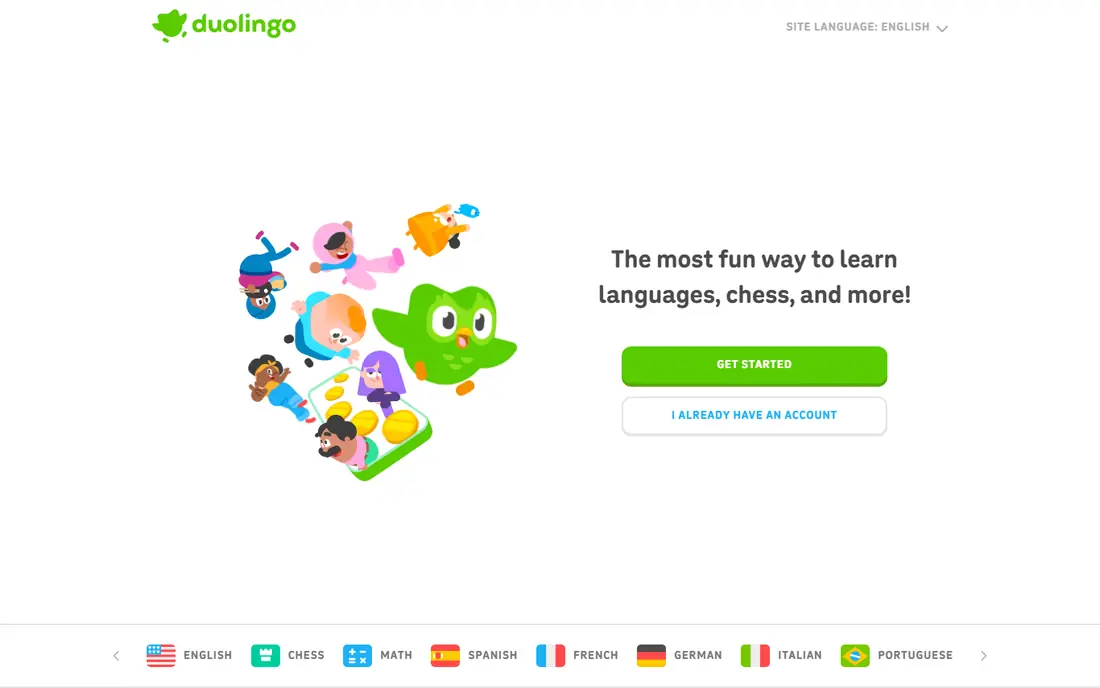
Duolingo is the easiest way to start Japanese and keep going. Lessons are short, gamified, and free, with streaks and points that help a daily habit form. The Japanese course covers hiragana, katakana, basic vocabulary, and simple sentences, which gives absolute beginners a friendly first month.
The limits show up fast. Grammar explanations are brief, free practice is limited by energy in the app, and the course alone will not carry you to intermediate reading or conversation. Super, the paid tier, starts around $7 per month when billed annually, with monthly prices higher in app stores. Use Duolingo as your habit app, then add LingoDeer or Bunpro for grammar and WaniKani for kanji.
- Free core course with gamified streaks
- Short lessons fit daily practice
- Covers hiragana, katakana, and basic vocabulary
- Grammar explanations are thin
- Free practice is energy limited
- Not enough alone for intermediate Japanese

LingoDeer is often named as the best structured app for Japanese beginners, and the reason is grammar. Lessons explain how a pattern works, show it in sentences, and test it with native speaker audio, rather than asking you to guess from examples alone. The path starts with hiragana and katakana and builds toward real sentence construction, which suits learners who want to understand Japanese, not just memorize phrases.
Pricing is listed at $14.99 per month in app stores, with an annual plan around $95.99 per year, and only the first lesson is free. That makes it a paid commitment, but the structure justifies it for serious beginners. If you want a course that teaches grammar properly from day one, LingoDeer is our first pick.
- Clear grammar explanations for Asian languages
- Native speaker audio
- Structured path from alphabet to sentences
- Higher monthly price than some rivals
- First lesson free only, not a full free tier
- Fewer languages than general apps
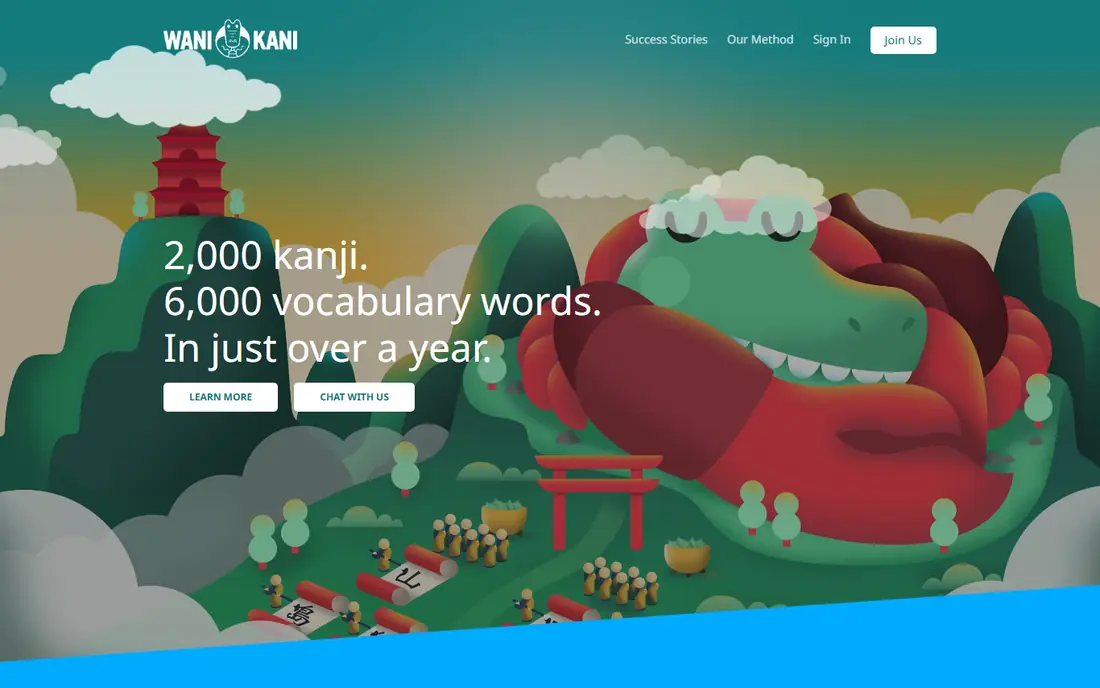
WaniKani solves the hardest part of Japanese for many learners: kanji. It teaches radicals first, then kanji built from those radicals, then vocabulary that uses each kanji, with mnemonics to make characters stick. Spaced repetition schedules reviews at increasing intervals, and levels give a clear sense of progress through more than 2,000 kanji.
The first three levels are free, and paid plans start at $9 per month, with annual and lifetime options at $89 per year and $299. Progression is locked, so you cannot skip characters you already know, and the app teaches reading rather than speaking or grammar. Pair WaniKani with LingoDeer for grammar and a listening app, and it becomes the kanji engine of a strong study stack.
- Mnemonic system for radicals, kanji, and vocabulary
- Spaced repetition scheduling
- Clear level progression
- Locked progression, so you cannot skip ahead
- Focused on reading, not speaking
- Monthly cost adds up over years
Bunpro is the grammar review tool that keeps patterns in memory after you first learn them. You study a grammar point, add it to reviews, and Bunpro tests you with fill-in-the-blank sentences over time, following JLPT levels from N5 to N1. Textbook paths let you follow Genki, Minna no Nihongo, Tobira, and other books point by point, which helps classroom learners stay in sync.
It is a review system first, not a course that teaches each point from scratch with video lessons. The price starts at $5 per month, with a lifetime option listed at $150, and limited free access is available. Use Bunpro beside LingoDeer or a textbook, and it will do the job gamified apps often skip: making grammar stick for months, not days.
- JLPT-aligned grammar paths
- Spaced repetition for grammar points
- Textbook paths for Genki and other popular books
- Review-focused, not a full lesson app
- Vocabulary features are a supplement
- Interface is plain next to gamified rivals
Busuu offers structured Japanese lessons with a community twist: native speakers can correct your written and spoken exercises, which adds human feedback that most apps lack. Lessons are organized by level, cover grammar and vocabulary together, and fit short daily sessions. That combination suits learners who want a course plus a reason to write and speak from early on.
Japanese is not Busuu strongest language, and the course depth trails LingoDeer for grammar and WaniKani for kanji. Premium pricing also varies by plan and region, with yearly plans listed from around $70 in app stores, so we list it as See website. Pick Busuu if native-speaker corrections motivate you, and add a specialist app for kanji or grammar depth.
- Short CEFR-levelled lessons
- Feedback from native speakers
- Grammar and vocabulary in one course
- Japanese content is thinner than for European languages
- Premium pricing varies by plan and region
- Speaking practice still needs real conversation
Pimsleur is the audio pick for learners who want to speak Japanese. Lessons run about 30 minutes, use spaced repetition through listening and speaking, and build conversation step by step without a screen. That format suits commutes, walks, and learners who learn by hearing and repeating rather than by reading drills.
The price starts at $20.99 per month for a single language, with annual plans from around $131.99 per year, which is higher than most apps here. It also teaches little kanji or reading, so it cannot be your only app. Use Pimsleur for speaking and listening, and pair it with WaniKani for reading and LingoDeer or Bunpro for grammar.
- Audio-first lessons build speaking and listening
- 30-minute daily lessons fit commutes
- Strong pronunciation focus
- Among the more expensive subscriptions
- Little reading or kanji teaching
- Audio-only study can feel slow for visual learners
JapanesePod101 is the listening library on this list. It offers audio and video lessons across levels, with dialogues at natural speed, cultural explanations, and vocabulary lists for each lesson. Learners who want to train their ear for real spoken Japanese, rather than only app sentences, will find more authentic material here than in most gamified apps.
The size of the library is both a strength and a weakness. New learners can feel lost among thousands of lessons, and premium pricing varies by plan, so we list it as See website, with basic plans listed from around $4 per month in some comparisons. Pick a level path, follow it daily, and use it beside a grammar app for the best results.
- Large library of audio and video lessons
- Cultural notes and real conversation
- Personalized study paths
- Lesson library can feel overwhelming
- Premium pricing varies by plan
- Needs self-discipline to follow a path
Memrise builds vocabulary through short videos of native speakers, which helps learners connect words to real faces, voices, and situations. Spaced repetition reviews keep words in memory, and simulated conversation practice gives a low-pressure way to try speaking. For learners who already study grammar elsewhere and need more words, Memrise is a useful supplement.
Grammar instruction is thin, so it does not replace LingoDeer or Bunpro. Pricing is also steep monthly at $24.99 per month, with annual plans listed around $61.99 to $89.99 per year depending on the store and offer, so annual billing makes far more sense if you commit. Use Memrise for vocabulary and listening variety, not as your core grammar course.
- Videos of native speakers in real situations
- Spaced repetition for vocabulary
- Simulated conversation practice
- Grammar teaching is thin
- Monthly price is high next to annual rate
- Community courses were removed
Rosetta Stone takes an immersion approach: lessons use images, audio, and speech recognition without translating into English, so learners infer meaning from context. That suits learners who like to absorb a language naturally and who want pronunciation feedback on every lesson. A lifetime option, listed around $179, appeals to learners who dislike subscriptions.
The same design frustrates learners who want a grammar rule explained in plain English, and the course offers less JLPT-specific structure than Bunpro or LingoDeer. Monthly pricing is listed at $19.99 per month in app stores, with yearly web pricing around $159 per year. Pick Rosetta Stone if immersion clicks for you, and add Bunpro when you need a grammar point explained directly.
- Immersion method with no translation
- Pronunciation feedback with speech recognition
- Lifetime option available
- No translations by design, which frustrates some beginners
- Higher price for a single approach
- Less JLPT-specific structure
Anki is the free flashcard system that serious Japanese learners rely on for vocabulary. It uses spaced repetition, it runs free on desktop and Android, and shared decks cover core vocabulary, JLPT levels, and sentence mining. You can also build your own decks from words you meet in books, shows, and lessons, which makes review personal and targeted.
Setup is the barrier. Anki looks plain, deck choice takes research, and the iOS app costs $24.99 as a one-time purchase, while desktop and Android remain free. If you want a ready-made course, pick LingoDeer or Duolingo instead. If you want the most flexible vocabulary tool and you will review daily, Anki is the best free pick here.
- Free on desktop and Android
- Huge library of shared Japanese decks
- Full control over cards and scheduling
- Setup takes effort
- Interface is plain
- IOS app is a paid one-time purchase
How we picked these
We compared official app pages, app store listings, and pricing pages, and we favored apps that are actively maintained and available for Japanese in October 2026. We covered grammar, kanji, vocabulary, listening, and speaking, because no single app teaches all five well. Where app store prices varied by region or offer, we listed See website rather than a figure that might not match your store.
How to build a Japanese study stack
Start with one core app for your level. Beginners should start with LingoDeer for grammar or Duolingo for habit, and add WaniKani once hiragana and katakana feel solid. Intermediate learners should add Bunpro for grammar review and JapanesePod101 for listening, with Anki for vocabulary you meet in real material.
Keep daily study short and steady. Twenty to thirty minutes a day beats a long session once a week, and spaced repetition only works if reviews happen on schedule. Finally, add real Japanese as soon as you can: graded readers, slow podcasts, and simple shows give context that drills cannot. An app stack builds the foundation, but real input turns study into language skill.
Frequently asked questions
What is the best app for learning Japanese?
LingoDeer is the best structured app for beginners who want grammar explained properly, and WaniKani is best for kanji. Duolingo is best for building a daily habit for free. Most learners do best with a pair: LingoDeer plus WaniKani, or Duolingo plus Bunpro once basics are set.
What is the best free app to learn Japanese?
Duolingo offers the best free course for beginners, Anki offers the best free vocabulary system on desktop and Android, and JapanesePod101 offers free lessons for listening. WaniKani is free for the first three levels, which covers the start of kanji study. Combine two free tools rather than expecting one free app to cover everything.
What is the best app for learning Japanese kanji?
WaniKani is the best kanji app here, thanks to its mnemonic system, radical-first order, and spaced repetition. Anki is the best free alternative if you prefer shared decks and full control. Both need daily reviews, so pick the system whose daily routine you will actually keep.
Is Duolingo good for Japanese?
Duolingo is good for starting Japanese, learning kana, and building a daily habit, but it is weak for grammar depth and intermediate study. Use it as a starter and habit app, then add LingoDeer for grammar, WaniKani for kanji, and listening material for real conversation.
How long does it take to learn Japanese with an app?
It depends on daily time, prior language experience, and what fluency means to you. Basic conversation and kana reading can come within months of daily study, while comfortable reading and JLPT N2 level work usually takes years. Apps help most when study is daily, reviews are kept up, and app work is paired with real listening and reading.
Sources
See where you really rank - block by block
ProMapRanker scans Google Maps across a grid of your service area. Simple monthly plans from $19, white-label on every plan.
Start freeKeep reading
 zoho inventory alternatives
6 Alternatives to Zoho Inventory, Compared on Price and Fit
Zoho Inventory alternatives: 6 tools compared on price, free plans and fit. Katana leads the list for manufacturers. Fit and flaws are laid out for each entry.
Read → zoho crm alternatives
Best Zoho CRM Alternatives (2026)
Need Zoho CRM alternatives? We compare 7 tools on cost, free access and who each suits. Every pick gets a straight assessment. Built for quick decisions.
Read → zelle alternatives
Best Zelle Alternatives in 2026
Compare the best Zelle alternatives for sending money to friends, paying sellers and moving funds abroad, with honest notes on fees, speed and safety in 2026.
Read →