 ProMapRanker
Best IT Service Firms for Managing Infrastructure in 2026

Key takeaways
- Most firms in this list price by quote, not by a published monthly rate, so a short discovery call matters more than a price page.
- Global firms suit multi-country estates and regulated work, while mid-market firms suit companies that want one named team and faster answers.
- The best fit depends on scope: network and cloud operations, help desk coverage, security monitoring, and strategic planning are often sold as separate layers.
- Ask every finalist for response times, escalation paths, and what is excluded from the monthly fee before signing.
Quick comparison
| Pick | Great for | Pricing starts at | Free tier | |
|---|---|---|---|---|
 IBM | Large hybrid cloud estates | See website | No | Visit |
 Accenture | Enterprise transformation and operations | See website | No | Visit |
 Cognizant | AI-assisted IT operations | See website | No | Visit |
 Infosys | Multi-cloud and regulated industries | See website | No | Visit |
 HCLTech | Large infrastructure outsourcing | See website | No | Visit |
 TCS | Global application and infrastructure operations | See website | No | Visit |
 Wipro | Full-service managed infrastructure | See website | No | Visit |
 Dataprise | Mid-market managed IT | See website | No | Visit |
The best IT service firms for managing infrastructure
This is a firms roundup, not a software list. Each entry below is a service firm that runs infrastructure for clients, and prices are quote-based unless a firm publishes a rate. We compared official service pages, published service scopes, support models, and public reviews.
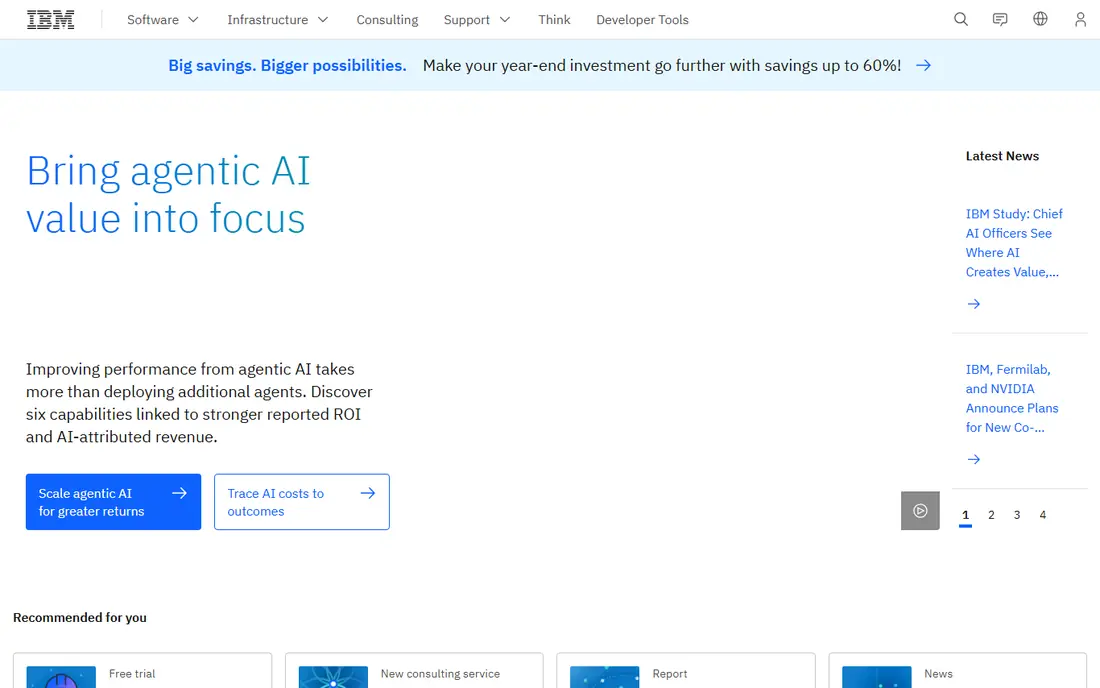
IBM suits organisations that run systems across on-premises servers, private cloud, and public cloud at the same time. Its managed services cover infrastructure operations, automation, and security work, with an emphasis on keeping mission-critical workloads running under formal service agreements. For a large estate, that breadth is the point, since one firm can own monitoring, patching, incident response, and cloud operations together.
The trade-off is fit. A small company with a dozen staff and one office will likely find the engagement model larger than it needs, and onboarding can take longer than with a smaller firm. Ask IBM for a named delivery team, a clear service level agreement, and a list of which tools and licences are included in the quote.
- Broad hybrid cloud and automation coverage
- Global delivery footprint
- Strong security and compliance experience
- Enterprise scale and process can feel heavy for small teams
- Pricing is quote-based and opaque up front
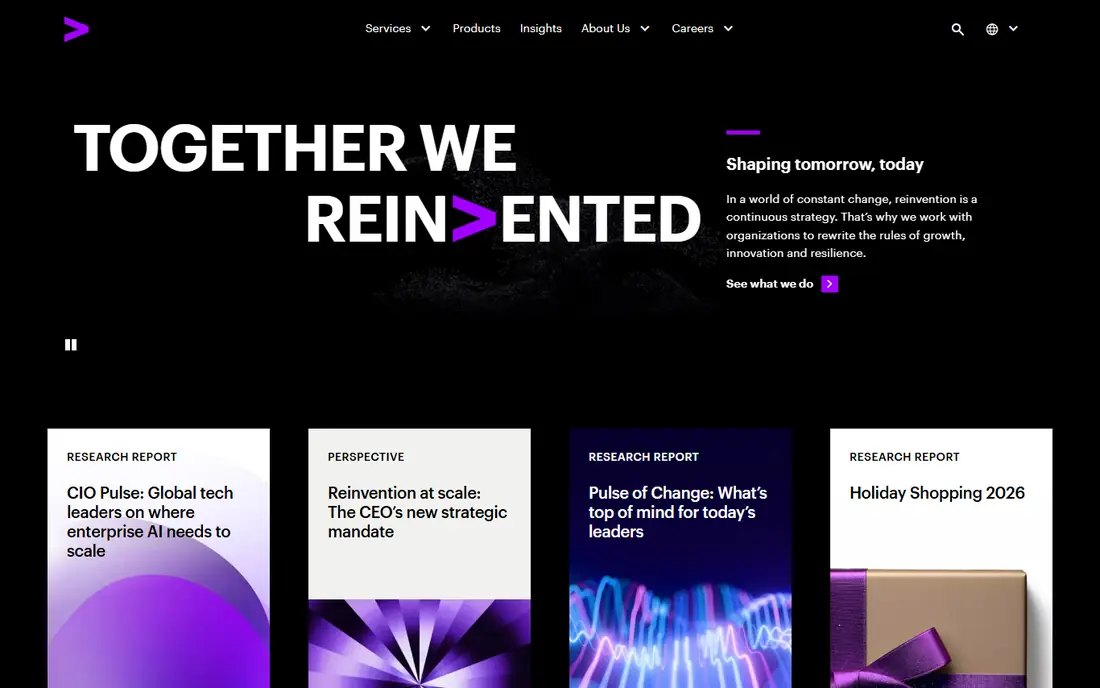
Accenture is a strong choice when infrastructure change and infrastructure running need to happen together. A company moving to cloud, consolidating data centres, or modernising older systems can hand both the migration and the ongoing operation to the same firm. That continuity reduces handover gaps, and the firm has staff across many industries and regions.
The honest catch is scale. Accenture is built for large, complex programmes, so a modest support contract may sit lower in its priorities. Buyers should confirm who will actually run the account, how often service reviews happen, and how change requests are priced.
- Combines consulting with day-to-day operations
- Deep cloud modernisation experience
- Global staffing depth
- Best suited to large programmes
- Smaller contracts may not get senior attention

Cognizant frames much of its infrastructure work around operational analytics and automation, aiming to spot problems before users report them. That matters for companies with many applications, where a server fault can show up first as a slow checkout or a failed internal tool. The firm also manages applications alongside infrastructure, which helps when a fault sits between the two.
Buyers should still test the specifics. Ask which incidents are automated, which still need a human, and how the firm reports on recurring faults. A good proposal will name the monitoring tools, the escalation clock, and the monthly report format, rather than promising general improvement.
- Operational analytics and automation focus
- Application and infrastructure management together
- Industry-specific teams
- Quote-based pricing makes early comparison slow
- Service quality can vary by delivery team
Infosys works well for companies that must show auditors and regulators how systems are governed. Its infrastructure services cover multi-cloud operations, service governance, and compliance controls, which suit banks, insurers, health organisations, and other regulated sectors. For a firm with operations in several countries, a single governance model across clouds is a real benefit.
The downside is pace at the start. Proposals, security reviews, and transition plans take time, and that overhead only pays off when the estate is large enough to need it. Smaller buyers should ask for a phased start, with one business unit or one cloud environment moved first.
- Multi-cloud management experience
- Governance and compliance focus
- Large global delivery network
- Engagement process can be formal and slow to start
- Best value appears at scale
HCLTech has built its reputation on running infrastructure for large clients, including networks, end-user devices, data centres, and cloud environments. Companies that want to outsource a whole infrastructure function, rather than buy help desk cover alone, will find a matching scope here. Its service models also cover workplace services, so laptops, office networks, and remote access can sit under one agreement.
Complex contracts are the watch point. Service credits, change categories, and tooling charges can be hard to compare across bidders unless the buyer insists on a like-for-like scope table. Get that table in writing, and ask how a routine change, such as adding a new office, is charged.
- Long record in infrastructure services
- Network, workplace, and data centre coverage
- Global support model
- Contract structures can be complex
- Change control may slow small requests
Tata Consultancy Services, known as TCS, suits companies that need the same infrastructure standards in many locations. Its managed services cover infrastructure operations and application support, with delivery teams in many countries. For a multinational buyer, that consistency matters more than any single tool, since a fault in one region should follow the same process as a fault in another.
The risk is attention. A mid-sized buyer inside a very large firm can struggle to get quick decisions unless the contract names a service delivery manager and a review cadence. Ask for both, and ask for references from clients of a similar size, not only from the largest accounts.
- Very large delivery capacity
- Consistent processes across regions
- Broad industry coverage
- Account teams vary in responsiveness
- Small firms may feel like a small account
Wipro covers a wide span of managed infrastructure work, from cloud and network operations to workplace support and security monitoring. That range helps companies that want fewer vendors and one accountability line for day-to-day technology. It also helps during growth, since new offices, new cloud workloads, and new security controls can be added under an existing relationship.
Breadth can hide gaps, so buyers should pin down the scope. Ask whether security monitoring is included or sold separately, whether patching covers all device types, and what happens outside business hours. A proposal that answers those questions in plain terms is worth more than a longer list of service names.
- Wide infrastructure and cloud service range
- Workplace and security services included
- Global reach
- Service scope can be broad and vague in early proposals
- Pricing needs careful scoping
Dataprise is the most approachable firm on this list for a small or mid-sized US business. Its fully managed IT service includes help desk support, network monitoring, patching, endpoint security, backups, Microsoft 365 and cloud management, and strategic planning. Each client gets a named service delivery manager and account manager, which is a practical benefit when a problem needs a person, not a ticket queue.
The limits are geographic and scale-based. Companies with staff spread widely outside the United States should confirm onsite response and time zone coverage. Even so, for a US firm that wants predictable support without building an internal IT department, Dataprise is a strong finalist to quote against a global firm.
- Clear per-user managed IT model for smaller firms
- 24/7 help desk and monitoring
- Named service delivery roles
- US-focused delivery
- Onsite coverage varies outside its main office cities
How we picked these
We compared official service pages, published scopes, support models, and public reviews for firms that manage infrastructure as a service, not firms that only sell software licences. We favoured firms with a clear infrastructure operations offer, a stated support model, and a record of serving business clients at a stated size range. Prices are quote-based for every firm here, so we list them as See website rather than inventing a monthly rate.
What to check before you sign
Start with scope, not price. Write down every system the firm must run, including networks, servers, cloud accounts, laptops, phones, printers, and security tools, then ask each finalist to mark each item as included, extra, or excluded. That single table prevents most later disputes about what the monthly fee covers.
Next, test support in practical terms. Ask for response and resolution targets by severity, ask how after-hours incidents are staffed, and ask for a sample monthly report. A firm that shares a real report format, with ticket volumes, repeat faults, and patch status, is showing how it will be judged. Finally, agree the exit terms early. Ask how data, credentials, documentation, and monitoring history transfer if you leave, and how long transition support lasts.
Frequently asked questions
How much does a managed IT firm cost?
Most firms price by quote, based on user count, device count, locations, systems in scope, and security requirements. Expect a discovery call and a written proposal, and compare proposals on the same scope table rather than on headline price alone.
What is the difference between a managed service firm and an IT support company?
A support company usually fixes faults as they arise, while a managed service firm also monitors, patches, plans, and reports on infrastructure on an ongoing basis. The managed model suits companies that want prevention and planning, not only break-fix help.
Should a small business choose a global firm or a mid-market firm?
A mid-market firm often gives faster access to senior staff and a simpler contract, while a global firm suits multi-country estates, regulated work, and very large systems. Match the firm to the size and complexity of your estate, not to brand size alone.
What should be in the service level agreement?
Response and resolution targets by severity, uptime commitments, reporting frequency, escalation paths, and service credits should all be written down. Ask also for what counts as an incident, what counts as a change, and how each is charged.
Can we start with part of our infrastructure?
Yes, many firms accept a phased start, such as one office, one cloud environment, or help desk cover first. A phased start tests the relationship before a full transfer, and it gives both sides a clear success measure.
Sources
See where you really rank - block by block
ProMapRanker scans Google Maps across a grid of your service area. Simple monthly plans from $19, white-label on every plan.
Start freeKeep reading
 worlds best local seo company
8 Worlds Best Local SEO Companies for Map Pack Growth in 2026
Compare the worlds best local seo company options for Google Business Profile work, citations, reviews, and multi-location rankings and reporting in 2026.
Read → world's best web hosting company
World's Best Web Hosting Company in 2026
Searching for the world's best web hosting company? We compared 10 hosts on price, renewal rates, speed, and support to help you choose well today in 2026.
Read → who's got the best nanny tax services
Who's Got the Best Nanny Tax Services in 2026
We answer who's got the best nanny tax services, comparing full filing, back taxes, software, and pricing so families can handle nanny taxes correctly.
Read →