 ProMapRanker
Best IT Consulting Company in 2026

Key takeaways
- Global firms suit large, multi-country programmes, while focused firms suit a single system or a faster delivery.
- Cloud, AI, data, and cybersecurity now sit inside most IT consulting work, so check depth in your specific area.
- Pricing is almost always custom, so a scoped proposal with clear deliverables matters more than a rate card.
- Ask for a comparable case study and the actual team before judging a firm by its brand alone.
Quick comparison
| Pick | Great for | Pricing starts at | Free tier | |
|---|---|---|---|---|
 Accenture | Large-scale transformation | See website | No | Visit |
 Deloitte | Consulting plus risk and controls | See website | No | Visit |
 IBM Consulting | Hybrid cloud and legacy estates | See website | No | Visit |
 TCS | Large delivery at scale | See website | No | Visit |
 Infosys | Digital engineering and AI | See website | No | Visit |
 Capgemini | Cloud, data, and engineering | See website | No | Visit |
 Cognizant | Healthcare and financial services IT | See website | No | Visit |
 Slalom | Mid-market cloud and data work | See website | No | Visit |
 HCLTech | Engineering and infrastructure | See website | No | Visit |
The best it consulting companies
These firms provide IT strategy, implementation, cloud, data, and managed services for businesses of different sizes. We compared their stated services, scale, and fit for different buyers.
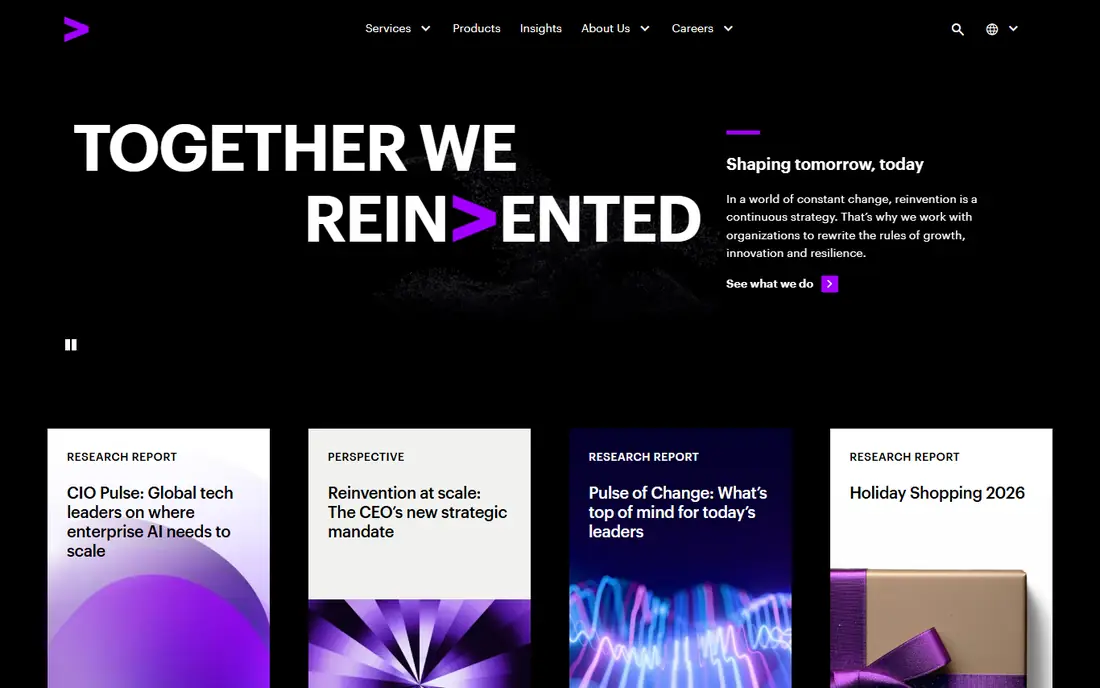
Accenture is the default shortlist pick for a large transformation, because it covers strategy, cloud, AI, data, and managed services in one firm. Its scale helps when a programme spans many countries, systems, and business units, and its AI practice is among the largest in the market. For a Fortune 500 buyer, that breadth reduces the need to coordinate many vendors.
The same scale is a drawback for a smaller project. Process and governance can slow a simple build, and pricing reflects enterprise rates. Accenture suits buyers with a large, multi-year scope, not firms looking for a quick fix to one system.
- Very broad service range
- Large global delivery
- Strong AI and cloud practices
- Premium pricing
- Process-heavy for small projects
- Team quality varies by practice
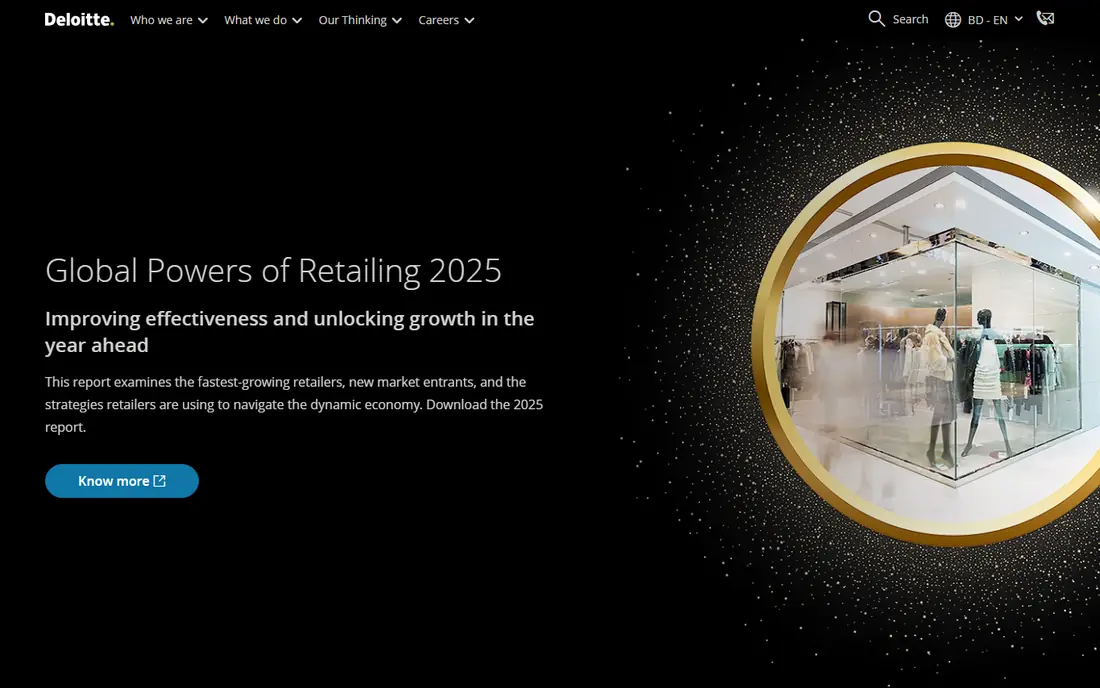
Deloitte suits buyers where the technology question is also a controls question. Its consulting work sits alongside risk, tax, and audit practices, which helps in regulated industries and in projects where data governance matters from day one. Cloud, ERP, cybersecurity, and AI services round out the offer.
That governance strength can slow fast pilots, since reviews and approvals are built into the way the firm works. Buyers who want rapid experimentation may prefer a smaller firm for the pilot, then bring Deloitte in for the governed rollout. For regulated work, the trade-off usually favours Deloitte.
- Strong risk, audit, and regulatory link
- Cloud, ERP, and cyber services
- Global reach
- Premium pricing
- Governance focus can slow pilots
- Large-firm process
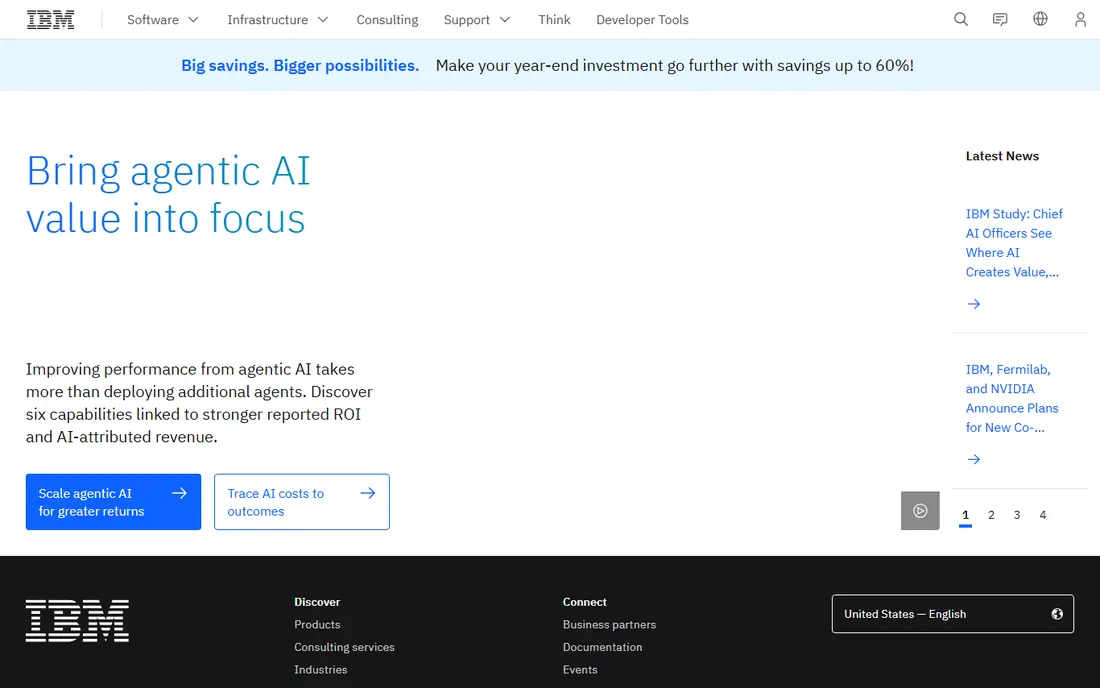
IBM Consulting is a strong pick for firms with older systems that cannot simply be replaced. Its hybrid cloud work, built around its own platforms and Red Hat, helps connect mainframes and legacy apps to modern cloud services. Security and governance are also central to its approach, which suits regulated estates.
Buyers should check platform fit early. A firm that wants a fully non-IBM stack may find the approach less flexible, and timelines can be longer than at a boutique firm. IBM Consulting suits buyers who value stability and governed delivery over speed alone.
- Strong hybrid cloud and mainframe experience
- Governance and security focus
- Global delivery
- Can favour IBM platforms
- Timelines can be long
- Premium pricing
Tata Consultancy Services, known as TCS, offers delivery scale that few firms can match, with strengths in banking, retail, and large application programmes. Its cloud and AI platforms help standardise work across many teams, which matters when a programme involves dozens of systems. For a buyer with a large, long-running estate, that capacity is a real asset.
Scale brings process, and a small project can feel lost inside a large account structure. TCS suits buyers with sustained, large-scale needs, while a mid-market firm with one clear project may get more attention from a smaller vendor.
- Very large delivery capacity
- Strong banking and retail experience
- AI and cloud platforms
- Large-firm process
- Account team quality varies
- Less suited to tiny projects
Infosys combines digital engineering with cloud and AI services, which suits firms modernising customer-facing systems and back-office platforms together. Its cloud platform and AI offering give teams a shared base for new builds, rather than a fresh start on each project. That structure helps when several products must move at once.
As with other large integrators, the experience depends on the practice and the account team. Buyers should ask for the team that will do the work, a comparable case study, and a clear delivery plan, rather than judging Infosys on its overall brand.
- Strong digital engineering
- Cloud and AI platforms
- Global delivery
- Large-firm process
- Pricing varies by scope
- Team fit varies by practice
Capgemini suits buyers who need cloud, data, and engineering work together, especially where product engineering or industrial systems are involved. Its SAP, data, and cloud practices are well established, and its European footprint helps firms with operations on both sides of the Atlantic. That mix makes it a strong all-round integrator.
The firm is still large, so process and pricing reflect enterprise delivery. Smaller buyers should check whether the proposed team is sized for their project, or whether a smaller firm would give the work more direct attention.
- Strong engineering and cloud work
- SAP and data strengths
- European and global reach
- Large-firm process
- Premium pricing
- Fit varies by industry team
Cognizant is a strong pick for healthcare and financial services firms, where domain knowledge matters as much as technical skill. Its work in those sectors covers core systems, data, cloud, and AI, with delivery at enterprise scale. Buyers in those industries benefit from teams that already understand the regulatory and operational context.
Outside those sectors, the advantage is smaller, and buyers should judge Cognizant on a case study from their own industry. Large-firm process also applies, so a small, fast project may suit a more focused vendor better.
- Strong healthcare and financial services focus
- Enterprise AI and cloud work
- Large delivery
- Industry concentration can limit fit elsewhere
- Large-firm process
- Pricing is custom
Slalom suits mid-market and large firms that want cloud modernisation, analytics, and change management without the weight of the largest integrators. Its partnerships with major cloud providers, plus a focus on adoption and training, help teams actually use the new systems. That practical focus is a real strength for firms whose last project stalled after delivery.
Deep AI engineering is thinner than at the largest firms, so a buyer with a complex model or platform build should check that area closely. Slalom is best for cloud, data platform, and application work where adoption matters as much as code.
- Strong cloud and data partnerships
- Change management focus
- More approachable than global giants
- Smaller global scale
- Thinner deep AI engineering
- Pricing is custom
HCLTech suits buyers who need engineering and infrastructure strength, from product engineering to cloud and IT operations. Its scale and delivery model help firms with large, ongoing estates, and its engineering focus suits hardware-adjacent and complex system work. For a buyer with a long modernisation road, that depth matters.
Strategy-led buyers may find the firm more delivery-focused than advisory-led, so pair it with clear internal product leadership when the project needs strong business direction. As with all large firms, check the specific team and a comparable case study before signing.
- Strong engineering services
- Cloud and infrastructure depth
- Large global delivery
- Large-firm process
- Account fit varies
- Less brand-led strategy work
How we picked these
We compared firms still offering IT consulting in October 2026, with verifiable service ranges in cloud, data, AI, or systems integration. We used firm service pages, industry rankings, and client-fit notes, and we favoured firms with a clear specialty rather than a generic technology claim. We left out strategy-only firms with no implementation arm and small vendors with no verifiable case work.
How to choose an IT consulting firm
Start with the outcome, not the technology. Name the business result, the systems involved, and the deadline, then ask each firm to describe the delivery plan, the team, and the risks in plain terms. A firm that talks only about platforms, without naming your workflow, has not yet understood the job.
Next, check the team and the evidence. Ask who will lead the work, what they built recently in your industry, and whether you can speak to a reference client. Ask how knowledge will transfer to your staff, so you are not dependent on the vendor for every change after go-live.
Finally, agree on commercial terms in writing. Define scope, milestones, acceptance tests, data and security rules, and exit terms for code, data, and documentation. A fixed scope with clear milestones suits a defined build, while a time-and-materials model suits exploratory work, but both need a cap and a review point. Keep the first phase small enough to test the firm before committing to a multi-year programme.
Frequently asked questions
What is the best IT consulting company?
Accenture suits large-scale transformation, Deloitte suits regulated work where controls matter, and IBM Consulting suits hybrid cloud and legacy estates. Slalom suits mid-market cloud and data work, while TCS, Infosys, Capgemini, Cognizant, and HCLTech suit large delivery programmes.
How much does IT consulting cost?
Most firms price by project, retainer, or staff model after a scoping exercise, so there is no standard rate card. Costs vary by scope, team seniority, location, and duration, and a scoped proposal with milestones is the reliable way to compare firms.
What services do IT consulting companies offer?
Common services include IT strategy, cloud migration, data and AI work, cybersecurity, ERP implementation, custom software, and managed services. Firms differ in depth by area, so check the specific practice for your need rather than the firm-wide service list.
Should a small business hire a large IT consulting firm?
A small business can hire a large firm for a defined project, but a smaller or mid-market firm often gives more direct attention and a better price for a single system. Choose based on the team, the scope, and the support model, not on firm size alone.
How do I check an IT consulting firm before hiring?
Ask for a comparable case study, the names and experience of the delivery team, a reference client, and a written plan with milestones and acceptance tests. Check security practices, knowledge transfer, and exit terms for code and data before signing.
Sources
See where you really rank - block by block
ProMapRanker scans Google Maps across a grid of your service area. Simple monthly plans from $19, white-label on every plan.
Start freeKeep reading
 zscaler alternatives
Best Zscaler Alternatives in 2026
Looking for zscaler alternatives? We compare 9 SASE and zero trust platforms on architecture, data protection, pricing, and fit for your network and team.
Read → zapier alternatives free
Best Zapier Alternatives Free in 2026
Nine automation tools for zapier alternatives free in 2026, all with genuinely free tiers, plus free plan limits, starting prices and upgrade paths explained.
Read → which platform is best for online reputation
Which Platform Is Best for Online Reputation in 2026
Wondering which platform is best for online reputation? We compare 8 review, listing, and response tools for small and multi-location businesses and agencies.
Read →