 ProMapRanker
Best IP Management Software in 2026

Key takeaways
- Anaqua, Clarivate and Questel suit large portfolios, while AppColl and Alt Legal suit smaller firms and trademark-heavy teams.
- Docketing is the core job: missed deadlines can cost rights, so test deadline handling before judging any other feature.
- Most enterprise IP tools are quote-based, so budget from a written quote, not from a headline price.
- This article gives general information only, not legal advice, and key filings should be reviewed by a qualified lawyer.
Quick comparison
| Pick | Great for | Pricing starts at | Free tier | |
|---|---|---|---|---|
 Anaqua | Large corporate and firm portfolios | See website | No | Visit |
 Clarivate IPfolio | Corporate teams that want cloud IP management | See website | No | Visit |
 AppColl | Small firms that need full docketing | $100 per month | Free trial | Visit |
 Alt Legal | Trademark docketing for firms | $60 per month | Free trial | Visit |
 IPzen | Firms and legal departments that want volume-based pricing | See website | Free trial | Visit |
 Dennemeyer | Teams that want software plus IP services | See website | No | Visit |
 Questel Equinox | Teams that want software plus global services | See website | No | Visit |
 Triangle IP | Lean teams that want patent pipeline views | See website | Free trial | Visit |
The best ip management software
We compared vendor feature pages, pricing notes and public descriptions for these eight tools, focusing on docketing, portfolio records, deadlines, documents and reporting. The list mixes enterprise platforms with tools for smaller firms, because a solo practice and a global IP department do not need the same system. This article gives general information only, not legal advice. Patent and trademark decisions can affect legal rights, so have a qualified lawyer review filings, deadlines and strategy before acting on them.
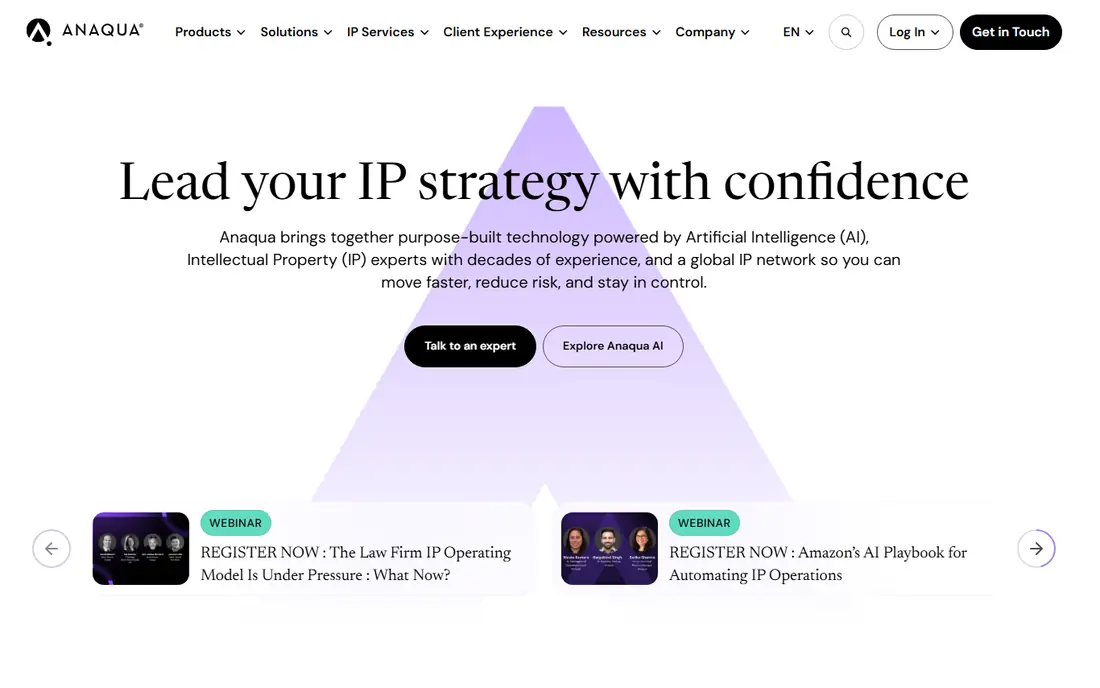
Anaqua is the enterprise end of this list, built for corporate IP departments and firms with large, multi-country portfolios. Its AQX platform covers portfolio records, docketing, invention disclosure, renewals, spend tracking and reporting in one system, with related products for firm docketing. That breadth helps a team that manages thousands of matters and needs consistent workflows across offices and outside counsel.
The cost of that breadth is effort and price opacity. Pricing is quote-based and depends on portfolio size, users and modules, and implementation needs planning, data migration and training. A small firm will likely find Anaqua more system than it needs. A large team that needs control, analytics and audit trails across a global portfolio will get more value from it.
- Broad patent and trademark coverage
- Docketing, analytics and spend tracking
- Strong workflow options
- Quote-based pricing
- Implementation is a project, not a quick setup
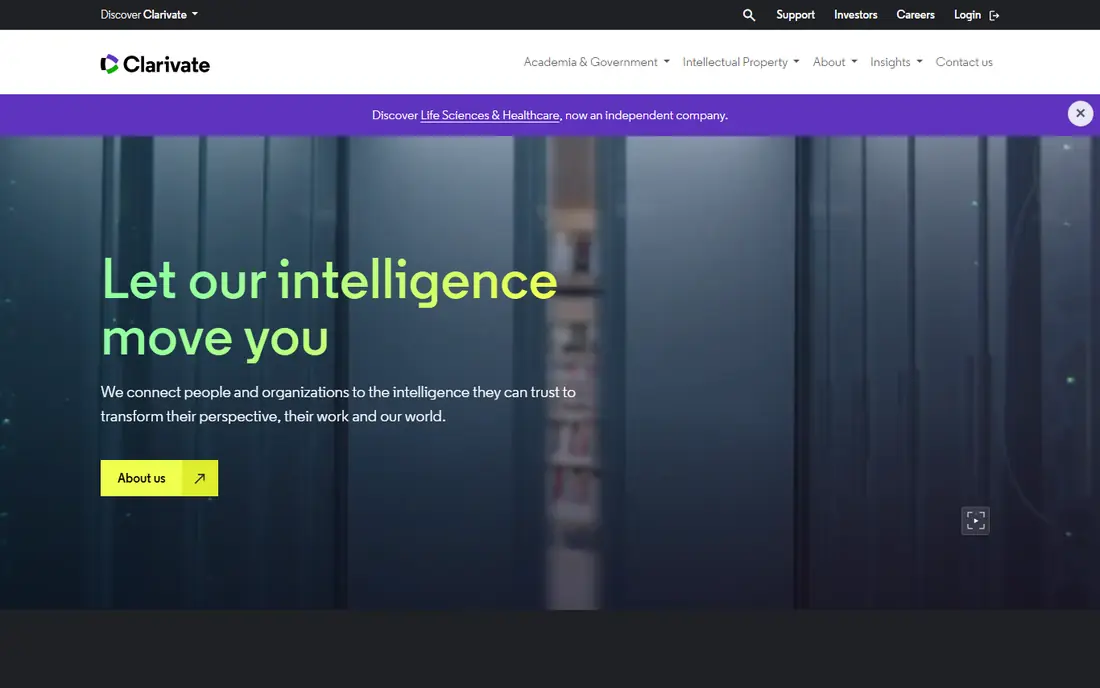
Clarivate IPfolio is aimed at in-house teams that want a cloud system for patents, trademarks and related IP records without running their own servers. It covers docketing, deadline tracking, documents, costs and portfolio reporting, and it sits alongside other Clarivate IP products for firms, including FoundationIP. For a corporate team, the appeal is a current cloud product with a clear corporate workflow, rather than a firm system adapted for in-house use.
The limit is the same as for most enterprise tools: pricing is quote-based, so the buyer needs a scoped quote for users, matters and modules. Teams that need unusually deep workflow customisation should test those cases in a demo before signing. IPfolio fits a midsize to large corporate team that wants a modern, cloud-based system of record.
- Cloud-based portfolio management
- Docketing and reporting for corporate teams
- Ties to Clarivate IP data
- Pricing is quote-based
- Very deep customisation may need a larger platform
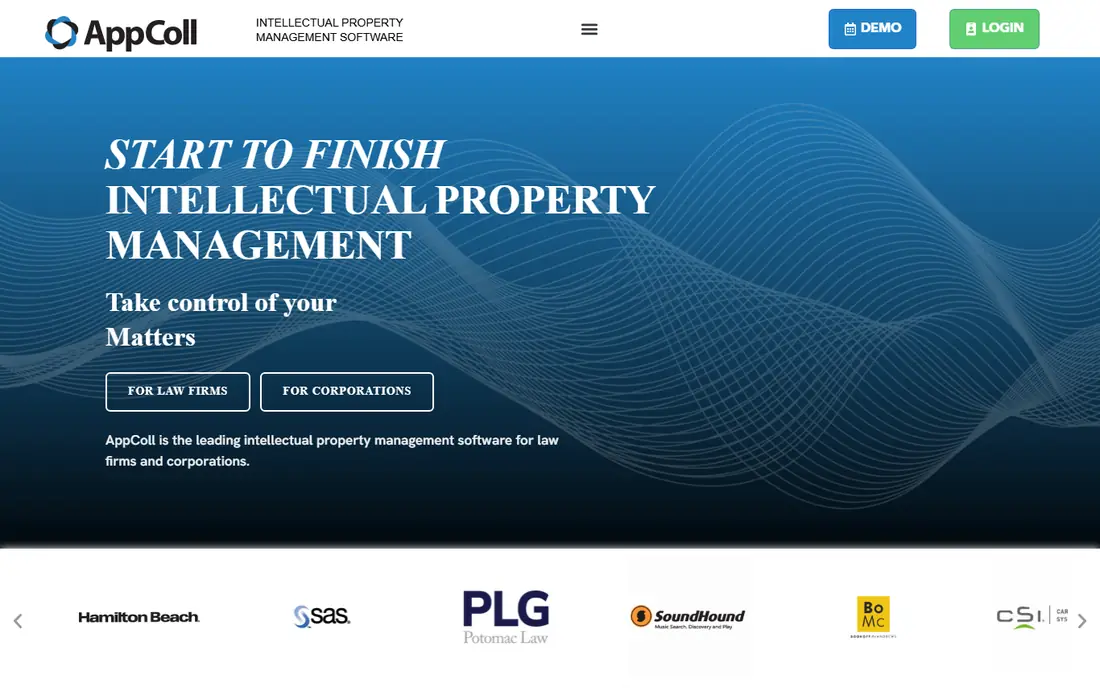
AppColl is the value pick for smaller patent and trademark practices. Its Prosecution Manager covers docketing, deadlines, documents, billing, reporting and client management, with a starting price listed at $100 per month and a free trial for higher-tier features. That published starting point makes it easier for a solo practitioner or small firm to budget than with quote-only enterprise tools.
The trade-off is tiering. Some automation, portal and AI features sit on the Plus tier, so a firm should check which tier covers the workflows it actually uses. The system also has depth that takes time to set up well. AppColl still stands out for a small firm that wants full docketing without enterprise pricing or a long sales cycle.
- Patent and trademark docketing in one cloud tool
- Billing and document tools
- Clear starting price
- Advanced features sit on higher tiers
- Interface depth takes time to learn
Alt Legal does one job with focus: automated trademark docketing for firms and legal departments. It pulls trademark data, tracks deadlines and organises matters around trademark practice, with plans priced by the number of docketed matters and a starting point listed at $60 per month for up to 50 matters. That matter-based pricing can suit a firm whose trademark volume is steady and measurable.
The limit is scope by design. Alt Legal is not a general patent docketing system, so a mixed patent and trademark practice will need a second tool or a broader platform such as AppColl or Anaqua. For a trademark-heavy team, the focus is a strength: less setup for patent workflows it will never use, and a workflow built around trademark deadlines.
- Automated trademark docketing
- Pricing based on docketed matters
- Focused trademark workflow
- Trademark-only focus
- Patent-heavy firms will need another tool
IPzen is a cloud IP tool for firms, legal departments and midsize companies, covering trademarks, domain names, documents, calendars and invoicing. Its published pricing model is based on record volume and users, starting from 2,500 euros per year excluding tax, with a demo and free trial offered. That model can suit a team that wants a predictable link between portfolio size and price.
The catch for US buyers is fit. IPzen has a stronger European footprint, so a US firm should test USPTO workflows, US deadline rules and support hours in a demo. Patent-heavy teams should also check docketing depth against AppColl or Anaqua. IPzen fits a trademark and domain-heavy team that values clear volume pricing and European data hosting.
- Trademark, domain and document tracking
- Published volume-based pricing model
- European hosting options
- Smaller US presence than larger vendors
- Patent docketing depth needs checking in a demo
Dennemeyer pairs its DIAMS IP management software with a large IP services business covering renewals, filings and related work. For a team that wants one relationship for both the system and the services around it, that pairing can reduce handoffs. The software covers portfolio management, docketing, deadlines and reporting, while the services side handles the operational work that software alone does not do.
The drawback is comparison clarity. When software and services are bundled, it is harder to separate the software price from the service price, so buyers should ask for an itemised quote. Smaller teams may also find the enterprise focus more than they need. Dennemeyer fits a team that wants software plus managed IP services from one vendor.
- DIAMS software plus managed renewals and services
- Long IP services history
- Global coverage
- Pricing is quote-based
- Bundled services can make software-only comparison harder
Questel Equinox is an IP management suite for companies and firms, covering portfolio records, docketing, deadlines and related IP work, alongside Questel services for renewals, translations and filings. The combination suits a team that wants the system and the service network together, especially for multi-country portfolios where local filing and renewal work matters.
As with Dennemeyer, the bundle is both the strength and the complication. A buyer who only wants software should ask what the software-only price covers and what is a service charge. Implementation and migration also need planning for a large portfolio. Equinox fits a team that values a global services network as much as the software itself.
- Equinox IP suite plus a broad services ecosystem
- Patent and trademark coverage
- Global reach
- Pricing is quote-based
- Bundling can complicate a software-only decision
Triangle IP is aimed at lean teams that want a clear view of a patent pipeline without adopting a full enterprise suite. It focuses on patent portfolio tracking, pipeline stages and related analytics, with a free trial for evaluation. That focus can suit a startup, a small R and D team or a firm that wants to track invention and filing progress in one readable place.
The limit is scope. Triangle IP does not aim to replace a full docketing and services platform for a large mixed portfolio, so trademark-heavy or very large teams should check coverage in a trial. For a lean patent team, the lighter setup and pipeline view are the reasons to shortlist it alongside AppColl.
- Patent-focused pipeline and portfolio views
- Lighter setup than enterprise suites
- Free trial offered
- Narrower scope than full enterprise platforms
- Trademark depth needs checking
How we picked these
We compared official vendor pages, published pricing notes and public product descriptions, and we kept only tools that exist and work today and truly fit IP management, meaning portfolio records, docketing or trademark and patent workflow. We did not claim hands-on testing, and we did not invent prices, ratings or rankings. Where pricing is quote-based, we wrote See website. Because IP tools differ sharply by portfolio size and by patent versus trademark focus, the list mixes enterprise platforms with smaller, focused tools.
What to check before you buy
Start with the portfolio, not the feature list. Count matters by type, country and status, and list the deadline rules that matter most, because docketing accuracy is the core job. Ask how the tool imports existing data, how it handles patent office correspondence, and what happens when a deadline rule changes. A demo with the buyer sample matters is more useful than a generic walkthrough.
Next, check roles, audit trails and data control. IP records are sensitive, so confirm who can edit deadlines, who can see cost and strategy notes, and how changes are logged. Ask about hosting, backups, exports and what happens to data at contract end. Finally, get a written quote that separates software, implementation, training and any managed services, and confirm whether the lawyer review step sits inside the workflow or outside it.
Frequently asked questions
What does IP management software actually do?
It keeps patent and trademark records in one place, tracks deadlines and renewals, stores documents, manages costs and produces portfolio reports. Some tools also handle invention disclosure, billing and client portals. The core value is fewer missed deadlines and a single record for each matter, rather than spreadsheets and separate calendars.
Do I still need a lawyer if I use IP software?
Yes for key decisions. Software organises deadlines and records, but it does not give legal advice for a specific filing, dispute or strategy choice. Have a qualified lawyer review filings, deadline decisions and any action that could affect rights, and keep that review step in the workflow.
How is IP software priced?
Most enterprise tools are quote-based, with price set by users, matter volume, countries and modules. Smaller tools publish starting prices, such as AppColl from $100 per month and Alt Legal from $60 per month for up to 50 matters. Always ask for a written quote that lists implementation and services separately.
Is patent software different from trademark software?
Often, yes. Patent tools focus on prosecution, office actions and patent deadlines, while trademark tools focus on trademark filings, oppositions and renewals. Some platforms cover both, and some, such as Alt Legal, focus on trademarks only. Match the tool to the mix of matters the team actually manages.
Can we migrate from spreadsheets to IP software?
Yes, but migration needs care. Clean the matter list first, confirm deadline dates against patent office records, and test the import with a sample before moving the full portfolio. Keep the old records until the new system has been checked, and confirm that deadline calculations match the old method for a set of test matters.
Sources
See where you really rank - block by block
ProMapRanker scans Google Maps across a grid of your service area. Simple monthly plans from $19, white-label on every plan.
Start freeKeep reading
 what’s the best risk software for enterprises
What Is the Best Risk Software for Enterprises in 2026
We compared what’s the best risk software for enterprises on risk registers, controls, third-party risk, and reporting, with pricing notes for large teams.
Read → what's the best pam software for enterprises
What is the Best PAM Software for Enterprises in 2026
Find what's the best pam software for enterprises, with vaulting, session recording, just in time access and pricing compared for large enterprise IT teams.
Read → what’s the best grc software
What Is the Best GRC Software in 2026
We compared what’s the best grc software on risk, compliance, audit and vendor risk, so teams can pick a platform that fits their frameworks and budget.
Read →