 ProMapRanker
Best Investment Companies With High Returns in 2026


Broad low-cost investing · Pricing starts at: See website
Key takeaways
- No investment company can promise high returns, and any search for higher returns must start with a clear view of risk, time horizon, and loss tolerance.
- Low costs, broad diversification, and a long holding period often matter more than chasing a single hot fund or stock.
- Brokerages and investment platforms differ in fees, fund choice, research tools, retirement accounts, and support, even when stock commissions look the same.
- Higher-return strategies, such as concentrated stock portfolios, borrowed-money products, or volatile assets, can lose money quickly and are not suitable for every investor.
Quick comparison
| Pick | Great for | Pricing starts at | Free tier | |
|---|---|---|---|---|
| Fidelity Investments | Broad low-cost investing | See website | No | Visit |
 Vanguard | Long-term index investing | See website | No | Visit |
 Charles Schwab | Active traders and retirement savers | See website | No | Visit |
 Robinhood | Mobile-first beginners | See website | No | Visit |
 Webull | Active mobile traders | See website | No | Visit |
 Interactive Brokers | Advanced and global traders | See website | No | Visit |
 E*TRADE from Morgan Stanley | Education and research | See website | No | Visit |
 SoFi Invest | Simple all-in-one investing | See website | No | Visit |
 Betterment | Hands-off diversified portfolios | See website | No | Visit |
The best investment companies with high returns
We compared investment companies and platforms that give ordinary investors access to stocks, funds, and retirement accounts, with attention to costs, fund choice, tools, and risk controls. This guide does not rank companies by return, because returns depend on the investments chosen, market conditions, and timing, not on the brokerage alone. A company that offers low costs and broad choices can support a higher-return strategy, but it cannot guarantee one.
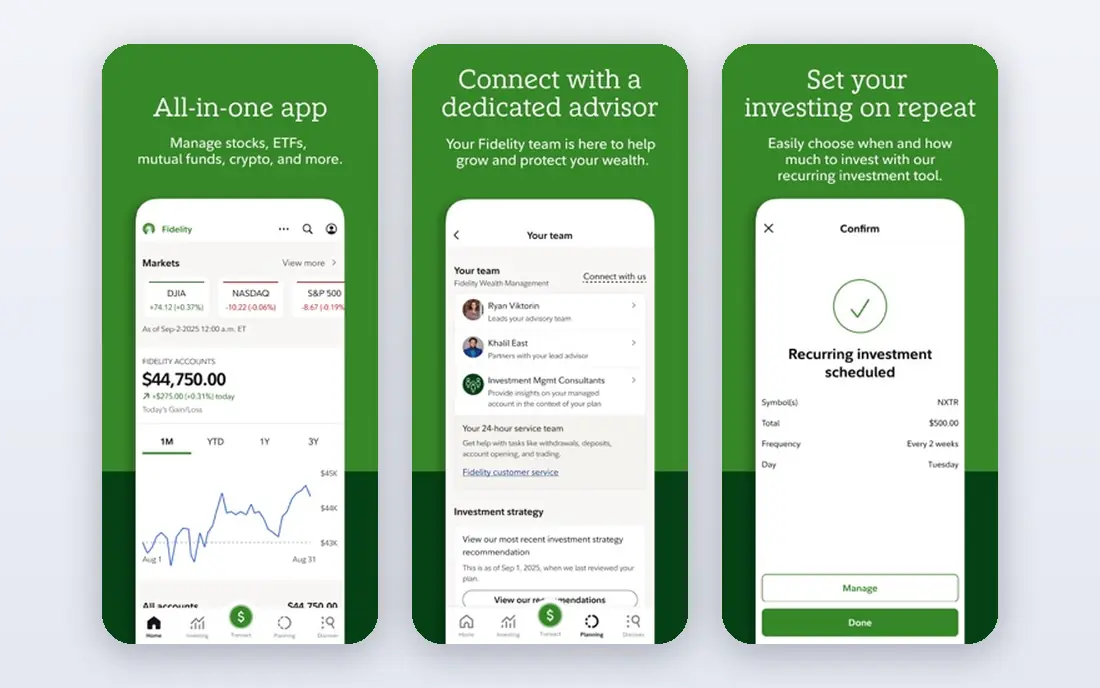
Fidelity is a strong default for investors who want low costs and a wide choice without being pushed toward a single strategy. Its stock and ETF trades are described as zero commission, it offers zero-expense index funds for broad market exposure, and it supports retirement accounts, health savings accounts, and education accounts alongside taxable brokerage accounts. That breadth helps an investor build a diversified portfolio, keep costs low, and stay invested through market swings, which are the factors most within an investor control.
The risk warning still applies in full. Low costs do not remove market risk, and a portfolio concentrated in a few stocks or sectors can fall sharply even on a low-cost platform. Fidelity research tools can help investors compare funds and understand risk, but tools alone do not turn a risky bet into a safe one. For most readers, Fidelity is best used for a diversified, long-term plan, with any higher-risk positions sized so a loss would not derail core goals.
- Zero-commission stock and ETF trades as described by the company
- Zero-expense index funds
- Broad retirement and research tools
- Platform depth can feel large for beginners
- Some advanced features need learning time
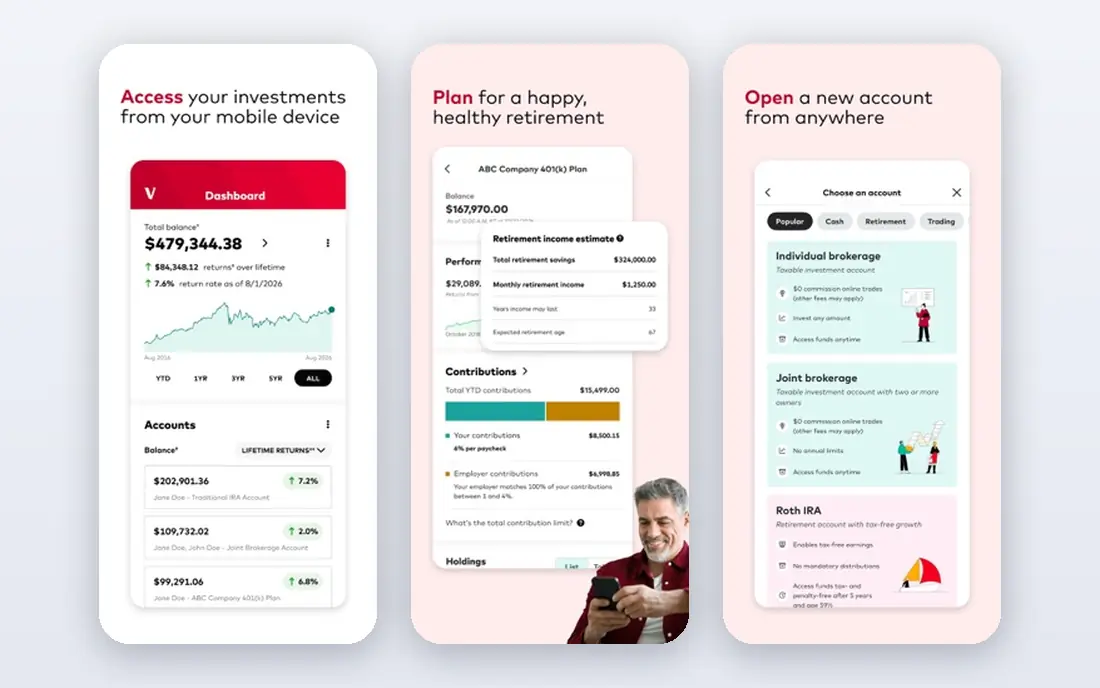
Vanguard is often chosen by investors who want to keep costs low and hold a diversified portfolio for many years. Its index funds and ETFs cover broad United States and international markets, bonds, and balanced portfolios, and its average fund costs are low by industry standards. That low-cost, diversified approach is one reason many long-term investors use Vanguard as a core holding, even when they hold other accounts elsewhere for trading or banking.
Vanguard is less suited to investors who want frequent trading tools, complex order types, or a highly customised active trading platform. Its strength is patience, not speed, and a higher-return goal still depends on asset allocation and market outcomes, not on the Vanguard name. Investors who want higher potential returns through more stock exposure must also accept larger swings in value, and Vanguard own educational material stresses diversification and time horizon for that reason.
- Pioneer of low-cost index funds
- Broad ETF and mutual fund range
- Retirement-focused tools
- Trading and app experience can feel simpler than rivals
- Advisory services have minimums in some cases
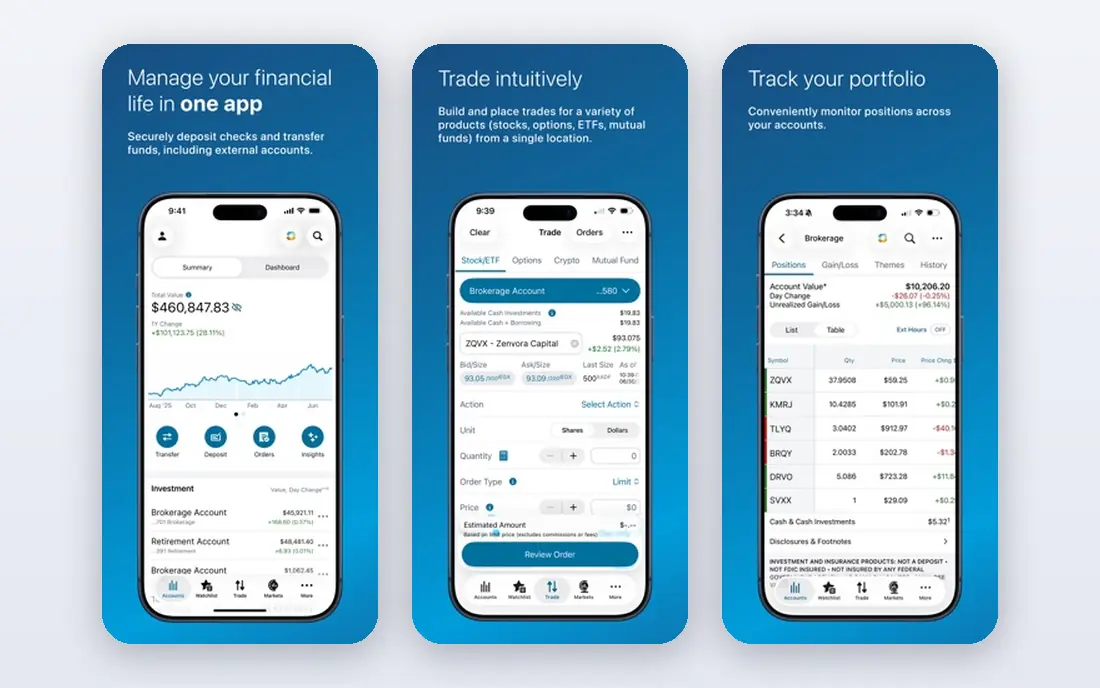
Charles Schwab combines a full brokerage with banking, retirement accounts, and a professional trading platform in thinkorswim. That combination suits investors who want to start with a diversified portfolio and later add more active trading, research, or retirement planning without switching firms. Schwab also offers managed portfolio options for investors who prefer a set allocation, along with extensive education material on risk, asset allocation, and retirement income.
The catch for return-seeking investors is that access to trading tools does not improve odds on its own. Active trading can raise costs, taxes, and behavioural mistakes, even when commissions are zero. Schwab cash held in a default sweep may also earn less than a money market fund unless the investor moves it, so cash management deserves attention. Used for a clear plan, with trading kept separate from core long-term holdings where possible, Schwab is a strong and flexible choice.
- Zero-commission stock and ETF trades as described by the company
- Thinkorswim platform
- Branch and phone support
- Cash sweep yields can be lower unless money is moved
- Platform choice can confuse beginners
Robinhood is best known for a clean mobile app that makes buying a first stock, ETF, or fractional share feel simple. That simplicity has brought many new investors into the market, and its IRA and Gold subscription options add features such as retirement matches and higher cash yields under their own terms. For a beginner who wants to start with small amounts and learn by holding diversified funds, Robinhood lowers the practical barriers to entry.
The risk is behavioural. An app that makes trading easy can also make frequent trading tempting, and frequent trading in volatile stocks is one of the fastest ways to lose money while chasing high returns. Robinhood research and education tools are improving, but they are thinner than those at Fidelity or Schwab. Investors using Robinhood for higher-return goals should set a written plan, limit single-stock bets, and treat any volatile holding as money that could fall sharply.
- Simple mobile app
- Zero-commission stock and ETF trades as described by the company
- Fractional shares and IRA options
- Research depth is thinner than large brokerages
- Easy trading can encourage overtrading
Webull targets active traders who want charts, technical tools, and market data on a mobile-first platform. Its stock and ETF trades are described as zero commission, and it offers fractional shares, options, futures, and crypto-related products under separate terms and risk disclosures. For an investor who already understands risk and wants a focused trading workspace, Webull provides more depth than a basic beginner app without the full complexity of an institutional platform.
That active focus is also the warning. Tools for short-term trading do not make short-term trading safer, and borrowed-money or volatile products can produce large losses. Webull is a weaker fit for a retiree or a long-term saver who wants a simple diversified fund portfolio and human advice, because its product set and support model are built around self-directed trading. It belongs on this list for active, risk-aware investors, not as a general promise of higher returns.
- Active trading tools on mobile and desktop
- Zero-commission stock and ETF trades as described by the company
- Extended hours in some cases
- No mutual fund offering in the same way as large brokerages
- Active focus may not suit long-term savers
Interactive Brokers is the most capable platform on this list for advanced and global investors. It offers access to many international markets, currencies, and asset types, along with advanced order tools, research, and low margin rates for qualified accounts. An investor seeking higher returns through global diversification, or through strategies that need specific order types, will find breadth here that smaller apps do not offer.
Complexity is the trade-off, and margin is a serious risk. Borrowing to invest can magnify gains, but it can also magnify losses and trigger forced sales if values fall. Interactive Brokers is not a good first account for a beginner chasing returns, because its tools assume knowledge of risk, borrowing, and market structure. For experienced investors with a written risk plan, it is a powerful platform, and for everyone else, its presence here is a reminder that capability alone does not create returns.
- Very broad global market access
- Low margin rates as described by the company
- Advanced order and research tools
- Platform complexity is high
- Beginners can feel overwhelmed
E*TRADE from Morgan Stanley suits investors who want to learn while they invest. Its education library, webinars, paper trading, and research tools help beginners move from a first ETF purchase toward a more considered portfolio, without forcing them into active trading. It also offers retirement accounts and managed portfolios for investors who prefer a set allocation with professional management, for a fee.
As with every platform here, education does not remove risk. A well-researched stock can still fall, and a managed portfolio can still lose value in a market decline. E*TRADE is best used to build a diversified core first, then to explore higher-risk ideas in a small, separate allocation if the investor accepts the loss risk. Its blend of self-directed and managed options makes it a useful middle ground between a basic app and a full advisory firm.
- Zero-commission stock and ETF trades as described by the company
- Strong education library
- Managed portfolio options
- Brand and product lines can feel layered after the Morgan Stanley integration
- Advisory fees apply to managed options
SoFi Invest fits investors who want investing, banking, and borrowing in one app, with a simple interface and low friction. Its automated investing option builds a diversified portfolio based on risk tolerance, while its active investing option allows stock and ETF purchases, including fractional shares. That simplicity can help a new investor start early and invest regularly, which often matters more than picking a perfect fund.
The limit is depth. SoFi does not match Fidelity, Schwab, or Interactive Brokers for research, fund choice, or advanced trading, and its automated portfolios still carry market risk. Higher returns are not promised by automation, and a portfolio with more stocks will swing more than a conservative portfolio. SoFi is a good fit for a straightforward, regular investing habit, provided the investor understands that simplicity and safety are not the same thing.
- Simple investing alongside banking and lending
- Fractional shares
- Automated investing option
- Research and trading depth is thinner than large brokerages
- Product range is narrower
Betterment is a robo-advisor that builds and rebalances a diversified ETF portfolio based on goals and risk tolerance, with tax-loss harvesting offered in eligible taxable accounts. For investors who want higher long-term growth potential without managing individual holdings, Betterment automates diversification, rebalancing, and deposits, which removes many behavioural mistakes. Its goal tools help investors see how a retirement, house, or education goal relates to contribution rate and risk level.
The fee and the loss risk both deserve attention. Betterment charges an advisory fee on top of fund costs, so total cost is higher than a do-it-yourself index portfolio, even when the service saves time. Portfolios with higher stock allocations can also fall sharply, and tax-loss harvesting does not prevent losses. Betterment is best for hands-off investors who accept market risk, want diversification handled for them, and are willing to pay for that service.
- Automated diversified portfolios
- Tax-loss harvesting in eligible accounts
- Goal-based planning tools
- Advisory fee applies
- Less control for investors who want to pick individual stocks
How we picked these
We compared official brokerage and platform pages, fee schedules, fund and account ranges, research tools, and risk disclosures. We did not claim hands-on testing, and we did not rank companies by past returns, because past performance does not predict future results and returns depend on the investments chosen. We favoured companies with current United States accounts, clear fee information, and a product range that ordinary investors can actually use, from diversified funds to retirement accounts.
How to think about higher returns without taking blind risks
Start with the goal, the time horizon, and the loss you can accept without changing the plan. A goal that is ten or twenty years away can usually accept more stock market swings than a goal that is due next year, because there is time to recover from a decline, although recovery is never guaranteed. Write down the stock and bond mix you intend to hold, the amount you will contribute regularly, and the conditions under which you would change the plan. That written plan is more useful than any hot tip, because it gives you a rule to follow when markets move.
Next, separate core holdings from higher-risk ideas. A diversified core of broad stock and bond funds can carry most of the portfolio, while a smaller satellite allocation can hold individual stocks, sector funds, or volatile assets if you accept that the satellite could lose a large share of its value. Keep fees low, because fees are certain while extra returns are not, and check tax effects before trading frequently in a taxable account. Avoid borrowing to invest, concentrated bets, and products you cannot explain in plain terms, unless you have studied their risks and can afford the loss.
Finally, review the plan on a schedule, not on market news. Rebalancing once or twice a year, increasing contributions when income rises, and checking that cash is not sitting idle in a low-yield sweep can improve long-term outcomes without chasing returns. If you are unsure about risk, taxes, or retirement timing, speak with a qualified, independent adviser and verify their credentials before paying for advice. A good adviser will talk about risk and loss first, not about promised returns.
Frequently asked questions
Can an investment company guarantee high returns?
No. No legitimate investment company can guarantee high returns, and any promise of guaranteed high returns should be treated as a warning sign. Returns depend on market conditions, the investments chosen, fees, taxes, and timing. Companies provide access, tools, and sometimes advice, but they do not control market outcomes.
What actually drives higher long-term returns?
Higher long-term returns usually come from taking more market risk, most often through a higher share of stocks, holding for a long period, keeping costs low, and contributing regularly. Diversification spreads risk across many holdings, but it does not remove it. Short-term trading, borrowing to invest, and concentrated bets can raise potential returns, but they also raise the chance of large losses.
Are index funds a good route to higher returns?
Broad index funds can be a sensible core holding because they offer diversification at low cost, but they track the market rather than beating it. A broad market index can still fall sharply, and there is no promise that future market returns will match past returns. Index funds suit investors who want market exposure without picking individual stocks.
Should beginners use a robo-advisor or pick their own funds?
A robo-advisor can help beginners by building a diversified portfolio, rebalancing, and handling deposits automatically, for an advisory fee. Picking your own funds can be cheaper, but it requires research and discipline to stay diversified. Either route carries market risk, so the choice should reflect time, knowledge, and willingness to manage the portfolio.
Sources
See where you really rank - block by block
ProMapRanker scans Google Maps across a grid of your service area. Simple monthly plans from $19, white-label on every plan.
Start freeKeep reading
 zscaler alternatives
Best Zscaler Alternatives in 2026
Looking for zscaler alternatives? We compare 9 SASE and zero trust platforms on architecture, data protection, pricing, and fit for your network and team.
Read → zapier alternatives free
Best Zapier Alternatives Free in 2026
Nine automation tools for zapier alternatives free in 2026, all with genuinely free tiers, plus free plan limits, starting prices and upgrade paths explained.
Read → which platform is best for online reputation
Which Platform Is Best for Online Reputation in 2026
Wondering which platform is best for online reputation? We compare 8 review, listing, and response tools for small and multi-location businesses and agencies.
Read →