 ProMapRanker
Best Investment Apps for Beginners in 2026

Key takeaways
- Fidelity and Charles Schwab offer the strongest all-around starter package: $0 commissions on online US stock and ETF trades, broad research, and retirement accounts.
- Robinhood, SoFi Invest, and Webull suit beginners who want a simple mobile app, fractional shares, and recurring investments.
- Betterment and Acorns suit beginners who prefer a managed portfolio or automatic saving over picking individual stocks.
- This is not financial advice. Investing carries risk, and the value of investments can fall as well as rise.
Quick comparison
| Pick | Great for | Pricing starts at | Free tier | |
|---|---|---|---|---|
 Fidelity Investments | All-around starter investing | Free | Yes | Visit |
 Charles Schwab | Retirement savers and support | Free | Yes | Visit |
 Robinhood | Simple mobile trading | Free | Yes | Visit |
 Vanguard | Low-cost index investing | Free | Yes | Visit |
 SoFi Invest | Investing plus banking in one app | Free | Yes | Visit |
 Webull | Learning active trading | Free | Yes | Visit |
 Public | Multi-asset investing with research | Free | Yes | Visit |
 Betterment | Hands-off managed portfolios | $5 per month | No | Visit |
 Acorns | Automatic micro-investing | $3 per month | No | Visit |
The best investment apps for beginners
The best investment app for beginners is the one you will actually use steadily, with fees you understand and an account type that fits your goal. We compared official pricing pages, account features, and education resources for apps that are live in the United States in October 2026. Most apps here charge $0 commission on online US stock and ETF trades, but options, crypto, margin, and managed portfolios can carry separate costs. This article is for education only and is not financial advice. Investing carries risk, including possible loss of principal, so start with money you can afford to leave invested and consider speaking with a qualified adviser for personal decisions.
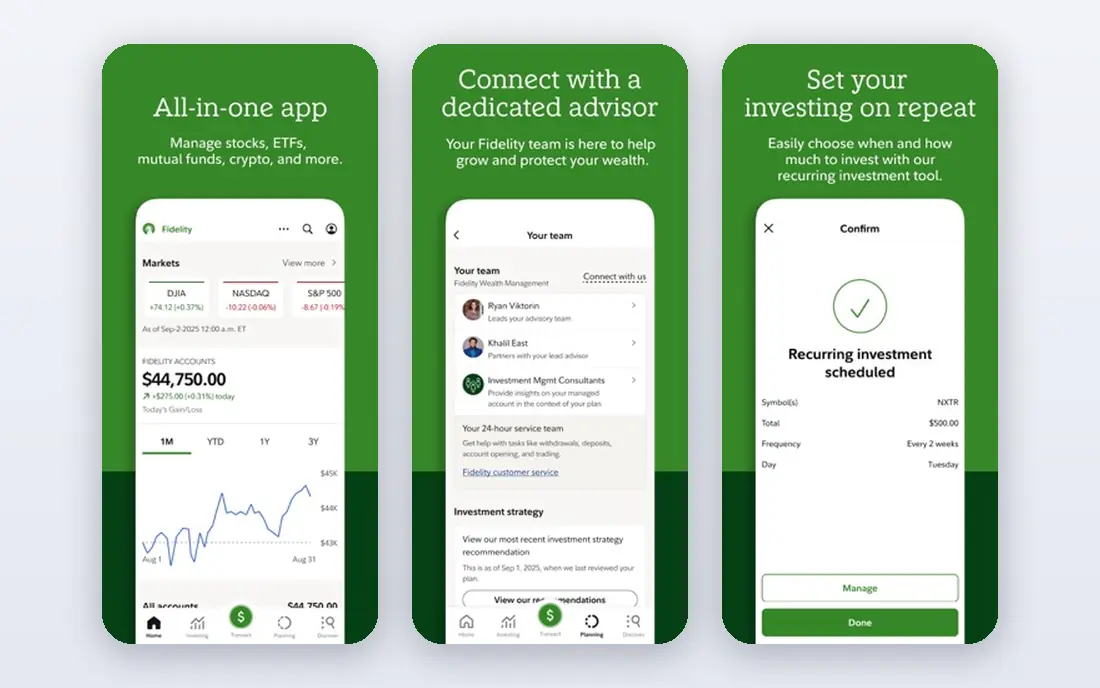
Fidelity is our pick for most beginners because it covers the basics well and grows with you. You can open a brokerage account or an IRA with no account minimum on core accounts, buy fractional shares from $1, and set up recurring investments. Research tools, screeners, and plain-language education help new investors learn why a broad ETF differs from a single stock, without pushing you toward frequent trading.
The catch is breadth. Fidelity offers so many account types and tools that the first week can feel busy. Start with one account, one broad ETF or a small set of holdings, and a recurring contribution you can sustain. If you later want managed help, Fidelity offers advice services for an added fee, but the self-directed account alone is enough for many beginners.
- $0 commissions on online US stock and ETF trades
- Fractional shares from $1
- Strong research and education, plus IRAs and other account types
- App and website can feel dense at first
- Managed advice costs extra
- Crypto access is limited compared with crypto-first apps
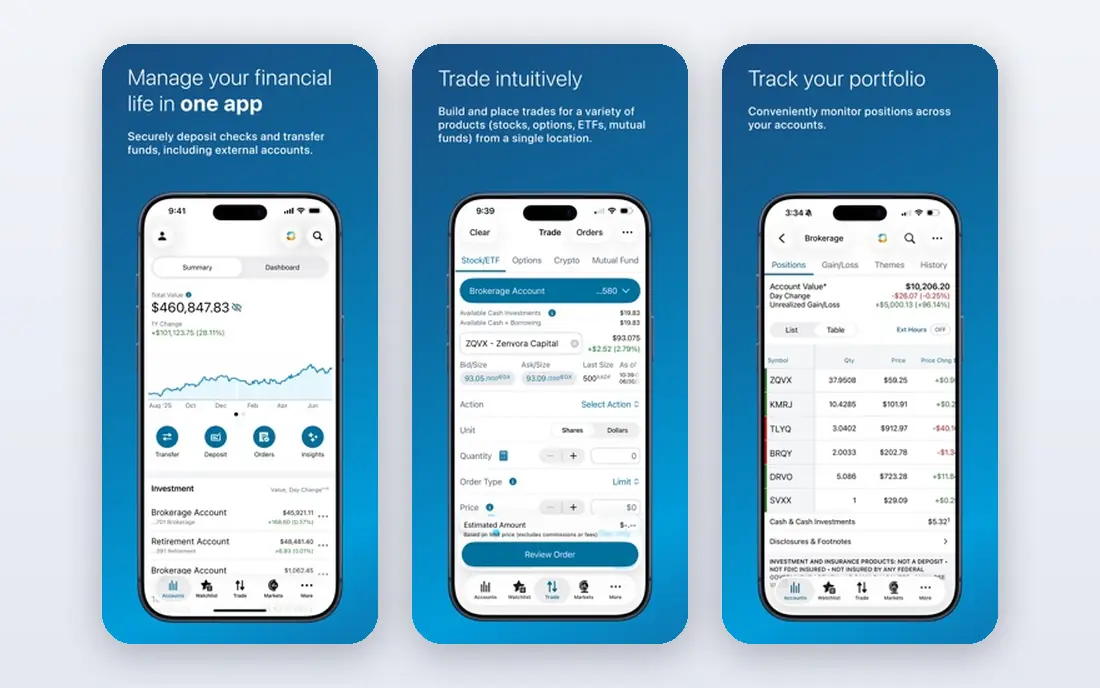
Schwab suits beginners who want a full-service broker at do-it-yourself prices. You can open a brokerage account or an IRA, trade US stocks and ETFs online with $0 commission, and use fractional shares for many stocks. Support options, including phone help, are a real plus when you hit your first confusing form or tax document. Education content covers retirement planning as well as basic trading.
The trade-off is simplicity. Schwab's range of platforms and account types is wide, so new users should start in the main app and ignore advanced tools until they need them. For retirement savers who want a broker they can stay with for decades, Schwab is a strong, low-drama choice.
- $0 commissions on online US stock and ETF trades
- No minimum to open a brokerage account
- Strong customer support and education
- Fractional share minimum is higher than some rivals
- Platform range can feel complex
- Managed portfolios cost extra
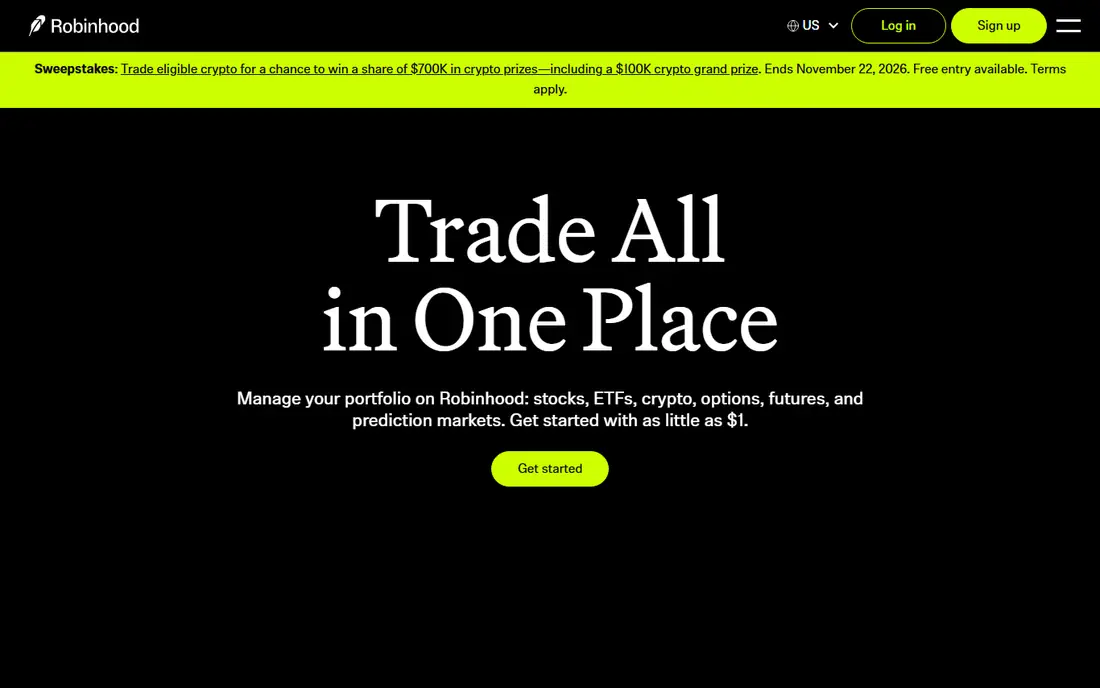
Robinhood is the easiest app here to learn in an afternoon. The interface is clean, fractional shares start at $1, and recurring investments help you build a habit without timing the market. IRA accounts, including a match offer that changes over time, make it more than a trading toy for beginners who want to save for retirement.
The honest weakness is depth. Research tools are thinner than those at Fidelity or Schwab, and the fast, simple design can tempt new investors to trade too often. Set a plan before you open the app: a recurring contribution, a broad holding, and a rule about how often you will check prices. Used that way, Robinhood is a fine starter app.
- $0 commissions on stock and ETF trades
- Fractional shares from $1
- Clean mobile design with recurring investments and IRA options
- Research and education are lighter than Fidelity or Schwab
- Interface can encourage frequent trading
- Some features sit behind Robinhood Gold at $5 per month
Vanguard suits beginners who want to keep costs low and hold broad index funds for years. The firm built its name on index investing, and its own ETFs and funds remain a natural fit for a simple retirement portfolio. Opening an IRA is straightforward, and the emphasis on long-term holding helps beginners avoid the churn that eats into returns.
The app is not the flashiest here, and active traders will miss advanced charting and fast order tools. That is a fair trade for many beginners. If your plan is to contribute regularly to a broad portfolio and check it rarely, Vanguard is hard to beat on cost and focus.
- $0 commissions on most online US stock and ETF trades
- Low-cost index funds and ETFs
- Simple IRA setup for long-term savers
- App feels more basic than rivals
- Fractional trading is limited to select ETFs
- Less suited to active stock picking
SoFi Invest fits beginners who want one app for several money jobs. You can run a self-directed account with fractional investing from $5, or choose an automated portfolio from $50, alongside SoFi banking and other products. That single login can make regular saving easier, especially for people who already bank with SoFi.
The catch is depth. Research and trading tools are lighter than those at Fidelity, Schwab, or Webull, so active learners may outgrow SoFi faster. For a beginner whose main goal is to start investing regularly without juggling several apps, SoFi is a practical, low-cost entry point.
- $0 commissions on stock and ETF trades
- Active investing from $5 and automated investing from $50
- Banking, loans, and investing in one place
- Research tools are lighter than specialist brokers
- Automated portfolios have account minimums
- Crypto offering varies over time
Webull is the pick for beginners who want to learn how markets move, with tools that many paid platforms charge for. Paper trading lets you practise with virtual money before risking real cash, and charts, screeners, and real-time quotes are generous for a free app. Fractional shares and recurring investments are also available, so you can still build a long-term position.
The warning matters here. Webull's strengths can pull beginners toward frequent trading, options, and margin, all of which can lose money fast. Use paper trading first, keep most of your money in broad holdings if you invest for the long term, and treat active trading as a small, separate learning budget. As a learning tool, Webull is excellent. As a first retirement account, Fidelity or Schwab may suit you better.
- $0 commissions on US stock, ETF, and many options trades
- Paper trading with real-time data
- Strong charts and market data for a free app
- Less suited to a simple retirement-only plan
- Options and margin carry real risk
- Education is geared toward active traders
Public suits beginners who want several asset types in one place without a cluttered trading terminal. You can buy stocks, ETFs, bonds, and Treasuries, set recurring investments, and read research summaries that explain holdings in plain terms. The design feels calmer than apps built for day trading, which helps new investors stick to a plan.
The catch is fee detail. While stock and ETF commissions are $0, premium subscriptions and some asset types carry separate costs, so read the fee page for the exact assets you plan to use. Turn off social noise if it tempts you to copy trades you do not understand. For a diversified starter portfolio with room to learn, Public is a solid choice.
- $0 commissions on stocks and ETFs
- Stocks, ETFs, bonds, Treasuries, and crypto in one app
- Recurring plans and research summaries
- Some plans, subscriptions, and asset types carry separate fees
- Fractional minimum is $5 for stocks
- Community features can distract from a plan
Betterment is for beginners who want investing handled for them. You answer questions about your goal and risk tolerance, Betterment builds a diversified portfolio, and it rebalances automatically as markets move. That hands-off structure removes the hardest beginner decision, which is what to buy and when to adjust it. Goal tools for retirement, a house deposit, or a general fund make the purpose of the money clear.
The cost is the trade-off. Betterment charges $5 per month on some plans, or 0.25 percent annually with a qualifying balance or deposits, depending on the plan you choose. You also give up picking individual stocks. If you want to learn by choosing holdings yourself, pick a self-directed broker instead. If you want a managed portfolio you can fund and largely leave alone, Betterment is a strong pick.
- Fully managed, diversified portfolios
- Automatic rebalancing
- Goal-based planning for retirement and other targets
- Management fee applies to invested balances
- No free plan for managed investing
- Less control over individual stock picks
Acorns suits beginners whose main problem is starting. Round-Ups round up card purchases to the nearest dollar and invest the spare change into a managed portfolio, and you can add recurring contributions on top. That automation turns saving into a background habit, which is often more valuable than picking the perfect ETF in your first month.
The fee needs attention. Plans start at $3 per month, so a tiny balance will take time to outgrow the fee. Add a recurring contribution, even a small one, so the account grows faster than the fee eats into it. Acorns will not teach you advanced trading, but as a first step toward regular investing, it works well for many people.
- Round-Ups invest spare change automatically
- Managed portfolios
- Simple start for people who struggle to save regularly
- Monthly fee can outweigh returns on very small balances
- Limited control over holdings
- Higher tiers cost more
How we picked these
We compared official pricing pages, account minimums, commission schedules, and education resources for brokers and apps live in the United States in October 2026. We favoured $0 stock and ETF commissions, fractional shares, IRA availability, and clear fee pages, and we mixed self-directed brokers with managed options. We did not claim hands-on testing, and we did not include apps we could not verify as active. Fees for options, crypto, margin, and managed advice vary, so check the fee schedule for the exact trades you plan to make.
How to choose your first app
Start with your goal, not with the app. A retirement saver needs an IRA and a broad, low-cost portfolio. A general saver may prefer a taxable brokerage account with recurring investments. A hands-off saver may prefer a managed portfolio. Write down the goal, the monthly amount you can sustain, and how often you plan to check the account, then match those answers to the list above.
Next, check costs beyond the headline commission. Look at options contract fees, account transfer fees, margin rates, and managed fees, even if you do not plan to use them yet. A $0 commission does not mean every service is free. Also check whether fractional shares, recurring investments, and dividend reinvestment are available, because those three features make steady beginner investing much easier.
Building a beginner habit
Set a recurring contribution for payday, even if it starts small, and reinvest dividends where the app allows it. Keep your holdings simple at first: one broad ETF or a managed portfolio is enough to learn how markets feel. Avoid checking prices daily, avoid borrowing on margin, and avoid putting money you need soon into stocks. If a single stock falls sharply, that is normal market behaviour, not proof that long-term investing has failed.
Accounts and tax basics
A Roth IRA and a traditional IRA have different tax rules, and contribution limits change over time, so check current IRS limits before you contribute. A taxable brokerage account is more flexible for money you may need before retirement, but gains can be taxable. Keep records of contributions and trades, and use the tax documents your broker provides at year end. This section is general education, not tax advice.
Frequently asked questions
What is the best investment app for beginners?
Fidelity is our pick for most beginners, thanks to $0 commissions, $1 fractional shares, strong research, and IRA options. Schwab is a close second for retirement savers, while Robinhood suits beginners who want the simplest mobile experience.
What is the best app for stock investing for a first-time investor?
Fidelity, Schwab, Robinhood, and Webull all offer $0 commissions on US stock trades, but they differ in research depth and design. Beginners who want guidance should favour Fidelity or Schwab. Beginners who want a simple app should favour Robinhood or SoFi Invest.
What is the best beginner investing app with no minimum?
Fidelity, Schwab, Robinhood, Vanguard, SoFi Invest, Webull, and Public all let you start with no account minimum on core accounts, though some features have their own minimums. Fractional shares mean you can start with a small amount rather than waiting to afford a full share.
Is investing with an app safe?
Brokerage accounts at US brokers are typically covered by SIPC protection up to set limits if the firm fails, but that protection does not cover market losses. Check that the broker is registered, use strong passwords and two-factor authentication, and never share login details. Market risk remains even with a well-run app.
How much money do I need to start investing?
You can start with a small amount on several apps here, thanks to fractional shares from $1 or $5 and recurring investments. A regular monthly contribution matters more than a large first deposit. Start with an amount you can sustain, then raise it as income allows.
Which app is best for earning money from trading?
No app guarantees earnings from trading, and frequent trading often underperforms steady, diversified investing for beginners. If your goal is long-term growth, favour broad ETFs, recurring contributions, and low fees over short-term trading. Treat active trading as a learning activity with money you can afford to lose.
Sources
- https://www.fidelity.com
- https://www.schwab.com
- https://robinhood.com
- https://investor.vanguard.com
- https://www.sofi.com
- https://www.webull.com
- https://public.com
- https://www.betterment.com
- https://www.acorns.com
- https://rankite.com/blog/best-software-for-investing
- https://www.selfemployed.com/6-popular-free-investment-apps-for-self-employed-beginners-in-2026/
See where you really rank - block by block
ProMapRanker scans Google Maps across a grid of your service area. Simple monthly plans from $19, white-label on every plan.
Start freeKeep reading
 youtube alternatives
Best YouTube Alternatives in 2026
Looking for youtube alternatives in 2026? We compare Vimeo, Dailymotion, Twitch, Rumble, and more on price, audience, monetization, control and privacy.
Read → what's the best ai tool for photo editing
What Is the Best AI Tool for Photo Editing in 2026
What is the best AI tool for photo editing? We compare ten tools for 2026, from Photoshop and Lightroom to Luminar, Topaz, Canva and mobile editors today.
Read → twitter alternatives
Best Twitter Alternatives in 2026
Compare the best twitter alternatives for 2026, from Bluesky, Threads, and Mastodon to Reddit, Tumblr, and Micro.blog, with free plans and audience notes.
Read →