 ProMapRanker
Inventory Tracking Software

Direct answer
If you need configurable open source tracking, Odoo Inventory is the first tool to look at here. Fishbowl is better for warehouse-heavy manufacturers, and Katana is better for makers who track production. Prices, free plans and limits for all 7 tools follow.
Key takeaways
- The list opens with Odoo Inventory, aimed at configurable open source tracking.
- inFlow Inventory has the lowest monthly starting price in this list: $129 per month.
- Katana comes with a trade-off: premium plans custom priced or from $299 a month.
- For B2B and wholesale tracking, inFlow Inventory is worth a look.
Quick comparison
| Pick | Great for | Pricing starts at | Free tier | |
|---|---|---|---|---|
 Odoo Inventory | Configurable open source tracking | Free | Yes | Visit |
 Fishbowl | Warehouse-heavy manufacturers | $229 a month | No | Visit |
 Katana | Makers who track production | Free | Yes | Visit |
 Cin7 | Multichannel tracking at scale | $349 per month | No | Visit |
 Sortly | Visual phone-based tracking | Free | Yes | Visit |
 Zoho Inventory | Small sellers on a budget | Free | Yes | Visit |
 inFlow Inventory | B2B and wholesale tracking | $129 a month | No | Visit |
Inventory Tracking Software compared in detail
ProMapRanker put together this guide to inventory tracking software for readers who want a clear shortlist without reading every vendor page. It compares 7 tools on starting price, free plans, who each one suits and where each one falls short.
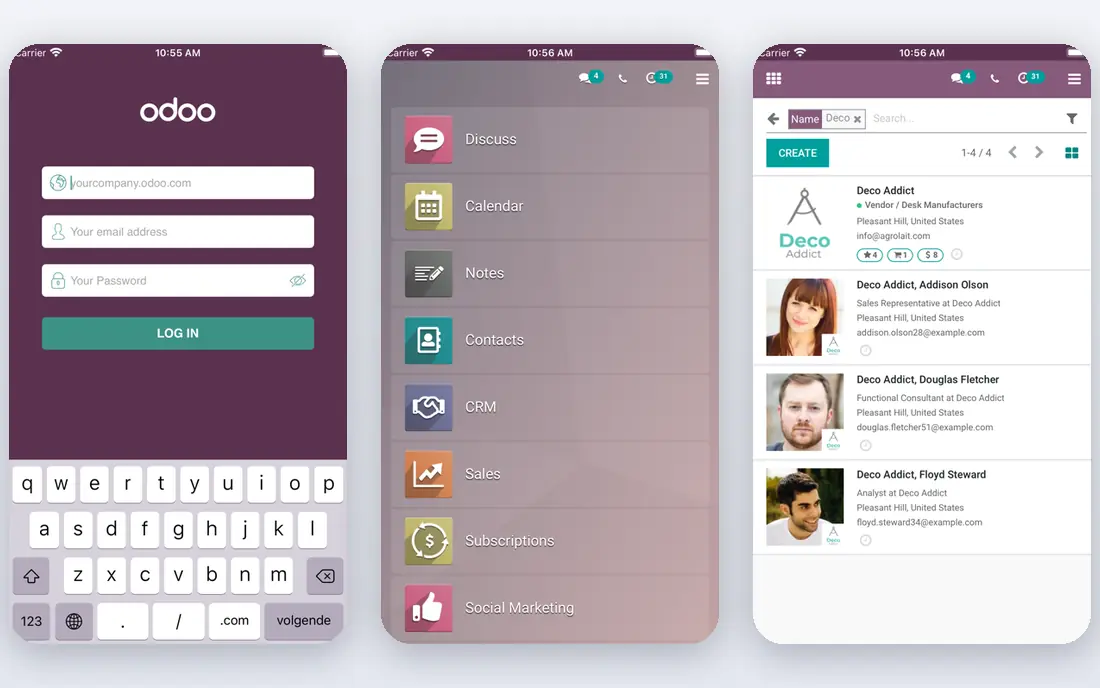
Odoo Inventory is designed for configurable open source tracking. Odoo Inventory is part of the Odoo ERP suite. Its free single-app plan spans unlimited users for inventory alone, with premium suite plans from about $38.90 per user a month or $24.90 per user a month in the first year billed yearly, based on the offer.
Drawbacks to consider: Configuration takes effort.
Odoo adaptability means setup takes longer than a focused tracker, and implementation for a multi-module business can cost more than the first year of licenses. The cost is configuration time. Odoo Inventory pricing: Free. Odoo Inventory includes a free tier.
- Forecasting and auto purchase orders
- Barcode support
- Implementation can exceed license cost

Fishbowl was built for warehouse-heavy manufacturers. Pricing begins at $229 a month billed yearly for Essentials with two users, with advanced manufacturing tiers from $595 a month. Worth adding: for pure resellers or small makers, Katana or Zoho handles the job at lower cost and with quicker setup.
What to check first: Advanced manufacturing from $595 a month.
For manufacturers already running QuickBooks who require warehouse depth, Fishbowl is the established choice. For everyday use, the drawbacks are price, setup effort. The lack of a free plan: evaluation runs through a demo instead of a self-serve trial. Fishbowl starts at: $229 per month. Fishbowl has no free tier.
- Deep QuickBooks integration
- Live assembly tracking
- Setup effort for manufacturers
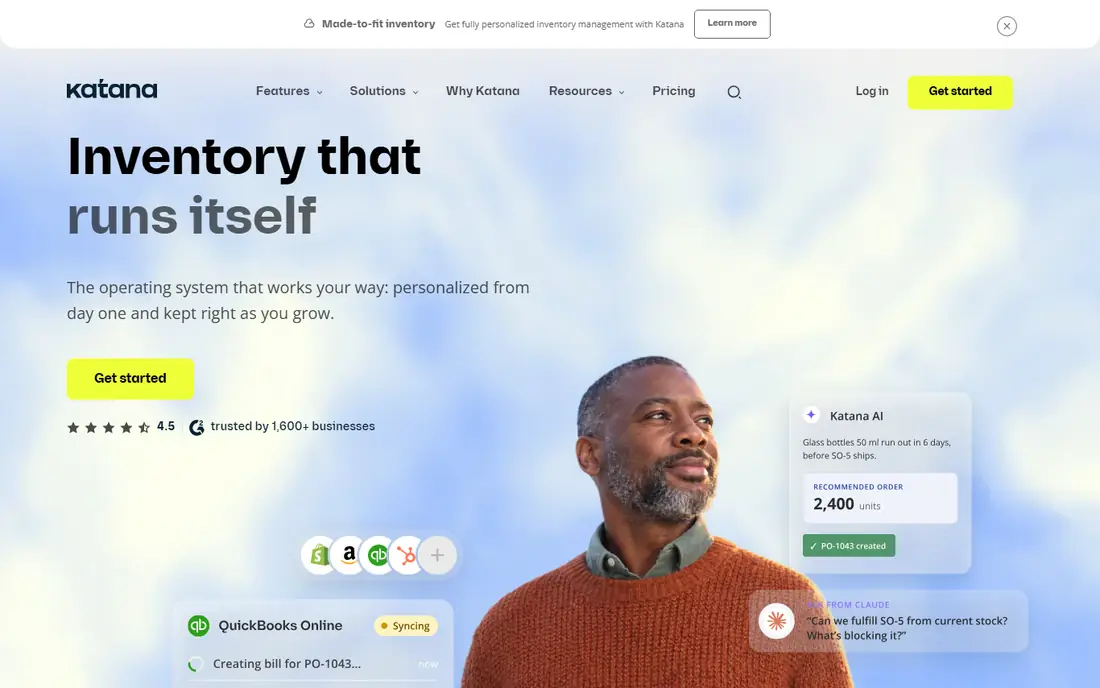
Katana makes the most sense for makers who track production. Katana is a cloud inventory tool for product firms that make or assemble their own goods, tracking raw materials, work in progress, and finished stock in one flow. More specifically, for makers, though, the production view is the point, since most inventory tools track finished stock well but deal with raw materials poorly.
Also, the free plan includes up to 30 SKUs, with premium plans custom priced or from $299 a month for bigger catalogs. Bills of materials present what can be built from current materials, production planning schedules work orders, and integrations with Shopify, WooCommerce, Amazon, QuickBooks, and Xero keep sales and accounting connected. Entry price for Katana: Free. Katana includes a free tier.
Where it falls short: premium plans custom priced or from $299 a month.
- Free plan for up to 30 SKUs
- Production planning
- Manufacturing focus layers on complexity for resellers
Cin7 makes the most sense for multichannel tracking at scale. Core pricing begins at $349 a month, with Omni plans custom priced for bigger operations and a 14-day free trial.
On cost, Cin7 starts like this: $349 per month. Cin7 has no free tier.
Where it falls short: Overkill for small single-channel sellers.
- Demand forecasting
- Live multichannel sync
- Implementation takes weeks
Sortly targets visual phone-based tracking. Sortly takes a visual approach to tracking: each item gets a photo, a QR or barcode label. A location, so staff can find and count stock from a phone instead of from a spreadsheet row.
In daily use, the Advanced plan also omits purchase orders and stock counts on some configurations, so check the feature table for your level before buying. In practice, the free plan includes restricted items, and premium plans start at $49 a month for Advanced billed monthly, with lower annual rates on some plans. Sortly cost at the entry level: Free. Free access exists with Sortly.
Points against: Advanced plan omits purchase orders on some levels.
- Photo-based visual catalog
- Mobile QR and barcode scanning
- Less order management depth
Zoho Inventory is a good fit for small sellers on a budget. Premium plans start at $29 a month billed yearly for Standard, raising limits to 500 orders, three users. Two locations, and pricing is per organization instead of per seat, which keeps costs low as small teams grow.
Also, the limits are the caps themselves. Multi-channel sync handles Amazon, eBay, Etsy, Shopify, and WooCommerce, with batch and serial tracking plus expiration monitoring for food and supplement sellers. More specifically, order volume, user count, and warehouse counts all rise with plan level, so an expanding seller moves to Professional at $79 a month sooner than the headline price recommends. For everyday use, advanced automation and fulfillment features also wait on higher levels, and there is no built-in point-of-sale system for physical keeps. The starting price for Zoho Inventory: Free. Zoho Inventory has a free plan.
Where it falls short: No built-in POS; Advanced features sit on higher levels.
- Per-organization pricing
- Multi-channel sync
- Location caps rise with plan
inFlow Inventory is built with B2B and wholesale tracking in mind. inFlow Inventory is aimed at B2B and wholesale companies that require structured tracking with customer-specific pricing and invoicing. Also, the B2B showroom portal lets trade customers browse only their own products and prices and place orders straight, whereas purchase orders, stock tracking, and multi-level bills of materials handle the operations side.
Best features of inFlow Inventory: B2B showroom portal.
Pricing opens at $129 a month, or $99 a month billed yearly, with a 14-day free trial and team seats bundled into each level. On top of that, there is no free plan, so small sellers must commit from the start, and multichannel retail sync is thinner than Cin7. Starting cost for inFlow Inventory: $129 per month. No free plan comes with inFlow Inventory. The main drawbacks: Higher entry price than Zoho.
- Unlimited orders on premium plans
- Per-customer pricing
- Less multichannel depth than Cin7
How these tools were picked
The comparison looks at four things: starting price, free access, how well the feature set matches inventory tracking software, and the main limit of each tool. Where a vendor does not publish a price, the entry says quote. Where a price depends on seats or billing term, the entry says so. Position on the page reflects fit for a typical buyer first, with price clarity and free access breaking ties. Treat it as a guide, not a ruling.
A buyer's checklist
- Prices are a starting point; inFlow Inventory shows $129 per month to start, so verify what your seat count would cost.
- Check what the free option really includes: Odoo Inventory, Katana, Sortly and Zoho Inventory offer a free plan, and usage caps differ.
- Before choosing Odoo Inventory, weigh its main limit: configuration takes effort.
- Look at which plan of Zoho Inventory unlocks the features you need; entry tiers are often cut down.
- Ask inFlow Inventory about contract length, onboarding fees and user minimums before you sign.
Frequently asked questions
Should a manufacturer pick Katana or Fishbowl?
Pick Katana if you are a small maker who wants production planning with a free starting level and straightforward setup. Pick Fishbowl if you run QuickBooks, need deep warehouse management, or need advanced manufacturing features at scale.
Can inventory software plug into my accounting?
Yes. Most tools here connect with QuickBooks, Xero, or Zoho Books: Zoho Inventory syncs natively with Zoho Books, Fishbowl with QuickBooks and Xero, and inFlow with QuickBooks Online.
Which options for inventory tracking software have a free plan?
Odoo Inventory, Katana, Sortly and Zoho Inventory offer a free plan in this list. Free plans usually cap users, projects or features, so check the limits on the vendor page.
Do these tools publish their prices?
Yes. Every tool from Odoo Inventory to inFlow Inventory shows a starting price, though seats, add-ons and billing terms still change the final cost.
What is the cheapest option for inventory tracking software in this list?
On published monthly entry prices, inFlow Inventory is the lowest here at $129 per month. Entry price is only part of the cost, because seats, add-ons and billing terms can change the total.
Is Odoo Inventory the right pick for everyone comparing inventory tracking software?
No single tool suits every team. Odoo Inventory comes first because it fits customizable open source tracking, while Fishbowl suits warehouse-heavy manufacturers and Katana suits makers who track production. Match the tool to your own size, budget and workflow before deciding.
Sources
See where you really rank - block by block
ProMapRanker scans Google Maps across a grid of your service area. Simple monthly plans from $19, white-label on every plan.
Start freeKeep reading
 zoho inventory alternatives
6 Alternatives to Zoho Inventory, Compared on Price and Fit
Zoho Inventory alternatives: 6 tools compared on price, free plans and fit. Katana leads the list for manufacturers. Fit and flaws are laid out for each entry.
Read → zoho crm alternatives
Best Zoho CRM Alternatives (2026)
Need Zoho CRM alternatives? We compare 7 tools on cost, free access and who each suits. Every pick gets a straight assessment. Built for quick decisions.
Read → zelle alternatives
Best Zelle Alternatives in 2026
Compare the best Zelle alternatives for sending money to friends, paying sellers and moving funds abroad, with honest notes on fees, speed and safety in 2026.
Read →