 ProMapRanker
Best Inventory Management Software for Manufacturing in 2026

Key takeaways
- Katana and MRPeasy lead for small and mid-size makers that need BOMs, work orders, and stock in one system.
- Fishbowl and Cin7 suit larger manufacturers and multi-channel operations, with stronger warehouse and accounting depth.
- NetSuite and Odoo suit manufacturers that want inventory inside a full ERP, rather than a standalone tool.
- Check whether manufacturing features are included or sold as an add-on, since that changes the real monthly cost.
- Start with BOM structure, batch and lot tracking, and accounting integration, not just stock counts.
Quick comparison
| Pick | Great for | Pricing starts at | Free tier | |
|---|---|---|---|---|
 Katana | Small and mid-size manufacturers | $299 per month | Yes | Visit |
 MRPeasy | Per-user manufacturing planning | $49 per month | No | Visit |
 Fishbowl | QuickBooks-led manufacturing | $229 per month | No | Visit |
 Cin7 | Multichannel manufacturing | $349 per month | No | Visit |
 NetSuite | Mid-size to large ERP manufacturing | See website | No | Visit |
 Odoo Inventory | Flexible ERP inventory | Free | Yes | Visit |
 inFlow Inventory | Wholesale and B2B stock | $99 per month | No | Visit |
 Zoho Inventory | Small multichannel makers | $29 per month | Yes | Visit |
 Global Shop Solutions | Job shop production control | See website | No | Visit |
The best manufacturing inventory management software
Manufacturing inventory software tracks raw materials, work in progress, and finished goods, and links stock to bills of materials, production orders, purchasing, and sales. The best manufacturing inventory software depends on size, production style, sales channels, and accounting system. We compared manufacturing-first tools and ERP platforms side by side.
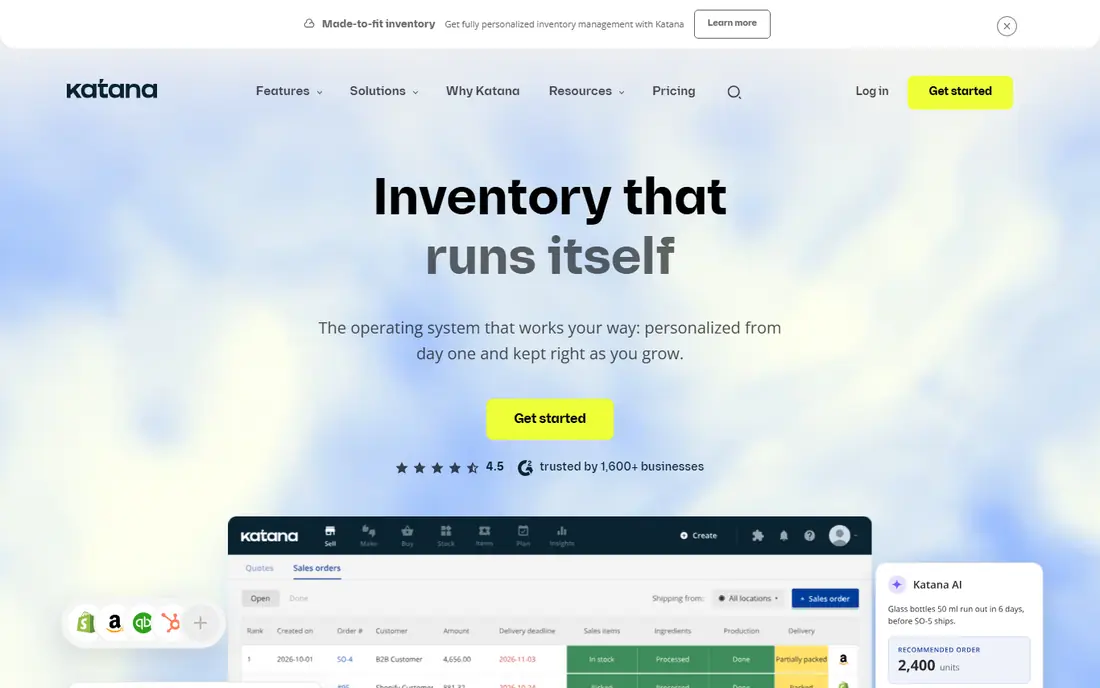
Katana fits small and mid-size manufacturers that make products from raw materials and sell online or wholesale. It links sales orders to production, deducts materials as work progresses, and tracks finished goods and raw stock in real time. For makers moving off spreadsheets, that production-aware stock view is the main benefit.
The catch is add-on pricing. Core starts from $299 per month, while manufacturing management and other modules add monthly cost, so the full manufacturing setup costs more than the headline plan. Check which modules your production needs before budgeting, and use the free plan to test BOM structure first.
- Clear BOM and production planning for makers
- Unlimited users on paid plans
- Integrations with Shopify, WooCommerce, QuickBooks, and Xero
- Manufacturing add-ons raise the real cost
- Single location on the entry paid plan
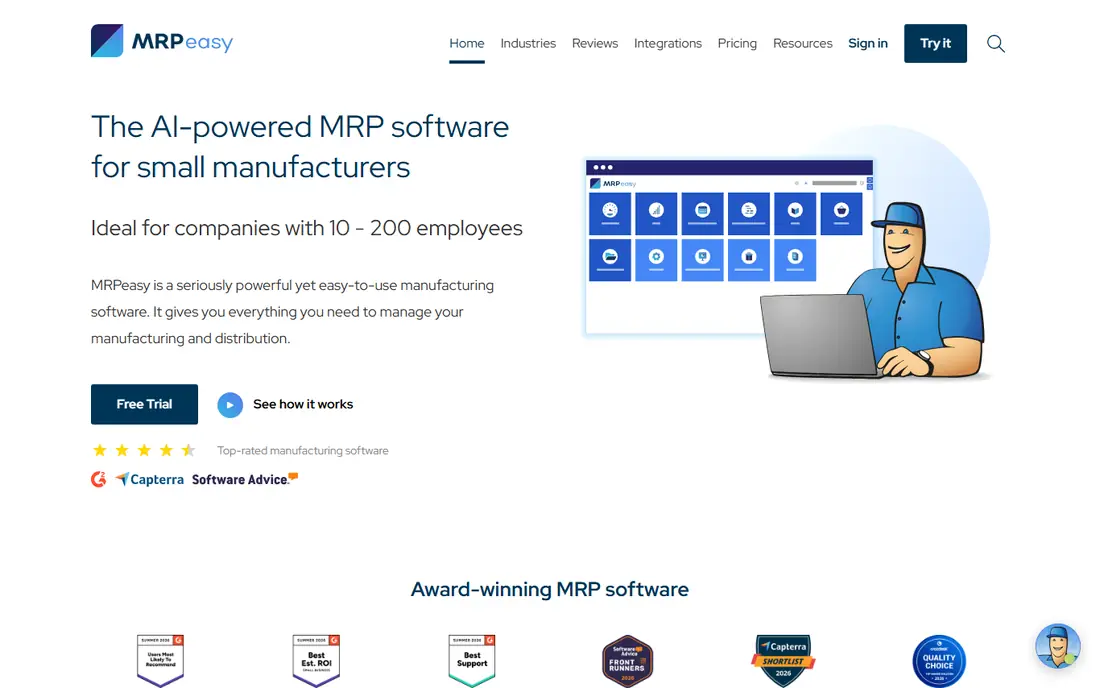
MRPeasy fits small manufacturers that want a complete MRP system without enterprise ERP complexity. It covers bills of materials, production planning, stock management, purchasing, sales, and team planning, with tiers that add capacity and features as teams grow. The Starter plan starts at $49 per user per month, which keeps entry cost low for a one- or two-person operation.
The trade-off is per-user scaling. A team of ten pays far more than a team of two, while Katana charges a flat plan price regardless of user count. Model both structures at your expected team size, and check whether bulk user pricing or tier changes alter the comparison.
- Per-user pricing suits small teams
- BOM, production planning, and purchasing in one system
- Clear tier structure
- No free plan, only a trial
- Per-user cost grows with team size
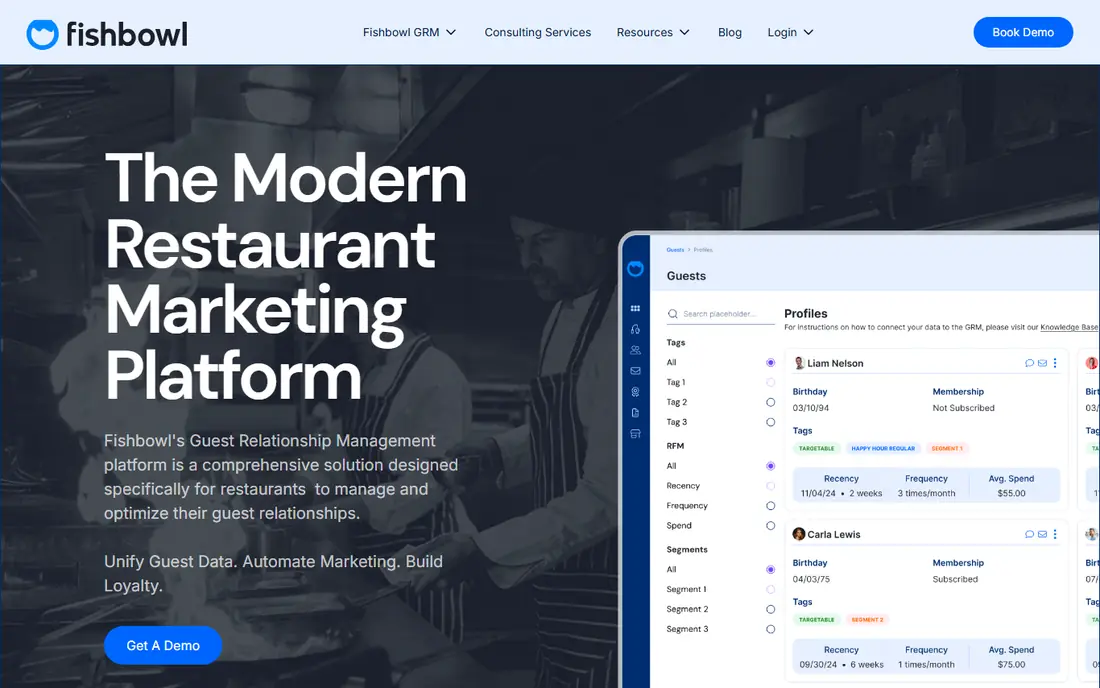
Fishbowl fits manufacturers and warehouses that run accounting in QuickBooks. Its inventory, order, part tracking, and shipping features keep stock and accounting in step, which reduces manual reconciliation. Multi-warehouse support on paid plans helps teams with more than one site.
The honest catch is tier scope. Entry Fishbowl Inventory starts from $229 per month, but advanced manufacturing features sit on a separate, higher-priced product. Confirm which product covers your BOM, work order, and shop floor needs before comparing Fishbowl with Katana or MRPeasy on price alone.
- Strong QuickBooks and Xero integration
- Multi-warehouse stock and assembly tracking
- On-premises and cloud options
- Full manufacturing features sit on higher tiers
- Implementation can take time
Cin7 fits product businesses that manufacture, wholesale, and sell across many channels. Its Core plan starts from $349 per month and covers inventory, orders, warehousing, and forecasting, with higher tiers adding EDI, advanced warehousing, and more integrations. For multichannel makers, that breadth reduces the need for separate tools per channel.
The trade-off is cost and setup. Cin7 is priced for growing product businesses, not for a two-person maker testing production software. If you sell through several channels and need warehouse depth, the price is easier to justify. If you sell through one channel, a maker-first tool may be cheaper.
- Strong multichannel and warehouse features
- Demand forecasting and EDI on higher tiers
- Many integrations
- Higher entry price than maker-first tools
- Setup needs time for multichannel rules
NetSuite fits mid-size to large manufacturers that need inventory inside a full ERP. It links stock, production, purchasing, finance, and sales in one system, with demand planning, replenishment, and multi-location visibility. For companies outgrowing standalone inventory tools, that single-system view reduces reconciliation and manual data entry.
The catch is implementation. NetSuite pricing is custom, and setup needs a partner or internal project team, with data migration and process design. Smaller makers should not start here. Larger manufacturers that need ERP depth will find the investment worthwhile, provided they budget for implementation as well as subscription.
- Full ERP with inventory, manufacturing, finance, and CRM
- Real-time visibility across sites
- Demand planning and replenishment
- Quote-based pricing
- Implementation is a project, not a quick signup
Odoo Inventory fits teams that want to start lean and grow into a full ERP. The standalone Inventory app is free, with real-time stock tracking, multi-warehouse management, barcode scanning, and batch and serial tracking. Adding Manufacturing, Sales, Purchasing, or Accounting turns it into a connected ERP without switching inventory systems.
The trade-off is plan structure. Once you add a second app, you move to a paid per-user plan, so cost depends on how many apps and users you need. Odoo also needs setup time to configure routes, rules, and warehouses well. For flexible teams with ERP ambitions, that trade-off is reasonable.
- Standalone Inventory app is free with unlimited users
- Double-entry stock tracking
- Wide app ecosystem for sales, manufacturing, and accounting
- Paid plans rise when you add apps
- Setup and learning curve need time
inFlow Inventory fits wholesale and B2B sellers that need stock, orders, and invoicing in one system. It supports B2B showrooms, purchase orders, barcoding, and multi-location stock, with plans starting from $99 per month billed annually. For distributors and makers that mainly assemble or resell, that B2B focus is a clear strength.
The limit is manufacturing depth. inFlow handles stock and orders well, but makers that need deep BOM, work order, and shop floor control should test those features carefully. For B2B-led operations with light production, inFlow is a strong value pick.
- Strong B2B ordering and invoicing
- Clear per-plan user and location limits
- QuickBooks and Xero integration
- Manufacturing depth is lighter than Katana or MRPeasy
- No free plan, only a trial
Zoho Inventory fits small makers and sellers that need affordable order and stock management. The free plan covers 50 orders per month with one user and one location, while paid plans start from $29 per organisation per month billed annually. Multichannel selling through Amazon, eBay, Etsy, and Shopify, plus Zoho Books integration, keeps billing and stock in step.
The catch is the cap ladder. Order, user, and location limits rise across tiers, so growing businesses move from $29 to $79 and beyond as volume grows. For a small maker with steady, modest volume, Zoho is excellent value. For a maker with complex BOM production, pair it with a manufacturing tool or choose Katana or MRPeasy instead.
- Free plan for small order volumes
- Per-organisation pricing stays predictable
- Native Zoho Books integration and multichannel selling
- Order and location caps rise steeply across tiers
- Manufacturing features are lighter than MRP tools
Global Shop Solutions fits job shops that need traceable inventory movements tied to production orders and BOM consumption. Stock updates post back from production with serial or lot context, which helps quality control and traceability for regulated or custom manufacturing. Its ERP scope covers scheduling, purchasing, and shop floor control alongside inventory.
The trade-off is buying path. Pricing is quoted, and implementation suits established shops with defined processes. Small makers testing software for the first time will find Katana or MRPeasy faster to start. Job shops with traceability and scheduling needs will value the production depth.
- Production-driven inventory tied to work orders
- Serial and lot traceability
- Strong job shop and BOM workflow
- Pricing is quote based
- Implementation suits established job shops more than startups
How we picked these
We compared official feature pages, pricing pages, documentation, and public reviews for manufacturing inventory tools active in October 2026. We kept only products that track raw materials, work in progress, and finished goods, or that add manufacturing modules to a stock system in a clear way. We included maker-first MRP tools, multichannel inventory platforms, and ERP systems, because manufacturers buy across all three types.
We did not claim hands-on testing that did not happen. Where a vendor does not publish a starting price, we wrote See website rather than guessing. Where manufacturing features are add-ons, we noted that in the product text, since headline price alone can mislead buyers.
What to check before you choose
Map your BOM before you buy
Write out a real product BOM, including subassemblies, scrap, and batch rules, then test it in a trial. A tool that handles simple BOMs well may struggle with multi-level BOMs, by-products, or lot traceability. That test reveals more than a feature list.
Check batch, lot, and serial tracking
Food, pharma, electronics, and custom manufacturing often need lot or serial traceability for recalls and quality checks. Confirm how the tool tracks lots from receipt through production to shipment, and how recall reporting works. A gap here can become a compliance problem later.
Confirm accounting integration
Stock movements affect cost of goods sold, valuation, and tax reporting, so accounting integration matters. Check whether QuickBooks, Xero, or Zoho Books sync is native, two-way, and real-time, or whether it relies on manual exports. Test a full order-to-invoice flow in the trial.
Model the full manufacturing price
Add base plan, manufacturing modules, extra locations, and implementation fees before comparing tools. A $299 plan plus a $199 manufacturing module costs more than a $349 all-in plan for the same team. Ask each vendor for a written quote for your exact configuration.
Frequently asked questions
What is the best inventory management software for manufacturing overall?
The best inventory management software for manufacturing overall for small and mid-size makers is Katana for production-aware stock, with MRPeasy as a strong per-user alternative. Larger manufacturers should shortlist Fishbowl, Cin7, and NetSuite, depending on accounting system, channel mix, and ERP needs.
What is the best manufacturing inventory management software for small businesses?
The best manufacturing inventory management software for small businesses is Katana for makers with online sales, MRPeasy for small teams that prefer per-user pricing, and Zoho Inventory for small sellers with light production needs. Start with BOM complexity and order volume, then pick the cheapest tool that handles both well.
Do I need MRP software or just inventory software?
You need MRP software if you make products from raw materials, since MRP tracks what goes into each product, calculates unit cost, and deducts materials when you produce a batch. Pure inventory software only tracks what you have in stock. If you buy finished goods and resell them, basic inventory software is enough.
How much does manufacturing inventory software cost?
Small maker tools start from free or $29 to $99 per month, mid-market manufacturing tools run $229 to $349 per month, and ERP manufacturing is quote based with implementation costs on top. Add manufacturing modules and extra locations to the headline price before comparing, since those extras change the real monthly cost.
Can manufacturing inventory software handle multiple warehouses?
Yes, most tools in this list support multiple warehouses or locations, though limits vary by plan. Katana limits locations on entry plans, Fishbowl and Cin7 support multi-warehouse stock on paid plans, and NetSuite and Odoo support multi-site inventory inside ERP. Check location limits in your plan before you sign.
Does manufacturing inventory software integrate with accounting?
Yes, most tools integrate with QuickBooks, Xero, or Zoho Books, with depth varying by vendor. Fishbowl is strongest for QuickBooks users, Zoho Inventory syncs natively with Zoho Books, and NetSuite and Odoo include accounting inside ERP. Test invoice, purchase order, and stock valuation flows in a trial to confirm the sync works for your process.
Sources
- https://katanamrp.com/pricing
- https://www.mrpeasy.com/pricing/
- https://www.fishbowl.com/pricing/
- https://www.cin7.com/pricing/
- https://www.netsuite.com/portal/products/erp.shtml
- https://www.odoo.com/pricing
- https://www.inflowinventory.com/pricing/
- https://www.zoho.com/inventory/pricing/
- https://www.globalshopsolutions.com
See where you really rank - block by block
ProMapRanker scans Google Maps across a grid of your service area. Simple monthly plans from $19, white-label on every plan.
Start freeKeep reading
 zscaler alternatives
Best Zscaler Alternatives in 2026
Looking for zscaler alternatives? We compare 9 SASE and zero trust platforms on architecture, data protection, pricing, and fit for your network and team.
Read → zapier alternatives free
Best Zapier Alternatives Free in 2026
Nine automation tools for zapier alternatives free in 2026, all with genuinely free tiers, plus free plan limits, starting prices and upgrade paths explained.
Read → which platform is best for online reputation
Which Platform Is Best for Online Reputation in 2026
Wondering which platform is best for online reputation? We compare 8 review, listing, and response tools for small and multi-location businesses and agencies.
Read →