 ProMapRanker
Best Inventory Management Software in 2026

Key takeaways
- Zoho Inventory is our pick for small businesses on a budget, with a free plan and paid plans from $29 per month billed annually.
- Cin7 Core suits multichannel sellers with real complexity, at $349 per month, while inFlow suits B2B and wholesale operations.
- Square for Retail suits physical stores that already use Square for payments, with free POS-native inventory.
- Sortly suits simple visual tracking, while Katana suits makers who need production planning and bills of materials.
- Start with channel count, SKU count and warehouse needs, since the cheapest tool that fits your workflow beats the most powerful tool you never use.
Quick comparison
| Pick | Great for | Pricing starts at | Free tier | |
|---|---|---|---|---|
 Zoho Inventory | Small business value | $29 per month | Yes | Visit |
 Cin7 | Multichannel sellers | $349 per month | Free trial | Visit |
 inFlow | B2B and wholesale | $99 per month | Free trial | Visit |
 Square for Retail | Physical stores | Free | Yes | Visit |
 Katana | Small manufacturers | $299 per month | Free trial | Visit |
 Fishbowl | Warehouse manufacturers | $229 per month | Free trial | Visit |
 Sortly | Simple visual tracking | Free | Yes | Visit |
 Odoo Inventory | Customizable ERP-style stock | Free | Yes | Visit |
The best inventory management software
We compared official pricing pages, channel integrations, warehouse features, manufacturing support and free plan limits. The list covers online sellers, retailers, wholesalers and makers, with prices verified in October 2026 guides.
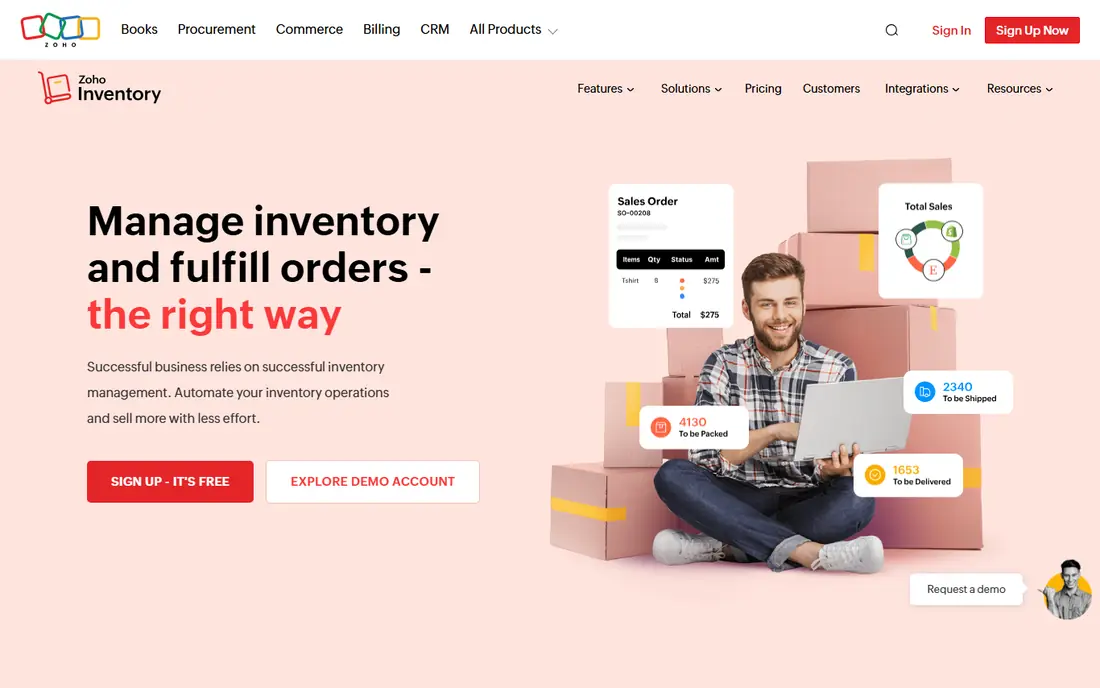
Zoho Inventory is the best starting point for most small businesses. Its free plan covers 50 orders per month, one user and one location, which is enough to test real order management before paying. Paid plans from $29 per month billed annually add multichannel selling, purchase orders, bundling and kitting, and integrations with Shopify, Amazon, eBay and Zoho Books.
The limits are volume and depth. Order caps, user limits and warehouse features grow only with higher tiers, so fast-growing sellers may need to upgrade sooner than expected. For a small online seller who wants affordable, real inventory control without an ERP price tag, Zoho Inventory is hard to beat.
- Free plan with 50 orders per month
- Paid from $29 per month billed annually
- Multichannel selling and purchase orders
- Order caps on lower tiers
- Advanced warehouse features need higher plans
- Support can be slower on free plan
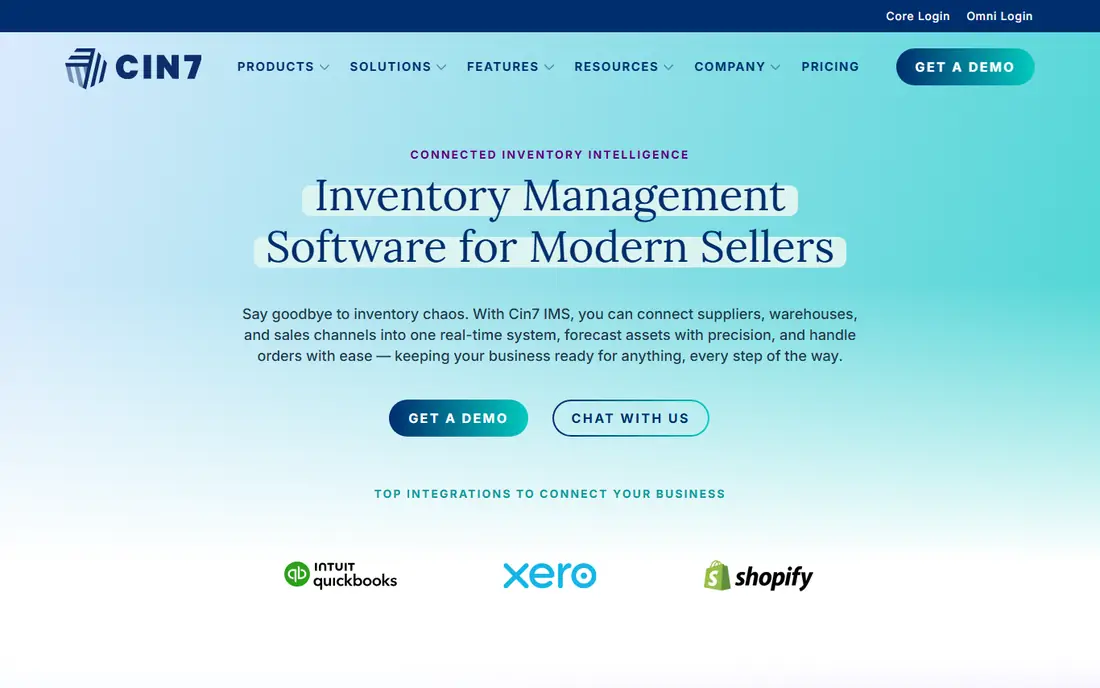
Cin7 Core suits product businesses that sell on several channels and need one inventory pool to stop overselling. It syncs stock across Shopify, Amazon, eBay, Walmart and other channels, handles purchasing, manufacturing and multi-location warehouses, and offers a B2B portal as an add-on. Its 14-day free trial lets teams test the core workflow before committing.
The cost and setup are the trade-offs. At $349 per month, Cin7 is a serious investment, and implementation, data migration and training can take weeks. Single-channel sellers and very small shops should start with Zoho or Square instead. For scaling multichannel brands, Cin7 is one of the most complete options.
- Core plan from $349 per month
- 700 plus integrations
- Purchasing, manufacturing and warehouse depth in one system
- Price jumps quickly with add-ons
- Implementation takes time
- Overkill for single-channel sellers
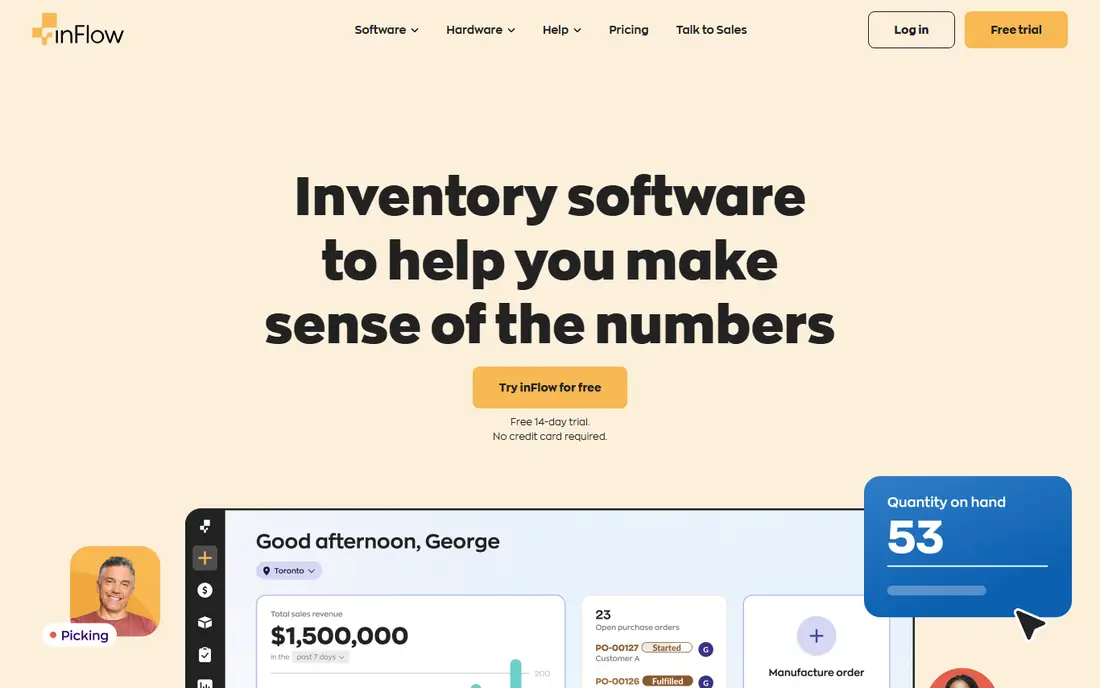
InFlow suits B2B and wholesale businesses that sell to other companies. Its private B2B portals let customers see their own products and prices, place orders and view invoices, while showroom and invoicing tools support sales teams. The $99 per month billed annually entry price, listed as $129 per month on monthly billing in some guides, reflects that B2B focus.
Pure ecommerce sellers may find Cin7 or Zoho better for marketplace sync, since inFlow's strength is wholesale workflow rather than channel breadth. For distributors, wholesalers and showroom-based sellers, inFlow offers a clear, focused system without ERP complexity.
- $99 per month billed annually
- B2B showrooms and invoicing
- Strong order and customer pricing features
- Entry price is higher than Zoho
- Multichannel depth is less than Cin7
- Some features need higher tiers
Square for Retail is the natural choice for brick-and-mortar stores already using Square for payments. Its free plan covers POS, online store and basic inventory, so a small shop can track stock, sell in store and online, and count inventory without a separate system. Paid Plus adds purchase orders, vendor management and advanced reporting.
Advanced warehouse features are limited compared with Cin7 or Fishbowl, and the system works best when payments, hardware and online store all run through Square. For a physical store with one or two locations, Square for Retail offers the simplest path from till to stock control.
- Free POS-native inventory
- Integrated payments and online store
- Easy stock counts and purchase orders on paid plans
- Limited advanced warehouse tools
- Paid Plus plan costs $49 per location per month in recent guides
- Best inside Square ecosystem
Katana is built for makers who produce or assemble products. Its bills of materials, production planning and shop-floor tracking help small manufacturers see raw materials, work in progress and finished stock in one view. Integrations with Shopify, WooCommerce and QuickBooks connect sales and accounting to production.
Pure resellers should skip Katana, since its manufacturing depth will sit unused while its $299 per month Core price exceeds simpler tools. For food, cosmetics, furniture and craft businesses that make their own products, Katana turns production from spreadsheets into a controlled workflow.
- Production planning and bills of materials
- Real-time inventory for makers
- Integrations with Shopify and QuickBooks
- $299 per month Core pricing
- Overkill for pure resellers
- Advanced features need higher tiers
Fishbowl suits warehouse-heavy manufacturers and distributors who need deeper stock control than a simple online tool offers. Its real-time assembly tracking, warehouse workflows, barcode scanning and EDI support help businesses that supply big-box retailers or manage large warehouses. Essentials pricing from $229 per month billed annually covers two users in recent guides.
Setup is more involved than Zoho or Square, and Fishbowl works best alongside QuickBooks for accounting, which suits QuickBooks users but adds a dependency for others. For manufacturers with warehouse complexity, Fishbowl offers depth that lighter tools cannot match.
- $229 per month Essentials billed annually
- Real-time assembly tracking
- Warehouse management and EDI features on higher tiers
- Implementation can be complex
- Demo rather than free trial in some cases
- QuickBooks integration is central to its design
Sortly is the simplest tool on this list, and that simplicity is its strength. Teams can photograph items, scan QR codes or barcodes, set reorder alerts and see what is where, without learning a full ERP. It suits equipment tracking, field teams, small warehouses and businesses that need to know location more than sales channel sync.
High-volume ecommerce sellers will hit its limits quickly, since Sortly lacks the deep order, purchasing and marketplace features of Zoho or Cin7. Paid plans from $49 per month add users and items, but the core remains visual tracking. For simple stock visibility, Sortly is the easiest tool to adopt.
- Free plan for basic tracking
- Photo-based catalog with QR and barcode scanning
- Mobile app for field teams
- Less suited to high-volume sales
- Paid plans from $49 per month
- No deep multichannel order management
Odoo Inventory suits businesses that want a customizable system they can grow into a full ERP. Its One App Free plan covers unlimited users on a single app, which is generous for a small team starting with inventory alone. Modules for sales, purchasing, manufacturing and accounting can be added as needs grow, and workflows can be tailored to unusual processes.
Flexibility brings complexity. Setting up Odoo well takes time, and implementation help can cost more than the license in year one, especially for larger teams. Businesses that want a ready-made inventory tool should pick Zoho or Cin7. Businesses that want a system they can shape over years should consider Odoo.
- One App Free covers unlimited users on a single app
- Highly customizable modules
- Full ERP suite available as you grow
- Steeper learning curve
- Standard pricing from $24.90 per user per month in first-year guides
- Implementation can exceed license cost
How we picked these
We compared official pricing pages, channel integrations, warehouse and manufacturing features, free plan limits and public reviews updated in October 2026. We favored tools that publish pricing clearly or offer a free plan or trial, and we kept a mix of budget, multichannel, wholesale, retail and manufacturing options. We did not claim hands-on testing; our comparison rests on vendor pages and public guides.
How to choose inventory software
Start with how you sell. Count your sales channels, SKUs, locations and monthly orders, then check whether the tool syncs stock across those channels in real time. A tool that cannot stop overselling on Amazon and Shopify at the same time will cost more in refunds and reviews than it saves in subscription fees.
Next, check workflow fit. Makers need bills of materials and production planning, wholesalers need customer pricing and B2B portals, retailers need POS integration, and warehouses need barcode scanning and multi-location control. Test with a real product list, including a sale on two channels, a purchase order and a stock count, before committing. Finally, compare total cost, including users, locations, order volume and add-ons, not just the headline monthly price.
Frequently asked questions
What is the best inventory management software for small business?
Zoho Inventory is a strong small-business pick because it offers a free plan and paid plans from $29 per month billed annually, with multichannel selling and purchase orders. Square for Retail suits physical stores, while Sortly suits simple visual tracking. The best choice depends on channels, SKU count and warehouse needs.
What are the top inventory management software options for ecommerce?
Cin7, Zoho Inventory, inFlow, Linnworks and Ordoro are among the top options for ecommerce, with Cin7 strongest for complex multichannel brands and Zoho strongest for budget sellers. Test channel sync with a real product on two channels before choosing, since overselling prevention is the core job.
What is the best rated inventory management software for manufacturers?
Katana suits small manufacturers with production planning and bills of materials, while Fishbowl suits larger warehouse manufacturers with assembly tracking and EDI. Cin7 also covers manufacturing for multichannel brands. Choose based on production complexity and warehouse size.
Is there free inventory management software?
Yes. Zoho Inventory offers a free plan with 50 orders per month, Square for Retail offers free POS-native inventory, Sortly offers a free visual tracking plan, and Odoo offers One App Free for a single app. Free plans have limits on orders, users or locations, so check them against your volume.
What is the difference between inventory software and an ERP?
Inventory software manages stock, orders, purchasing and fulfillment. An ERP adds finance, human resources, customer management and more. Tools such as Cin7 and Fishbowl blur the line with manufacturing and accounting depth, but they remain cheaper and faster to implement than a full ERP such as NetSuite.
How much does inventory management software cost?
Entry prices run from free to about $350 per month in this list, with Zoho from $29, Square Plus at $49 per location, inFlow at $99 billed annually, Fishbowl at $229 billed annually and Cin7 Core at $349 per month. Implementation, users and add-ons can raise the total, so compare the full yearly cost.
Sources
See where you really rank - block by block
ProMapRanker scans Google Maps across a grid of your service area. Simple monthly plans from $19, white-label on every plan.
Start freeKeep reading
 youtube alternatives
Best YouTube Alternatives in 2026
Looking for youtube alternatives in 2026? We compare Vimeo, Dailymotion, Twitch, Rumble, and more on price, audience, monetization, control and privacy.
Read → what's the best ai tool for photo editing
What Is the Best AI Tool for Photo Editing in 2026
What is the best AI tool for photo editing? We compare ten tools for 2026, from Photoshop and Lightroom to Luminar, Topaz, Canva and mobile editors today.
Read → twitter alternatives
Best Twitter Alternatives in 2026
Compare the best twitter alternatives for 2026, from Bluesky, Threads, and Mastodon to Reddit, Tumblr, and Micro.blog, with free plans and audience notes.
Read →