 ProMapRanker
Best Invention Help Company in 2026

Key takeaways
- InventHelp and Davison offer broad invention submission services, while InventRight focuses on licensing coaching and outreach.
- Invention help firms vary widely, fees and success are not guaranteed, and readers should check complaints and contracts carefully before paying.
- Patent help should come from a licensed patent attorney, not from a marketing firm alone.
- Low-cost coaching and evaluation options exist, and they are often a safer first step than a large upfront package.
- This guide is general information only and is not legal advice, so get independent advice before you sign or file.
Quick comparison
| Pick | Great for | Pricing starts at | Free tier | |
|---|---|---|---|---|
 InventHelp | Broad invention submission help | See website | No | Visit |
 Davison | Design and product development | See website | No | Visit |
 InventRight | Licensing coaching and outreach | $49.95 per month | No | Visit |
 InventionHome | Invention marketing help | See website | No | Visit |
 IdeaPros | Product development and launch help | See website | No | Visit |
 Edison Nation | Licensing submissions | See website | No | Visit |
 Bold Patents | Patent law services | See website | No | Visit |
 Quirky | Community-driven product ideas | See website | No | Visit |
The best invention help companies
We compared public service descriptions for firms that help inventors with design, prototypes, patent referrals, and licensing submissions. This is general information only and is not legal advice. Invention help firms vary widely, fees and success are not guaranteed, and you should check complaints and contracts carefully before paying any large fee. Read the full agreement, ask what is included, and check what happens if no company shows interest.

InventHelp is one of the best-known invention submission firms in the US, offering idea organisation, design support, prototype modelling, patent attorney referrals, and submission to companies that review new ideas. Its Virtual Invention Browsing Experience lets companies review ideas privately, and its process is structured for first-time inventors who want a guided path.
The caution matters as much as the service list. Packages can cost thousands of dollars, outcomes vary, and public disclosures and past litigation show that very few clients earn back more than they paid. Check current complaints, read the contract, and do not pay money you need for essentials. InventHelp states it makes no promise of success, and that warning should be taken seriously.
- Long-running submission service
- Design, prototype, and presentation help
- Company submission process
- Fees can be large
- Success is not guaranteed
- Past complaints and litigation are part of its public record
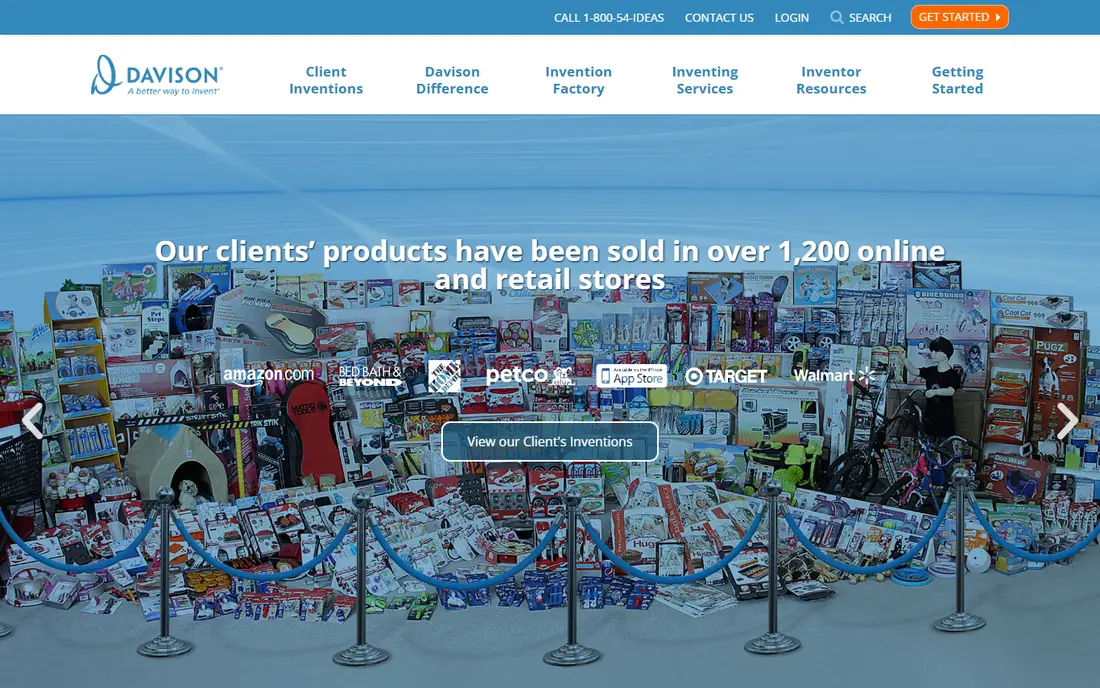
Davison offers research, design, prototype development, packaging, and presentation materials, with later phases quoted by complexity. Its published fee ranges for design and representation work run into thousands of dollars, and representation can add a commission on top of a fee. That structure suits inventors who want a full design package and who understand the cost before they start.
As with InventHelp, the record includes complaints and past regulatory attention, and success is far from assured. Ask for a written breakdown of each phase, what you own at each stage, and what happens if you stop after research. Get independent advice before you commit to a later phase.
- Design, prototype, and packaging services
- Research and presentation materials
- Long history in the field
- Later phase fees can reach thousands of dollars
- Success is not guaranteed
- Complaints exist in its public record
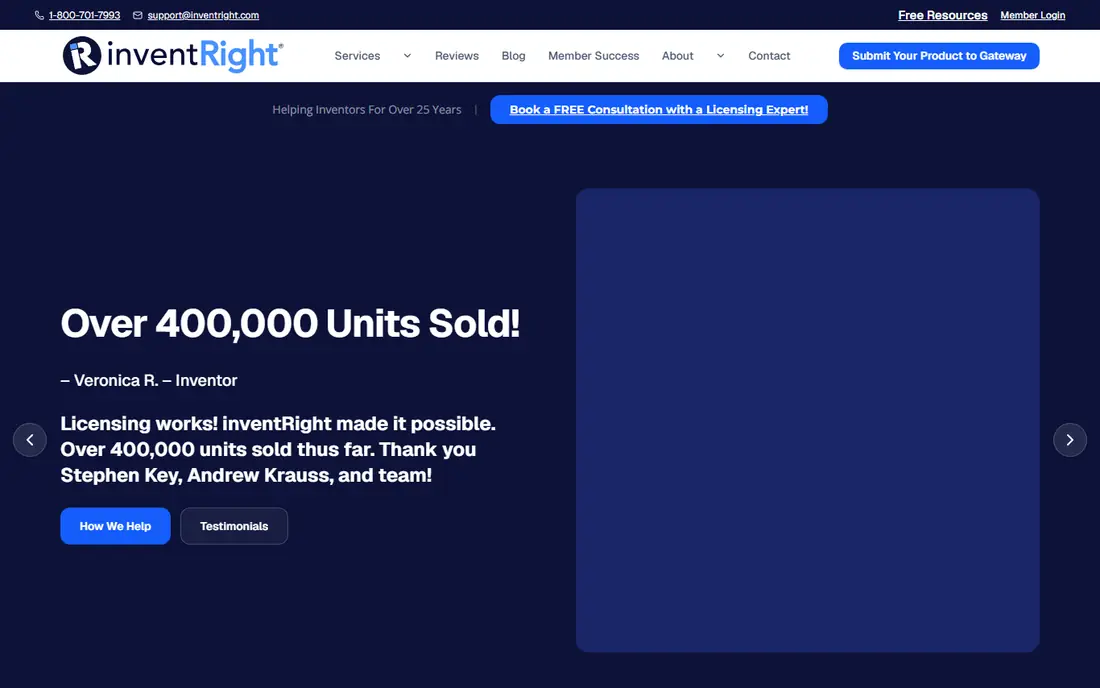
InventRight focuses on licensing, which means helping inventors pitch ideas to companies for royalties rather than manufacturing themselves. Its membership teaches a licensing process, its coaching program adds guidance over months, and its Gateway program offers done-for-you outreach with a stated response goal. Evaluation and consultation options let you test fit before a large commitment.
Licensing is still a numbers game, and a response is not a deal. The Gateway fee is large, so weigh it against the cost of learning the process yourself and pitching directly. For inventors who want to learn licensing or who want outreach help with clear terms, InventRight is one of the clearer options in this field.
- Clear licensing programs
- Coaching and done-for-you outreach
- Transparent company contact lists on some programs
- Gateway program is a large one-time fee
- Licensing still depends on company interest
InventionHome offers marketing and licensing support for inventors, including help presenting ideas to companies and referrals for patent work. Its pitch is similar to other submission firms: organise the idea, build presentation materials, and submit to firms that may license or buy the concept. That structure helps inventors who lack industry contacts.
Pricing is not published as a simple list, so you need a quote and a written scope before you pay. Ask which companies will see the idea, how many submissions are included, and what you get if no company responds. As with every firm here, check complaints and read the contract line by line.
- Invention marketing and licensing help
- Patent referral resources
- Submission support
- Pricing is quote-based
- Success depends on company interest and market fit
IdeaPros positions itself as a product development partner, helping inventors move from idea to a market-ready product through design, engineering, and launch planning. That broader scope suits inventors who want more than a submission packet and who are ready to invest in development, prototyping, and go-to-market work.
The cost and commitment are higher than a simple evaluation, and manufacturing, funding, and retail demand still decide success. Ask who owns the intellectual property, how fees are staged, and what happens if the product does not launch. For serious product builders, IdeaPros is worth a conversation, with the same contract caution as every firm here.
- Product development, design, and launch support
- Team-based approach
- Focus on bringing products to market
- Pricing is quote-based
- Launch success depends on funding, manufacturing, and market demand
Edison Nation works with inventors through licensing submissions, often through calls for ideas in specific product categories. The model is to match an inventor's idea with a company that may license it, rather than to sell a large design package to every inventor. That selectivity can be a good sign, since a firm that accepts everything has less reason to filter for market fit.
Selectivity also means many ideas will not be accepted, and acceptance is not a promise of a deal. Check current submission terms, fees if any, and what rights you keep. For inventors with a consumer product idea that fits a category call, Edison Nation is a lower-pressure route than a large upfront package.
- Licensing-focused submissions
- Category-based calls for ideas
- Company partnerships in its model
- Acceptance is selective
- Licensing outcomes are not guaranteed
- Check current submission terms
Bold Patents is different from the firms above, since it is a patent law firm rather than an invention marketing firm. It offers patent searches, drafting, filing, and related legal help from licensed attorneys, which is the right route if your main need is protection rather than marketing. A patent attorney can also advise on prior art and on whether an idea is likely to be patentable.
Legal fees depend on the work, and a granted patent does not mean a product will sell or a company will license it. Still, for protection, a law firm is safer than a marketing firm that only refers you onward. This guide is general information only and is not legal advice, so use a licensed attorney for decisions about filing.
- Licensed patent attorneys
- Patent searches, drafting, and filing
- Inventor-focused law practice
- Legal fees vary by work
- A patent does not guarantee sales or licensing
Quirky is a community-driven platform where inventors submit ideas and the community and Quirky team help refine, design, and develop selected products. That collaborative model suits inventors who want feedback and who are open to sharing an idea in a community setting, rather than keeping it fully private until a company review.
The model has changed over the years, so check current terms before you submit, including who owns the idea, how revenue is shared, and what happens if a product is not selected. Do not submit an idea you need to keep confidential without reading those terms. For community-minded inventors, Quirky offers a different path from a paid submission package.
- Community input on product ideas
- Design and development collaboration
- Consumer product focus
- Model and terms have changed over time
- Check current submission and revenue terms carefully
How we picked these
We compared public service descriptions for firms that are known in the invention help field in October 2026, covering submission, design, licensing, patent law, and community models. We included firms with very different models on purpose, since the best invention help company for a licensing pitch is not the same as for patent protection. We did not rank by success, since success figures are disputed, incomplete, or not comparable, and we did not claim hands-on testing.
What to check before you pay an invention help firm
Start with the contract, not the sales pitch. Ask for the full agreement in writing, including every fee, every phase, what you own, what the firm owns, and what happens if you stop. Ask for the firm's disclosure of past results if it is required to provide one, and read it, since it shows how rarely clients earn back their fees. Check complaints with consumer protection agencies and the Better Business Bureau, and search for recent reviews, not just testimonials on the firm's own site.
Then separate protection from marketing. A patent search and filing should involve a licensed patent attorney, and you can also search the US Patent and Trademark Office database yourself for prior art. Marketing, design, and submission help are separate services, and paying for one does not guarantee the other. Never pay a large upfront fee under pressure, never borrow against essentials to fund an invention, and get a second opinion from an independent attorney or a local inventor group before you sign.
Finally, test the idea cheaply first. Talk to potential users, build a simple prototype or mock-up, and check whether anyone would pay for the product at a price that covers manufacturing. Many ideas fail on market fit, not on design quality, and a cheap test saves far more than a polished submission packet. This guide is general information only and is not legal advice.
Frequently asked questions
What is the best invention help company?
There is no single best firm for every inventor. InventHelp and Davison suit broad submission and design help, InventRight suits licensing, Bold Patents suits patent law, and Edison Nation suits licensing submissions. Your goal, budget, and stage should decide the shortlist, and contract terms should decide the final choice.
How much do invention help companies charge?
Fees vary widely, from a low-cost evaluation or monthly coaching plan to thousands of dollars for design, prototype, and representation phases. Some firms quote by phase, so ask for a written breakdown of each phase before you pay. Fees and success are not guaranteed, so do not assume a higher fee means a higher chance of a deal.
Should I patent my idea before contacting an invention help firm?
Talk to a licensed patent attorney about timing, since public disclosure can affect patent rights. Many firms offer patent attorney referrals, but the attorney, not the marketing firm, should advise on searches and filing. Keep records of your idea, dates, and sketches, and use confidentiality agreements where appropriate.
How do I check if an invention help firm is legitimate?
Read the full contract, check the firm's required disclosures of past results, search for complaints with consumer protection agencies, and look for recent independent reviews. Be wary of pressure tactics, promises of success, and fees that must be paid at once. A legitimate firm will let you take time, get advice, and read the agreement.
What is the difference between licensing and manufacturing my invention?
Licensing means a company pays you royalties to make and sell your product, while manufacturing means you fund production, marketing, and sales yourself. Licensing needs less capital but gives you less control, while manufacturing gives control but carries inventory and marketing risk. Your capital, skills, and appetite for risk should guide that choice.
Can an invention help firm guarantee my product will sell?
No firm can honestly guarantee sales, licensing, or profit, since companies, retailers, and buyers decide those outcomes. Any promise of guaranteed success is a warning sign. Treat invention help as paid assistance with design, presentation, or outreach, not as a promise of a market result.
Sources
See where you really rank - block by block
ProMapRanker scans Google Maps across a grid of your service area. Simple monthly plans from $19, white-label on every plan.
Start freeKeep reading
 zscaler alternatives
Best Zscaler Alternatives in 2026
Looking for zscaler alternatives? We compare 9 SASE and zero trust platforms on architecture, data protection, pricing, and fit for your network and team.
Read → zapier alternatives free
Best Zapier Alternatives Free in 2026
Nine automation tools for zapier alternatives free in 2026, all with genuinely free tiers, plus free plan limits, starting prices and upgrade paths explained.
Read → which platform is best for online reputation
Which Platform Is Best for Online Reputation in 2026
Wondering which platform is best for online reputation? We compare 8 review, listing, and response tools for small and multi-location businesses and agencies.
Read →