 ProMapRanker
Best Intermittent Fasting Apps in 2026

Key takeaways
- Zero is the best default for most people, with a clean timer, common presets, and a useful free tier for starting out.
- BodyFast and Fastic suit beginners who want guided plans and structure, while Window and FastHabit suit minimalists who want a simple timer.
- Simple and DoFasting add coaching and structured programs, but their best features sit behind subscriptions, so check the free tier first.
- This article gives general information only, not medical advice. Check with a clinician before starting a fasting plan, especially with a health condition, medication, pregnancy, or a history of disordered eating.
Quick comparison
| Pick | Great for | Pricing starts at | Free tier | |
|---|---|---|---|---|
 Zero | Most people overall | Free | Yes | Visit |
 Fastic | Beginners who want guidance | Free | Yes | Visit |
 Simple | Coaching and food logging | See website | Free trial | Visit |
 BodyFast | Guided weekly plans | Free | Yes | Visit |
 DoFasting | Structured programs | See website | Yes | Visit |
 Window | Minimalist iPhone tracking | Free | Yes | Visit |
 FastHabit | Simple no-account tracking | Free | Yes | Visit |
 Fastient | Journal and graphs | Free | Yes | Visit |
 LIFE Fasting Tracker | Group fasts and community | Free | Yes | Visit |
The best intermittent fasting apps
A fasting app does one job well when it makes the timer easy to start, the schedule easy to follow, and the history easy to read. The apps below cover that job in different ways, from a bare timer to a full coaching program. This is general information only, not medical advice, and anyone with a health condition, medication, pregnancy, or a history of disordered eating should check with a clinician before starting a fasting plan. Our pick for most people is Zero, with BodyFast for guided plans and FastHabit for simple tracking.
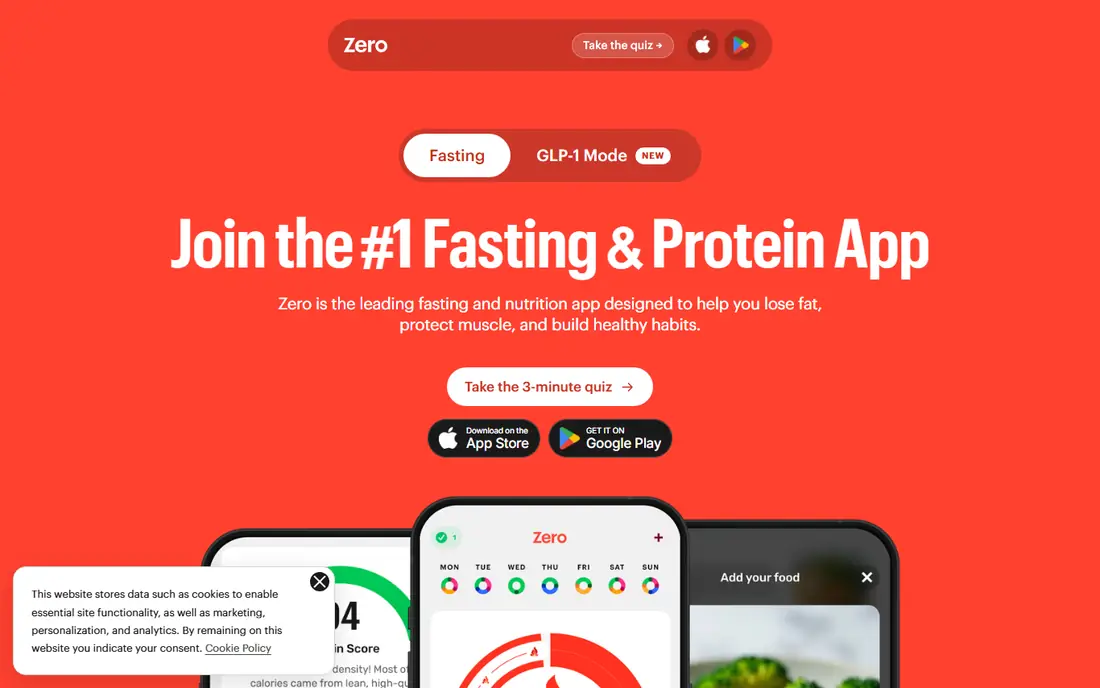
Zero is the best-known fasting tracker, and its clean timer is the reason. A user picks a preset such as 16:8, 18:6, or a custom window, taps start, and sees progress, history, and streaks without wading through a coaching program. The free tier covers the basics most people need to start, including the timer, a schedule, and basic history.
The paid Plus plan, listed from $9.99 per month or $69.99 per year in app stores, adds deeper content, weight tracking, and more schedules. A beginner who only needs a timer can stay free for a long time, while a user who wants analytics and guided content will feel the paywall sooner. For a first fasting app, Zero is still the safest default.
- Clean timer with common presets
- Fasting history and streaks
- Apple Health and Google Fit sync
- Many deeper insights and plans sit behind the paid Plus plan
- Free tier covers only basic tracking
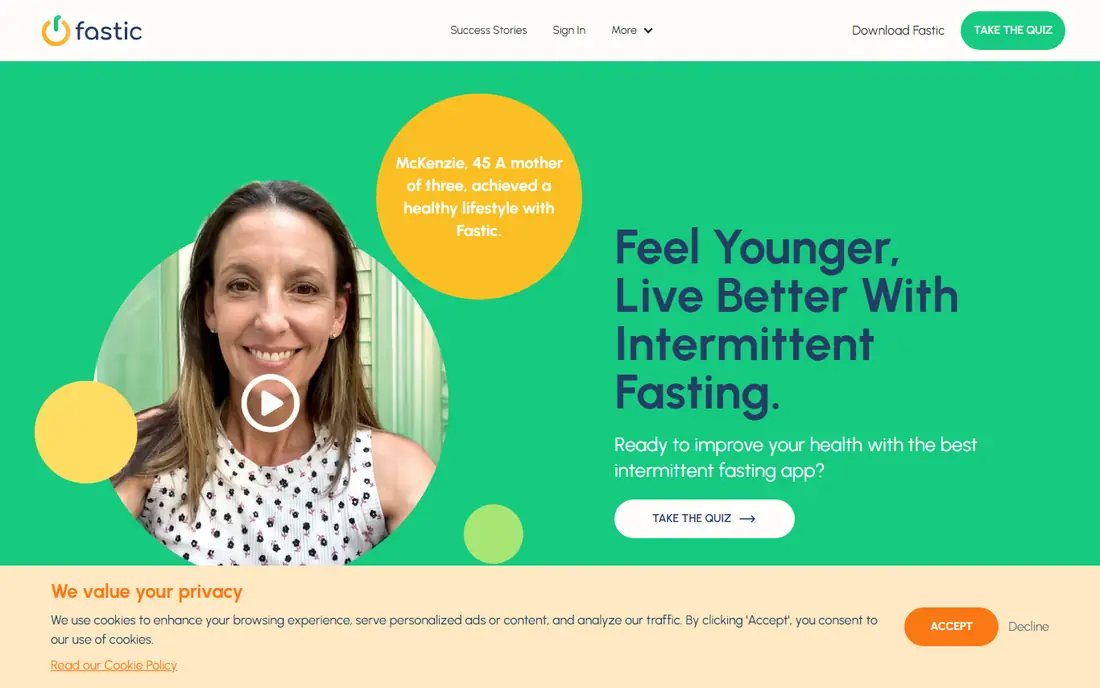
Fastic suits a beginner who wants more hand-holding than a timer alone. Onboarding walks a new user through goals and schedules, and the free tier covers the timer plus water, weight, and mood notes. That combination helps a new faster notice patterns, such as hunger timing or sleep changes, without buying a coaching plan on day one.
The paid plan, listed around $11.99 per month in recent guides, adds meal logging, full courses, and guided reflections. The interface is busier than Zero or FastHabit, which may put off a minimalist. For a user who wants guidance and is willing to pay for it later, Fastic is a strong starting point.
- Friendly onboarding for new fasters
- Timer plus water, weight, and mood logging
- Step tracking and guided content on paid plans
- Full meal logging and courses sit behind a subscription
- Interface feels denser than a bare timer app

Simple is the coaching pick on this list. It pairs fasting schedules with food logging, daily tips, and adjustments based on logged habits, which suits a user who wants feedback rather than just a timer. Challenges and group features add accountability for people who stick with a plan better in company.
Simple is effectively a subscription product, with a free trial rather than a generous free tier, and pricing varies by store and offer, so check the current price in the app store before committing. A user who only wants a timer will find Simple heavy and expensive. A user who wants coaching and food awareness in one app will find it the most guided option here.
- AI-based coaching with daily tips
- Food logging beside fasting tracking
- Challenges and community features
- Best features are subscription-based
- Free access is limited and trial-based rather than a standing free tier
BodyFast suits a user who gets bored with the same 16:8 window every day. Its weekly plans vary fasting days and lengths across the week, which gives structure without requiring the user to design a plan. The free tier covers core tracking and a set of plans, and the app is available on both iOS and Android.
The free plan does not include the full plan library or personalized coaching, which sit on paid tiers. Notifications are also frequent by default, though they can be adjusted. For a beginner who wants a plan to follow rather than a blank timer, BodyFast is one of the easiest starts.
- Weekly plans that vary across the week
- Free tier with core timer and plans
- Recipes and coaching content on paid plans
- Free plan limits plan variety
- Notifications can feel prescriptive for some users
DoFasting is built around programs rather than a single timer. A user follows a structured plan with daily guidance, meal ideas, and workout suggestions, which suits someone who wants a complete routine instead of deciding each day. Progress tracking shows how the program is going across weeks, not just hours.
DoFasting is the most subscription-led app on this list, with limited free access and program pricing that varies by offer, so a buyer should confirm the total cost and billing period in the app before starting. A user who wants a free timer should choose Zero or FastHabit instead. A user who wants a guided program and is ready to pay will find DoFasting more structured than a timer alone.
- Structured fasting programs with daily guidance
- Meal and workout suggestions beside the timer
- Progress tracking across a program
- Mostly subscription-based for full programs
- Pricing varies by offer and region, so confirm the total before subscribing
Window is the minimalist pick. It focuses on the fasting window itself, with scheduling, alerts, and a clean history view, and it stays out of the way the rest of the day. That simplicity suits a user who already knows their schedule and does not want coaching, recipes, or social features in the same app.
Window does not try to be a diet or fitness platform, so food logging, coaching, and program guidance are limited or absent. The premium plan, listed around $9.99 per month in recent guides, adds statistics for users who want more detail. For a user who values a quiet, focused timer, Window is an excellent choice.
- Clean, minimal interface
- Scheduling and alerts for fasting windows
- Premium plan for extra statistics
- Feature set is narrower than coaching apps
- Best experience is on iOS, with Android coverage more limited in some guides
FastHabit is the simplest app on this list, and that is its appeal. It tracks fasting windows, schedules, and reminders without pushing an account or a subscription at every step, and the Pro upgrade is a low one-time purchase listed at $2.99 in recent guides. For a user who distrusts subscription apps, FastHabit is a refreshing change.
FastHabit does not offer coaching, recipes, or community features, so a beginner who wants guidance should look at BodyFast or Fastic. It also has fewer analytics than Zero Plus. For a user who wants a timer that just works, FastHabit is the lowest-friction option here.
- Simple tracking without a forced account
- Scheduling and reminders
- Low-cost one-time Pro upgrade
- No coaching or meal planning
- Interface is plain compared with larger apps
Fastient suits a user who likes to write about the fast as well as time it. Journal entries, weight notes, and graphs sit beside the timer, which helps a user spot patterns over weeks, such as energy, mood, or sleep changes. The yearly upgrade, listed at $4.99 per year in recent guides, is among the cheapest paid tiers in this category.
Fastient is a tracking and journaling tool, not a coaching program, so users who want meal plans or daily guidance will need another app. Its presence is stronger on Android in some listings, so iOS users should confirm the current app store version before committing. For reflective trackers, Fastient is a strong, cheap pick.
- Journal entries beside fasting tracking
- Clear graphs for history and trends
- Low yearly upgrade cost
- Android-focused in some listings, with a smaller presence on iOS
- No coaching program
LIFE Fasting Tracker, often called LIFE, adds a social layer to fasting tracking. A user can join circles, start group fasts with friends, and share progress, which helps accountability for people who stick with habits better in company. The core timer and history cover common schedules, and the app is free to start.
LIFE is not a coaching or diet app, so food logging and personalized plans are thinner than Simple or BodyFast. A solo user who does not want social features may prefer Zero or FastHabit. For a user who fasts with friends, family, or a community group, LIFE makes the habit easier to keep.
- Group fasts and circles with friends
- Timer and history for common schedules
- Community support for accountability
- Fewer coaching and food-logging features than Simple or DoFasting
- Community features suit social users more than solo trackers
How we picked these
We compared fasting apps that are live in October 2026 on iOS and Android, using app store listings, vendor pages, and recent fasting app guides. We kept apps with a usable free tier or low-cost entry, a real timer, and schedules that match common intermittent fasting patterns, and we favored a mix of timers, guided plans, coaching, and community options. Prices vary by store, region, and offer, so where pricing was inconsistent across sources we say See website rather than publishing a disputed figure. This article is general information only, not medical advice.
How to choose a fasting app safely
Start with your goal and your health, not the app store ranking. A timer suits a user who already has a schedule from a clinician or a trusted source, while a guided plan suits a beginner who wants structure. Either way, check with a clinician before starting, especially with diabetes, medication, pregnancy, breastfeeding, a history of disordered eating, or any condition that affects eating.
Pick the schedule with care
Common schedules include 16:8, 18:6, and alternate-day patterns, but a longer fast is not automatically better. Start with a shorter, sustainable window, track how you feel, and change only with guidance. An app that pushes an aggressive schedule on day one is a warning sign, not a feature.
Watch the subscription before the streak
Many fasting apps lead with a subscription prompt, and the free tier may cover only the timer. Check what the free tier includes, what the paid tier adds, and how much the paid tier costs per month or year before building a streak you do not want to lose. A simple free timer is often enough for months.
Use the data, but do not over-read it
Weight, mood, and fasting history can show trends, but daily swings are normal. Look at weekly patterns rather than a single day, and stop and seek medical advice if you feel dizzy, unwell, or unable to eat enough during eating windows. An app cannot judge whether a fast is safe for you, and no streak is worth pushing through warning symptoms.
Frequently asked questions
What is the best app for intermittent fasting?
Zero is the best app for most people, thanks to its clean timer, common presets, and useful free tier. BodyFast is best for guided weekly plans, FastHabit is best for simple tracking, and Simple is best for coaching and food logging.
What is the best free intermittent fasting app?
Zero, BodyFast, Fastic, Window, FastHabit, Fastient, and LIFE all offer free tiers that cover core timer tracking. FastHabit and Fastient have the lowest paid upgrades if you later want extra features, while Zero and BodyFast give the most useful free starting point.
Is intermittent fasting safe?
Intermittent fasting is not suitable for everyone, and safety depends on health, medication, pregnancy, age, and eating history. This article is general information only, not medical advice, so check with a clinician before starting, and stop and seek advice if you feel unwell.
How do I choose between 16:8 and other fasting schedules?
Start with a shorter, sustainable window such as 16:8 if a clinician agrees it is suitable, and track energy, sleep, and mood for a few weeks before trying a longer window. An app preset is a starting point, not a prescription, and a schedule should fit work, sleep, and family meals.
Do fasting apps give medical advice?
No, or they should not be used as a substitute for it. Fasting apps track timers, schedules, and habits, but they cannot assess your health. Use them for tracking and reminders, and rely on a clinician for decisions about whether fasting is appropriate for you.
Sources
See where you really rank - block by block
ProMapRanker scans Google Maps across a grid of your service area. Simple monthly plans from $19, white-label on every plan.
Start freeKeep reading
 zscaler alternatives
Best Zscaler Alternatives in 2026
Looking for zscaler alternatives? We compare 9 SASE and zero trust platforms on architecture, data protection, pricing, and fit for your network and team.
Read → zapier alternatives free
Best Zapier Alternatives Free in 2026
Nine automation tools for zapier alternatives free in 2026, all with genuinely free tiers, plus free plan limits, starting prices and upgrade paths explained.
Read → which platform is best for online reputation
Which Platform Is Best for Online Reputation in 2026
Wondering which platform is best for online reputation? We compare 8 review, listing, and response tools for small and multi-location businesses and agencies.
Read →