 ProMapRanker
Best Insurance Policy Administration Software in 2026


Large P and C carriers · Pricing starts at: See website
Key takeaways
- Guidewire PolicyCenter and Duck Creek Policy remain the main choices for large property and casualty carriers.
- Cloud-native systems such as BriteCore and Socotra suit smaller and mid-size insurers that want faster setup.
- Almost all enterprise policy systems are quote-based, so compare total cost including implementation and support.
- Policy administration touches rating, billing, and claims, so integration fit matters more than any single feature.
Quick comparison
| Pick | Great for | Pricing starts at | Free tier | |
|---|---|---|---|---|
| Guidewire PolicyCenter | Large P and C carriers | See website | No | Visit |
 Duck Creek Policy | Cloud-native core replacement | See website | No | Visit |
 BriteCore | Small and mid-size carriers | See website | No | Visit |
 Majesco Policy | Multi-line core modernisation | See website | No | Visit |
 Origami Risk | Risk and policy administration | See website | No | Visit |
 Insurity | P and C policy and billing | See website | No | Visit |
 Sapiens | Life, P and C, and specialty lines | See website | No | Visit |
 Socotra | Cloud-native product launch | See website | No | Visit |
The best insurance policy administration software
We compared core policy features, rating and billing fit, cloud delivery, and implementation scale for US insurers. This article is general information only. Coverage, pricing, and approval vary by policy and state, and no software guarantees a price or an underwriting outcome.
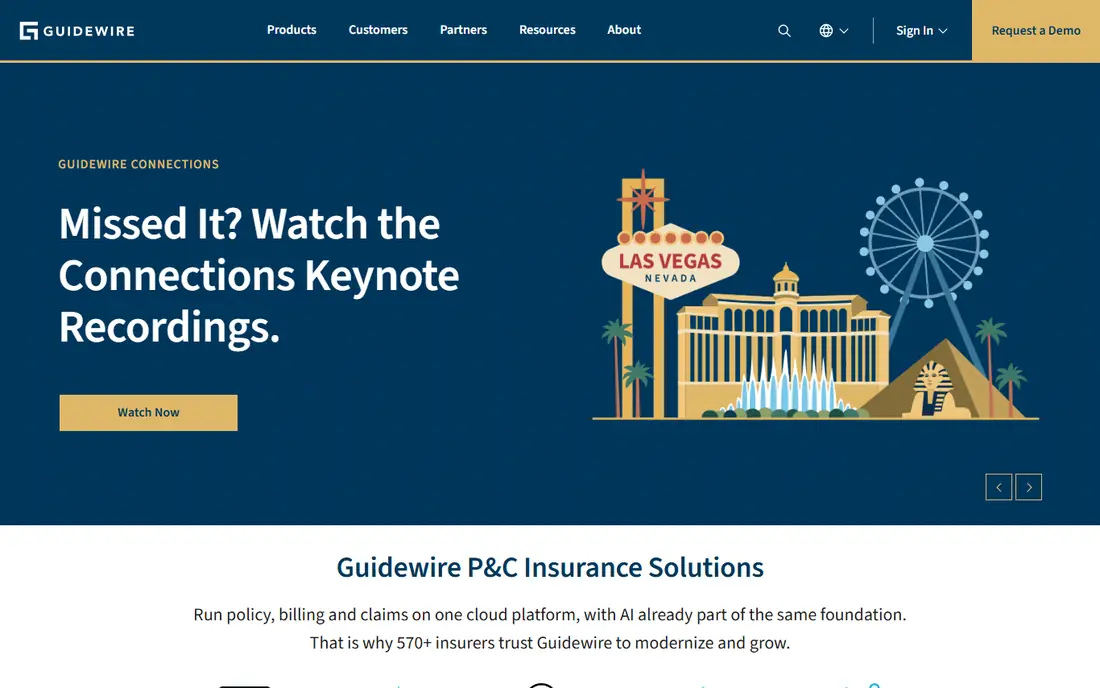
Guidewire PolicyCenter is part of Guidewire InsuranceSuite, covering policy creation, endorsement, renewal, and cancellation for property and casualty lines. Its strength is depth, especially for carriers with complex products, many states, and strict regulatory filing needs. The wider suite also links policy work to billing and claims, which helps when a policy change affects both.
That depth comes with cost and time. Implementations are major projects, often measured in months, and custom work may need developers familiar with Guidewire tools. Smaller carriers should weigh that burden carefully, while large carriers that already use Guidewire often find the shared platform worth it.
- Deep policy lifecycle coverage
- Strong rating and regulatory tooling
- Large partner and integration network
- High total cost and long implementation for large deployments
- Needs specialist skills for custom work
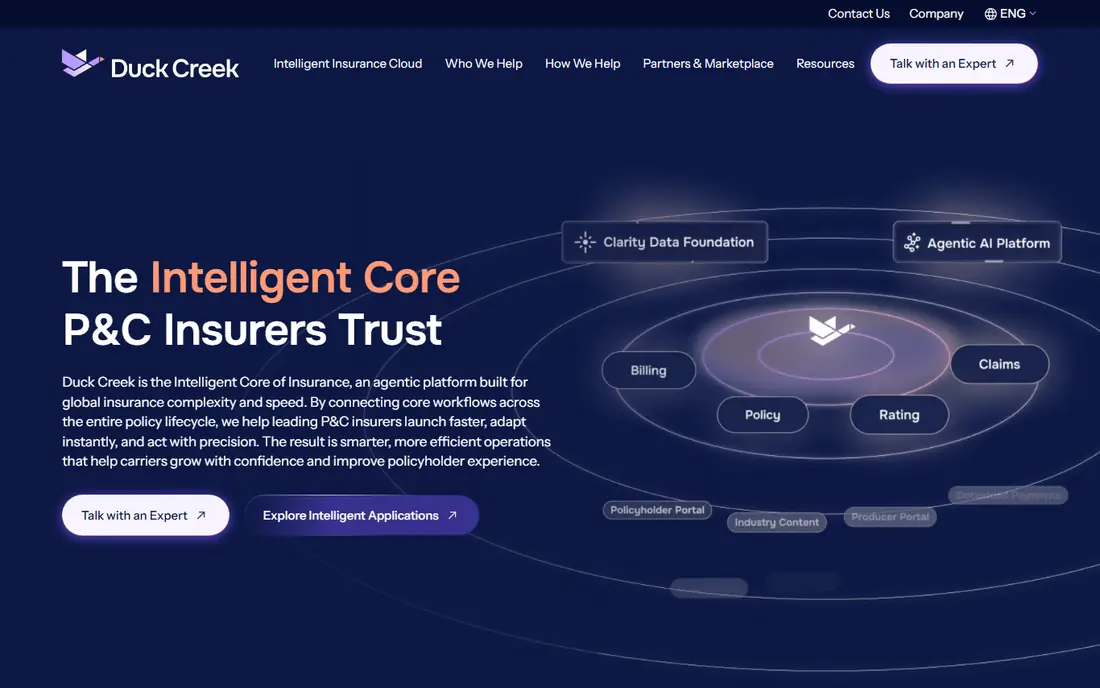
Duck Creek Policy gives carriers a cloud-native way to manage the full policy lifecycle, with tools that let product teams configure coverages, rules, and rating without waiting for every change to pass through IT. That configurability helps carriers that need to launch or adjust products quickly, and the API design supports agent, broker, and embedded distribution.
Buyers should still plan for a serious implementation, including data migration and testing across lines and states. Pricing is custom, shaped by policy volume, modules, and lines of business. Ask for a total cost that includes implementation, environments, and support, not only the subscription line.
- Cloud-native delivery
- Configurable product and rating tools
- API-first design for distribution
- Quote-based pricing with no public list price
- Partner network is smaller than Guidewire

BriteCore suits carriers that want a full core system without the scale of Guidewire or Duck Creek. Policy administration, billing, and claims sit in one cloud platform, which can simplify operations for teams that currently run several disconnected tools. Smaller carriers often value that single-system view.
The limit is complexity at the top end. Very large carriers with highly specialised products may find some areas less deep than the large suites. For regional and mid-size carriers, the balance of breadth and setup speed is the main appeal, provided migration and training are planned properly.
- Cloud platform built for smaller carriers
- Policy, billing, and claims in one system
- Faster setup than large suites
- Less depth for the most complex specialty products
- Still requires careful migration planning
Majesco offers policy administration as part of a wider insurance platform, covering several lines and supporting carriers that want to modernise in stages. That breadth helps groups with mixed books of business, where personal, commercial, and specialty lines all need attention but may move at different speeds.
Breadth also creates scoping risk. Buyers should define which lines, products, and states are in the first phase, and which integrations are required on day one. A clear phase plan keeps the project focused and makes it easier to judge whether Majesco fits better than a narrower, faster system.
- Policy administration across personal, commercial, and specialty lines
- Cloud and on-premise options described by the vendor
- Broad insurance portfolio
- Portfolio breadth can make scoping harder
- Implementation scope needs clear definition
Origami Risk combines policy administration with risk management, which suits carriers and risk-bearing organisations that want policy data close to risk data. Workflows can be configured for underwriting, policy handling, and reporting, and the platform supports teams that need a clear view of exposures alongside policies.
Carriers focused on very high-volume personal lines should test throughput and rating fit in detail. Origami strength is in the combined risk and policy view, so buyers should judge it on that combination rather than on personal lines speed alone. A demo with real product examples helps here.
- Policy and risk management in one platform
- Configurable workflows
- Useful reporting for risk teams
- Less known as a pure high-volume personal lines engine
- Check fit for each line before buying
Insurity provides policy administration with billing and data services for property and casualty insurers. Its appeal is a practical core for carriers that want policy and billing to move together, with data tools to support rating and reporting. Mid-size carriers often find the scope a good match for their books.
First-time buyers should ask the vendor to map each module to their own policy lifecycle, so it is clear what is included and what is an add-on. Like every system here, Insurity needs migration, testing, and training, and the total timeline should be agreed before signing.
- Policy, billing, and data tools for P and C carriers
- Experience across personal and commercial lines
- Cloud delivery options
- Product naming and module scope can confuse first-time buyers
- Implementation still needs planning
Sapiens covers life, property and casualty, and specialty insurance with core policy systems for each segment. That range helps insurance groups with diverse books, and the vendor brings experience from many markets. Carriers that need both life and P and C systems from one vendor may find that range useful.
The same range means buyers need a tight scope. Confirm which Sapiens product covers each line, what local regulatory support is included, and how the system handles US state variations. A phased plan by line usually works better than trying to replace everything at once.
- Wide line coverage including life and pensions
- Core systems for several insurance segments
- Global carrier experience
- Large portfolio means buyers must scope carefully
- Smaller US carriers should confirm local support depth
Socotra is built for insurers that want to configure and launch products quickly on a cloud-native core. Product definitions, rating, and policy handling can be set up through configuration and APIs, which suits managing general agents, startups, and carriers testing new lines. Speed to market is the clear selling point.
The trade-off is maturity and scale beside the largest suites. Carriers with large legacy books should test migration tooling, reporting depth, and support for complex endorsements. For a new product or a new carrier, Socotra speed may outweigh those limits, while a large legacy carrier may prefer a deeper suite.
- Cloud-native core built for fast product configuration
- API-first design
- Suits insurers launching new products
- Newer and smaller than Guidewire and Duck Creek
- Check depth for legacy book migration
How we picked these
We compared vendor product pages, core policy features, cloud delivery, and published comparisons for policy administration systems used in October 2026. We included large suites and cloud-native options because carriers differ greatly in size and complexity. We did not invent prices, and we used See website where vendors price by quote, which is standard for this category.
What to check before you buy
Start with your policy lifecycle, not with a feature list. Map quote, bind, endorsement, renewal, cancellation, and reinstatement for each line, then check how each system handles those steps, including rating changes and state rules. Ask how rating updates are tested and released, and who can change product rules without code.
Next, check billing, claims, document, and agent portal fit, because policy work rarely stands alone. Confirm data migration support, reporting, audit trails, and security controls, and ask for reference carriers of similar size and lines. Finally, get a written total cost covering subscription, implementation, data migration, training, and ongoing support.
Frequently asked questions
What is policy administration software?
It manages the full life of an insurance policy, from quote and bind through endorsement, renewal, and cancellation. It usually connects to rating, billing, document generation, and claims systems.
Why is most policy software quote-based?
Carriers differ in policy volume, lines, states, and modules, so vendors price by those factors rather than a single list price. Ask for a written quote with implementation and support included.
How long does implementation take?
Large core replacements often take many months, while smaller cloud systems can go live faster for a single line. Timeline depends on product complexity, data migration, and testing, so agree a phased plan early.
Can small insurers use these systems?
Yes, especially cloud-native systems built for smaller carriers. Small insurers should still check migration effort, support, and total cost, and start with one line if a full replacement is too large.
Does policy software set insurance prices?
No. It applies rating rules and product definitions that the carrier controls, subject to filing and regulatory rules. Final prices and coverage decisions remain with the carrier, and they vary by policy and state.
What should we test in a demo?
Test a real endorsement, a renewal with a rating change, a cancellation, and a multi-state product variation. Check reporting, audit trails, and how easily product staff can change a rule without developer help.
Sources
See where you really rank - block by block
ProMapRanker scans Google Maps across a grid of your service area. Simple monthly plans from $19, white-label on every plan.
Start freeKeep reading
 what’s the best risk software for enterprises
What Is the Best Risk Software for Enterprises in 2026
We compared what’s the best risk software for enterprises on risk registers, controls, third-party risk, and reporting, with pricing notes for large teams.
Read → what's the best pam software for enterprises
What is the Best PAM Software for Enterprises in 2026
Find what's the best pam software for enterprises, with vaulting, session recording, just in time access and pricing compared for large enterprise IT teams.
Read → what’s the best grc software
What Is the Best GRC Software in 2026
We compared what’s the best grc software on risk, compliance, audit and vendor risk, so teams can pick a platform that fits their frameworks and budget.
Read →