 ProMapRanker
Best Insect Identifier Apps in 2026


Free instant ID for beginners · Pricing starts at: Free
Key takeaways
- Seek by iNaturalist and iNaturalist are the strongest free starting points, with community checking behind the automatic suggestion.
- Picture Insect gives the most polished paid insect guide, with pest notes and expert answers, but its subscription needs to be worth regular use.
- No app in this list guarantees a safe identification, so never eat or handle a wild insect based on an app result alone.
- A clear, close photo in good light improves every app here far more than switching to a more expensive tool.
Quick comparison
| Pick | Great for | Pricing starts at | Free tier | |
|---|---|---|---|---|
| Seek by iNaturalist | Free instant ID for beginners | Free | Yes | Visit |
 iNaturalist | Community-checked ID | Free | Yes | Visit |
 Picture Insect | Paid insect guide | Free | Yes | Visit |
 ObsIdentify | Free recording and ID | Free | Yes | Visit |
 BugKnow | Free unlimited home scans | Free | Yes | Visit |
 Insectio | Hikers and outdoor use | See website | Yes | Visit |
 Google Lens | Quick guess with no new app | Free | Yes | Visit |
 BugIdentifier.org | One-off browser ID | Free | Yes | Visit |
The best insect identifier apps
An insect identifier app can turn a garden mystery into a name in seconds. These eight tools cover free citizen science apps, a polished paid guide, and quick browser options, with an honest note on where each one falls short.
Seek is our first suggestion for most readers because it is free, simple, and backed by the iNaturalist community. Point the camera at an insect, and the app suggests an identification from its image recognition model, often in seconds. It also awards badges for new species, which makes a walk or a garden session feel like a small field survey rather than a chore.
The limit is precision. Seek may name only the genus or family when the photo lacks detail, and similar species can confuse any image model. Treat its answer as a strong lead, then check the species page and photos before you act on it. For a child, a beginner, or anyone who wants a free tool with no paywall, Seek is the easiest place to start.
- Completely free with no subscription
- No account needed for basic use
- Badges and challenges make learning fun
- Suggestions can stop at genus level
- Accuracy drops with blurry or distant photos
iNaturalist is the fuller version of the same idea. You post an observation with a photo, location, and date, the app suggests an identification, and other naturalists can agree or suggest a correction. When enough members agree, an observation becomes research grade, which is a stronger signal than a single automatic guess. Your records also feed biodiversity research, which gives casual sightings a second purpose.
The trade-off is speed. A community answer may take hours or days, so iNaturalist suits a reader who wants a checked identification rather than an instant one. It is also the best choice if you want to build a personal record of what you have seen over a season. Use Seek for a fast guess in the field, and iNaturalist when you want that guess checked.
- Completely free nonprofit platform
- Community members confirm or correct IDs
- Observations support real science
- Community confirmation takes time
- Interface is less playful than Seek
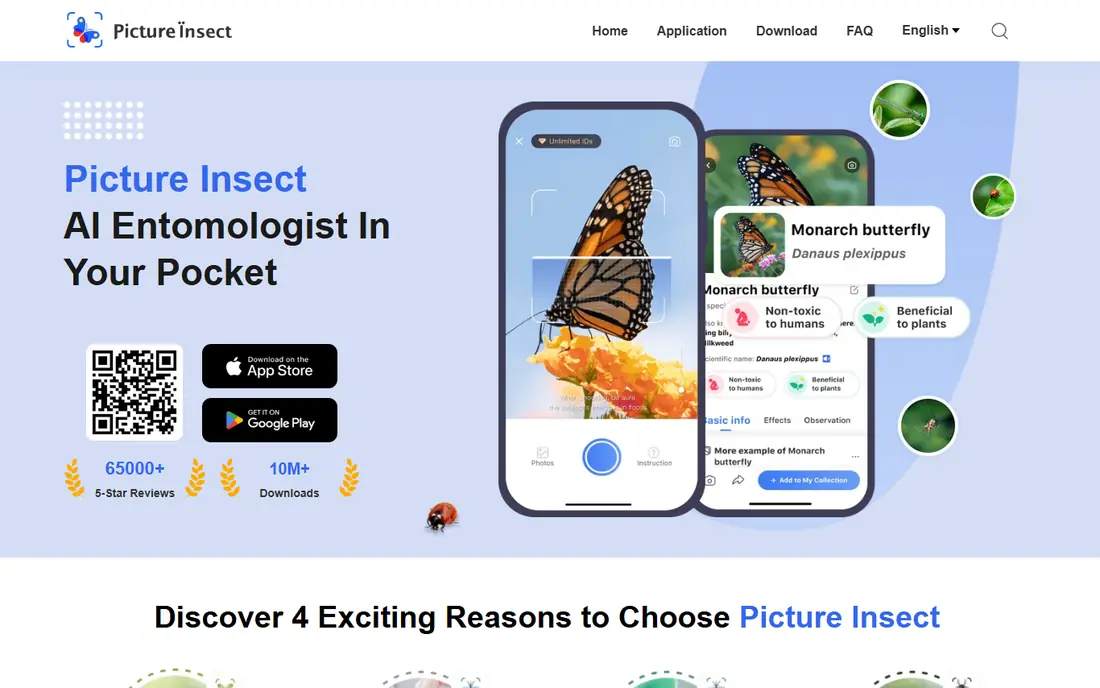
Picture Insect is the most polished dedicated insect app here. Snap a photo, and it returns a species suggestion plus habitat notes, pest information, and control tips where relevant. Premium adds unlimited identifications, answers from entomologists, and an ad-free experience. For a gardener dealing with repeat pest problems, that extra detail can be genuinely useful.
The catch is cost. The free tier is a trial of the idea, not a lasting free tool, so regular users will need a subscription. Check the current price in the app store before you subscribe, and cancel if you only identify a bug once a month. Picture Insect also shares the limit of every app here: its answer is a suggestion, not a guarantee, so do not handle or eat an insect based on it alone.
- Fast photo ID with detailed species pages
- Pest and bite information
- Expert answers on the premium plan
- Full use needs a paid subscription
- Free use is limited
ObsIdentify comes from the Observation.org community and has scored well in independent tests of insect identification, including strong family and genus level results. You photograph an insect, get a suggestion, and can record the observation for others to see. The app is free, which makes it a good second opinion alongside Seek or iNaturalist.
Its main limit is coverage. The community and data are strongest in Europe, so users elsewhere may find fewer confirmed observations for local species. Still, as a free cross-check, it costs nothing to try, and a second app agreeing with the first is a useful confidence signal. Keep the photo clear and include size or habitat notes where the app allows it.
- Free to use
- Strong results in independent tests for insect groups
- Observations feed a wider nature database
- Strongest in Europe
- Smaller community outside its home regions
BugKnow suits the everyday case: a bug in the kitchen, the garage, or the garden that you want named quickly. It offers free unlimited scans, which is a real advantage over paid apps that meter identifications, and its pest checker helps you judge if a household insect is a common nuisance or something that needs a closer look. The flow is simple enough for a quick check without an account or a tutorial.
Depth is where it falls behind the citizen science apps. You get less ecological context and less community checking, so a surprising result deserves a second check in iNaturalist or a field guide. For frequent home use, though, unlimited free scans make BugKnow a practical tool to keep on the phone.
- Free unlimited identifications for everyday use
- Pest checker for household bugs
- Simple scanning flow
- Less depth on ecology and range than iNaturalist
- Accuracy depends on photo quality
Insectio aims at hikers and outdoor explorers rather than only gardeners. Beyond photo identification, it adds features such as hike forecasts, live activity alerts, and pet protection guidance, which matter when you are walking where insects are active. That broader toolkit sets it apart from a simple scanner.
The breadth is also its weakness. A feature-heavy app can feel busy if you only want a quick name, and plan details should be confirmed in the app store before you pay. Insectio is best for readers who hike often and will use the extra outdoor features, not for someone who identifies one bug a year.
- Deep feature set for outdoor users
- Hike forecasts and activity alerts in some plans
- Pet safety guidance
- Feature-heavy interface can feel busy
- Pricing and plan limits should be checked in the store
Google Lens is the no-download option. Point it at an insect, and it searches visually similar images across the web, which often returns a plausible name for a common species. It is free, fast, and useful when you do not want another app for a one-off question.
The limit is specialization. In independent testing, general tools such as Lens scored lower at species level than dedicated insect apps, and the top result can be a similar-looking species rather than the right one. Use Lens as a first guess, then confirm a surprising or important result in iNaturalist or Seek. For common garden insects, that two-step check is usually enough.
- Already on many Android phones and free on iOS
- Fast visual search
- No new account needed for basic use
- General visual search, not an insect specialist
- Species level accuracy is lower than dedicated apps
BugIdentifier.org is the simplest tool here: open the site, upload a photo, and get an identification without installing anything. That makes it ideal for a single question on a shared computer, or for a reader who does not want another app. There is no account step standing between you and the answer.
Being web-only is the trade-off. It cannot help on a trail with no signal, and it lacks the community confirmation that makes iNaturalist strong. Treat its result as a lead, especially for any insect that might bite, sting, or damage crops, and confirm it before you act. For a fast, free, one-off identification, it does the job well.
- Works in any browser with no download
- Instant upload and result
- Good for a single question
- Web-only, so no offline field use
- Less community checking than iNaturalist
How we picked these
We compared apps and web tools that are live in October 2026 and that identify insects from photos, using official pages, app store listings, and public identification roundups. We kept a mix of free citizen science tools, a paid guide, and quick no-download options, and we left out tools that only identify plants or that had closed. Every app here was judged on whether it truly fits insect identification, not on general photo search alone.
How to get a better identification, and stay safe
Take the photo close, in good light, from the side that shows wings, antennae, and body shape, and add a second photo from another angle if you can. Note the size, the place, and the plant it was on, since those details help both the app and any human who checks the result. If two apps disagree, trust neither on its own, and ask the iNaturalist community or a local extension service for a checked answer.
Safety comes first, and no app guarantees a safe identification. Never eat or handle a wild insect based on an app result alone, and keep a distance from any insect that might sting, bite, or carry disease. If you are stung or bitten and you develop swelling, trouble breathing, or a spreading rash, seek medical help at once rather than waiting for an app to confirm the species. For a possible pest problem at home, a clear photo plus a call to a local pest professional is safer than spraying based on a guess.
Frequently asked questions
What is the best insect identifier app for free?
Seek by iNaturalist is the best free starting point, with iNaturalist as the stronger choice when you want community checking. Both are completely free, with no subscription, and both improve with clear photos.
How accurate are insect identifier apps?
Accuracy varies by species, photo quality, and region, and even good apps can stop at genus or family level for similar species. Use a second app or the iNaturalist community to confirm any result that matters, such as a possible pest or a stinging insect.
Can an insect app tell me if a bug is dangerous?
An app can suggest a species and note whether that species is known to bite or sting, but it cannot guarantee safety. Never handle or eat a wild insect based on an app alone, and seek medical help at once for a severe reaction to a sting or bite.
Do insect identifier apps work offline?
Some apps offer offline features, but photo identification usually needs an internet connection for the full model or community check. Download any offline packs before a hike, and take clear photos to identify later if you have no signal.
Which app is best for garden pests?
Picture Insect gives the most pest-focused detail, including control tips, while BugKnow offers free unlimited scans for household bugs. For a serious crop problem, confirm the identification with a local extension service before you spray.
Sources
See where you really rank - block by block
ProMapRanker scans Google Maps across a grid of your service area. Simple monthly plans from $19, white-label on every plan.
Start freeKeep reading
 worlds best local seo company
8 Worlds Best Local SEO Companies for Map Pack Growth in 2026
Compare the worlds best local seo company options for Google Business Profile work, citations, reviews, and multi-location rankings and reporting in 2026.
Read → world's best web hosting company
World's Best Web Hosting Company in 2026
Searching for the world's best web hosting company? We compared 10 hosts on price, renewal rates, speed, and support to help you choose well today in 2026.
Read → who's got the best nanny tax services
Who's Got the Best Nanny Tax Services in 2026
We answer who's got the best nanny tax services, comparing full filing, back taxes, software, and pricing so families can handle nanny taxes correctly.
Read →