 ProMapRanker
Best Insect Identification App in 2026

Key takeaways
- Picture Insect is the best dedicated insect identifier, with detailed species profiles and pest and safety information.
- Seek by iNaturalist is the best free option for families, with real-time camera identification and no account needed for basic use.
- iNaturalist is the best choice if you want community confirmation and to contribute sightings to science.
- BugKnow suits homeowners who want bite and pest severity guidance alongside a species match.
- No AI identifier is perfect, so treat a result as a starting point, check a second source for stings or pests, and do not handle an unknown insect.
Quick comparison
| Pick | Great for | Pricing starts at | Free tier | |
|---|---|---|---|---|
 Picture Insect | Detailed insect profiles | Free | Yes | Visit |
 Seek by iNaturalist | Free family identification | Free | Yes | Visit |
 iNaturalist | Community-confirmed IDs | Free | Yes | Visit |
 BugKnow | Homeowners and pest checks | Free | Yes | Visit |
 Insect ID | Beginner-friendly bug ID | Free | Yes | Visit |
 Google Lens | Quick ID with no new app | Free | Yes | Visit |
 Bug Identifier | Fast photo identification | Free | Yes | Visit |
 Insect Identifier | Simple photo matching | Free | Yes | Visit |
The best insect identification apps
We compared apps on identification method, species database, safety and pest information, community review, privacy, and price. Here are the apps that are most useful for identifying insects in the garden, at home, and outdoors.

Picture Insect is the best dedicated insect identifier for most users. Take a photo, get a species match, and read a profile covering habitat, behaviour, and if the insect is harmful, a pest, or harmless. That extra context matters, because knowing a name is only half the job: you also want to know if to leave it alone, move it outside, or call a pest professional. The app handles blurry or low-light photos better than many free tools, though no AI tool is reliable with a very poor image.
The free tier covers basic identification, while full features and unlimited use sit behind a subscription, with pricing shown in the app. That paywall is the main drawback, and some species profiles are shorter than others. For gardeners, homeowners, and nature lovers who want detail as well as a name, Picture Insect is still the strongest dedicated pick.
- Large species database
- Habitat and safety details
- Works from photos
- Full features need a subscription
- Accuracy drops with blurry photos
- Some profiles are brief
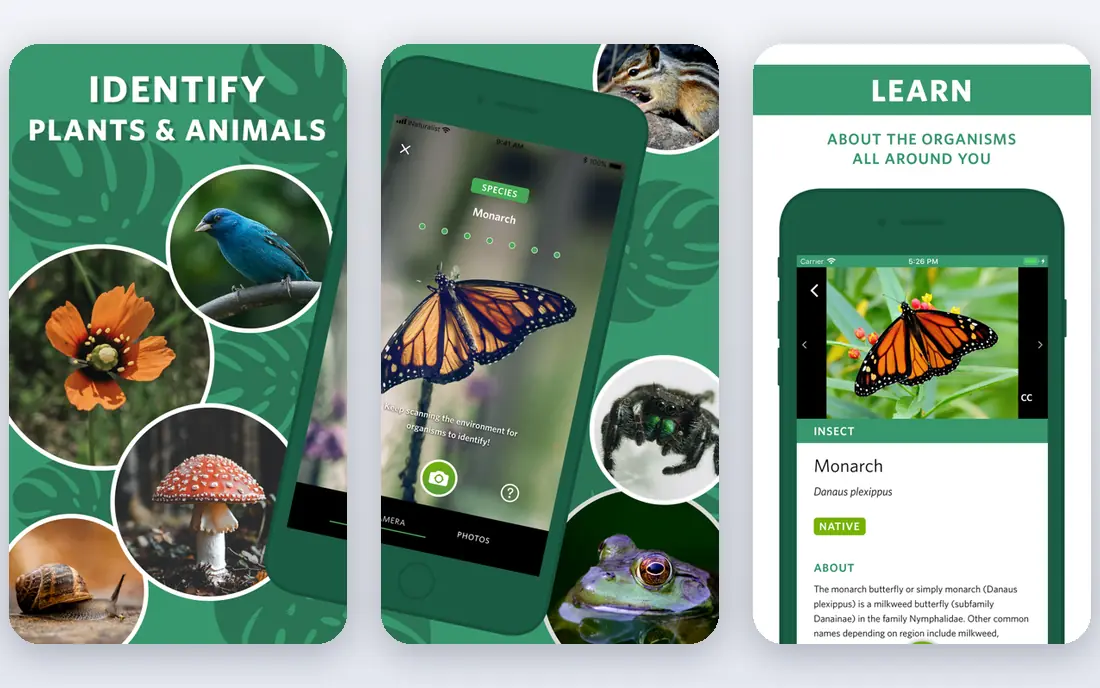
Seek by iNaturalist is our pick for families and casual users. Point your camera at an insect and Seek identifies it in real time, with no photo upload or account needed to start. Badges and monthly challenges turn a garden walk into a game for children, and the app keeps location data vague and avoids registration for basic use, which suits classroom and family use. Because it is built by the team behind iNaturalist, its identification engine draws on a large citizen-science database.
Seek is a general nature app, not an insect specialist, so it also identifies plants, fungi, and animals, and it sometimes stops at genus or family level when it is not confident about a species. It also offers little pest, bite, or safety detail compared with Picture Insect or BugKnow. For a free, low-pressure first identifier, especially for children, Seek is hard to beat.
- Free
- Real-time camera ID
- No account needed for basic use
- Family-safe design
- General nature app, not insect-only
- Sometimes stops at genus or family
- Less pest detail

iNaturalist is the full platform behind Seek, and it is the best choice if you want your identification checked by other people. Upload a photo, get an AI suggestion, and let the community confirm or correct it. That human review catches AI errors that a photo-only app would miss, and your observations contribute to real biodiversity science, which is a bonus for nature lovers. The database is huge, covering insects and many other groups worldwide.
The trade-off is speed and setup. Full use needs an account, identifications can take time while the community reviews them, and the interface feels more utilitarian than a polished consumer app. Use iNaturalist when accuracy matters more than an instant answer, or when you find an unusual insect that a quick AI match cannot settle.
- Free
- Community verification
- Contributes to science
- Huge observation database
- Needs an account for full use
- IDs can take time
- Interface feels utilitarian
BugKnow is built for the everyday homeowner question: what is this bug in my house, and should I worry about it. Point your camera at the insect for a species match from a database covering more than 260,000 insects, spiders, and other arthropods found across the United States, with profiles on habitat, behaviour, life cycle, and interaction with humans and pets. A bite checker gives a reference read on an unexplained bite or sting, and a pest severity assessment walks you through questions to gauge a possible infestation.
Scanning itself is free and unlimited, which is rare in this category, and you can post a photo to the in-app community for a second opinion when the AI is not confident. The US focus means coverage outside the United States may be thinner, and bite and pest tools give guidance, not a medical or pest-control diagnosis. For homeowners, BugKnow is the most practical pest-aware identifier here.
- Unlimited free scanning
- Large US species database
- Bite checker and pest severity assessment
- US focus
- Community second opinion needed when AI is unsure
- Paid features for full use
Insect ID, listed on app stores as Insect ID: AI Bug Identifier, is a simple photo identifier aimed at beginners and budding entomologists. Take a picture, answer a few prompts where needed, and get a species match with behaviour and habitat notes. The interface is easy to learn, and it suits users who want a clear answer without the science-community workflow of iNaturalist. Offline options for downloaded content help on field trips with poor signal.
The focus is on common species, so rarer insects may get a less precise match, and some versions ask several questions before giving a result, which slows a quick ID. Full features sit behind a paid upgrade, with pricing shown in the app. For a beginner who wants a straightforward bug identifier, Insect ID is a solid, low-friction choice.
- Simple photo ID workflow
- Beginner-friendly profiles
- Offline content options
- Focus on common species
- Several questions before a precise ID in some versions
- Paid upgrade for full features
Google Lens is not a dedicated bug app, but it is already on most Android phones and inside the Google app on iPhone, which makes it the lowest-effort option on this list. Snap or upload a photo of an insect and Lens will search visually similar images and pages, often giving you a species name or a close match in seconds. That convenience helps when you find a bug unexpectedly and do not want to install a new app first.
Lens is a general-purpose visual search tool, not an entomology app, so it offers less species depth, habitat detail, and safety guidance than Picture Insect or BugKnow. A close visual match can also be a different species that looks similar. Use Google Lens for a quick first guess, then confirm with Picture Insect, Seek, or iNaturalist before you act on the result, especially for stings, bites, or pest decisions.
- Already on most phones
- Free
- Snap or upload a photo for a visual match
- General visual search, not an insect specialist
- Less species depth
- No pest guidance
Bug Identifier is a photo-based identifier app found on iOS and Android app stores, built for fast answers on common insects. Upload or take a photo, get a match, and read a short profile. That speed suits household finds, where you mainly want to know if a bug is a common ant, beetle, moth, or spider, and if it is likely to be a pest. The workflow is simple, with no science-community steps to learn.
Depth is thinner than Picture Insect, and accuracy varies with photo quality, lighting, and angle, as with all AI identifiers. Full features sit behind a paid upgrade in some versions. Use Bug Identifier for quick household IDs, and confirm unusual, biting, or potentially harmful insects with iNaturalist or a local extension service before you handle or treat them.
- Fast photo matching
- Simple workflow
- Useful for common household insects
- Less depth than Picture Insect
- Accuracy varies by photo quality
- Paid features for full use
Insect Identifier is another app-store photo identifier that keeps the process simple: upload a photo, get a species suggestion, and read basic information about the insect. It works well for common garden insects, where a quick name and a short profile are enough to decide if to leave the insect alone or look up pest control. The simple layout suits users who do not want community features or a science platform.
Profile depth is smaller than Picture Insect, subscription prompts appear for full features, and there is less community review than iNaturalist. Treat its result as a first suggestion, especially for insects that bite, sting, or damage crops, and check a second source before you act. For a simple garden identifier, it is a usable free starting point.
- Simple photo upload
- Clear species suggestions
- Good for garden insects
- Smaller profile depth than rivals
- Subscription prompts
- Less community review
How we picked these
We compared official app pages, app store listings, and recent bug identifier guides, and we favoured apps that are still available on iOS or Android, that identify from a photo or live camera, and that give species information beyond a name. We checked if each app offers pest or safety context, community review, or a free tier, and we left out apps that had closed, that only identified plants, or that gave no species information at all. Prices here refer to the free tier where one exists, with paid upgrades shown in the app, since many insect apps show subscription pricing only inside the store listing.
How to choose the right insect identification app
Decide if you need speed, depth, or confirmation
For a fast answer, use Picture Insect, BugKnow, or Google Lens. For detailed profiles and pest context, use Picture Insect or BugKnow. For a confirmed identification, use iNaturalist and wait for community review. No single app does all three best, so pick the job that matters most for your usual finds, and keep a second app for checks.
Take a better photo for a better ID
AI accuracy depends heavily on photo quality. Get close, focus on the insect, include a clear side or top view, and avoid harsh shadows and motion blur. If the insect is small, crop the photo so it fills the frame, and take a second photo from another angle if you can do so safely without handling it. A good photo often matters more than which app you use.
Do not handle an unknown insect
Never pick up an insect you cannot identify, and keep children and pets away from it until you know what it is. Some insects sting, bite, or cause allergic reactions, and some look similar to harmless species. If you find a nest, a swarm, or signs of an infestation, contact a local pest professional or extension service rather than treating it yourself based on an app result alone.
Use free apps first, then pay only if you need depth
Seek and iNaturalist are free and cover most casual identification needs, while BugKnow offers unlimited free scanning. Pay for Picture Insect or another premium app only if you regularly need detailed profiles, pest guidance, or offline use. Test the free tier with your own garden and household finds before you subscribe, because accuracy varies by region and species.
Frequently asked questions
What is the best insect identification app overall?
Picture Insect is the best dedicated insect identifier for most people, with detailed species profiles and pest and safety context. Seek by iNaturalist is the best free alternative, especially for families, while iNaturalist is best if you want community confirmation.
What is the best free insect identification app?
Seek by iNaturalist is the best free insect identification app for most users, with real-time camera ID and no account needed for basic use. iNaturalist is also free and adds community review, while BugKnow offers unlimited free scanning with pest checks.
What is the best app for insect identification in the garden?
Picture Insect and BugKnow both suit garden use, with habitat and pest information alongside a species match. Seek is a good free garden companion for quick IDs during a walk, and iNaturalist helps when you find an unusual species that needs community confirmation.
Are insect identification apps accurate?
AI insect apps are often accurate for common species with a clear photo, but they can misidentify similar species, rare insects, or blurry photos. Treat a result as a starting point, check a second app or source for biting, stinging, or pest insects, and use iNaturalist community review for important IDs.
Can an insect app tell me if a bug is dangerous?
Dedicated apps such as Picture Insect and BugKnow give safety and pest context, including if a species is known to bite, sting, or damage property. That information is general guidance, not medical or pest-control advice, so seek professional help for bites, allergic reactions, nests, or infestations.
Do I need an account to identify insects?
No, not for basic use in several apps. Seek by iNaturalist needs no account for basic identification, and Google Lens works inside the Google app. iNaturalist needs an account for full community use, and some premium apps ask you to sign in for a subscription, so check privacy terms before you log sightings.
Sources
- https://www.farmstandapp.com/367514/best-insect-identification-keys/
- https://downbeach.com/news/2026/jul/06/6-best-free-bug-identification-apps/
- https://nerdbot.com/2026/07/07/5-best-household-insect-identification-apps/
- https://collegian.com/sponsored/2026/07/7-best-insect-identifier-apps-for-identification/
- https://www.pictureinsect.com
- https://www.inaturalist.org/pages/seek_app
- https://www.inaturalist.org
- https://lens.google
See where you really rank - block by block
ProMapRanker scans Google Maps across a grid of your service area. Simple monthly plans from $19, white-label on every plan.
Start freeKeep reading
 zscaler alternatives
Best Zscaler Alternatives in 2026
Looking for zscaler alternatives? We compare 9 SASE and zero trust platforms on architecture, data protection, pricing, and fit for your network and team.
Read → zapier alternatives free
Best Zapier Alternatives Free in 2026
Nine automation tools for zapier alternatives free in 2026, all with genuinely free tiers, plus free plan limits, starting prices and upgrade paths explained.
Read → which platform is best for online reputation
Which Platform Is Best for Online Reputation in 2026
Wondering which platform is best for online reputation? We compare 8 review, listing, and response tools for small and multi-location businesses and agencies.
Read →