 ProMapRanker
Best Index Fixed Income ETF Companies in 2026


Broad low-cost bond index range · Pricing starts at: 0.03% expense ratio
Key takeaways
- Most broad bond index ETFs track similar benchmarks, so cost and fund range often matter more than brand.
- Several flagship funds charge 0.03% per year, based on published fund data, but check the current prospectus before buying.
- Short, intermediate, and long bond funds behave differently when interest rates move, so duration matters.
- This is a guide based on publicly reported factors, not financial advice or a verified ranking.
Quick comparison
| Pick | Great for | Pricing starts at | Free tier | |
|---|---|---|---|---|
| Vanguard | Broad low-cost bond index range | 0.03% expense ratio | No | Visit |
 iShares by BlackRock | Largest bond ETF lineup | 0.03% expense ratio | No | Visit |
 Schwab | Low-cost aggregate bond access | 0.03% expense ratio | No | Visit |
 State Street SPDR | Portfolio bond ETFs | 0.03% expense ratio | No | Visit |
 Fidelity | Bond index funds and ETFs | 0.03% expense ratio | No | Visit |
 Invesco | Treasury and corporate bond ETFs | See website | No | Visit |
 Dimensional | Systematic fixed income ETFs | 0.17% expense ratio | No | Visit |
 BNY Mellon | Core bond ETF options | See website | No | Visit |
 JPMorgan | Active and index bond ETFs | See website | No | Visit |
The best index fixed income etf companies
We compared providers by their flagship index bond funds, published expense ratios, and fund range. Each profile names a flagship fund to make comparison easier, but you should check the current prospectus for fees, holdings, and risks before investing. This is not financial advice, and bond prices can fall as well as rise.
Vanguard is a natural starting point for bond index investors, because its Total Bond Market ETF covers a broad mix of US government, corporate, and securitized bonds. The fund is widely held, trades easily, and charges 0.03% per year according to published fund data. That low cost is a major reason many investors use it as a core bond holding.
The challenge is choice. Vanguard also offers short-term, intermediate-term, international, and Treasury funds, and each one fits a different goal. Start with your time horizon and risk tolerance, then pick duration and credit exposure to match, rather than buying every bond fund on offer.
- Flagship Total Bond Market ETF (BND)
- Broad fund range
- Long index history
- Fund choice can overwhelm new investors
- Bond funds still carry interest rate risk
- Platform features vary
iShares, from BlackRock, offers one of the widest bond ETF lineups in the market. Its Core US Aggregate Bond ETF tracks a benchmark close to Vanguard's flagship, also at 0.03% per year in published data, which makes direct comparison straightforward. Beyond that core fund, iShares covers Treasuries, corporates, municipals, high yield, and international bonds.
That breadth helps investors who want precise exposures, such as short Treasuries for cash-like holdings or long Treasuries for duration. It also means you should check each fund's index, duration, and credit quality, because a bond ETF label alone does not tell you its risk.
- Flagship Core US Aggregate Bond ETF (AGG)
- Very wide bond ETF range
- High trading liquidity
- Wide range can confuse
- Some specialist funds cost more
- Bond risk remains even in broad funds
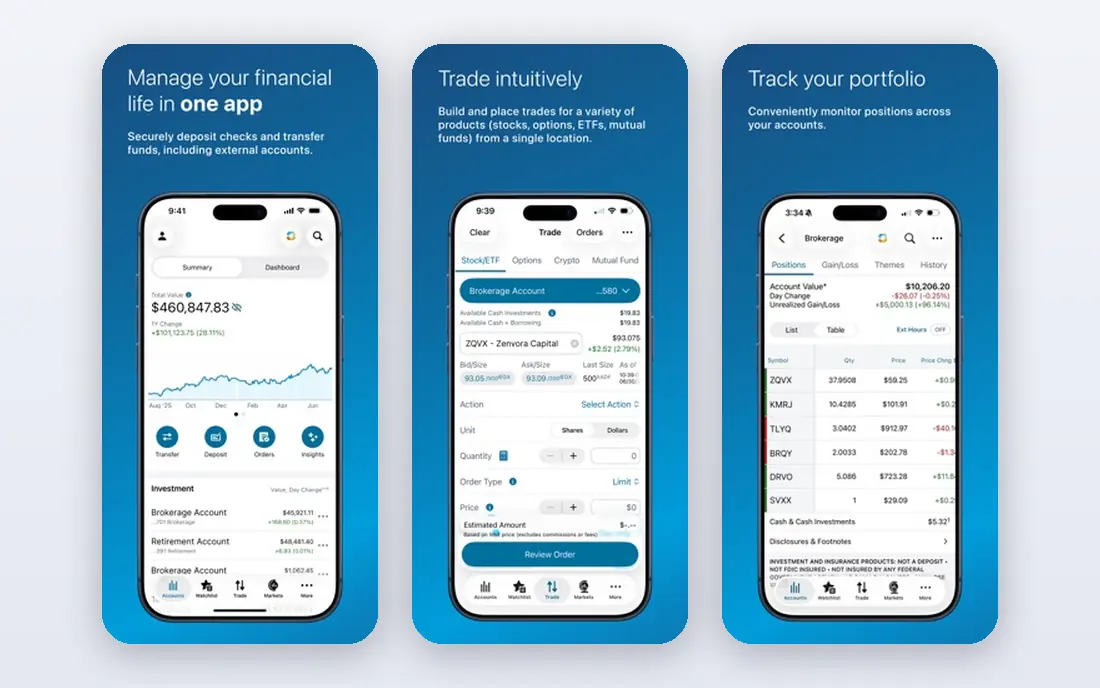
Schwab suits investors who want a simple, low-cost core bond fund without sorting through dozens of options. Its US Aggregate Bond ETF covers a broad US bond market at 0.03% per year in published data, similar to Vanguard and iShares flagships. For Schwab brokerage customers, buying and holding that fund is straightforward.
The smaller range is both a strength and a limit. Core needs are well covered, but specialist exposures may require funds from other providers. Check whether your account allows outside ETFs without extra fees before building a multi-provider portfolio.
- Flagship US Aggregate Bond ETF (SCHZ)
- Low published cost
- Simple range for core holdings
- Smaller lineup than iShares
- Brokerage features matter for access
- Bond funds can still lose value
State Street, through its SPDR brand, offers portfolio bond ETFs designed as low-cost core holdings. Its Portfolio Aggregate Bond ETF tracks a broad US bond benchmark at 0.03% per year in published data, putting it in line with the largest rivals. That makes it a credible alternative when you compare core funds on cost alone.
Awareness is lower among retail investors, and some SPDR funds hold fewer assets than Vanguard or iShares equivalents. Smaller size does not automatically mean a bad fund, but check trading volume, spreads, and holdings before buying, especially for less common exposures.
- Flagship Portfolio Aggregate Bond ETF (SPAB)
- Low published cost
- Strong institutional background
- Some funds are smaller than rivals
- Range is less well known to retail buyers
- Bond risk applies
Fidelity is worth including because many investors hold bond index exposure as a mutual fund rather than an ETF. Its US Bond Index fund charges 0.03% per year in published data and covers a broad US bond market, similar to the ETF flagships above. Fidelity also offers bond ETFs and managed options for investors who want them.
The main task is to match account type to fund type. Mutual funds and ETFs differ in trading, minimums, and tax handling in taxable accounts, so check those details for your account. Fidelity's platform tools can help compare, but the prospectus remains the final source.
- US Bond Index fund at low published cost
- Broad brokerage platform
- Research and planning tools
- Flagship bond index is a mutual fund, not only an ETF
- Fund names can confuse
- Bond risk remains
Invesco offers a broad bond ETF range that goes beyond a single aggregate fund. Treasury, corporate, and laddered maturity funds let investors target a specific duration or income profile, which suits more hands-on portfolios. Its BulletShares-style laddered funds, for example, target bonds maturing in a set year.
That precision requires care. A laddered or Treasury-only fund behaves differently from a broad aggregate fund, especially when rates move. Read the index description and duration figure for each fund, and do not assume a familiar brand name means a broad holding.
- Wide Treasury, corporate, and laddered bond ETFs
- Useful for duration targeting
- Global fund range
- Costs vary by fund
- Some funds are specialist, not core
- Check index and duration carefully
Dimensional takes a systematic approach to fixed income, using research on maturity, credit, and currency factors rather than tracking a single benchmark in the simplest way. Its Core Fixed Income ETF charges 0.17% per year in published data, higher than the 0.03% aggregate flagships, which reflects that broader, research-led design. Some investors value that flexibility, while others prefer the lowest possible cost.
Access can also differ. Dimensional funds are widely available through brokerages, but some investors first meet them through advisers. Compare total cost, holdings, and duration with a plain aggregate fund before deciding whether the extra cost is justified for your goals.
- Core Fixed Income ETF (DFCF)
- Systematic, research-led approach
- Broad fixed income exposure
- Higher published cost than 0.03% flagships
- Approach is less simple than pure index tracking
- Adviser access may matter
BNY Mellon, through its ETF range, offers a core bond ETF that appears in published peer comparisons at a low cost. For investors who already use BNY services, or who want an alternative core fund, it provides broad bond exposure without a complex lineup. Its asset management scale supports the fund operation behind the scenes.
Retail awareness is lower, so check current fees, assets, and trading spreads before buying. A core fund should be easy to trade and hold for years, so liquidity and cost matter as much as the provider name.
- Core Bond ETF (BKAG)
- Low-cost core option in published data
- Large asset management background
- Smaller retail profile than top rivals
- Fund range is narrower
- Check trading liquidity
JPMorgan rounds out this list because it offers both active and index-style bond ETFs, which shows how the fixed income market has changed. Investors who want a core bond holding can look at its index options, while investors who want active management can look at its active bond ETFs. That range suits investors who mix approaches.
The key check is strategy. An active bond ETF may hold different bonds, take different credit risks, and charge more than a plain index fund, even when the name sounds similar. Read the prospectus, compare duration and credit quality, and decide whether active risk fits your plan.
- Broad bond ETF range
- Active bond expertise alongside index options
- Large global manager
- Some flagship bond ETFs are active, not index
- Costs vary widely
- Check strategy for each fund
How we picked these
We compared providers by flagship bond index funds, published expense ratios, fund range, and availability to US investors. We favored providers with a clear core bond fund, published cost data, and a range that covers more than one bond segment. We left out providers whose bond index offer was unclear or whose funds were not readily available as ETFs or index funds.
This guide is based on publicly reported factors such as fund names, published expense ratios, and fund range. It is not a verified ranking, and fees, holdings, and risks change over time. Always check the current prospectus and fund fact sheet before investing, and consider professional advice for your situation.
How to compare bond index funds
Start with the benchmark. A broad aggregate fund, a Treasury-only fund, and a corporate fund can all be called bond funds, but they hold different bonds and react differently to rate changes. Match the benchmark to your goal, whether that goal is steady income, capital preservation, or diversification from stocks.
Next, check duration and credit quality. Duration gives a rough sense of sensitivity to interest rate moves, while credit quality shows how much of the fund sits in government versus corporate or lower-rated bonds. A fund with longer duration or lower credit quality can offer higher income, but it also carries more risk.
Costs beyond the expense ratio
The expense ratio is the main ongoing cost, but trading spreads and taxes also matter, especially in taxable accounts. ETFs and mutual funds handle distributions and trading differently, so compare after-tax outcomes where relevant. Low cost helps, but it does not remove bond market risk.
Building a simple bond core
Many investors start with one broad aggregate fund, then add short-term or Treasury funds only if they have a specific need, such as near-term spending or lower volatility. Avoid stacking several overlapping bond funds that hold the same bonds, because that adds complexity without adding diversification.
Frequently asked questions
What is an index fixed income ETF?
An index fixed income ETF is a fund that tracks a bond index, holding many bonds in one traded fund. It gives diversified bond exposure without buying individual bonds, and it trades on an exchange like a stock. Check the index, duration, and fees before buying.
Are bond ETFs safe?
Bond ETFs are generally less volatile than stock ETFs, but they are not risk-free. Bond prices fall when interest rates rise, and corporate bonds carry credit risk. A broad, high-quality bond fund reduces single-bond risk, but it does not remove market risk.
What does a 0.03% expense ratio mean?
It means the fund charges 0.03% of assets per year in management costs, or about 3 dollars per year on a 10,000 dollar holding, before trading costs and taxes. That figure comes from published fund data and can change, so check the current prospectus. Lower costs help returns over time, but they do not guarantee performance.
Should I choose BND, AGG, or SCHZ?
These flagship funds track similar broad US bond benchmarks and charge similar published costs, so the choice often comes down to brokerage, fund size, and personal preference. Compare holdings, duration, and trading costs in your account before deciding. This guide is not financial advice.
Can bond ETFs lose money?
Yes. Bond ETFs can fall in value, especially when interest rates rise sharply or credit conditions worsen. Shorter-duration and higher-quality funds tend to fall less in those periods, but no bond fund is guaranteed. Hold bond funds for income and diversification, not as a cash substitute, unless you choose a very short-term fund.
Sources
See where you really rank - block by block
ProMapRanker scans Google Maps across a grid of your service area. Simple monthly plans from $19, white-label on every plan.
Start freeKeep reading
 zoro.to alternatives
Best Zoro.to Alternatives in 2026
We compare the best zoro.to alternatives in 2026, listing only legal licensed anime streaming services, from Crunchyroll to free options for fans today.
Read → zip alternatives
Best Zip Alternatives in 2026
We compare the best zip alternatives for buy now, pay later in 2026, covering pay-in-4 plans, fees, spending limits, and credit reporting options today.
Read → yesware alternatives
Best Yesware Alternatives in 2026
Compare the best yesware alternatives for sales email tracking, templates, and sequences, with current pricing and honest tradeoffs for small sales teams.
Read →