 ProMapRanker
6 Best In Class Database Software for Data Security Options for 2026


Teams that want solid security without a licence fee · Pricing starts at: $0, no licence fee for the software itself (PostgreSQL project FAQ, checked 15 Nov 2026)
Direct answer
PostgreSQL leads the list, best for teams that want solid security without a licence fee. Amazon Aurora is the stronger choice for AWS teams that run MySQL or PostgreSQL workloads and want managed security, while Snowflake suits Cloud analytics teams that require governed access to shared data across departments.
Key takeaways
- PostgreSQL is the opening pick, best for teams that want capable security without a licence fee, and full control over their own deployment.
- 2 of 6 tools offer a free plan: PostgreSQL, MongoDB Enterprise Advanced.
- The main caution on Snowflake: costs are hard to predict, since credit use relies on warehouse size, query time, and edition, and the credit price rises to $3.00 on Enterprise and $4.00 on Business Critical.
- Google Cloud SQL suits Google Cloud teams that run MySQL.
Quick comparison
| Pick | Great for | Pricing starts at | Free tier | |
|---|---|---|---|---|
| PostgreSQL | Teams that want solid security without a licence fee | $0, no licence fee for the software itself (PostgreSQL project FAQ, checked 15 Nov 2026) | Yes | Visit |
 Amazon Aurora | AWS teams that run MySQL or PostgreSQL workloads and want | $0.12 per ACU-hour for Aurora Serverless v2 Standard configuration, US East (AWS pricing page, checked 15 Nov 2026) | New AWS accounts get $100 in credits at sign-up, and Aurora PostgreSQL serverless has a Free Tier option with limits | Visit |
 Snowflake | Cloud analytics teams that require governed access to shared data | $2.00 per Platform Credit on Standard edition, on demand, AWS US East (Snowflake Service Consumption Table, checked 15 Nov 2026) | Free trial (30 days) | Visit |
 Oracle Database | Large enterprises in finance | $0.0538 per ECPU per hour for Oracle Base Database Service Standard edition (vendor pricing page, checked 15 Nov 2026) | Free trial | Visit |
 MongoDB Enterprise Advanced | Teams that store document data on their own servers | Quote (MongoDB does not publish an Enterprise Advanced price; sales provides a quote, checked 15 Nov 2026) | Yes | Visit |
 Google Cloud SQL | Google Cloud teams that run MySQL | $0.0105 per hour for a db-f1-micro shared-core instance, Enterprise edition, us-central1 (Google Cloud pricing page, checked 15 Nov 2026) | Free trial (30 days) | Visit |
6 options for in class database software for data security in detail
ProMapRanker put together this guide to in class database software for data security for readers who want a clear shortlist without reading every vendor page. It compares 6 tools on starting price, free plans, who each one suits and where each one falls short.
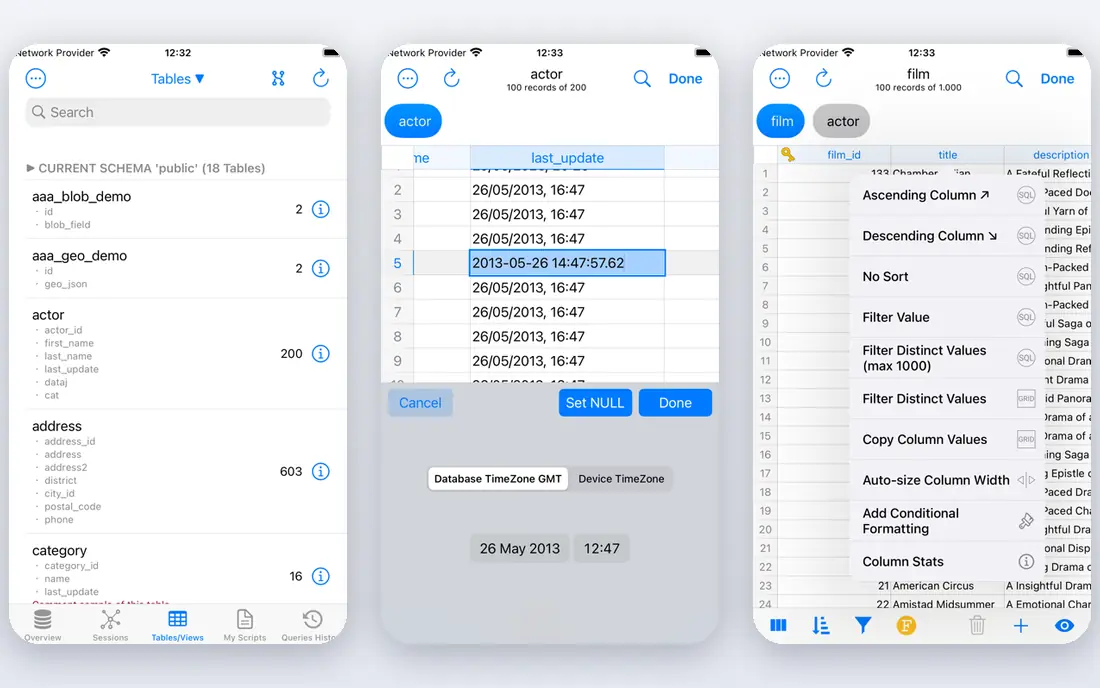
PostgreSQL targets teams that want strong security without a licence fee, and full control over their own deployment. Row-level security lets you write policies that filter rows by the current user. A managed service bills for hosting, so the $0 licence fee does not mean a $0 running cost.
Beyond that, connections can use TLS, and the pgcrypto extension brings encryption and hashing functions. For everyday use, you can grant privileges at the column level, so a reporting user sees only the columns they need. Price to start with PostgreSQL: $0, no licence fee for the software itself. PostgreSQL has a free plan.
Honest limits: managed services charge separately.
- Row-level security
- Including pgcrypto for encryption functions
- There is no vendor support desk by default, so teams must buy support from a third party or run security patching themselves
Amazon Aurora
Great for: AWS teams that run MySQL or PostgreSQL workloads and want
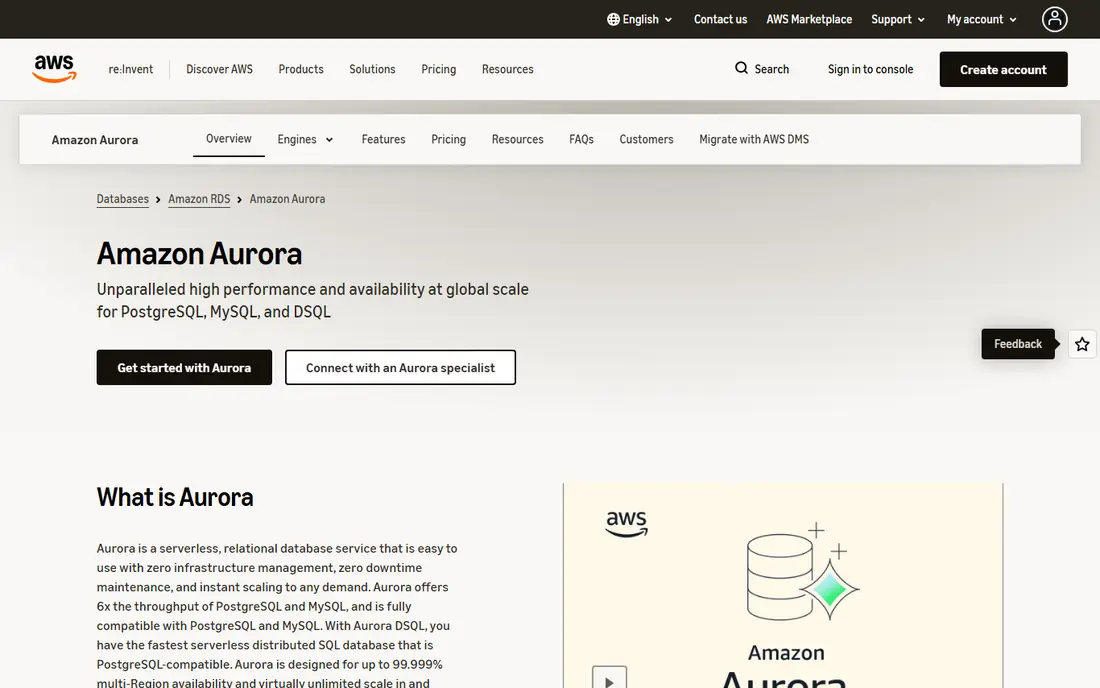
For AWS teams that run MySQL or PostgreSQL workloads and want managed security, patching, and quick failover, Amazon Aurora is a natural candidate. Amazon Aurora is a managed relational database that is compatible with MySQL and PostgreSQL. It keeps data in a distributed volume that is replicated across three Availability Zones, with six copies of each write.
Beyond that, pricing is usage based: Aurora Serverless v2 Standard costs $0.12 per ACU-hour, with storage at $0.10 per GB a month and IOPS at $0.20 per million requests. Beyond that, Provisioned instances start at about $0.29 per hour for a db.r5.large in US East. Amazon Aurora cost at the entry level: $0.12 per ACU-hour for Aurora Serverless v2 Standard configuration, US East. Free options: New AWS accounts get $100 in credits at sign-up, and Aurora PostgreSQL serverless has a Free Tier option with limits.
Drawbacks to consider: the service only runs inside AWS.
Highlights: automatic patching and backup.
- Encryption at rest with AWS KMS
- IAM database authentication
- Costs vary by instance size, storage, IOPS, so a busy workload can cost far more than the starting ACU rate recommends
Snowflake
Great for: Cloud analytics teams that require governed access to shared data
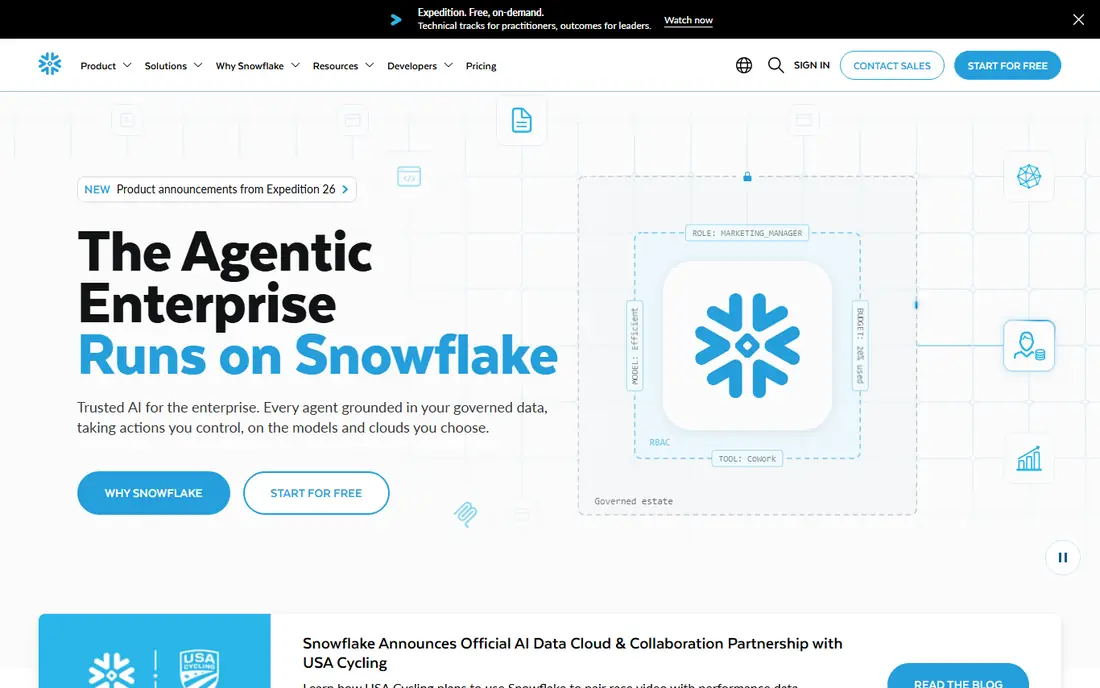
Snowflake makes the most sense for Cloud analytics teams that need governed access to shared data across departments and partners. Snowflake is a cloud data product, not a traditional transactional database, and its security model fits analytics well. New Gen2 warehouses use 1.35 credits per hour at X-Small on AWS.
Also, a Platform Credit costs $2.00 on Standard, $3.00 on Enterprise, and $4.00 on Business Critical, on demand in AWS US East, and an X-Small warehouse uses 1 credit per hour, doubling with each size step. Worth adding: data is encrypted at rest and in transit by default. The starting price for Snowflake: $2.00 per Platform Credit on Standard edition, on demand, AWS US East. Free plan details: Free trial (30 days).
Highlights: end-to-end encryption. The main drawbacks: the credit price rises to $3.00 on Enterprise and $4.00 on Business Critical.
- In-depth access history
- Dynamic data masking
- Costs are hard to predict, since credit use relies on warehouse size, query time, edition
Choose Oracle Database for large enterprises in finance, health, and government that need deep control over encryption and separation of duties. Database Vault blocks even privileged users from reading application data except when they hold a specific realm grant.
Worth adding: on-premises Enterprise Edition is listed at $47,500 per processor, with Standard Edition 2 at $17,500 per processor, so buyers should get a written quote first. The trade-off is cost and complexity. Oracle Database starts at: $0.0538 per ECPU per hour for Oracle Base Database Service Standard edition. Free options: Free trial.
Downsides: Licensing is complicated, with per-processor and per-user choices that are simple to misread.
- Data Redaction
- Transparent data encryption
- Enterprise Edition features add large cost
MongoDB Enterprise Advanced
Great for: Teams that store document data on their own servers
MongoDB Enterprise Advanced targets teams that store document data on their own servers or private cloud and need commercial support and advanced. MongoDB Enterprise Advanced is the self-managed commercial edition of MongoDB.
It adds the security features that matter most for sensitive data: encryption at rest, client-side field-level encryption, LDAP and Kerberos authentication, and in-depth auditing. MongoDB Enterprise Advanced cost at the entry level: quote. MongoDB Enterprise Advanced has a free plan.
Downsides: The price is not published, so budgeting needs a sales conversation.
- Ops Manager for backup and monitoring
- Field-level encryption
- The advanced security features are not in the free Community Server
Google Cloud SQL is aimed squarely at Google Cloud teams that run MySQL, PostgreSQL, or SQL Server and want a simple managed service. Google Cloud SQL is a completely managed service for MySQL, PostgreSQL, and SQL Server. Pricing is per vCPU and per GiB of memory: Enterprise edition dedicated-core instances cost $0.0413 per vCPU-hour plus $0.007 per GiB-hour in us-central1, whereas Enterprise Plus costs more and brings a higher availability SLA.
In practice, IAM integration ties database access to Google Cloud identity, and private IP keeps the instance off the public internet. The cheapest entry point is the shared-core db-f1-micro at $0.0105 per hour, but that size fits testing only. Price to start with Google Cloud SQL: $0.0105 per hour for a db-f1-micro shared-core instance, Enterprise edition, us-central1. Free options: Free trial (30 days).
Where it falls short: high availability doubles the compute rate, which buyers commonly miss in early estimates.
- IAM integration
- Encryption at rest and in transit by default
- There is no permanent free level for a production instance
Notes on in class database software for data security
If your data lives in the cloud, Snowflake or Amazon Aurora may fit better, since they add managed patching and built-in encryption. As for the details, key takeaways:
In Class Database Software for Data Security: the basics
Encryption and access control solve different problems. For everyday use, you need both. Transparent data encryption handles the first case.
Row-level security, column masking, and database vault features cover the second. Worth adding: the best tools here offer both, and they let you run keys outside the database. Beyond that, Enterprise editions typically add the most solid choices, whereas free or community editions may leave some out.
On top of that, check the edition table on each vendor page before you commit.
How we compared the tools
Pricing pages, product documentation and feature lists were the main sources, and every entry carries at least one honest drawback. Figures are shown as the vendors publish them. Billing terms, seat minimums and add-ons can change the real cost. The ranking is editorial: typical fit first, then clear pricing, then free access. If your needs are unusual, read the profiles rather than relying on position.
Questions to settle before buying
- Confirm the entry price on the vendor page for PostgreSQL and the others: seat counts and billing terms change the total.
- Look at free plan limits closely: PostgreSQL and MongoDB Enterprise Advanced have one, and the caps decide whether it is usable for real work.
- Use real work to test the free trial from Snowflake, Oracle Database and Google Cloud SQL, rather than a demo project.
- Before choosing PostgreSQL, weigh its main limit: there is no vendor support desk by default, so teams must buy support from a third party or run security patching themselves, and managed services charge separately.
- Check the integration list for Oracle Database against the tools you run today, and note which ones need a higher plan.
- Ask Amazon Aurora which support channels and response times come with the plan you would buy.
Frequently asked questions
Is PostgreSQL the right pick for everyone comparing in class database software for data security?
No single tool suits every team. PostgreSQL comes first because it fits teams that want strong security without a licence fee, while Amazon Aurora suits AWS teams that run MySQL or PostgreSQL workloads and want managed security and Snowflake suits Cloud analytics teams that need governed access to shared data across departments and partners. Match the tool to your own size, budget and workflow before deciding.
Do these tools publish their prices?
Yes. Every tool from PostgreSQL to Google Cloud SQL shows a starting price, though seats, add-ons and billing terms still change the final cost.
How are the tools for in class database software for data security ordered?
PostgreSQL sits first and Google Cloud SQL last because the order follows typical fit for in class database software for data security, then price clarity and free access. It is a judgement call, so read each profile for fit and limits.
Should I choose a cloud database or a self-managed database for security?
Choose a self-managed database if policy needs on-premises control, or you need custom key management and network design. Either way, you still own access policy, key rotation, audit review, and user training.
Can I try these tools before paying?
Often, yes. PostgreSQL and MongoDB Enterprise Advanced have a free plan and Snowflake, Oracle Database and Google Cloud SQL offer a free trial. Use your own data and a real task during the test, and check what the free tier or trial limits before you rely on it.
How much does secure database software cost?
Cloud tools bill by use: Snowflake charges $2.00 per Platform Credit on Standard in AWS US East, Aurora Serverless v2 costs $0.12 per ACU-hour, and Cloud SQL opens at $0.0105 per hour for a tiny test instance. Always model storage, replicas, high availability, and support plus compute.
Sources
See where you really rank - block by block
ProMapRanker scans Google Maps across a grid of your service area. Simple monthly plans from $19, white-label on every plan.
Start freeKeep reading
 zscaler alternatives
Best Zscaler Alternatives in 2026
Looking for zscaler alternatives? We compare 9 SASE and zero trust platforms on architecture, data protection, pricing, and fit for your network and team.
Read → zapier alternatives free
Best Zapier Alternatives Free in 2026
Nine automation tools for zapier alternatives free in 2026, all with genuinely free tiers, plus free plan limits, starting prices and upgrade paths explained.
Read → which platform is best for online reputation
Which Platform Is Best for Online Reputation in 2026
Wondering which platform is best for online reputation? We compare 8 review, listing, and response tools for small and multi-location businesses and agencies.
Read →