 ProMapRanker
Best IFTA Reporting Software in 2026


Owner-operators and small fleets · Pricing starts at: $19 per month
Key takeaways
- FleetCollect and ExpressIFTA suit small fleets, while Motive and Samsara suit larger fleets that already use telematics.
- GPS mileage and fuel card imports reduce manual entry, which is where most IFTA errors start.
- Quarterly rate updates, state-by-state mileage, and fuel by jurisdiction are the core outputs to check.
- Audit-ready records matter as much as the return itself, so keep GPS trails, fuel receipts, and trip logs together.
- Per-filing tools can be cheaper for one truck, while monthly fleet tools suit multi-truck operations.
Quick comparison
| Pick | Great for | Pricing starts at | Free tier | |
|---|---|---|---|---|
| FleetCollect | Owner-operators and small fleets | $19 per month | Free trial | Visit |
 ExpressIFTA | Budget filers who enter data manually | $14.90 per filing | No | Visit |
 TruckingOffice | Owner-operators who want dispatch plus IFTA | $20 per month | Free trial | Visit |
 IFTA Plus | Small fleets that want a dedicated IFTA tool | $99 per quarter | Free trial | Visit |
 Motive | Larger fleets that use ELD and telematics | See website | Free trial | Visit |
 Samsara | Enterprise fleets that need telematics plus IFTA | See website | Free trial | Visit |
 Geotab | Telematics-focused fleets | See website | Free trial | Visit |
 J.J. Keller | Fleets that want managed compliance support | See website | No | Visit |
 Truxello | Small and midsize fleets that want dispatch plus IFTA | $29 per month | Free trial | Visit |
The best IFTA reporting software
We compared nine IFTA tools for mileage tracking, fuel records, quarterly reports, and audit support, with a focus on fleet size and data sources.
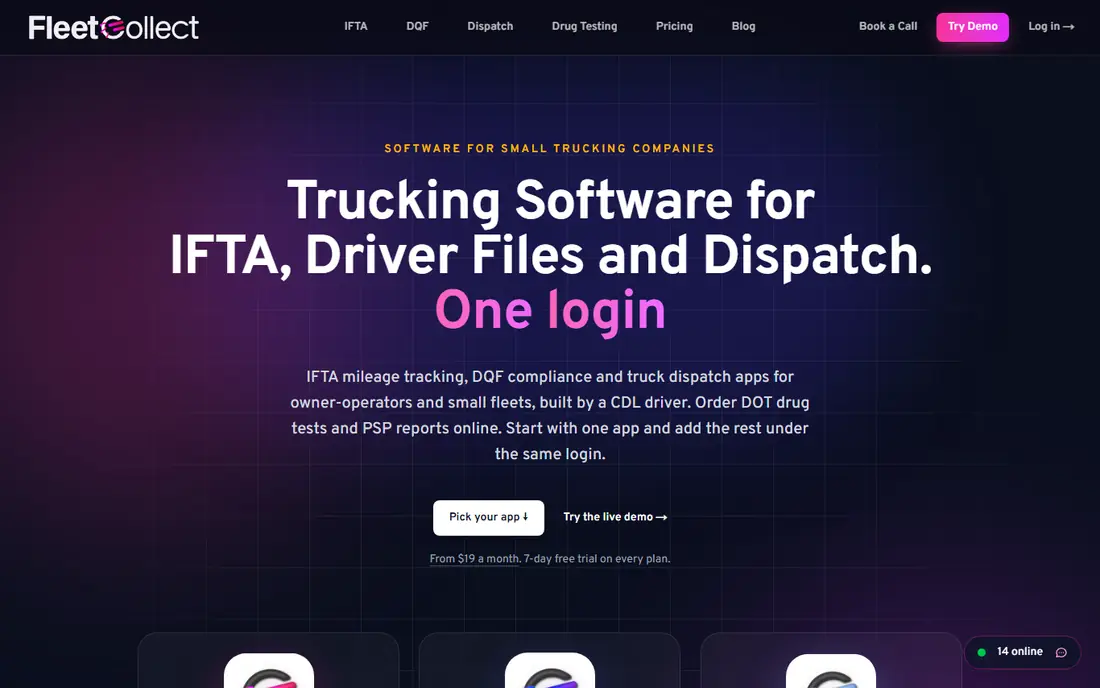
FleetCollect is a strong option in this list. FleetCollect focuses on fuel tax tracking, with GPS mileage, fuel logging, and quarterly reports in one small-fleet tool. Its automatic location detection for fuel stops reduces manual state entry, which helps when drivers cross several states in one trip.
In our view, the main trade-off is this: it is narrower than a full telematics platform, so fleets that need ELD, safety, and maintenance tools may need a second system. That matters most when your volume, team size, or budget changes, so test the setup you will use every week before you commit.
- Automatic GPS mileage tracking
- Fuel purchase logging
- Quarterly report generation
- Smaller feature set than full telematics suites
- Pricing varies by fleet size
For many buyers, ExpressIFTA is a practical place to start. ExpressIFTA is a low-cost, filing-focused tool for carriers that already have mileage and fuel totals. Its per-filing price suits a single truck or a carrier that files only four times a year and wants a simple return.
The honest catch is it has no GPS tracking, so mileage and fuel must be entered or imported from another source, which adds work for larger fleets. Before you sign up, run one real task through it and check the result against your current process.
- Quarterly IFTA return generation
- Current tax rate tables
- Direct filing support in comparisons
- No GPS tracking
- Manual data entry for mileage and fuel
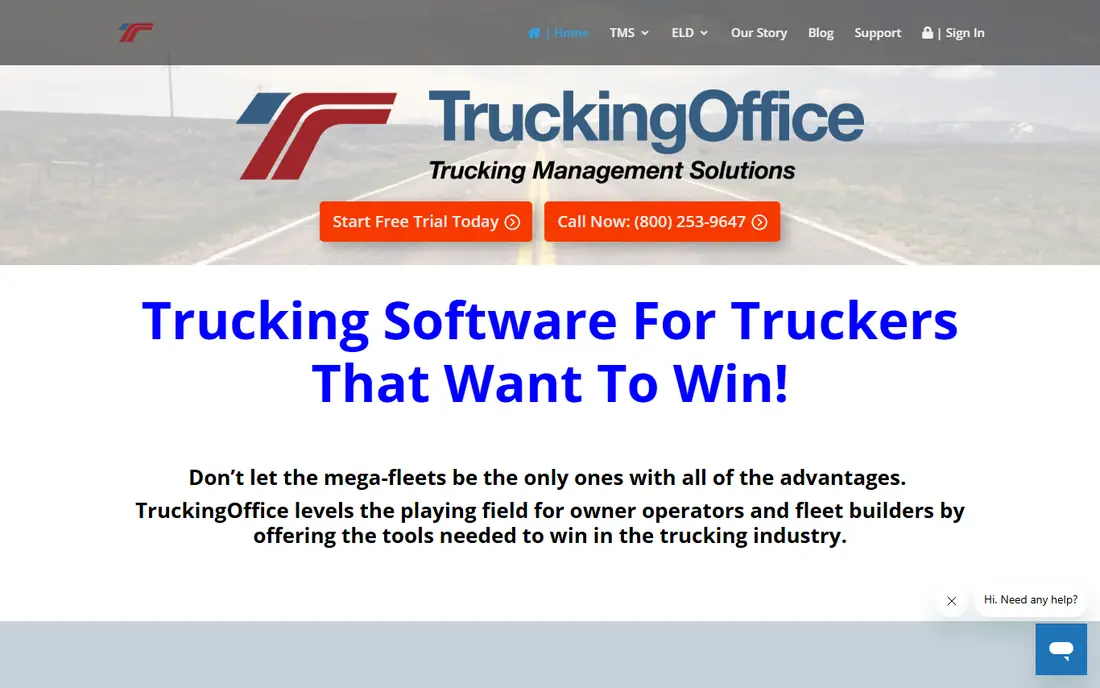
TruckingOffice takes a different approach in this category. TruckingOffice pairs dispatch and invoicing with IFTA calculations, so a small carrier can run back-office work in one place. Its IFTA reports use trip and fuel data already entered for dispatch, which reduces duplicate entry for owner-operators.
We would weigh this point carefully: it lacks a direct QuickBooks link in the comparisons we read, and some mileage features need an add-on, so check the total price. A short trial with your own data tells you more than a feature page, so use it before you move a whole workflow across.
- Dispatch, invoicing, and IFTA
- Mileage and expense tracking
- Driver settlement tools
- No direct QuickBooks link in comparisons
- Mileage add-on may cost extra
IFTA Plus deserves a close look before you decide. IFTA Plus focuses on IFTA reporting, with mileage and fuel imports and quarterly reports by jurisdiction. Its audit package approach helps when a carrier needs to show how a return was built, not just the final numbers.
In our view, the main trade-off is this: it is narrower than a full trucking platform, so carriers that also need dispatch and maintenance tools should plan for a second product. That matters most when your volume, team size, or budget changes, so test the setup you will use every week before you commit.
- Quarterly IFTA reports
- Fuel and mileage imports
- Audit-ready record package in comparisons
- Narrower than a full fleet platform
- Filing support varies by state
Motive is a strong option in this list. Motive combines ELD compliance, GPS tracking, and fleet tools with IFTA reporting drawn from telematics data. Its fuel card links and GPS trails give a stronger audit trail than manual logs, especially across many vehicles.
The honest catch is hardware and per-vehicle pricing add up, so small fleets should compare the full monthly total with a filing-only tool. Before you sign up, run one real task through it and check the result against your current process.
- ELD and GPS fleet tracking
- Fuel card integrations
- IFTA reporting from telematics data
- Hardware and per-vehicle costs add up
- Full value needs fleet-wide adoption
For many buyers, Samsara is a practical place to start. Samsara is a telematics platform that can feed IFTA reports from GPS and fuel data across a fleet. Its breadth suits fleets that already use Samsara for safety, routing, and vehicle data, since IFTA becomes one output of that system.
We would weigh this point carefully: pricing is by quote and the platform is broad, so a carrier that only needs quarterly returns may pay for tools it does not use. A short trial with your own data tells you more than a feature page, so use it before you move a whole workflow across.
- GPS and telematics platform
- Fuel card integrations
- IFTA reports from fleet data
- Pricing is by quote
- Platform is broad for a carrier that only needs IFTA
Geotab takes a different approach in this category. Geotab provides GPS and telematics data that can support IFTA reporting through its platform and integrations. Its analytics and vehicle data help larger fleets link mileage, fuel, and vehicle use in one record set.
In our view, the main trade-off is this: pricing is by quote, and IFTA output may need integration setup, so confirm the exact report format before signing. That matters most when your volume, team size, or budget changes, so test the setup you will use every week before you commit.
- GPS tracking and telematics
- IFTA reporting through integrations
- Fleet analytics
- Pricing is by quote
- IFTA setup may need integration work
J.J. Keller deserves a close look before you decide. J.J. Keller offers managed IFTA services alongside compliance and safety tools for fleets. Its managed approach suits carriers that prefer a provider to handle filing steps and compliance checks, rather than building reports themselves.
The honest catch is pricing is by quote and the service model is heavier than a self-serve filing tool, so it fits fleets that want support more than software alone. Before you sign up, run one real task through it and check the result against your current process.
- Managed IFTA filing service
- Compliance and safety tools
- Audit support in comparisons
- Pricing is by quote
- Less suited to a carrier that wants a simple self-serve tool
Truxello is a strong option in this list. Truxello combines dispatch, invoicing, settlements, and IFTA, with fuel card import and ELD links. Its per-truck pricing and included routing and mileage tools help small fleets compare a true total, rather than adding separate mileage tools.
We would weigh this point carefully: per-truck pricing still grows with fleet size, and its footprint is newer than Motive or Samsara, so check support and report formats during a trial. A short trial with your own data tells you more than a feature page, so use it before you move a whole workflow across.
- Dispatch and IFTA in one platform
- Fuel card import
- ELD connections in comparisons
- Per-truck pricing grows with fleet size
- Newer footprint than large telematics brands
How we picked these
We compared official product pages, pricing pages, and recent IFTA comparisons. We kept only tools that are still offered in October 2026 and that produce or support IFTA quarterly reports. We used See website where a vendor does not publish a clear starting price. We did not claim hands-on testing. This article is general information, not tax advice, and carriers should confirm filing rules with their base jurisdiction.
How to choose IFTA software without creating an audit problem
Start with your data source. GPS mileage and fuel card imports cut manual entry, while manual tools need a disciplined log for every trip and fuel stop. Check the report format for your base state, whether tax rates update each quarter, and whether the tool keeps GPS trails, fuel receipts, and trip logs in one audit package. Ask about filing deadlines and reminders, since a missed quarter brings penalties even when the numbers are right. Finally, price the full year, including hardware, per-vehicle fees, and any mileage add-on, rather than only the headline monthly rate.
Frequently asked questions
What is IFTA reporting software?
It is software that tracks miles driven and fuel bought by jurisdiction, applies the correct quarterly tax rates, and produces an IFTA return for a carrier base state. Some tools also file the return or prepare it for filing.
How often do I file IFTA?
IFTA returns are filed quarterly, with deadlines after each quarter ends. Good software sends reminders before each deadline and keeps the records for that quarter in one place.
Do I need GPS tracking for IFTA?
GPS tracking is not the only way to build a return, but it reduces manual entry and gives a stronger audit trail. Manual tools can work for one truck, as long as mileage and fuel logs are complete and consistent.
What records should I keep for an IFTA audit?
Keep trip logs, GPS trails where available, fuel receipts or fuel card records, and the calculations behind each return. A tool that stores those items together makes an audit far easier to handle.
Is per-filing or monthly pricing better?
Per-filing pricing can be cheaper for one truck that files four times a year. Monthly fleet pricing suits multi-truck carriers that also need dispatch, telematics, or ongoing mileage tracking.
Sources
See where you really rank - block by block
ProMapRanker scans Google Maps across a grid of your service area. Simple monthly plans from $19, white-label on every plan.
Start freeKeep reading
 worlds best local seo company
8 Worlds Best Local SEO Companies for Map Pack Growth in 2026
Compare the worlds best local seo company options for Google Business Profile work, citations, reviews, and multi-location rankings and reporting in 2026.
Read → world's best web hosting company
World's Best Web Hosting Company in 2026
Searching for the world's best web hosting company? We compared 10 hosts on price, renewal rates, speed, and support to help you choose well today in 2026.
Read → who's got the best nanny tax services
Who's Got the Best Nanny Tax Services in 2026
We answer who's got the best nanny tax services, comparing full filing, back taxes, software, and pricing so families can handle nanny taxes correctly.
Read →