 ProMapRanker
Best Idea Management Software in 2026


Open innovation and large communities · Pricing starts at: See website
Key takeaways
- IdeaScale fits open challenges and large communities, while Brightidea and HYPE fit enterprises running several innovation programs at once.
- Ideanote, Viima, and Sideways 6 give smaller teams a low-cost start, with free tiers that work for a first campaign.
- The best idea management tool is not the one with the most features: it is the one employees will actually open, vote on, and update.
- Most enterprise tools in this category are quote-based, so budget for implementation and moderation time, not just the license.
Quick comparison
| Pick | Great for | Pricing starts at | Free tier | |
|---|---|---|---|---|
| IdeaScale | Open innovation and large communities | See website | Free trial | Visit |
 Brightidea | Enterprises running many programs | See website | No | Visit |
 Ideanote | Small teams wanting a modern start | Free | Yes | Visit |
 HYPE Innovation | Full innovation lifecycle | See website | No | Visit |
 Qmarkets | Global, multilingual deployments | See website | No | Visit |
 Wazoku | Enterprise crowdsourcing at scale | See website | No | Visit |
 Sideways 6 | Microsoft Teams-first organizations | Free | Yes | Visit |
 Viima | Free visual idea boards | Free | Yes | Visit |
 Aha Ideas | Product teams linking ideas to roadmaps | See website | Free trial | Visit |
The best idea management software
Idea management software collects ideas, lets people vote and comment, moves the best ones through review, and tracks what actually gets built. The tools below range from free boards for a small team to enterprise platforms for global innovation programs, so we compared official pricing pages, campaign features, and review workflows.
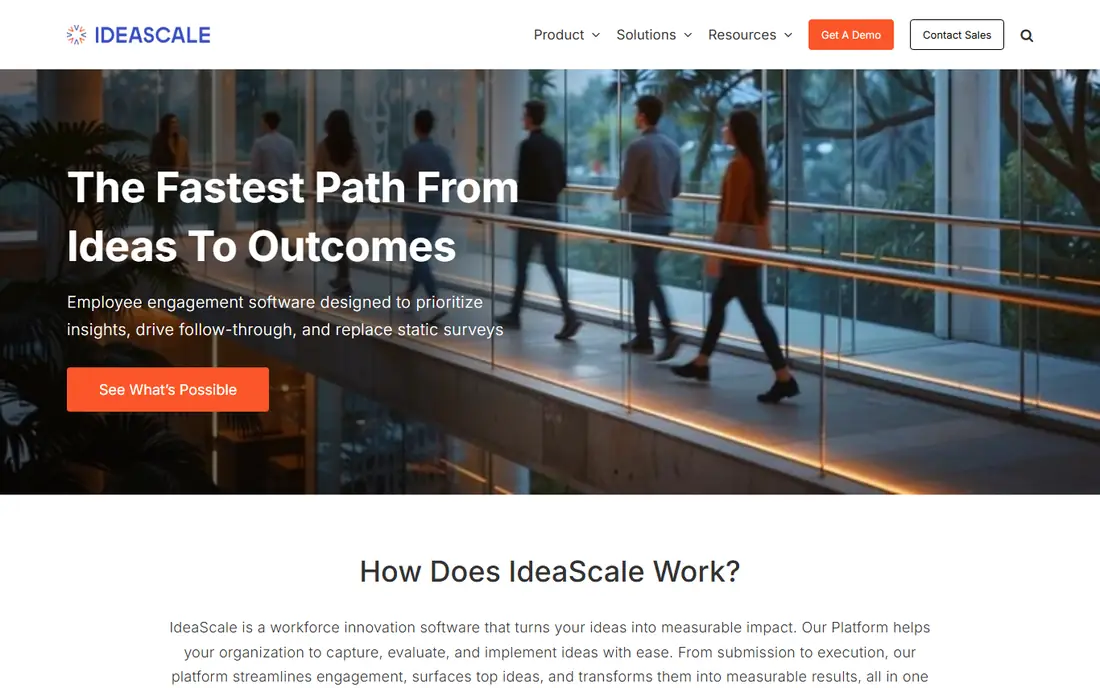
IdeaScale is built for organizations that want ideas from a wide group, not just a small product team. You can run open or closed challenges, let participants vote and comment, merge duplicate ideas, and move winners into stages with owners and next steps. That structure helps a government agency, a university, or a large company run a public challenge without losing track of submissions in email.
The trade-off is scale and price. IdeaScale publishes enterprise-style plans rather than a simple per-user price for every team, and third-party listings show annual figures in the thousands, so small teams should get a direct quote before assuming it fits. If you need a large community, strong moderation, and reporting on what happened to each idea, IdeaScale is a serious shortlist pick. If you need a simple board for twenty people, start with a free tool below.
- Strong crowdsourcing and voting tools
- Campaign management for public and internal challenges
- Proposal and stage workflows
- Enterprise pricing is quote-based
- Setup can feel heavy for a team of ten
- Some plans need a multi-year view to judge value

Brightidea, now part of a wider innovation group, is aimed at large organizations running more than one kind of program at once. A company can run an employee challenge, a hackathon, and an accelerator in the same system, with different workflows, judges, and reporting for each. Automated routing helps reviewers avoid chasing ideas by email, and the admin controls suit firms with strict access and data rules.
That depth comes with a sales-led buying process and no public starting price, so budgeting takes a demo and a quote. Smaller teams may find the setup heavier than a simple idea board, and the value shows most when several programs run each year. For an enterprise innovation team that needs one home for many programs, Brightidea is worth a demo. For a single annual challenge, a lighter tool may do the same job for less.
- Supports hackathons, labs, and accelerators
- Automated workflows
- Strong enterprise administration
- Quote-based pricing
- Implementation takes planning
- Can be more platform than a small team needs
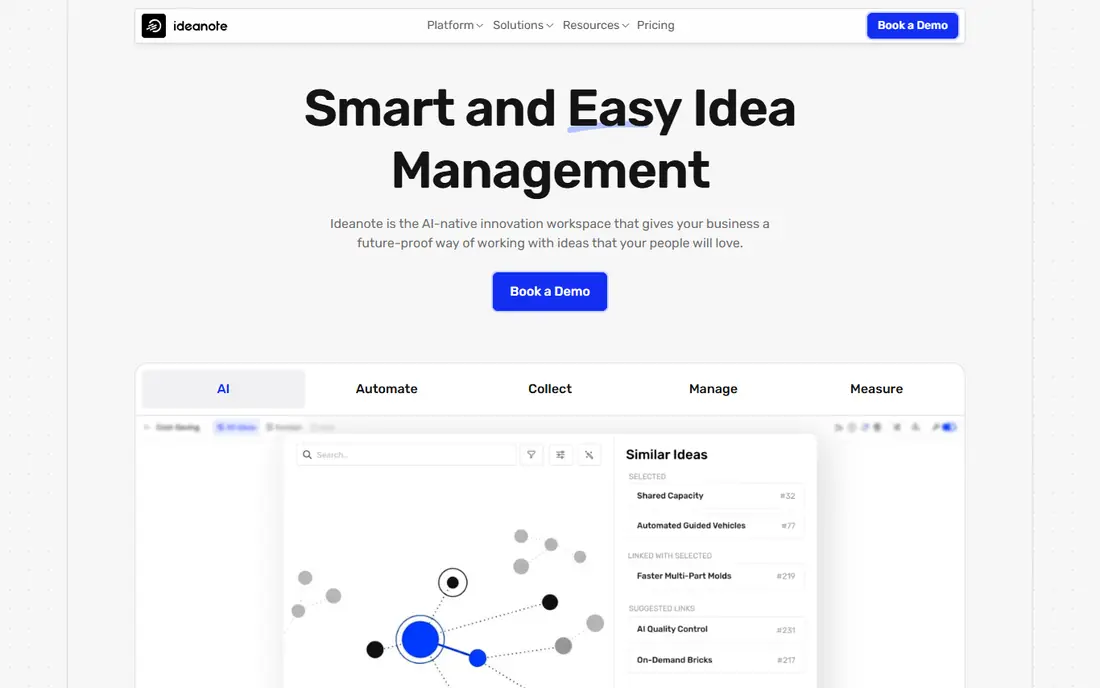
Ideanote is the easiest tool on this list to start with, and that is a real advantage in idea management. People submit ideas through a clean form, vote and comment, and move ideas along a board without a long training session. Templates help a team launch a first campaign in an afternoon, and the free plan for up to ten users lets you test whether staff will actually take part before you pay.
The limit is depth at enterprise scale. Ideanote handles small and mid-size teams well, but a global firm with complex stage-gate rules, multi-language needs, and heavy compliance reporting may need a larger platform. For a startup, a department, or a company running its first structured innovation program, Ideanote gives you a low-risk way to learn what works. Upgrade only when your campaigns outgrow the free or entry plans.
- Clean, modern interface
- Free plan for small teams
- Templates and AI help for sorting ideas
- Paid pricing varies by plan and region
- Less enterprise depth than Brightidea or HYPE
- Some advanced reporting sits on higher plans
HYPE Innovation covers the full journey from a first idea to a funded project in a portfolio, not just the collection step. Teams can run campaigns, evaluate ideas with scoring, track progress, and report on the portfolio over time. Multilingual support helps global firms run the same program in several countries, and the vendor offers program guidance alongside the software.
Pricing is enterprise-level and quote-based, with third-party guides placing annual costs well above a small-team budget. That makes HYPE a poor fit for a team that just wants a board, but a strong fit for a company that treats innovation as a managed portfolio with budgets and stage gates. If your leadership asks for portfolio reporting and foresight, not just a list of ideas, put HYPE on the shortlist.
- Covers ideation through portfolio tracking
- Multilingual support
- Strong consulting and program support
- Enterprise pricing, often tens of thousands per year
- Long sales and setup cycle
- Overkill for a single team board
Qmarkets is built for large firms that need separate workspaces for different business units, regions, or programs, all under one system. A global manufacturer can run a safety challenge in one workspace and a product challenge in another, with different reviewers, languages, and rules. Evaluation tools, including scoring and workflow routing, help reviewers move from hundreds of raw ideas to a shortlist without losing the reasoning behind each decision.
As with other enterprise tools here, pricing is custom, and the modular design needs someone to own setup and governance. Casual users may find it less inviting than Ideanote or Viima at first glance. The strength shows when a firm needs scale, language support, and consistent reporting across many programs. For a single-country team with one campaign, that scale is not needed.
- Modular workspaces for different units
- Multilingual and multi-region support
- Evaluation and workflow tools
- Quote-based pricing
- Modular setup needs planning
- Interface can feel enterprise-heavy for casual users
Wazoku combines idea management software with access to a wider crowd for open challenges, which suits firms that want ideas from outside their own staff. Inside the platform, teams can run campaigns, evaluate submissions, and track progress, with support that reviewers often praise. That mix of software and crowd access is different from a pure internal board.
The catch, noted in several reviewer summaries, is entry price and limited pricing transparency. A small team should get a firm quote and ask what is included for that price, including crowd access, support, and implementation. For a large firm that wants both internal and external ideas in one program, Wazoku is a credible enterprise pick. For a purely internal program, a simpler tool may deliver the same workflow for less.
- Large crowd and challenge network
- Strong support reputation
- Workflow and reporting for enterprise programs
- High entry pricing reported by reviewers
- Pricing is not transparent
- Smaller teams may struggle to justify cost
Sideways 6 takes a practical view: if your staff already live in Microsoft Teams, run idea campaigns there instead of asking them to open another app. Ideas can be submitted, discussed, and voted on inside Teams, which lowers the barrier to taking part. The free plan for up to ten users lets a Microsoft-first team test that idea before paying for a wider rollout.
The limit is obvious: firms that do not use Microsoft 365 get far less value, and the tool is not a general-purpose board for every stack. Advanced enterprise plans are also quote-based, so larger rollouts need a sales conversation. If your organization standardizes on Teams and Outlook, Sideways 6 may get more participation than a prettier standalone tool. If your team uses Slack or Google Workspace, look at a stack-neutral option instead.
- Deep Microsoft Teams integration
- Free plan for up to ten users
- Campaigns run where staff already chat
- Best value only inside Microsoft 365
- Less suited to firms on other stacks
- Advanced plans are quote-based
Viima started as a simple, visual idea board, and that simplicity is still its strength. Teams can post ideas on a board, vote, comment, and move the best ones forward without a manual. The free tier makes it a safe first step for a school, a nonprofit, or a small company that wants to run a first campaign and learn what kind of ideas staff actually submit.
Viima is now associated with HYPE Boards, so buyers moving from free to enterprise should confirm which product and price they are being quoted. Advanced stage-gate workflows, portfolio reporting, and enterprise controls are thinner here than in HYPE Innovation or Brightidea. For a first campaign, a classroom, or a small team, Viima is hard to beat on price and ease. For a managed innovation portfolio, treat it as a starting point, not the final platform.
- Free starting point with unlimited users on the free tier in many listings
- Visual boards are easy to grasp
- Simple voting and commenting
- Now linked to HYPE Boards, so enterprise pricing paths can confuse
- Fewer advanced workflows than enterprise tools
- Reporting is basic
Aha Ideas fits a different buyer from most tools here: a product team that collects customer and internal ideas and needs to turn the best ones into roadmap items. Ideas can be voted on, scored, and linked to features and releases, so a product manager can show why one idea moved forward and another did not. That trace from idea to shipped feature is valuable when customers ask what happened to their suggestion.
The trade-off is scope. Aha Ideas shines for product feedback, but a company running a general employee innovation program, with safety ideas, process ideas, and cost-saving ideas, may find a general tool such as IdeaScale or Ideanote a better fit. Pricing also sits inside the wider Aha product family, so get a quote for the exact plan you need. If your main goal is product roadmapping, Aha Ideas deserves a top spot. If your main goal is company-wide innovation, shortlist a general platform first.
- Links ideas directly to product roadmaps
- Strong for product feedback and prioritization
- Integrates with Aha Roadmaps
- Pricing is tied to the wider Aha suite
- Less suited to general employee innovation programs
- Learning curve for non-product teams
How we picked these
We compared official product pages, pricing pages, campaign and voting features, and public reviewer summaries for each tool. We favored tools that are still sold in October 2026, that support a full loop from submission to decision, and that fit a clear buyer, from a free small-team board to an enterprise portfolio platform. Where pricing was quote-based, we wrote See website rather than presenting a third-party estimate as a vendor price.
How to choose an idea management tool
Start with participation, not features. The best platform on paper fails if staff will not open it. Pick a tool that lives where your team already works, whether that is Teams, email, or a simple web board, and launch with one clear campaign question. A vague call for ideas produces vague ideas. A focused question, such as how to cut packaging waste in one plant, produces ideas you can actually judge.
Next, decide who decides and how fast. Name reviewers before launch, set a scoring method, and promise a reply date for every idea, even if the reply is no. Teams stop submitting when ideas vanish into a black box. A simple board with fast, honest feedback beats an enterprise platform with slow, opaque review.
Budget for moderation and follow-through
Software cost is only part of the bill. Someone must moderate submissions, merge duplicates, run review meetings, and report back on what got built. Enterprise tools add implementation and training time on top of the license. Free tools save license cost but still need a human owner. Plan that owner role before you launch, or your first campaign may also be your last.
Measure what got built, not just what got submitted
Count submissions, but judge success by decisions and outcomes: how many ideas reached review, how many were funded, and what changed as a result. A campaign with 50 ideas and five funded projects beats a campaign with 500 ideas and none. Use the reporting in your tool to track that funnel, and share the results with everyone who took part.
Frequently asked questions
What is the best idea management tool for small teams?
Ideanote and Viima are strong low-cost starts, with free tiers for small groups. Sideways 6 fits Microsoft Teams shops. Pick the one your team will open weekly, run one focused campaign, and upgrade only when you need deeper workflows or reporting.
What is the best innovation management software for enterprises?
Brightidea, HYPE Innovation, Qmarkets, and Wazoku all fit enterprise programs, with different strengths in hackathons, portfolio tracking, global deployment, and crowdsourcing. Shortlist two, run a pilot campaign in each if possible, and compare reviewer experience and reporting, not just demo slides.
What is the best innovation software for product teams?
Aha Ideas fits product teams best, because it links ideas to roadmaps and releases. For general employee innovation, IdeaScale or Ideanote may fit better. The difference is whether your ideas should become product features or broader business improvements.
Is there a free idea management tool?
Yes. Viima offers a free starting point, Ideanote has a free plan for small teams, and Sideways 6 offers a free plan for up to ten users. Free plans usually limit advanced workflows and reporting, so check those limits before you launch a large campaign.
How is idea management different from innovation management?
Idea management covers collecting, voting on, and reviewing ideas. Innovation management covers the wider loop: strategy, portfolio funding, development, and measuring outcomes. Many enterprise tools cover both, while simpler boards cover mainly the first part.
How do we get employees to actually submit ideas?
Ask one clear question, run the campaign where staff already work, and reply to every idea by a promised date. Recognize contributors, share what got built, and repeat the campaign on a regular cycle. Participation grows when people see ideas turn into action.
Sources
See where you really rank - block by block
ProMapRanker scans Google Maps across a grid of your service area. Simple monthly plans from $19, white-label on every plan.
Start freeKeep reading
 zoho inventory alternatives
6 Alternatives to Zoho Inventory, Compared on Price and Fit
Zoho Inventory alternatives: 6 tools compared on price, free plans and fit. Katana leads the list for manufacturers. Fit and flaws are laid out for each entry.
Read → zoho crm alternatives
Best Zoho CRM Alternatives (2026)
Need Zoho CRM alternatives? We compare 7 tools on cost, free access and who each suits. Every pick gets a straight assessment. Built for quick decisions.
Read → zelle alternatives
Best Zelle Alternatives in 2026
Compare the best Zelle alternatives for sending money to friends, paying sellers and moving funds abroad, with honest notes on fees, speed and safety in 2026.
Read →